
















Copyright: ©Author(s) 2026.
World J Exp Med. Mar 20, 2026; 16(1): 112061
Published online Mar 20, 2026. doi: 10.5493/wjem.v16.i1.112061
Published online Mar 20, 2026. doi: 10.5493/wjem.v16.i1.112061
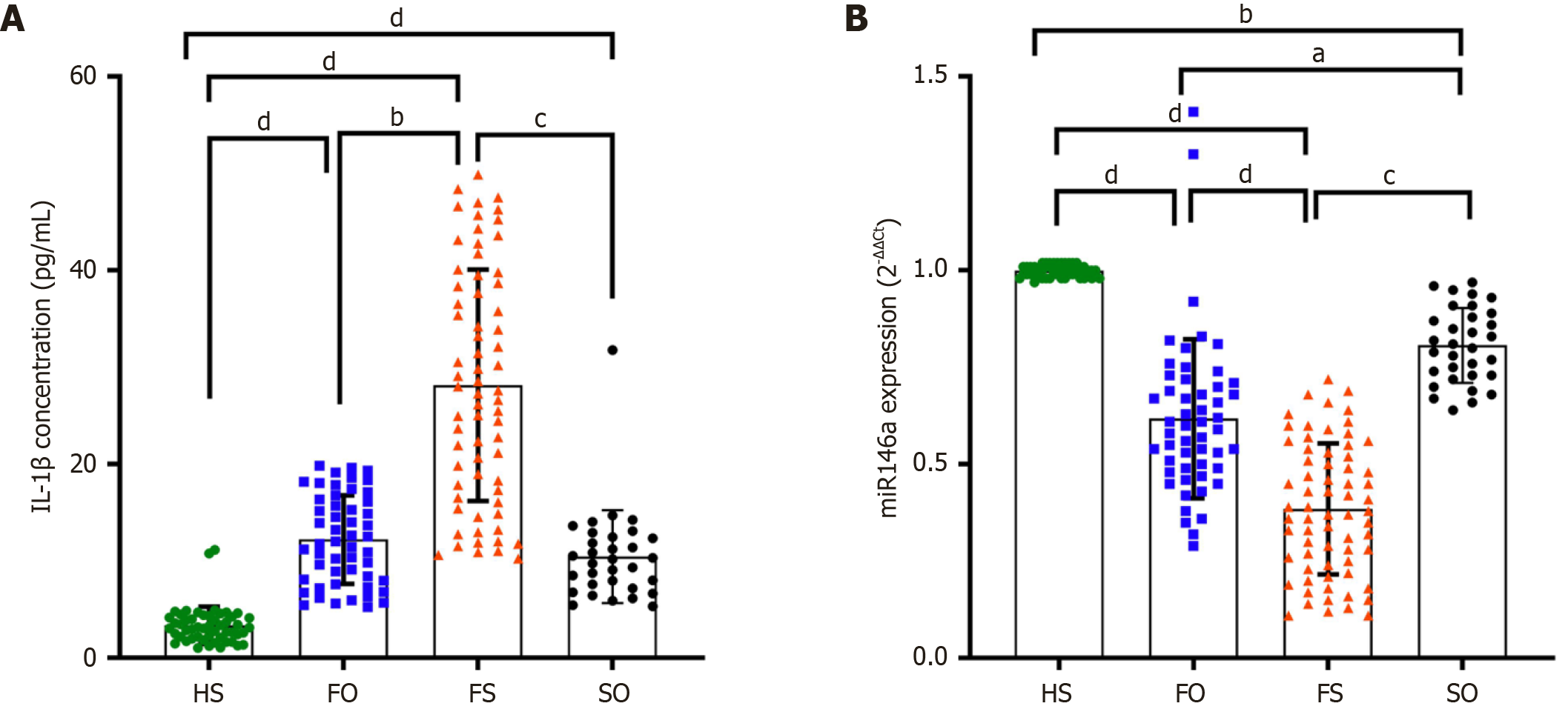
Figure 1 Plasma interleukin-1 beta concentrations and microRNA-146a expression in the febrile seizure, fever-only, seizure-only, and healthy subjects groups.
A: Kruskal-Wallis test revealed a statistically significant difference in plasma interleukin-1 beta levels among the febrile seizure (FS), fever-only (FO), seizure-only (SO), and healthy subjects (HS) groups (P < 0.0001). Pairwise comparisons using the Dunn-Bonferroni post-hoc test confirmed that interleukin-1 beta expression in FS patients was significantly higher than in the FO, SO, and HS groups. Bar charts display the mean expression (mean ± SD) of variables across the study groups; B: Moreover, the HS group exhibited the highest mean plasma microRNA-146a (miR-146a) expression at 0.9992 ± 0.01467, whereas the FS group showed the lowest levels at 0.3853 ± 0.16847. Intermediate levels were recorded in the FO group at 0.6181 ± 0.20504 and the SO group at 0.8072 ± 0.09646. Statistical analysis using the independent-samples Kruskal-Wallis test indicated significant differences in miR-146a expression among the groups (P < 0.0001). Post-hoc pairwise comparisons with the Dunn-Bonferroni test confirmed that miR-146a expression in FS patients was significantly lower than in all other groups (P < 0.0001). The HS group demonstrated significantly higher miR-146a levels compared to the FO group (P < 0.0001) and the SO group (P < 0.001). Statistically significant differences are denoted by asterisks: aP < 0.05, bP < 0.01, cP < 0.001, dP < 0.0001. IL-1β: Interleukin-1 beta; miR-146a: MicroRNA-146a; FS: Febrile seizure; FO: Fever-only; SO: Seizure-only; HS: Healthy subjects.
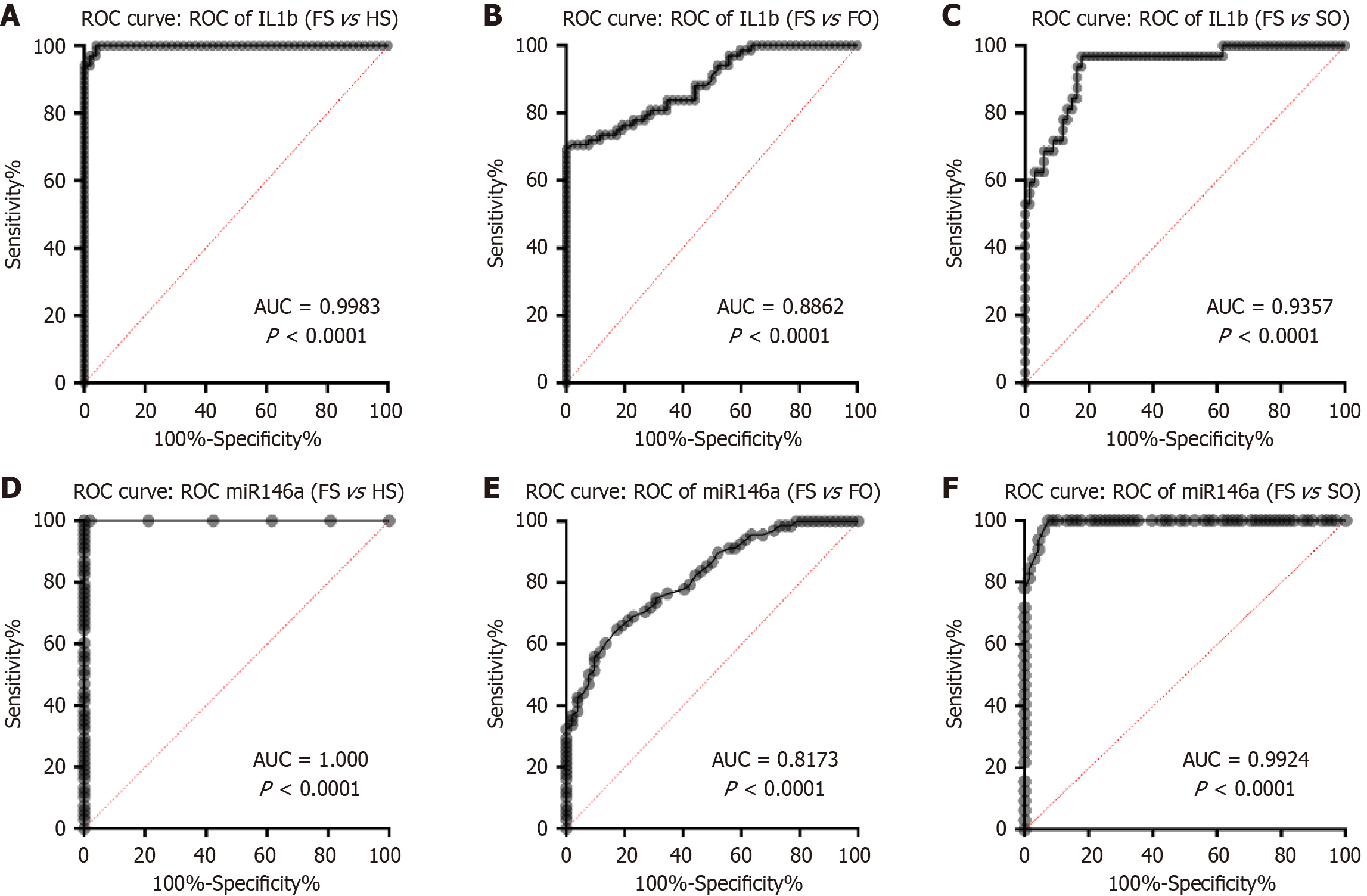
Figure 2 Receiver operating characteristic curve analyses.
A-C: Receiver operating characteristic curve analyses of interleukin-1 beta for the diagnosis of febrile seizures; A: Receiver operating characteristic (ROC) analysis for febrile seizures (FS) vs healthy subject groups. The area under the curve (AUC) is 0.9983 [95% confidence interval (CI): 0.9951-1.000], indicating excellent discriminatory performance. The cutoff value of 7.595 pg/mL provided a sensitivity of 100.0% and a specificity of 96.15%, with a likelihood ratio (LR) of 26.00; B: ROC analysis for FS vs fever-only groups. The AUC is 0.8862 (95%CI: 0.8298-0.9425), reflecting good discriminatory performance. A cutoff value of 19.75 pg/mL achieved a sensitivity of 70.59% and specificity of 98.08%, with an LR of 36.71; C: ROC analysis for FS vs seizure-only groups. The AUC is 0.9357 (95%CI: 0.8862-0.9851), demonstrating robust discriminatory power. The cutoff value of 14.82 pg/mL provided a sensitivity of 96.88% and specificity of 82.35%, with an LR of 5.49; D and E: ROC curve analyses of microRNA-146a for the diagnosis of FS; D: ROC analysis for FS vs healthy subject groups. The AUC is 1.000 (95%CI: 1.000-1.000), indicating perfect discriminatory power. A cutoff point of 0.9750 fold change (FC) provided a sensitivity of 100.00% and specificity of 98.08%, with an LR of 52.00; E: ROC analysis for FS vs fever-only groups. The AUC is 0.8173 (95%CI: 0.7442-0.8904), reflecting moderate discriminatory power. A cutoff point of 0.5050 FC provided a sensitivity of 72.06% and specificity of 71.15%, with an LR of 2.498; F: ROC analysis for FS vs seizure-only groups. The AUC is 0.9924 (95%CI: 0.9821-1.000), demonstrating exceptional discriminatory performance. A cutoff point of 0.6650 FC provided a sensitivity of 93.75% and specificity of 95.59%, with an LR of 21.25. ROC: Receiver operating characteristic; IL-1β: Interleukin-1 beta; miR-146a: MicroRNA-146a; FS: Febrile seizure; FO: Fever-only; SO: Seizure-only; HS: Healthy subjects.
- Citation: Mohammadi S, Abbood Hameed Ati M, Seyedhosseini FS, Zare Ebrahimabad M, Saeidi M, Hosseini SA, Darweesh M, Al-Harrasi A, Yazdani Y. Diagnostic utility of circulating interleukin-1 beta and microRNA-146a in differentiating febrile seizures from other pediatric conditions. World J Exp Med 2026; 16(1): 112061
- URL: https://www.wjgnet.com/2220-315x/full/v16/i1/112061.htm
- DOI: https://dx.doi.org/10.5493/wjem.v16.i1.112061