
















Copyright: ©Author(s) 2026.
World J Orthop. Apr 18, 2026; 17(4): 116419
Published online Apr 18, 2026. doi: 10.5312/wjo.v17.i4.116419
Published online Apr 18, 2026. doi: 10.5312/wjo.v17.i4.116419
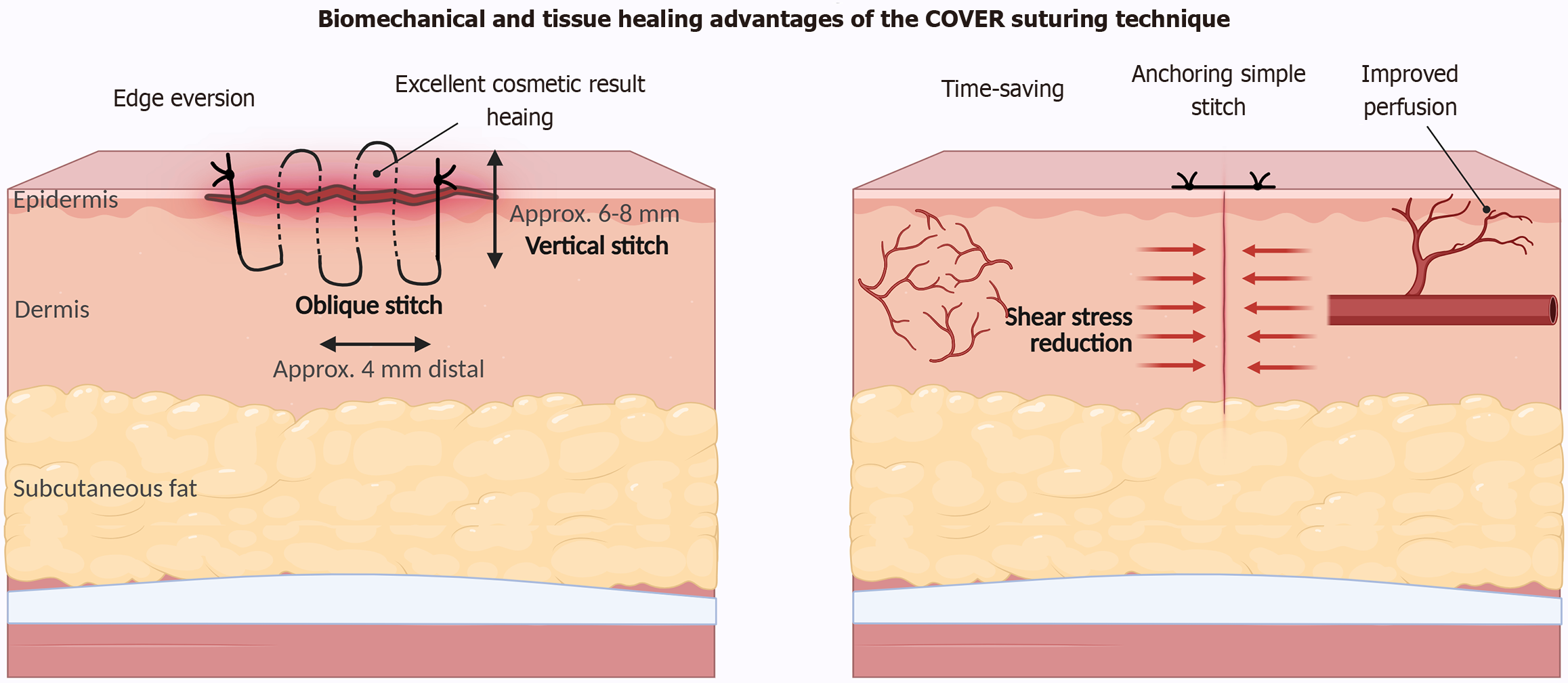
Figure 1 Biomechanical and tissue healing advantages of the combined oblique and vertical everting running suturing technique.
A conceptual representation of the biomechanical and tissue-healing benefits of the combined oblique and vertical everting running suturing technique. This diagram illustrates the functioning of the combined oblique and vertical everting running suturing technique through mechanical stability and biological repair. The alternating vertical and oblique sutures on the left create an inverted trapezoidal tension field. Vertical sutures allow for everted wound edges and deep dermal fixation, while oblique sutures redistribute shear forces, maintaining epidermal-dermal apposition and preventing edge collapse or strangulation. The balanced tension on the right maintains perfusion and oxygenation, optimizing microvascular flow and ensuring cooperation between perivascular fibroblasts and endothelial cells. The result is a setting with low tension and high perfusion, creating favorable conditions for various processes, including orderly collagen deposition, vigorous new blood vessel formation, and smooth, even scarring. COVER: Combined oblique and vertical everting running technique.
- Citation: Zhao R, Zhang HL, Jia BK, Li LZ, Yang YF, Zhang HL, Song ZJ. Letter to the Editor: Combined oblique and vertical everting running stitch: Redefining the biomechanics of wound closure. World J Orthop 2026; 17(4): 116419
- URL: https://www.wjgnet.com/2218-5836/full/v17/i4/116419.htm
- DOI: https://dx.doi.org/10.5312/wjo.v17.i4.116419