
















Copyright: ©Author(s) 2026.
World J Orthop. Apr 18, 2026; 17(4): 114143
Published online Apr 18, 2026. doi: 10.5312/wjo.v17.i4.114143
Published online Apr 18, 2026. doi: 10.5312/wjo.v17.i4.114143
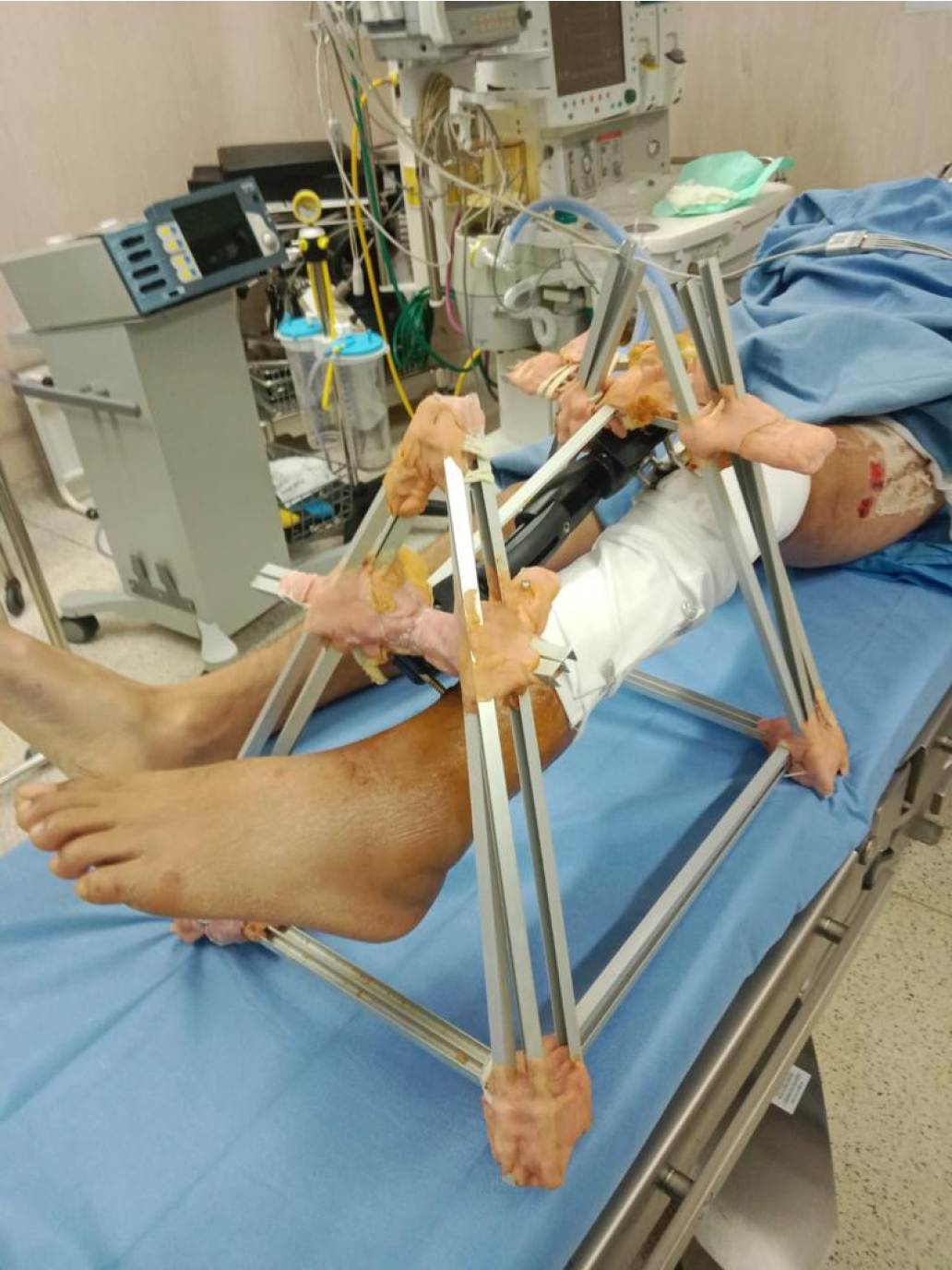
Figure 1
Initial state of the patient at presentation.
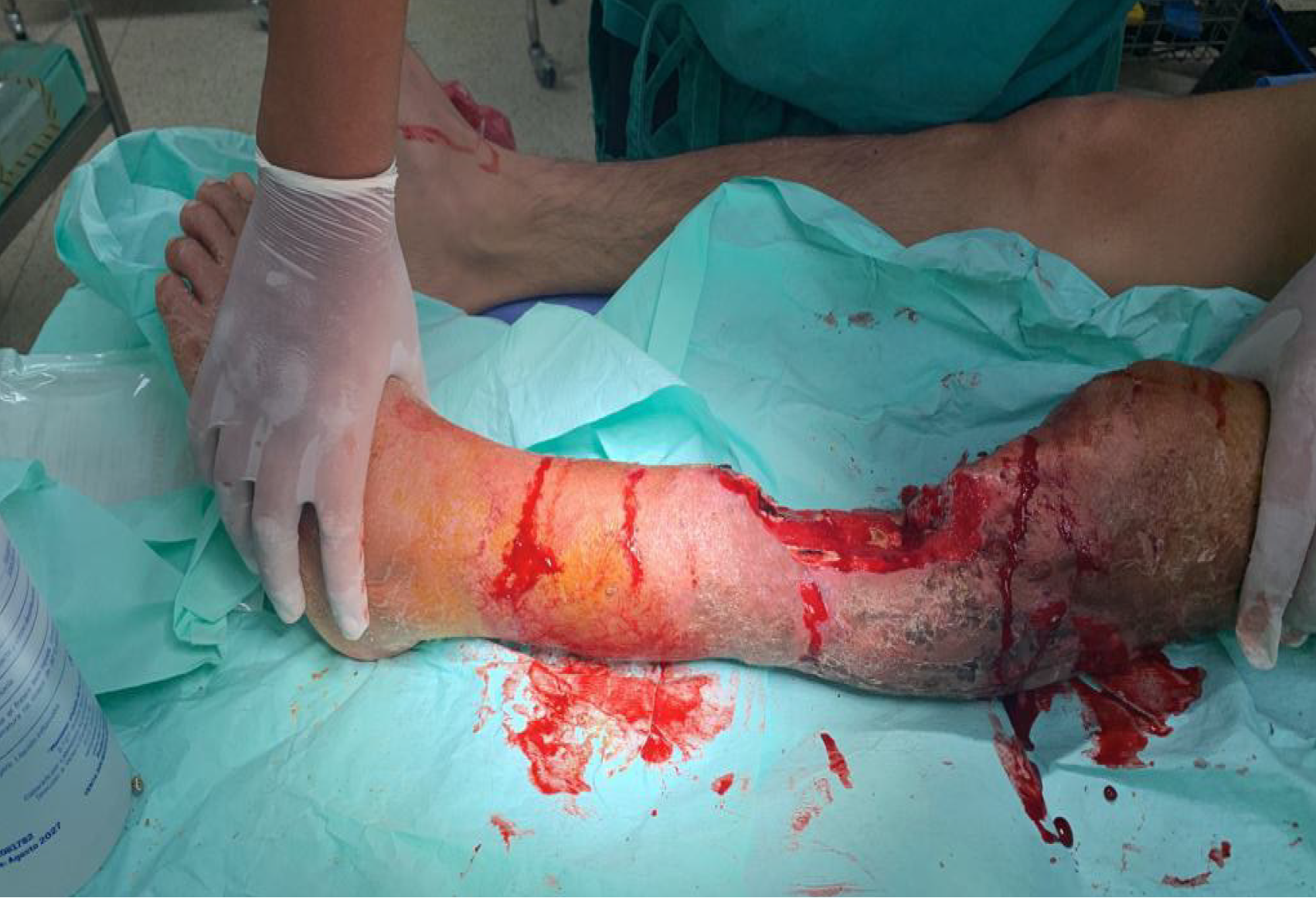
Figure 2
Bony defect and soft-tissue injury after the removal of the external fixator.
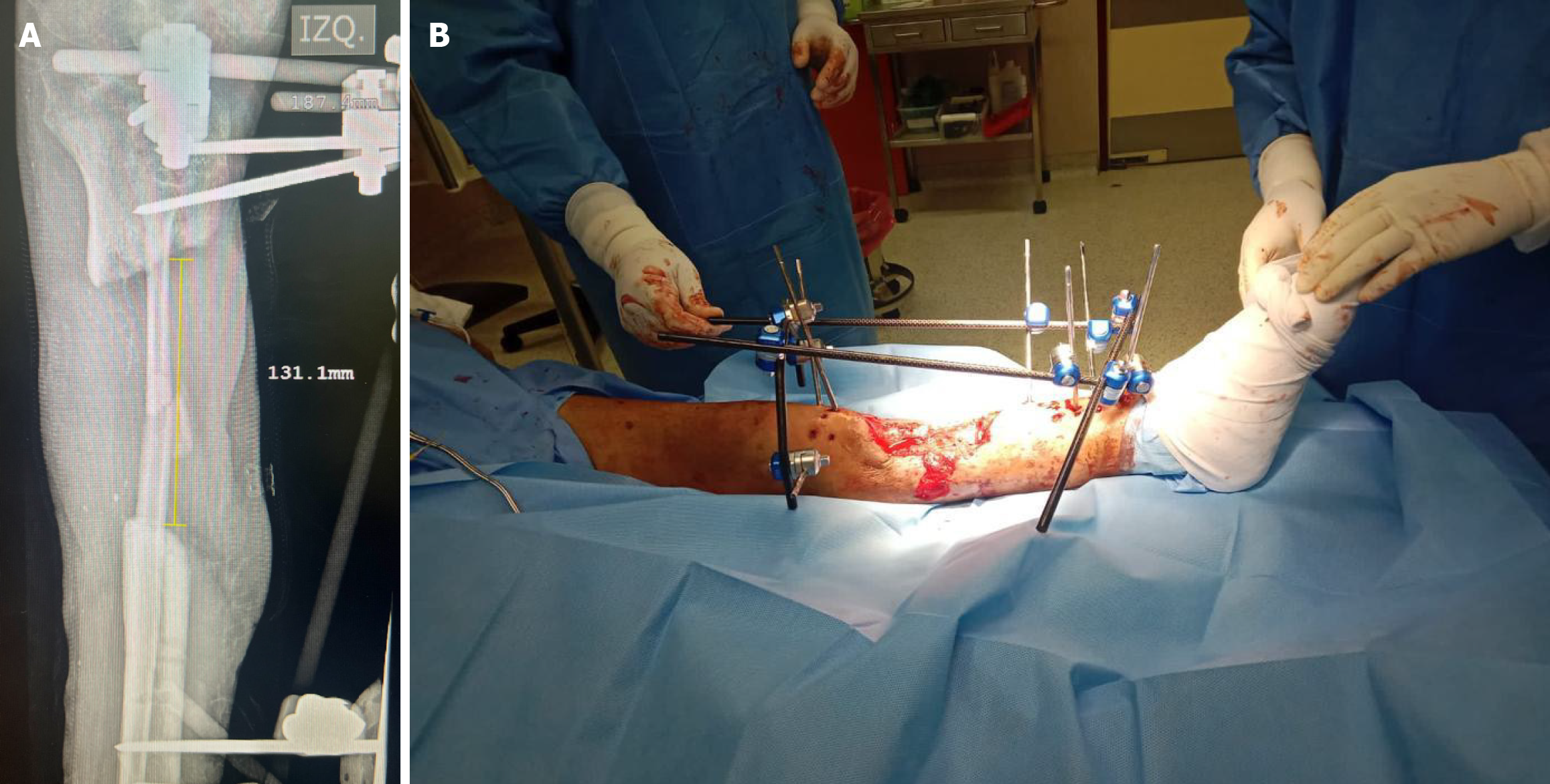
Figure 3 External fixation.
A: Radiograph of the anterior placement of the external fixator; B: Radical debridement with the fixator in place.
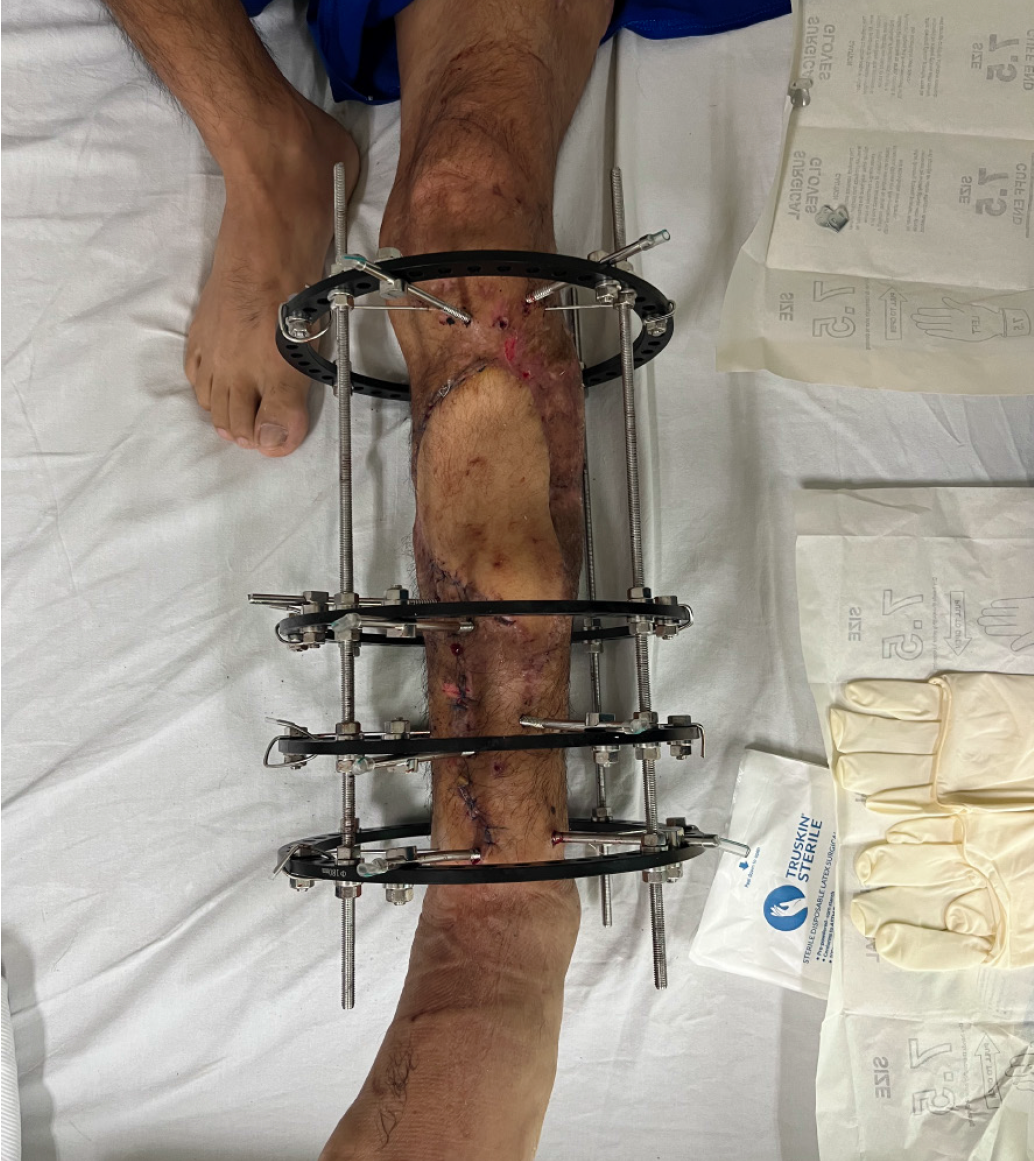
Figure 4
Defect covered by a free flap and circular external fixation.
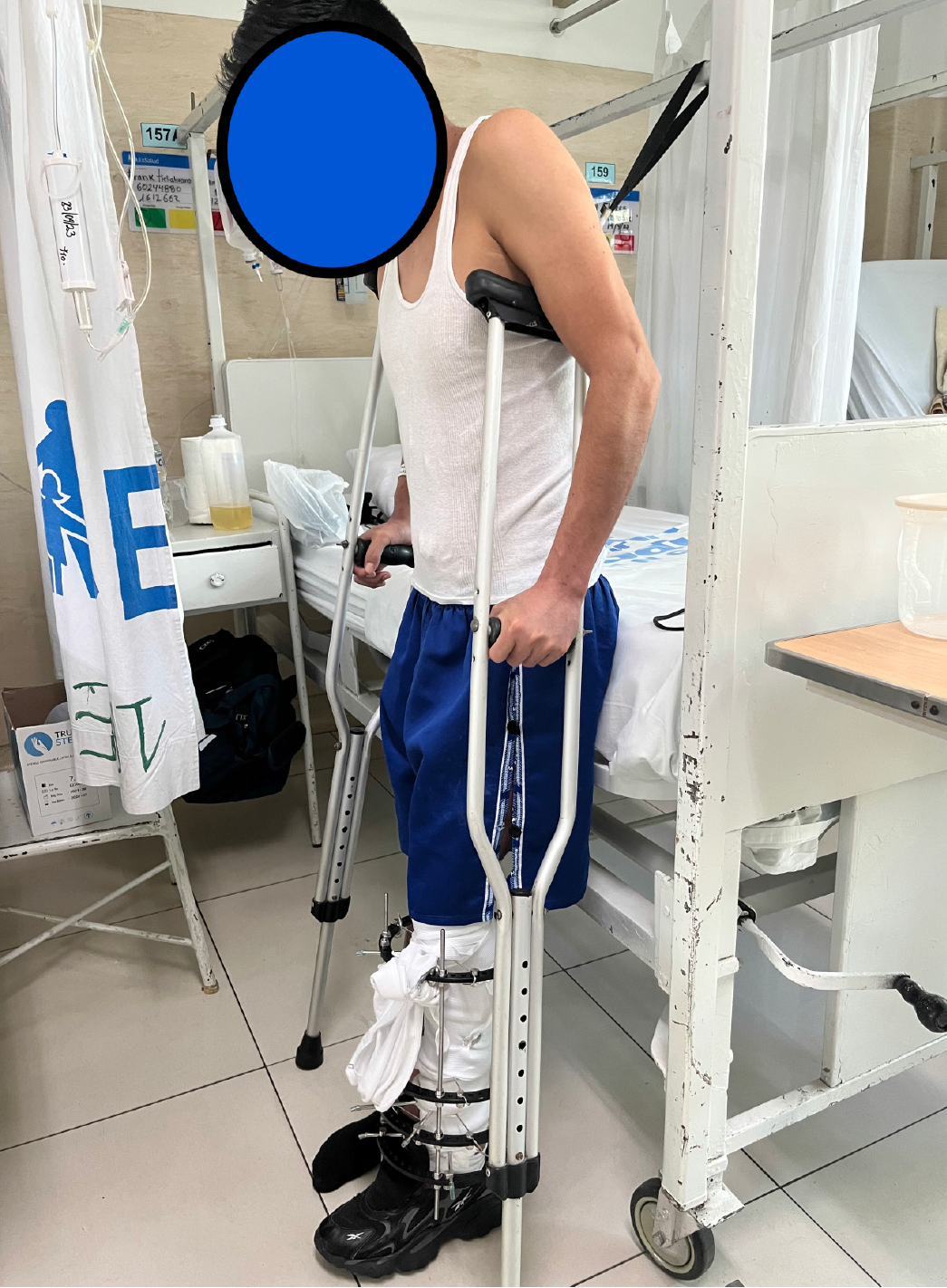
Figure 5
Placement of the external fixator allowed partial and progressive support initiation.
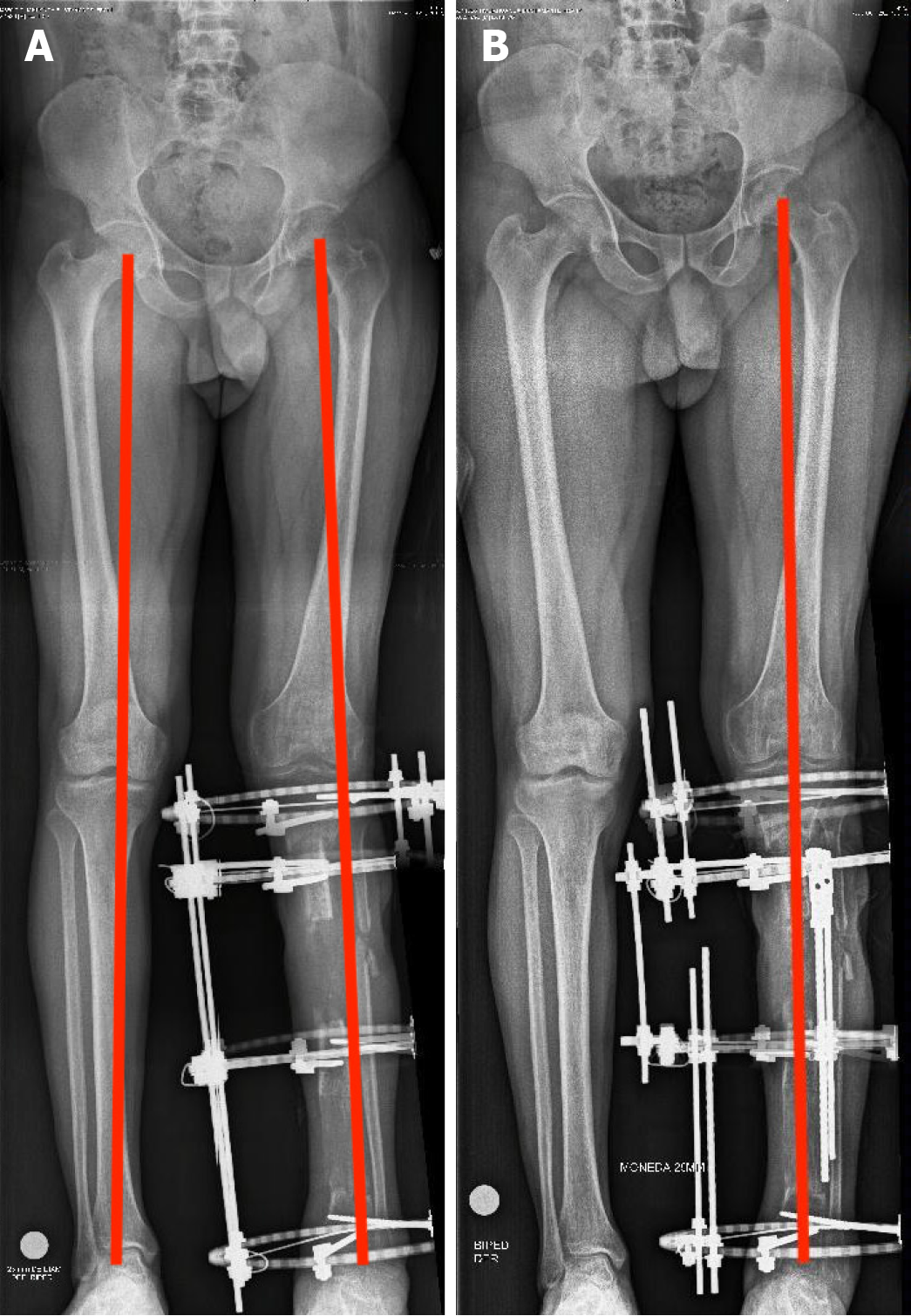
Figure 6 Panoramic radiographs.
A: Initial mechanical axis deviation in valgus; B: Corrected alignment after adjustment of hinges and bars.
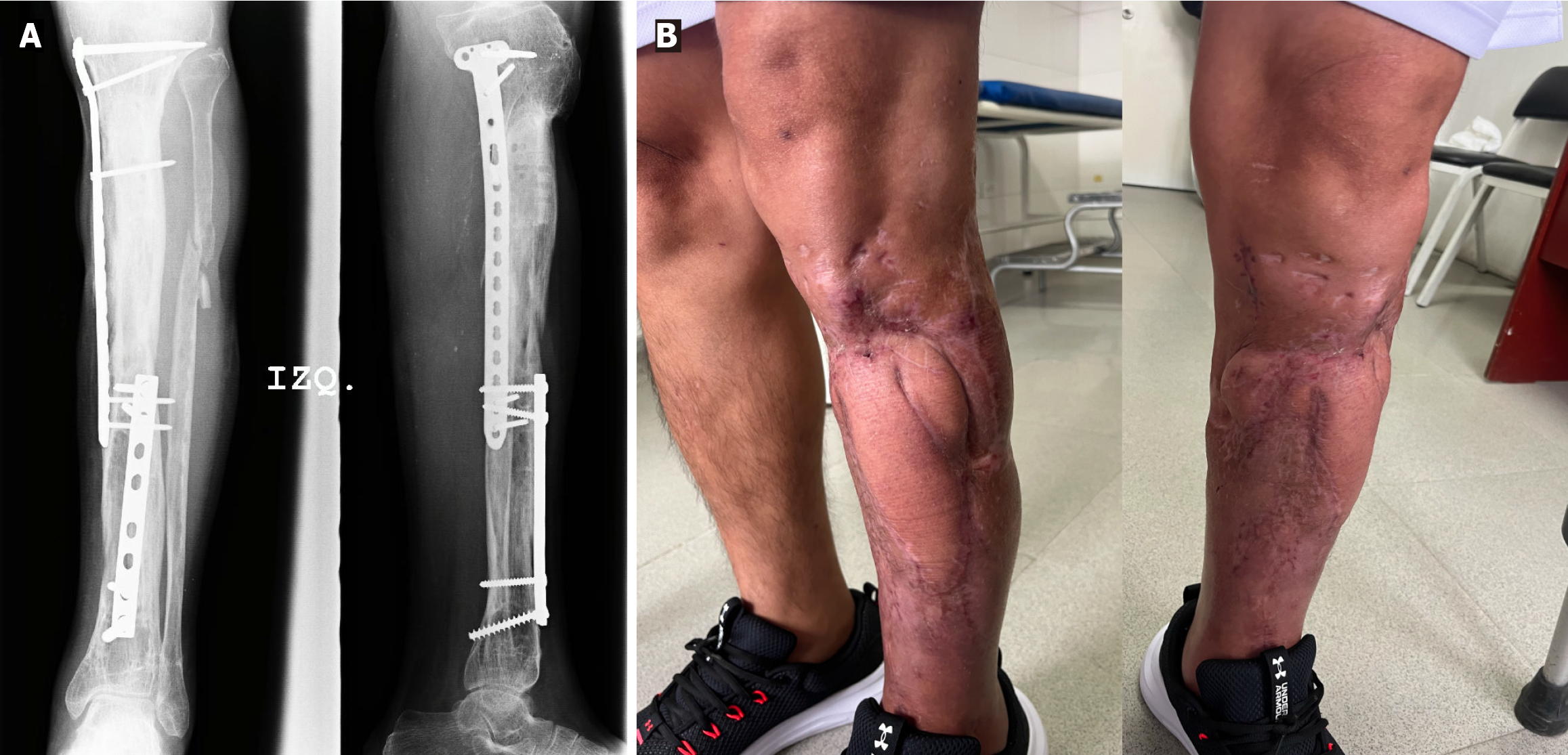
Figure 7 Final outcome.
A: Radiograph 6 months after internal fixation showed regeneration and corticalization; B: The patient’s leg with soft tissue was in good condition and showed no signs of infection.
- Citation: Miranda Cárdenas JE. Reconstruction of a massive tibial defect using trifocal bone transport and free flap: A case report. World J Orthop 2026; 17(4): 114143
- URL: https://www.wjgnet.com/2218-5836/full/v17/i4/114143.htm
- DOI: https://dx.doi.org/10.5312/wjo.v17.i4.114143