
















©The Author(s) 2026.
World J Orthop. Jan 18, 2026; 17(1): 112006
Published online Jan 18, 2026. doi: 10.5312/wjo.v17.i1.112006
Published online Jan 18, 2026. doi: 10.5312/wjo.v17.i1.112006

Figure 1 The implemented technique for one of the patients.
A: Initial radiograph showing left midshaft transverse humerus fracture; B: Intraoperative radiograph showing the 3 K-wires passing the fracture site after achieving adequate reduction; C: Post-operative radiograph showing the 3 K-wires passing the fracture site after achieving adequate reduction, prior to discharge; D: 4-weeks post-operative radiograph showing the 3 K-wires held in position, with callus formation and acceptable alignment; E: 8-weeks post-operative radiograph showing the 3 K-wires held in position, with complete callus formation and acceptable alignment; F: 6-months Post-operative radiograph showing the 3 K-wires held in position, with complete remodeling and healed fractures with 0- 150 elbow ROM; G: 1-year Post-operative radiograph; after the removal of the 3 K-wires.
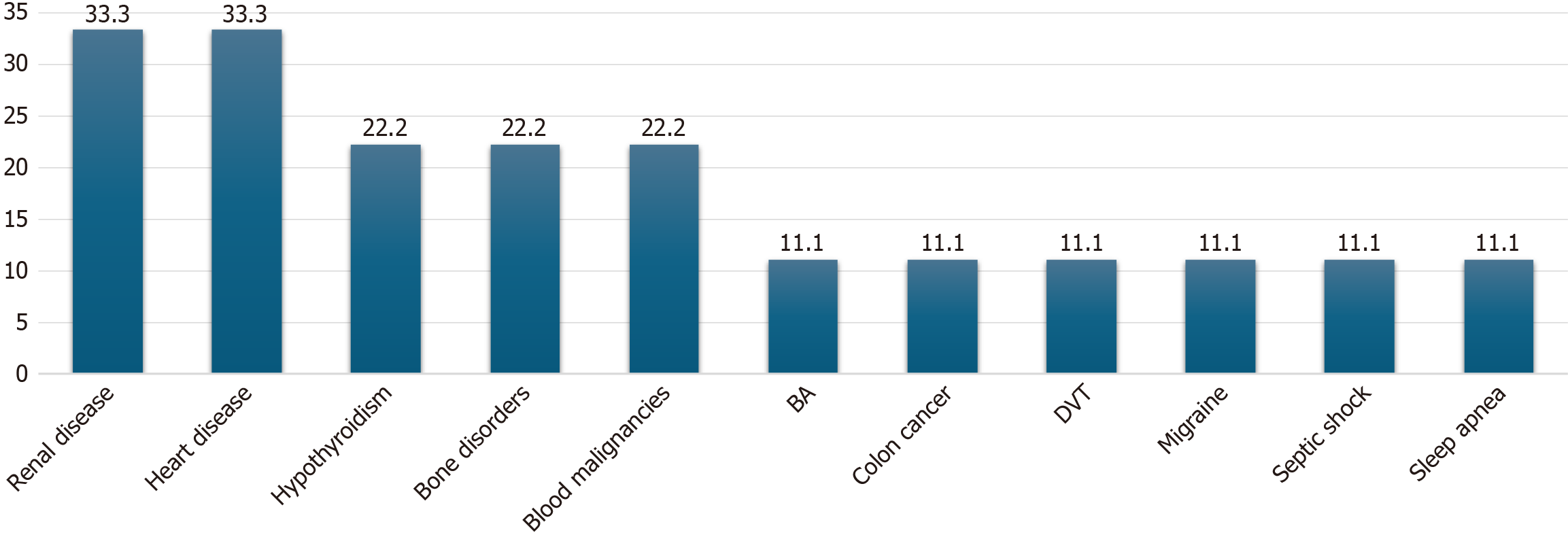
Figure 2 Different comorbidities among patients (n = 9).
DVT: Deep vein thrombosis; BA: Bronchial asthma.
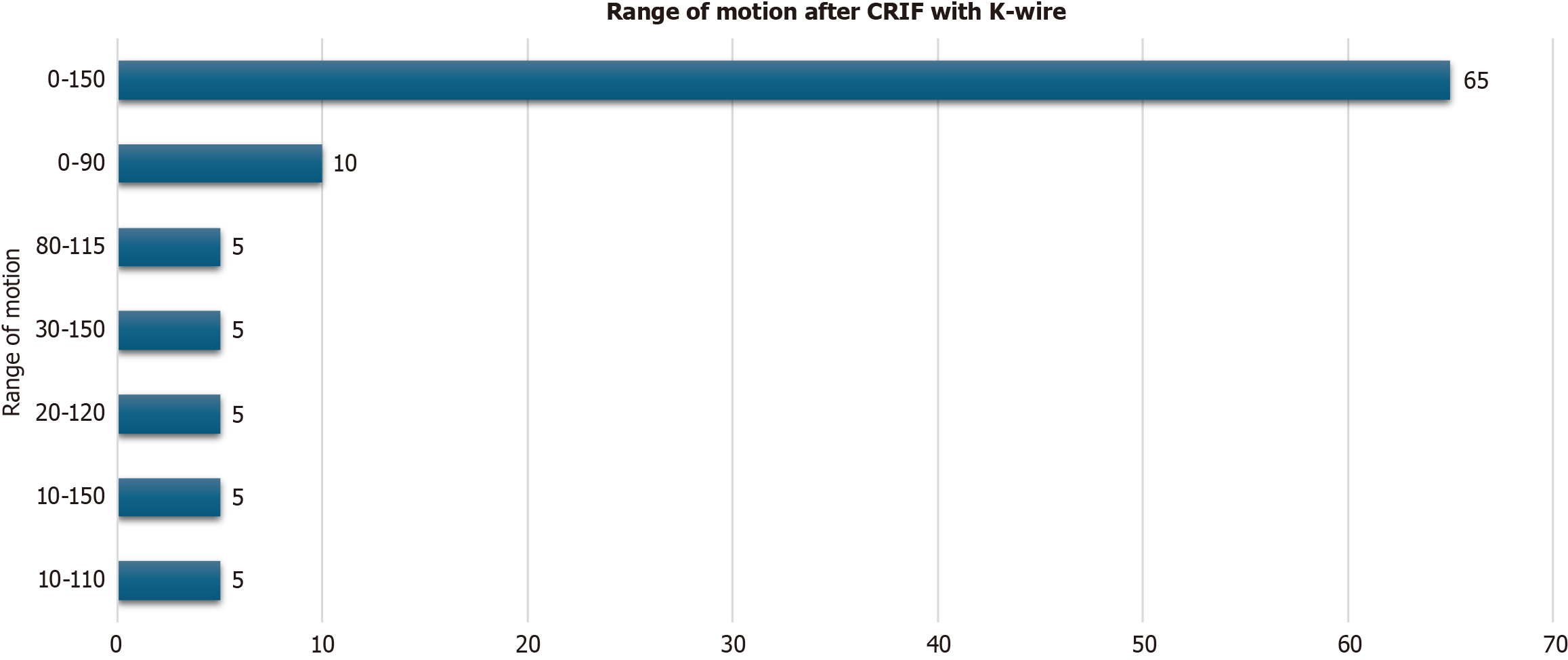
Figure 3 Range of motion after close reduction and internal fixation with K-wire (n = 20).
CRIF: Closed reduction and internal fixation.
- Citation: Abdulsamad MA, AlMugren TS, Saeed AI, Alrogy WA, Alanazi LD, Alsaqer OM, Alanbar FT, Alfarraj AH, Aljaafri ZA. Clinical outcomes of humeral shaft fractures managed with intramedullary K-wires: A closed reduction approach. World J Orthop 2026; 17(1): 112006
- URL: https://www.wjgnet.com/2218-5836/full/v17/i1/112006.htm
- DOI: https://dx.doi.org/10.5312/wjo.v17.i1.112006