
















Copyright: ©Author(s) 2026.
World J Clin Oncol. Apr 24, 2026; 17(4): 115287
Published online Apr 24, 2026. doi: 10.5306/wjco.v17.i4.115287
Published online Apr 24, 2026. doi: 10.5306/wjco.v17.i4.115287
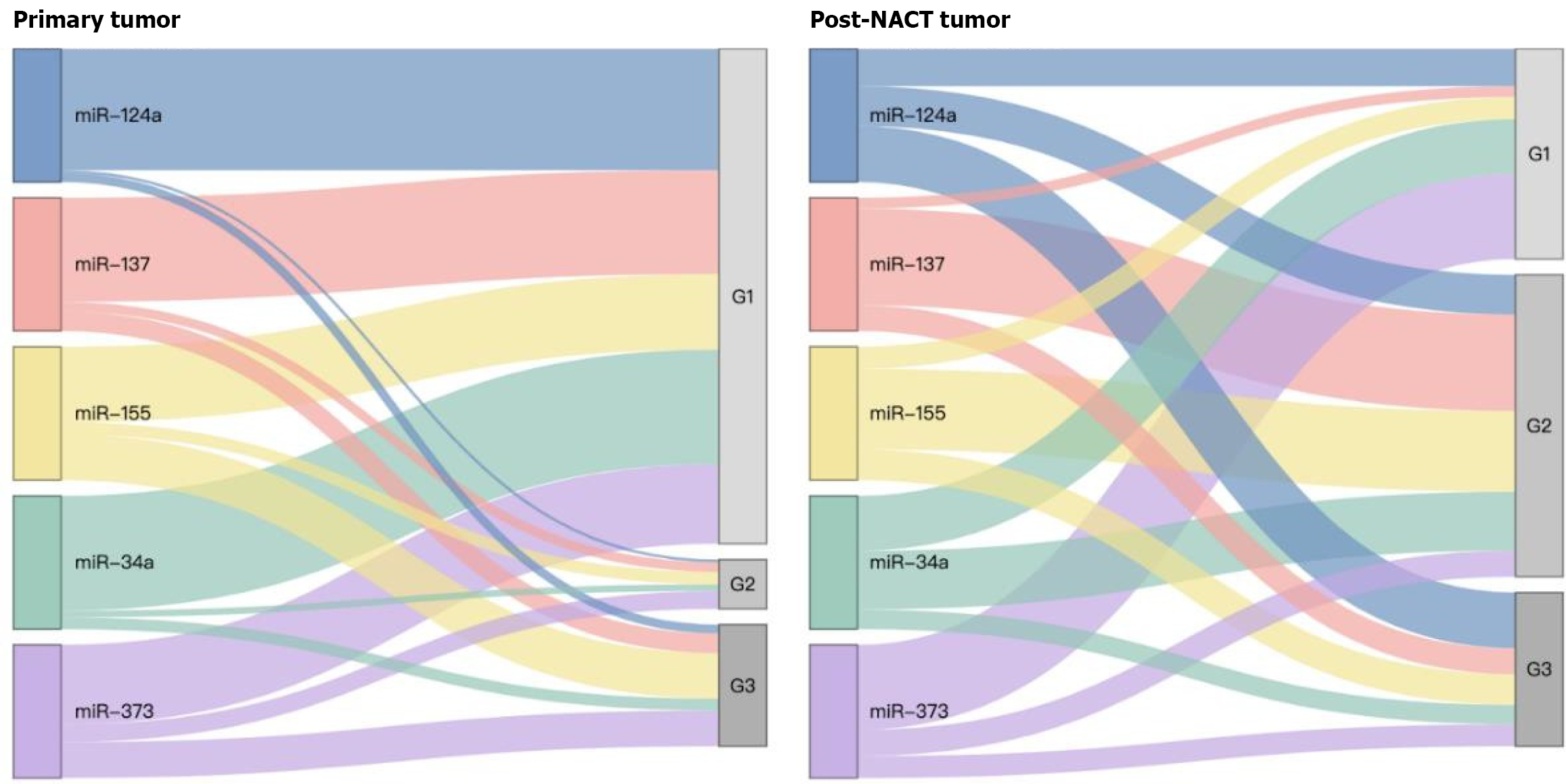
Figure 1 Changes in microRNA expression across tumor grades before and after neoadjuvant chemotherapy.
Sankey diagram illustrating the relative distribution of normalized expression levels of selected microRNAs across tumor grades (G1, G2, G3) in primary tumors (left) and post-neoadjuvant chemotherapy tumors (right). NACT: Neoadjuvant chemotherapy.
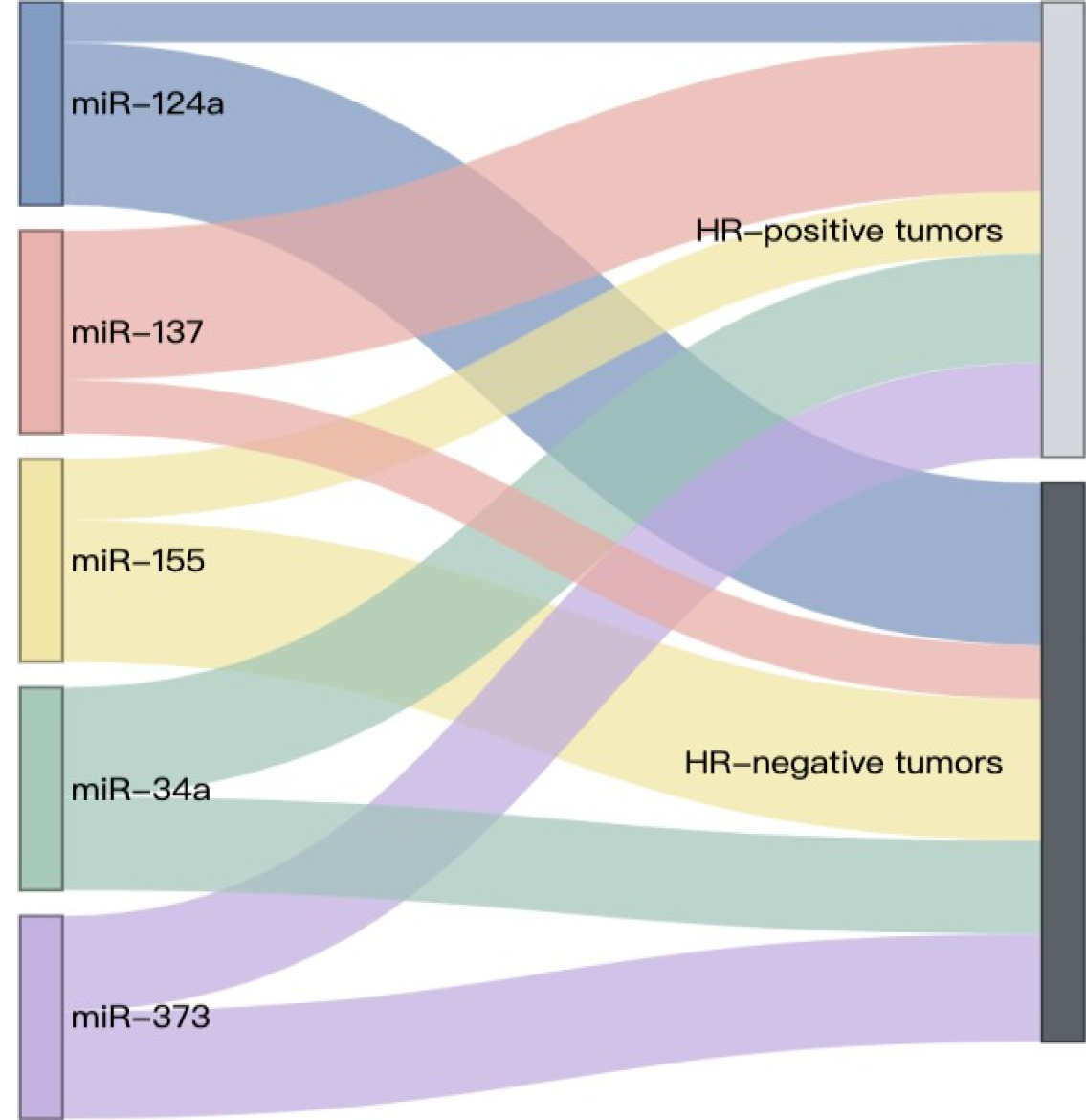
Figure 2 Visualization of microRNA distribution between hormone receptor-positive and hormone receptor-negative breast tumors using a Sankey diagram.
Sankey diagram illustrates the relative distribution of normalized expression levels for selected miRNAs across hormone receptor-positive and hormone receptor-negative breast cancer subtypes. Each microRNA’s expression was normalized independently to enable meaningful visual comparison. This normalization ensures that expression patterns are comparable across clinical subtypes, regardless of absolute expression differences. HR: Hormone receptor.
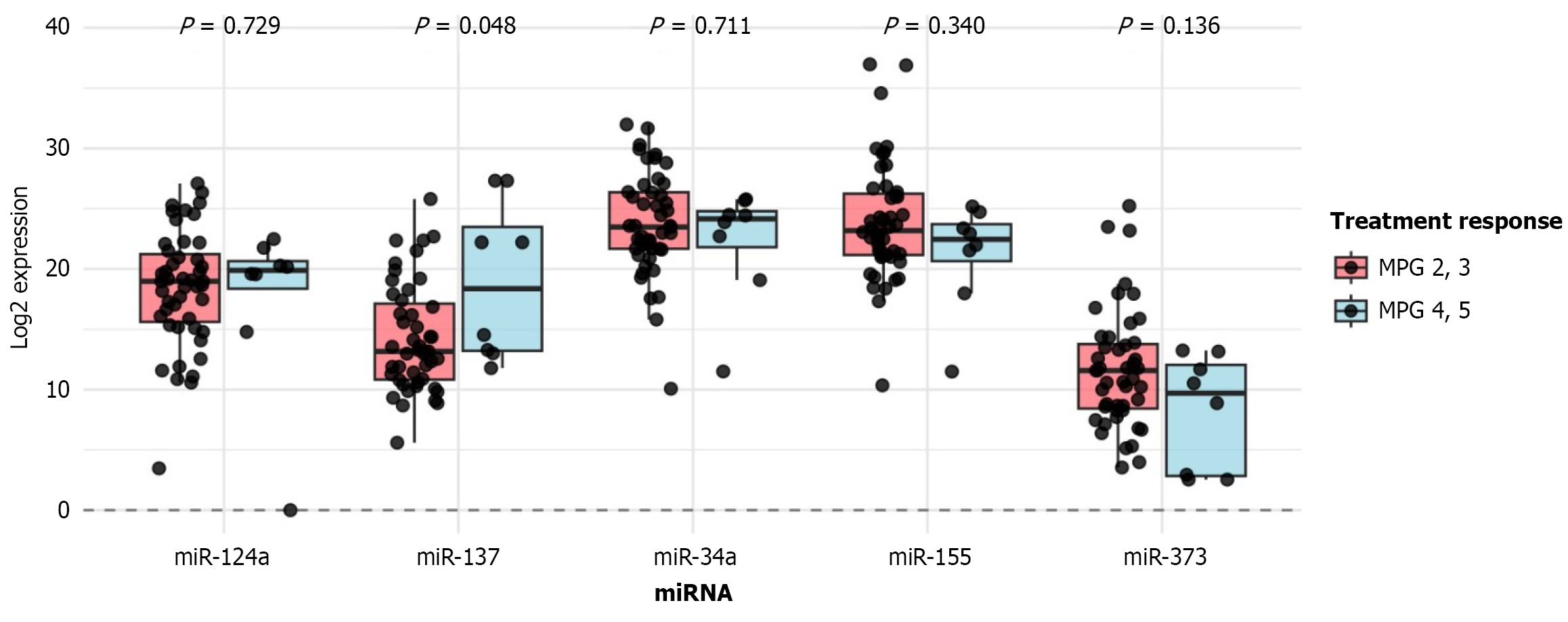
Figure 3 Expression levels of five microRNAs (miR-124a, miR-137, miR-34a, miR-155, and miR-373) in breast cancer patients stratified by treatment response according to the Miller-Payne grading system.
Miller-Payne grading 2-3: Partial response; Miller-Payne grading 4-5: Positive response. P values indicate between-group comparisons. MPG: Miller-Payne grading.
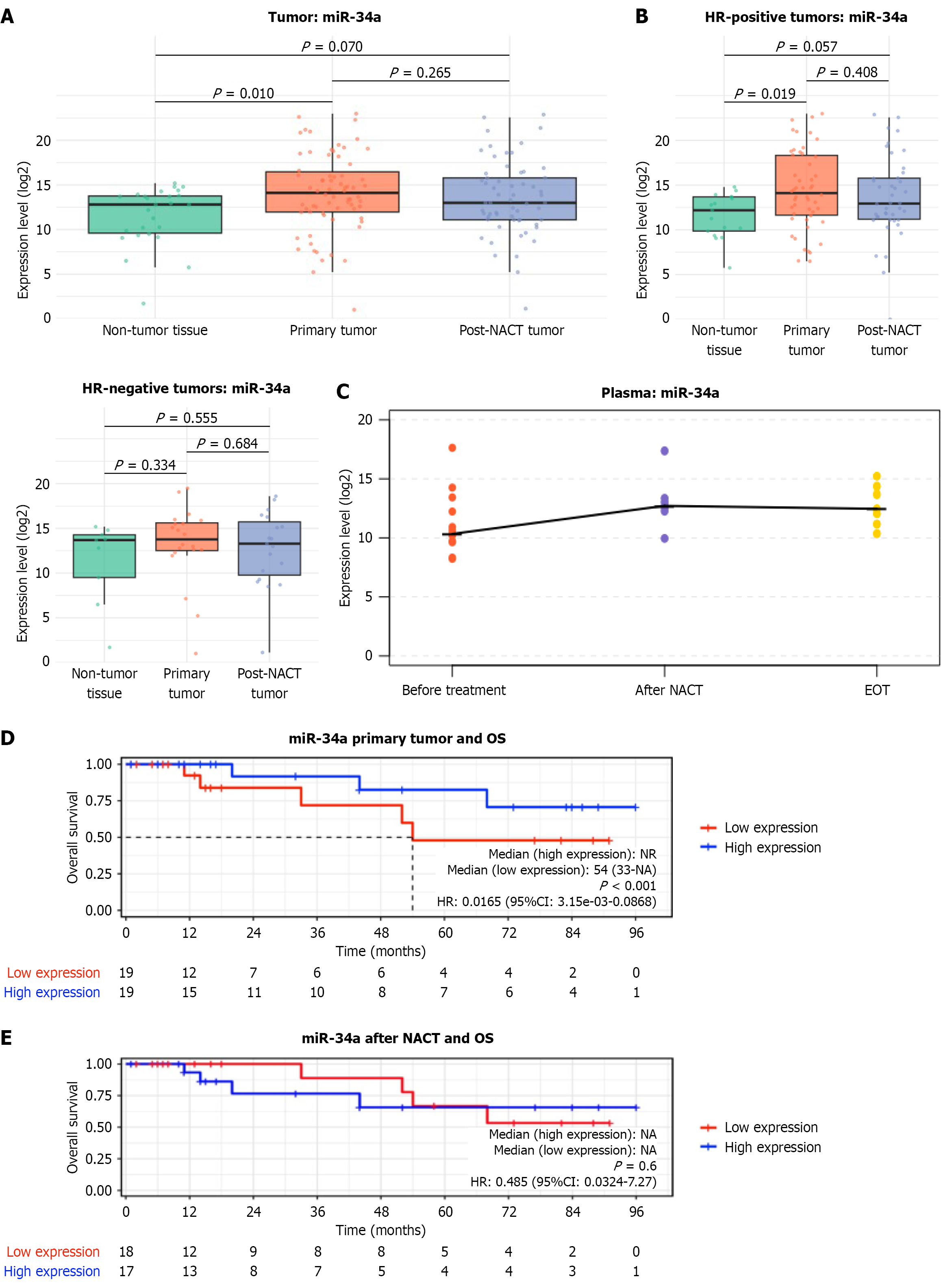
Figure 4 miR-34a expression.
A: MiR-34a levels in adjacent non-tumor tissue, primary tumor, and post-neoadjuvant chemotherapy tumor; B: Changes in miR-34a levels in hormone receptor-positive and hormone receptor-negative breast tumors; C: Plasma miR-34a levels at baseline, after neoadjuvant chemotherapy, and at the end of treatment; D: Overall survival according to miR-34a expression in primary breast tumors. Patients were stratified into high and low expression groups. Survival probabilities were calculated using the Kaplan-Meier method, with cumulative hazard functions estimated via the Nelson-Meier estimator; E: Overall survival according to miR-34a expression after neoadjuvant chemotherapy. Patients were stratified into high and low expression groups. NACT: Neoadjuvant chemotherapy; EOT: End of treatment; HR: Hormone receptor; OS: Overall survival; NR: Not reached; NA: Not applicable; HR: Hazard ratios; CI: Confidence interval.
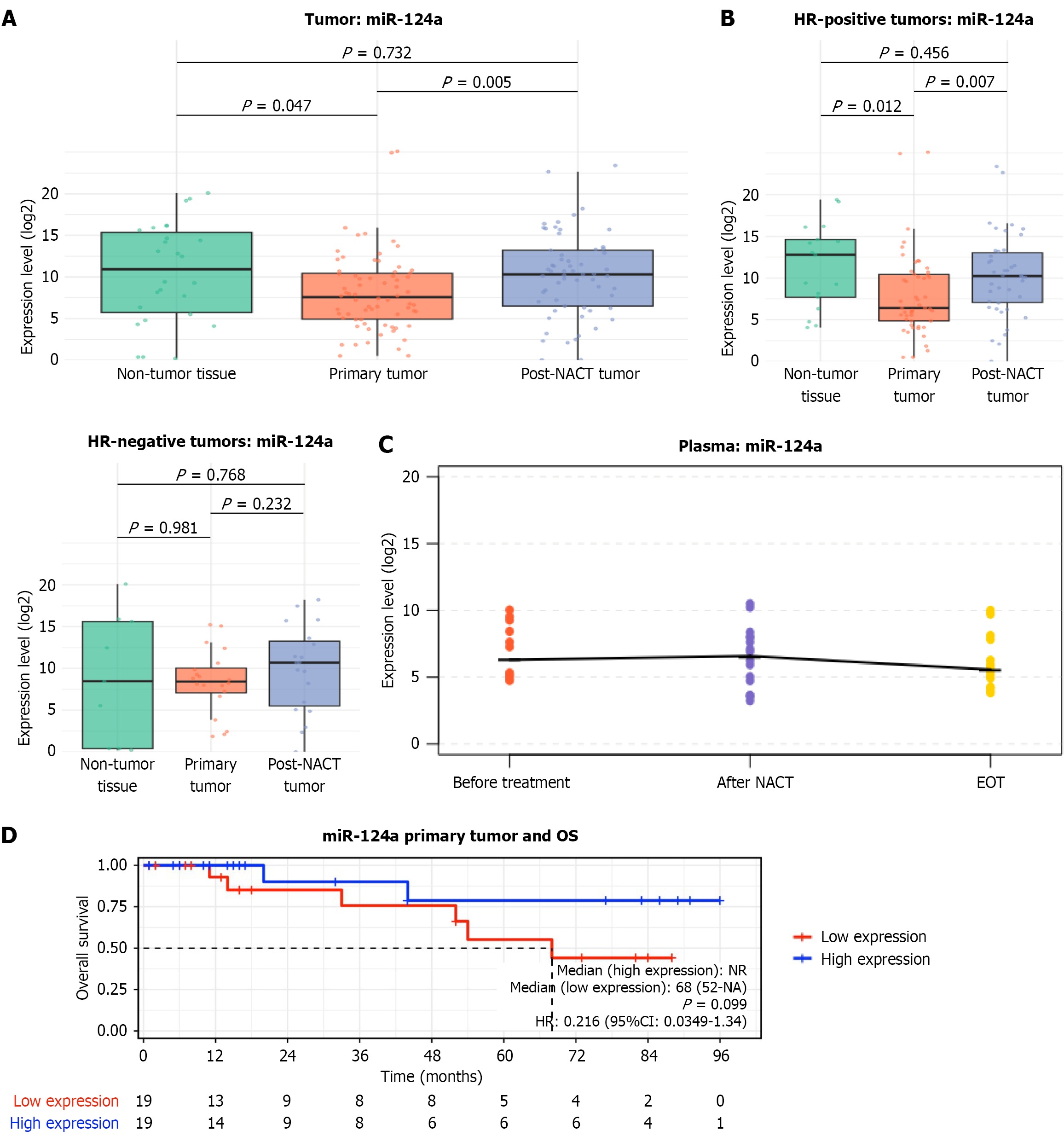
Figure 5 miR-124a expression.
A: MiR-124a levels in adjacent non-tumor tissue, primary tumor, and post-neoadjuvant chemotherapy tumor; B: Changes in miR-124a levels in hormone receptor-positive and hormone receptor-negative breast tumors; C: Plasma miR-124a levels at baseline - after neoadjuvant chemotherapy, and at the end of treatment; D: Overall survival according to miR-124a expression in primary breast tumors. Patients were stratified into high and low expression groups. Survival probabilities were calculated using the Kaplan-Meier method, with cumulative hazard functions estimated via the Nelson-Meier estimator. NACT: Neoadjuvant chemotherapy; EOT: End of treatment; HR: Hormone receptor; OS: Overall survival; NR: Not reached; NA: Not applicable; HR: Hazard ratios; CI: Confidence interval.
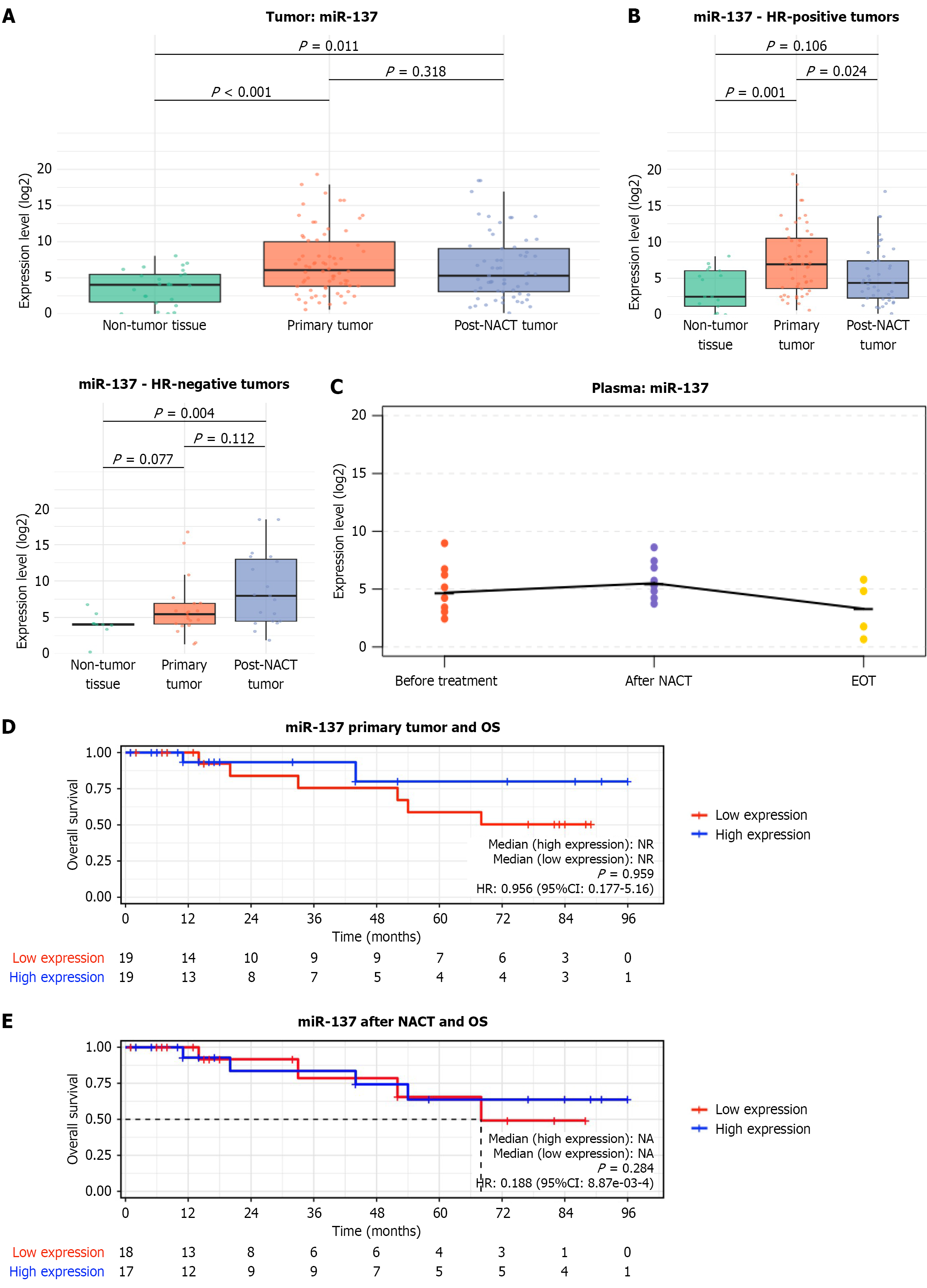
Figure 6 miR-137 expression.
A: MiR-137 levels in adjacent non-tumor tissue, primary tumors, and post-neoadjuvant chemotherapy tumors; B: Changes miR-137 expression in hormone receptor-positive and hormone receptor-negative breast tumors; C: Plasma miR-137 levels at baseline, after neoadjuvant chemotherapy, and at the end of treatment; D: Overall survival according to miR-137expression in primary breast tumors. Patients were stratified into high and low expression groups. Survival probabilities were calculated using the Kaplan-Meier method, with cumulative hazard functions estimated via the Nelson-Meier estimator; E: Overall survival according to miR-137 expression after neoadjuvant chemotherapy. Patients were stratified into high and low expression groups. NACT: Neoadjuvant chemotherapy; EOT: End of treatment; HR: Hormone receptor; OS: Overall survival; NR: Not reached; NA: Not applicable; HR: Hazard ratios; CI: Confidence interval.
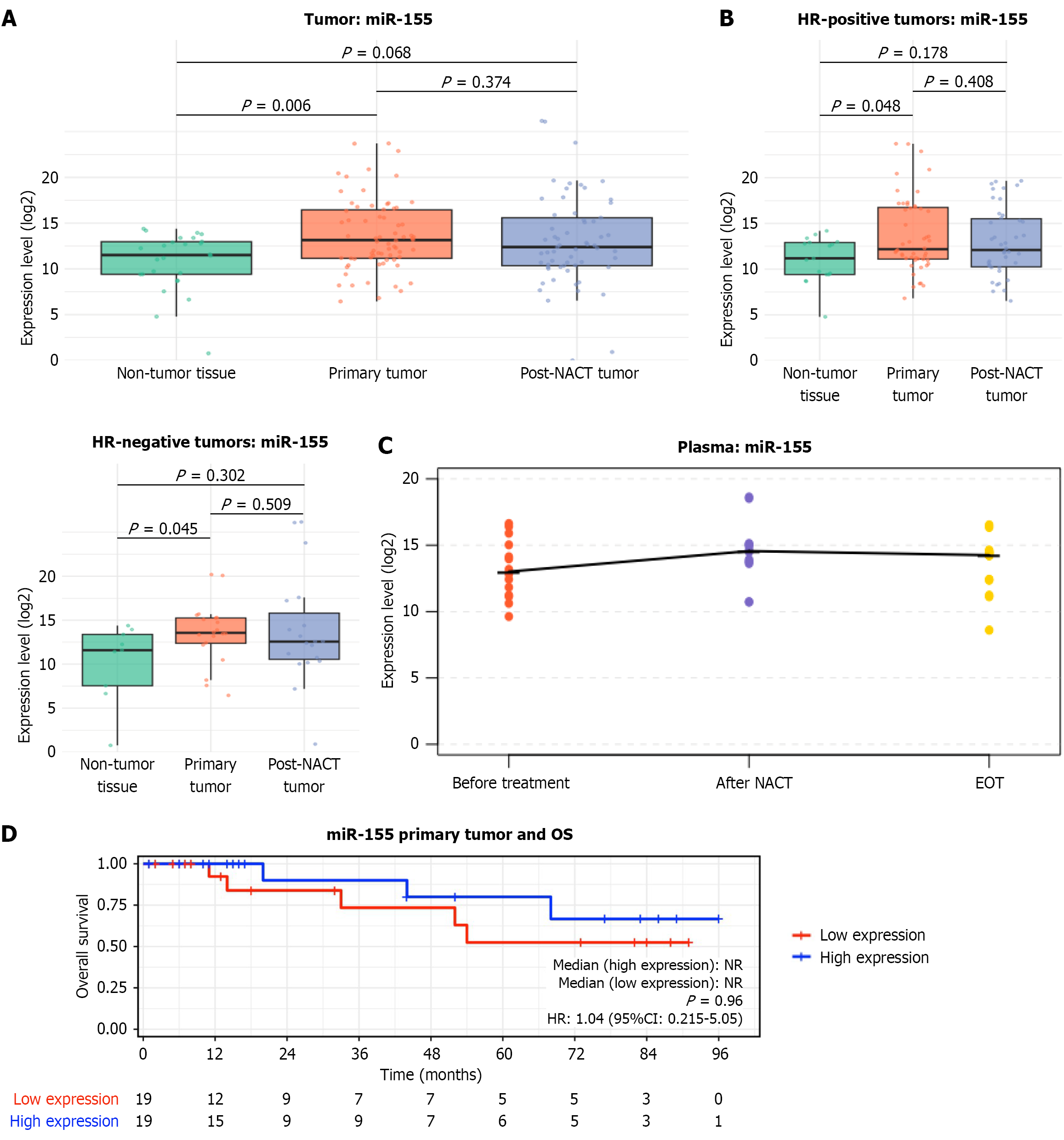
Figure 7 miR-155 expression.
A: MiR-155 levels in adjacent non-tumor tissue, primary tumors, and post-neoadjuvant chemotherapy tumor samples; B: Changes in miR-155 levels in hormone receptor-positive and hormone receptor-negative breast tumors; C: Plasma miR-155 levels at baseline, after neoadjuvant chemotherapy, and at the end of treatment; D: Overall survival according to miR-155 expression in primary breast tumors. Patients were stratified into high and low expression groups. Survival probabilities were calculated using the Kaplan-Meier method, with cumulative hazard functions estimated via the Nelson-Meier estimator. NACT: Neoadjuvant chemotherapy; EOT: End of treatment; HR: Hormone receptor; OS: Overall survival; NR: Not reached; NA: Not applicable; HR: Hazard ratios; CI: Confidence interval.
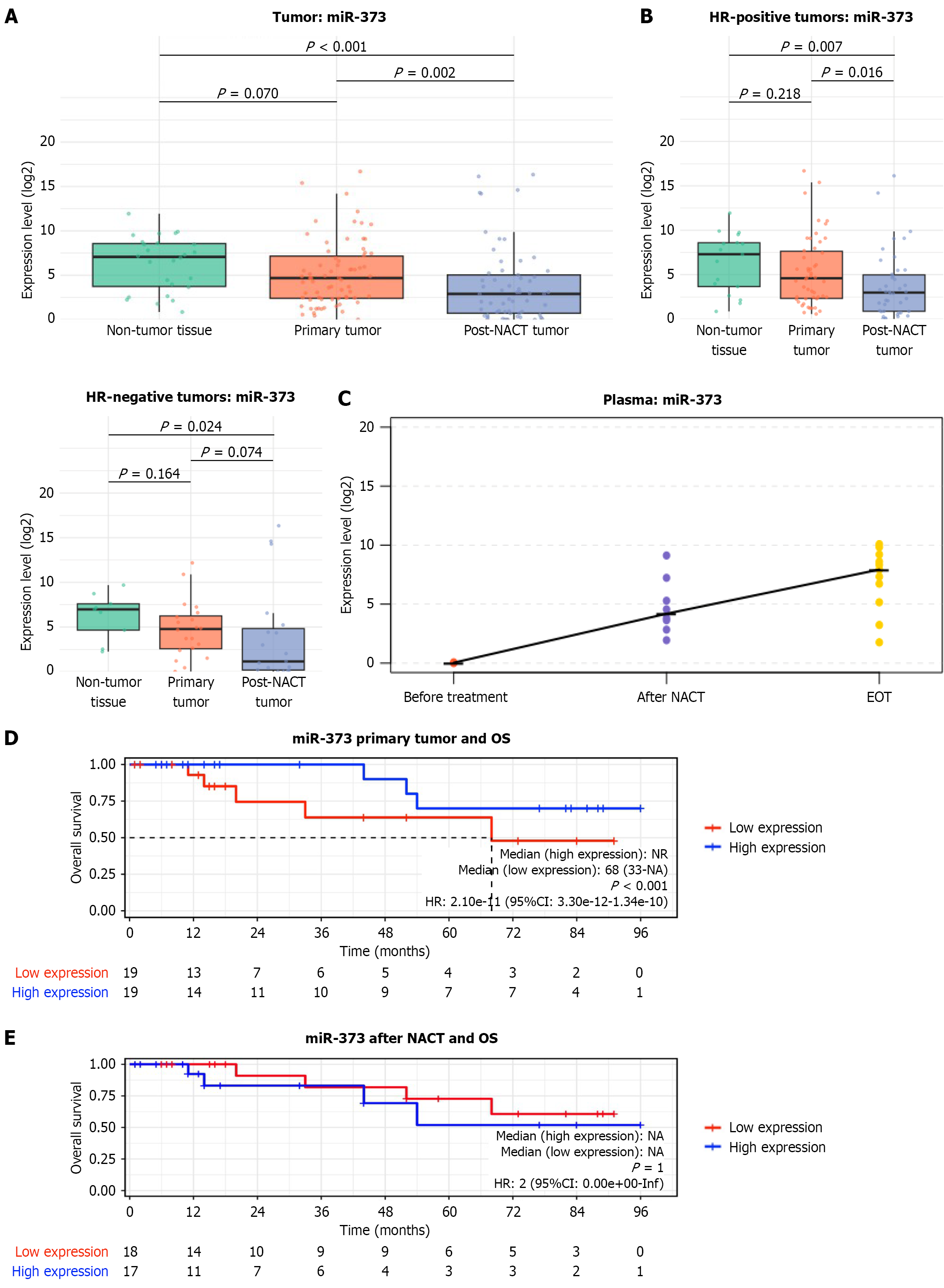
Figure 8 miR-373 expression.
A: MiR-373 levels in adjacent non-tumor tissue, primary tumors, and post-neoadjuvant chemotherapy tumor samples; B: Changes in miR-373 levels in hormone receptor-positive and hormone receptor-negative breast tumors; C: Plasma miR-373 levels at baseline, after neoadjuvant chemotherapy, and at the end of treatment; D: Overall survival according to miR-373 expression in primary breast tumors. Patients were stratified into high and low expression groups. Survival probabilities were calculated using the Kaplan-Meier method, with cumulative hazard functions estimated via the Nelson-Meier estimator; E: Overall survival according to miR-373 expression after neoadjuvant chemotherapy. Patients were stratified into high and low expression groups. NACT: Neoadjuvant chemotherapy; EOT: End of treatment; HR: Hormone receptor; OS: Overall survival; NR: Not reached; NA: Not applicable; HR: Hazard ratios CI: Confidence interval.
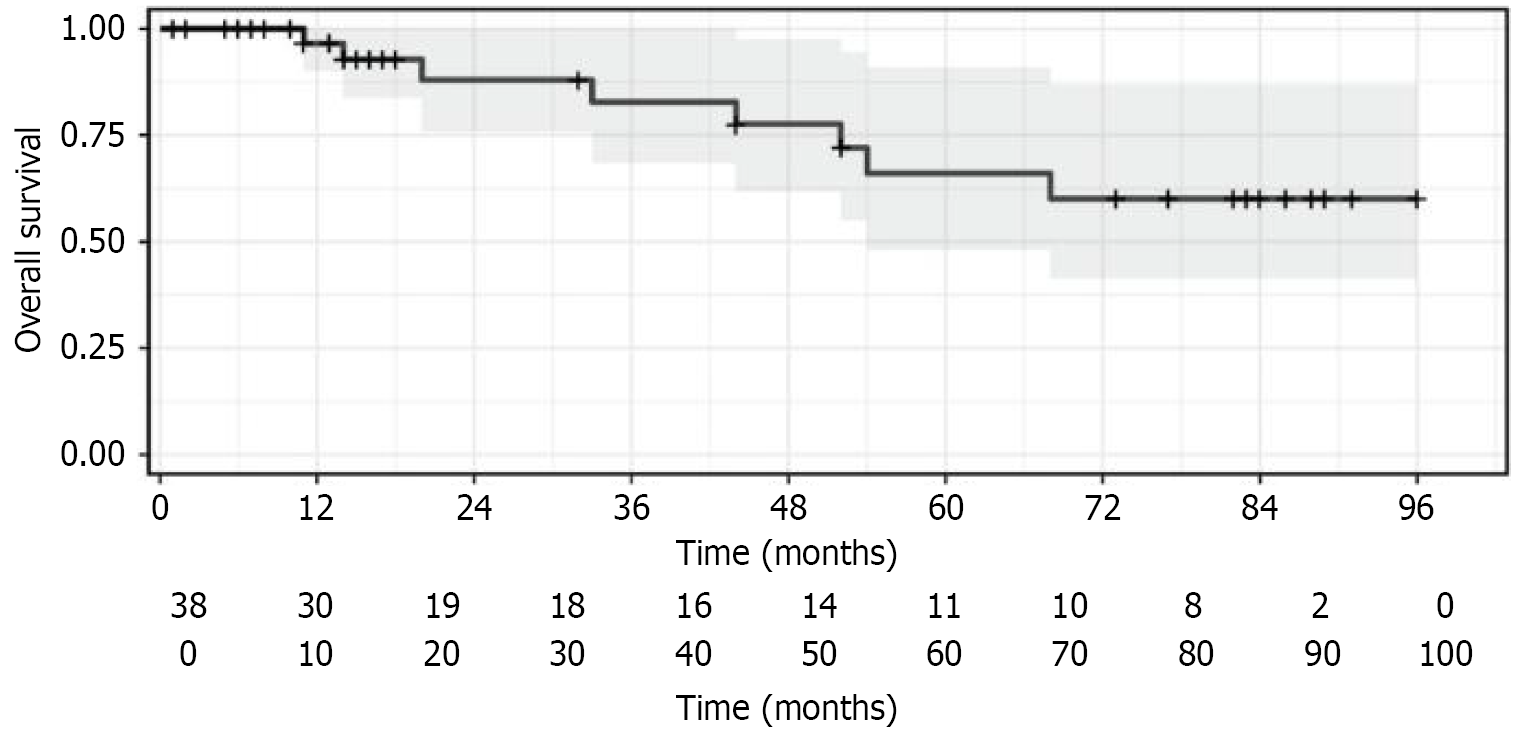
Figure 9
Kaplan-Meier curve illustrating overall survival in the study cohort.
- Citation: Ryspayeva D, Seyhan AA, Mu K, Liu M, Purcell C, MacDonald WJ, Halytskiy V, Drevytska T, Inomistova M, Khranovska N, Potorocha O, Taran L, Sumkina O, Smolanka Sr I, El-Deiry WS. Longitudinal microRNA profiles in breast cancer tissue and plasma: Associations with hormone receptors, response, and survival. World J Clin Oncol 2026; 17(4): 115287
- URL: https://www.wjgnet.com/2218-4333/full/v17/i4/115287.htm
- DOI: https://dx.doi.org/10.5306/wjco.v17.i4.115287