
















©The Author(s) 2026.
World J Clin Oncol. Feb 24, 2026; 17(2): 114298
Published online Feb 24, 2026. doi: 10.5306/wjco.v17.i2.114298
Published online Feb 24, 2026. doi: 10.5306/wjco.v17.i2.114298
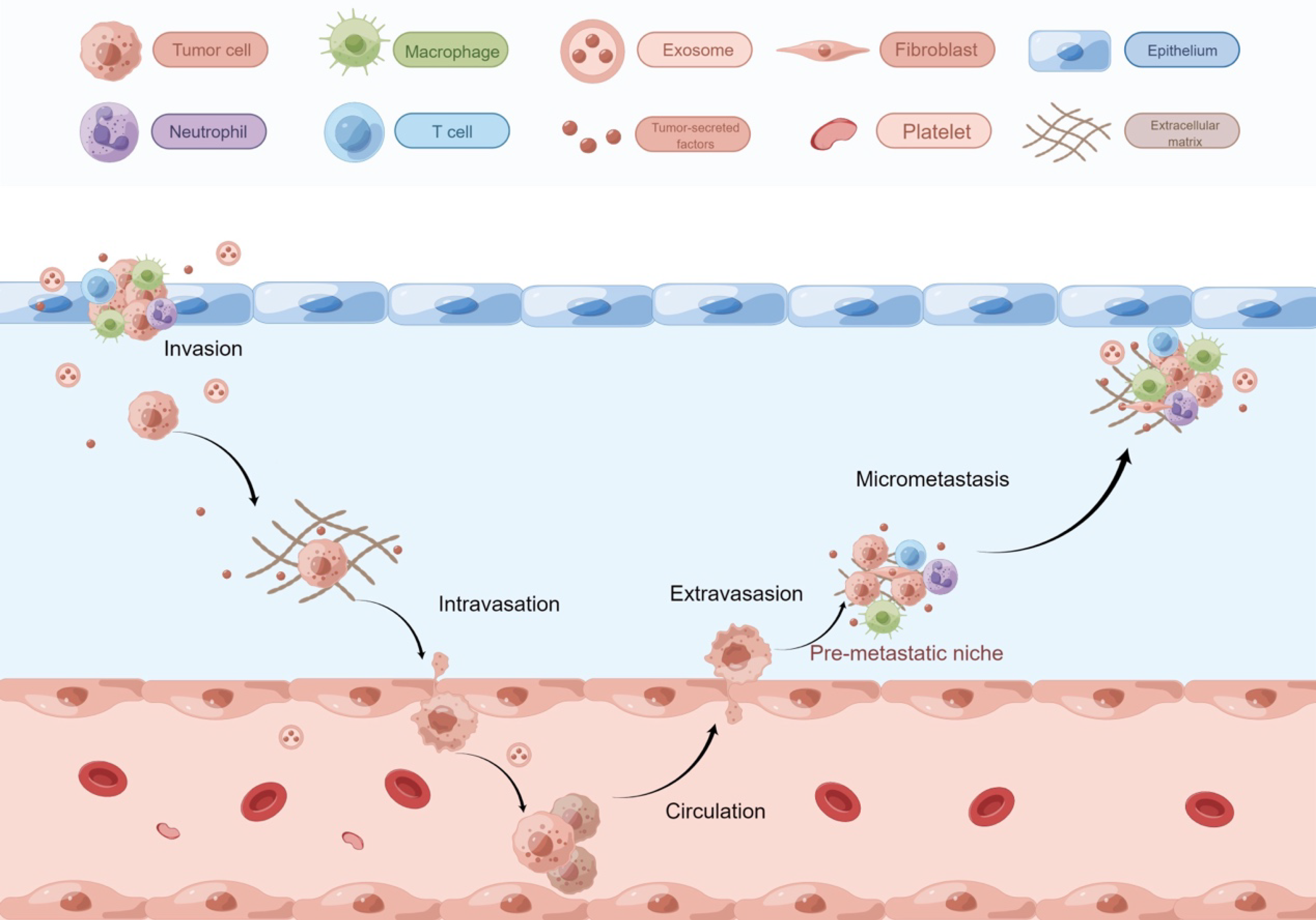
Figure 1 Mechanistic insights into tumor microenvironment’s role in metastatic progression, from invasion to micrometastasis.
Created with BioRender.
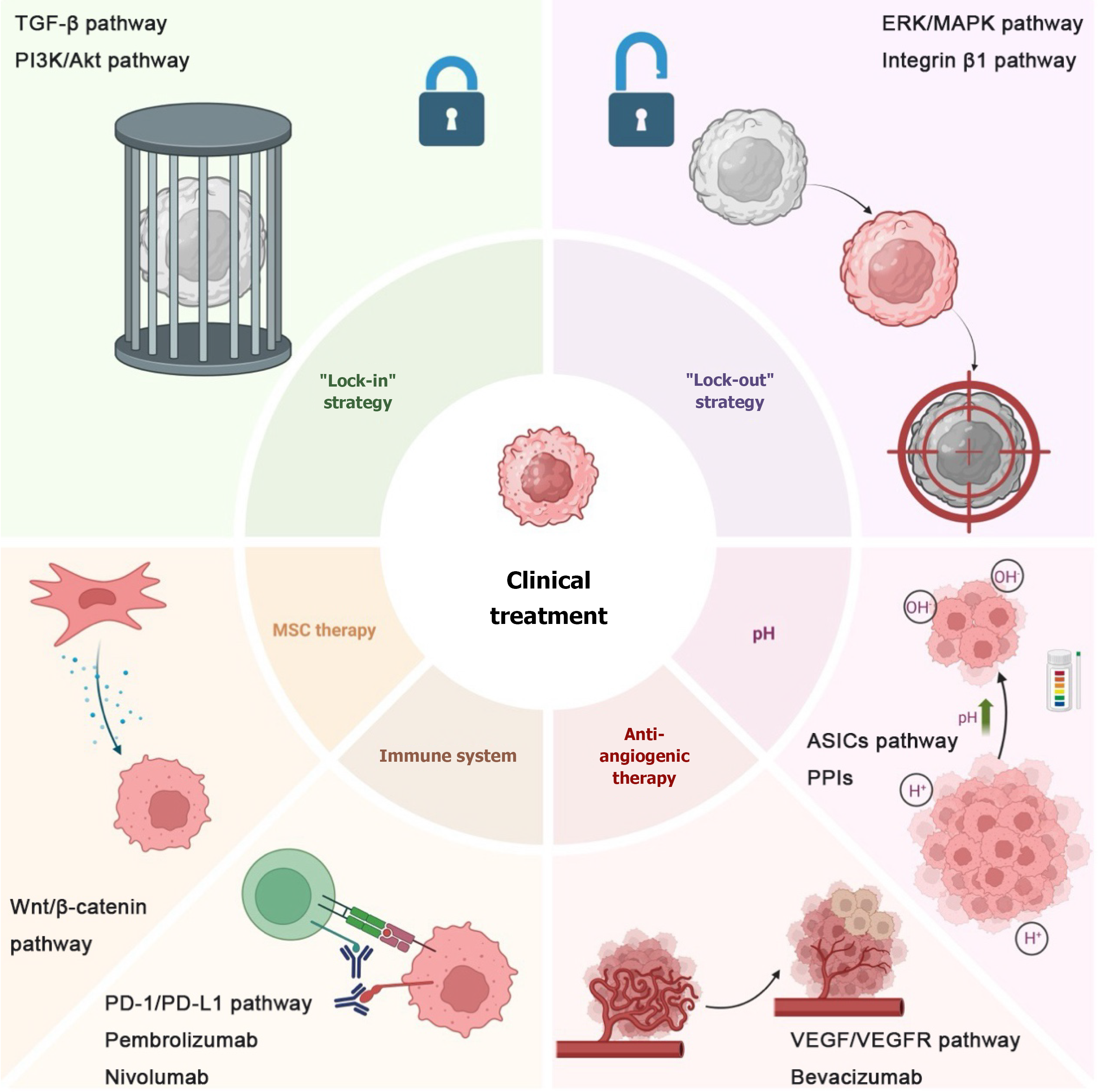
Figure 2 Strategies and approaches for targeting tumor dormancy in clinical treatments.
There are diverse therapeutic strategies targeting tumor dormancy to prevent cancer recurrence and metastasis. The “lock-in” strategy aims to maintain tumor cells in a permanent dormant state to inhibit reactivation. The “lock-out” strategy seeks to awaken dormant cells for heightened sensitivity to conventional treatments. Other approaches target components of the tumor microenvironment, including mesenchymal stem cell therapy, immune system modulation, anti-angiogenic therapy, and altering tumor pH levels. Created with BioRender. TGF-β: Transforming growth factor β; PI3K: Phosphatidylinositol 3-kinase; Akt: Protein kinase B; ERK: Extracellular regulated protein kinases; MAPK: Mitogen-activated protein kinase; PD-1: Programmed death receptor 1; PD-L1: Programmed death ligand 1; MSC: Mesenchymal stem cell; ASICs: Acid-sensing ion channels; PPIs: Proton pump inhibitors; VEGF: Vascular endothelial growth factor; VEGFR: Vascular endothelial growth factor receptor.
- Citation: Qian YR, Liu P, Xu H, Lv Y, Zhang XF, Xiang JX. Microenvironment plays a critical role in modulating tumor cell dormancy: Current perspectives and potential treatment options. World J Clin Oncol 2026; 17(2): 114298
- URL: https://www.wjgnet.com/2218-4333/full/v17/i2/114298.htm
- DOI: https://dx.doi.org/10.5306/wjco.v17.i2.114298