
















©The Author(s) 2026.
World J Gastrointest Pharmacol Ther. Mar 5, 2026; 17(1): 111615
Published online Mar 5, 2026. doi: 10.4292/wjgpt.v17.i1.111615
Published online Mar 5, 2026. doi: 10.4292/wjgpt.v17.i1.111615
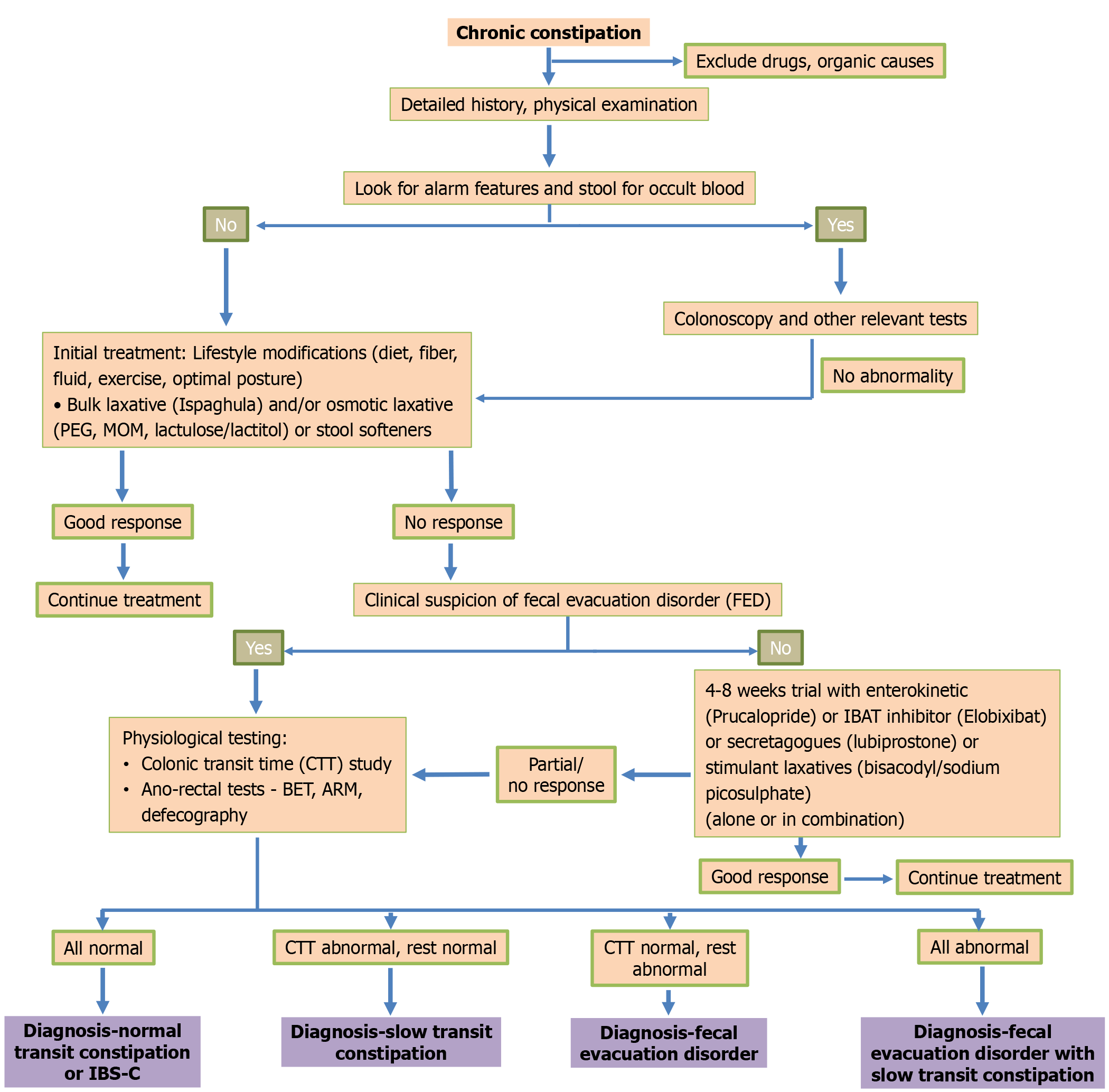
Figure 1 Diagnostic approach for evaluating chronic constipation.
PEG: Polyethylene glycol; MOM: Milk of magnesia; FED: Fecal evacuation disorder; CTT: Colonic transit time; ARM: Anorectal manometry; BET: Balloon expulsion test; IBAT: Ileal bile acid transporter; IBS-C: Irritable bowel syndrome-constipation.
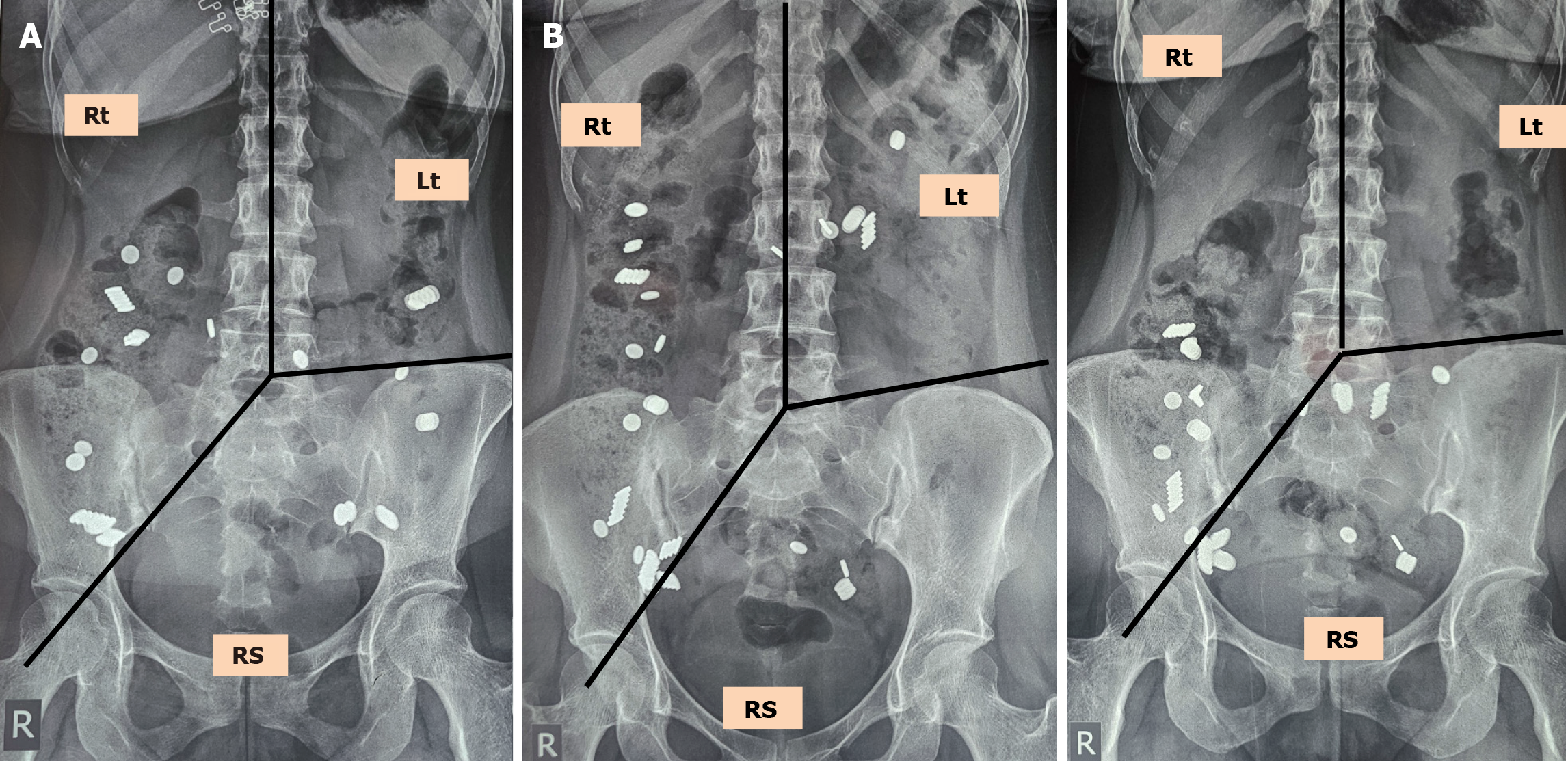
Figure 2 The X-ray.
A: Plain abdominal radiograph for colonic transit time assessment using radiopaque markers. Three lines need to be drawn to divide the colon into three segments: A vertical line up to the middle of the body of the fifth lumbar vertebra, a line from the body of the fifth lumbar vertebra to the right pelvic outlet, and a line from the fifth lumbar vertebra to the anterior superior iliac crest on the left. These lines divide the colon into three segments: The right colon, left colon, and rectosigmoid (RS) colon. This distribution helps localize segmental delays in colonic transit and differentiates between normal transit, slow transit constipation, and RS outlet dysfunction; B: Comparison of supine (left) and erect (right) abdominal radiographs in a patient undergoing colonic transit time evaluation using radiopaque markers. Although the erect X-ray suggested accumulation of markers in the RS region, the supine film revealed that many markers presumed to be in the RS have shifted from the transverse colon and should be reassigned to the right and left colon. This discrepancy illustrates how gravity-dependent descent of the transverse colon in the erect position can lead to misclassification of marker location and result in a false diagnosis of pelvic floor dysfunction. In this case correct interpretation supports a diagnosis of slow transit constipation. Additionally, accumulation of markers in the cecal region may be erroneously attributed to the RS segment, further emphasizing the importance of anatomical correlation in marker assignment. Rt: Right; Lt: Left; RS: Rectosigmoid.
- Citation: Kalra S, Goyal MK, Goyal K, Singh R, Vuthaluru AR, Goyal O. Unlocking the colon clock: Bridging the gap in colonic transit time studies for optimal management of chronic constipation. World J Gastrointest Pharmacol Ther 2026; 17(1): 111615
- URL: https://www.wjgnet.com/2150-5349/full/v17/i1/111615.htm
- DOI: https://dx.doi.org/10.4292/wjgpt.v17.i1.111615