
















Copyright: ©Author(s) 2026.
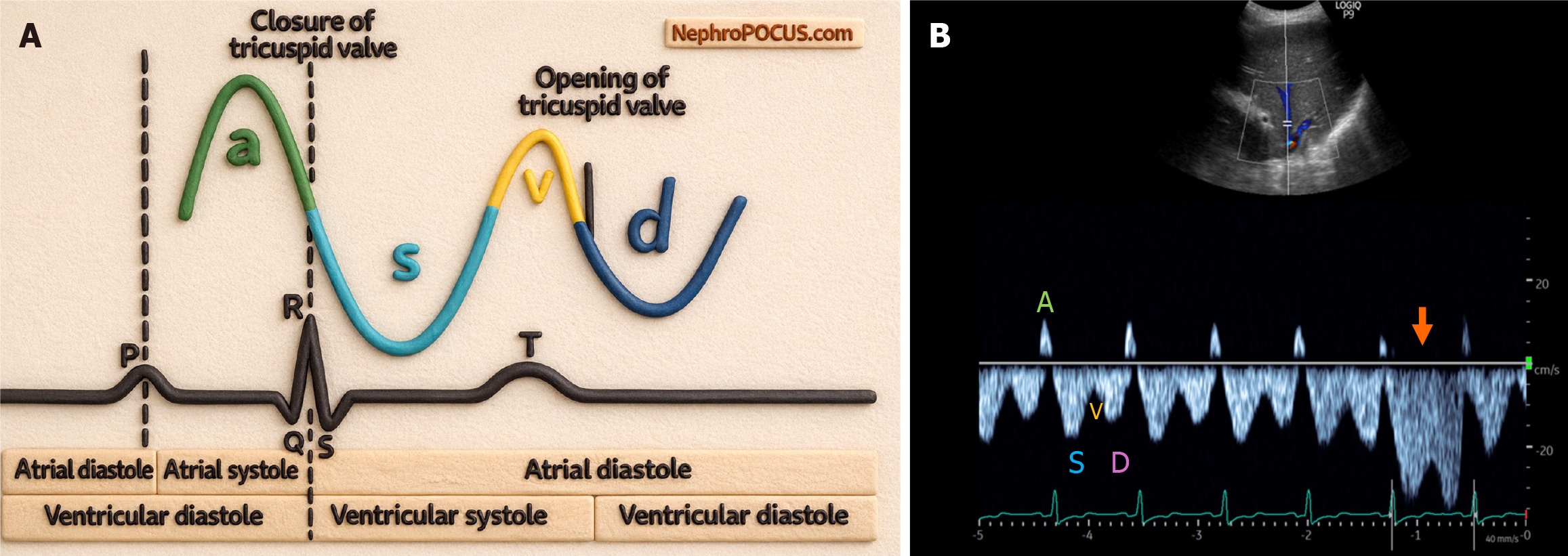
Figure 1 Hepatic vein Doppler waveforms with electrocardiographic correlation.
A: Schematic representation; B: Representative waveforms. Arrow in panel B indicates inspiratory increase in forward velocities. Figure are reproduced with permission from NephroPOCUS.com. The corresponding author (Abhilash Koratala), as the owner of the website, has authorized the use of these figures in this manuscript by all authors. P Proof of ownership can be found on the ‘About’ page of the website: https://nephropocus.com/about/.
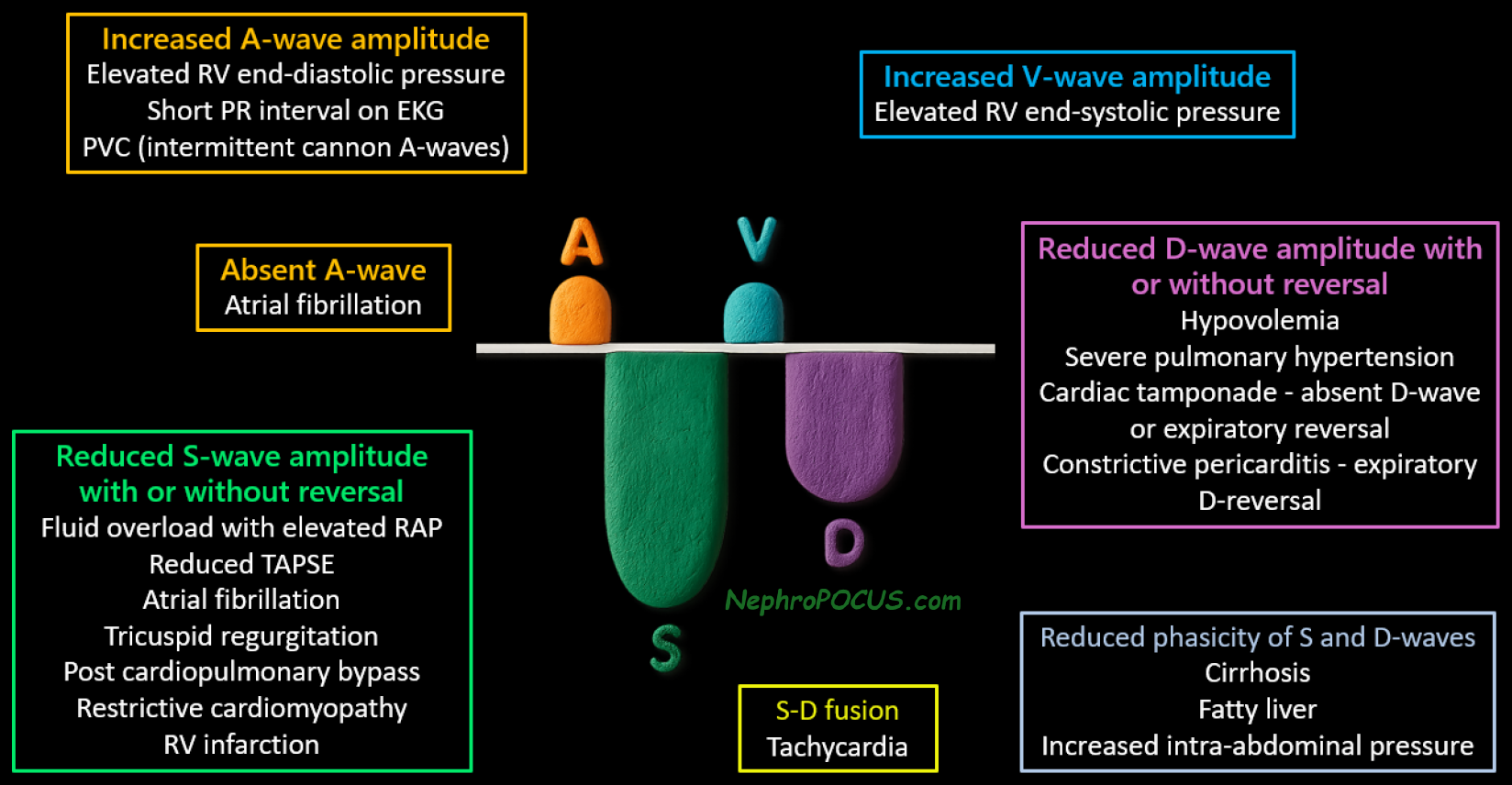
Figure 2 Key determinants of hepatic vein Doppler waveform components.
Figure is reproduced with permission from NephroPOCUS.com. The corresponding author (Abhilash Koratala), as the owner of the website, has authorized the use of these figures in this manuscript by all authors. Proof of ownership can be found on the ‘About’ page of the website: https://nephropocus.com/about/.
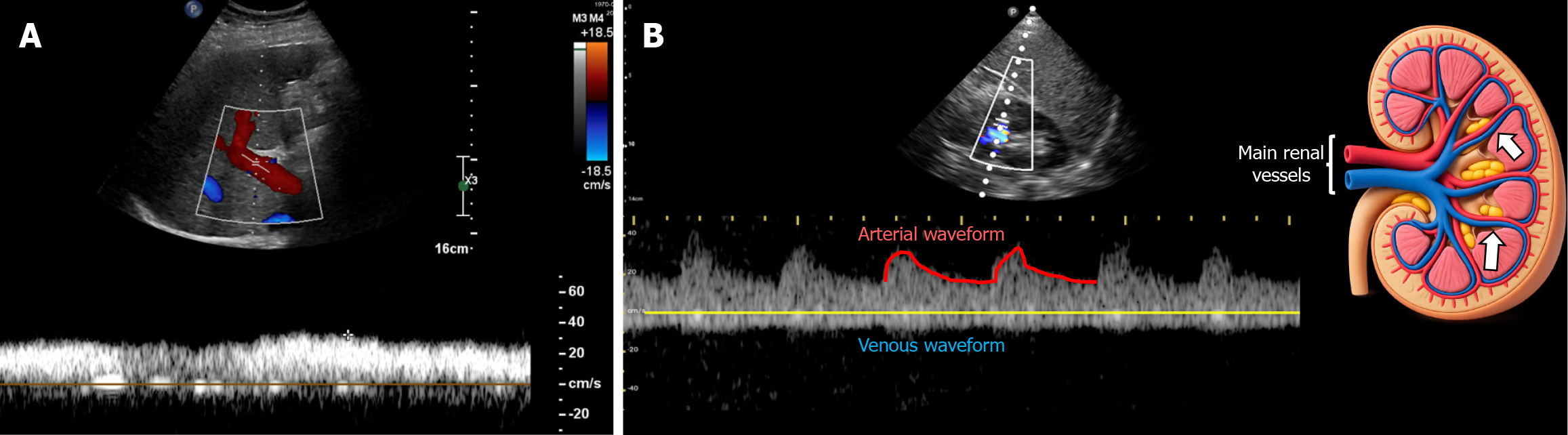
Figure 3 Doppler waveform.
A: Normal portal vein Doppler waveform demonstrating near-continuous flow with mild undulations above the baseline; B: Normal intrarenal venous Doppler waveform demonstrating continuous flow below the baseline with a concurrent arterial waveform above. The Doppler sample gate is positioned at the interlobar vessels, indicated by white arrows in the accompanying illustration.
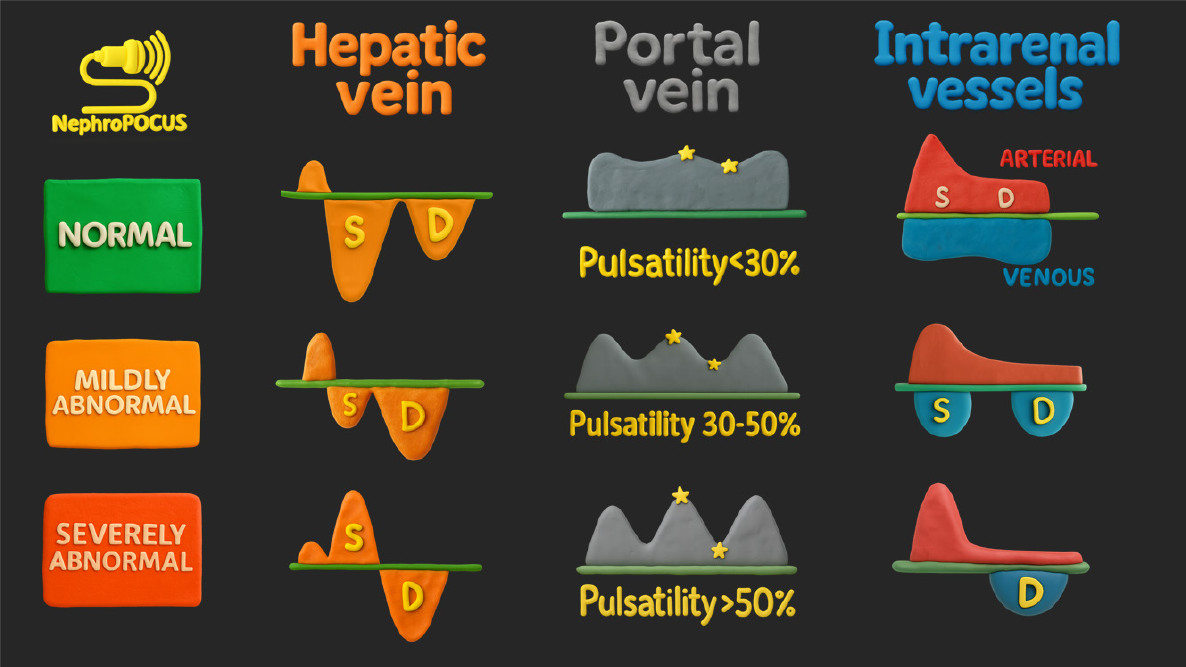
Figure 4 Schematic illustration of normal, mildly abnormal, and severely abnormal Doppler patterns of the hepatic, portal, and intrarenal veins.
Panels are displayed side-by-side to facilitate comparison of waveform evolution across severity grades. Figure are reproduced with permission from NephroPOCUS.com. The corresponding author (Abhilash Koratala), as the owner of the website, has authorized the use of these figures in this manuscript by all authors. Proof of ownership can be found on the ‘About’ page of the website: https://nephropocus.com/about/.
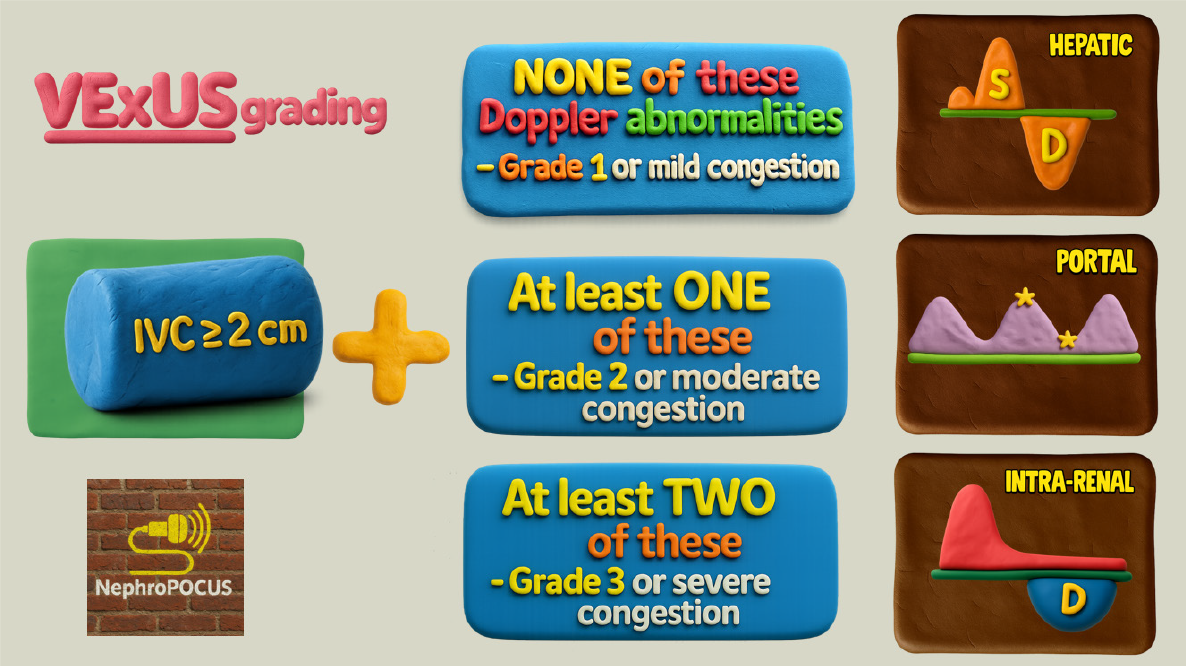
Figure 5 Venous excess ultrasound grading system.
Figure are reproduced with permission from NephroPOCUS.com. The corresponding author (Abhilash Koratala), as the owner of the website, has authorized the use of these figures in this manuscript by all authors. Proof of ownership can be found on the ‘About’ page of the website: https://nephropocus.com/about/. VExUS: Venous excess ultrasound.
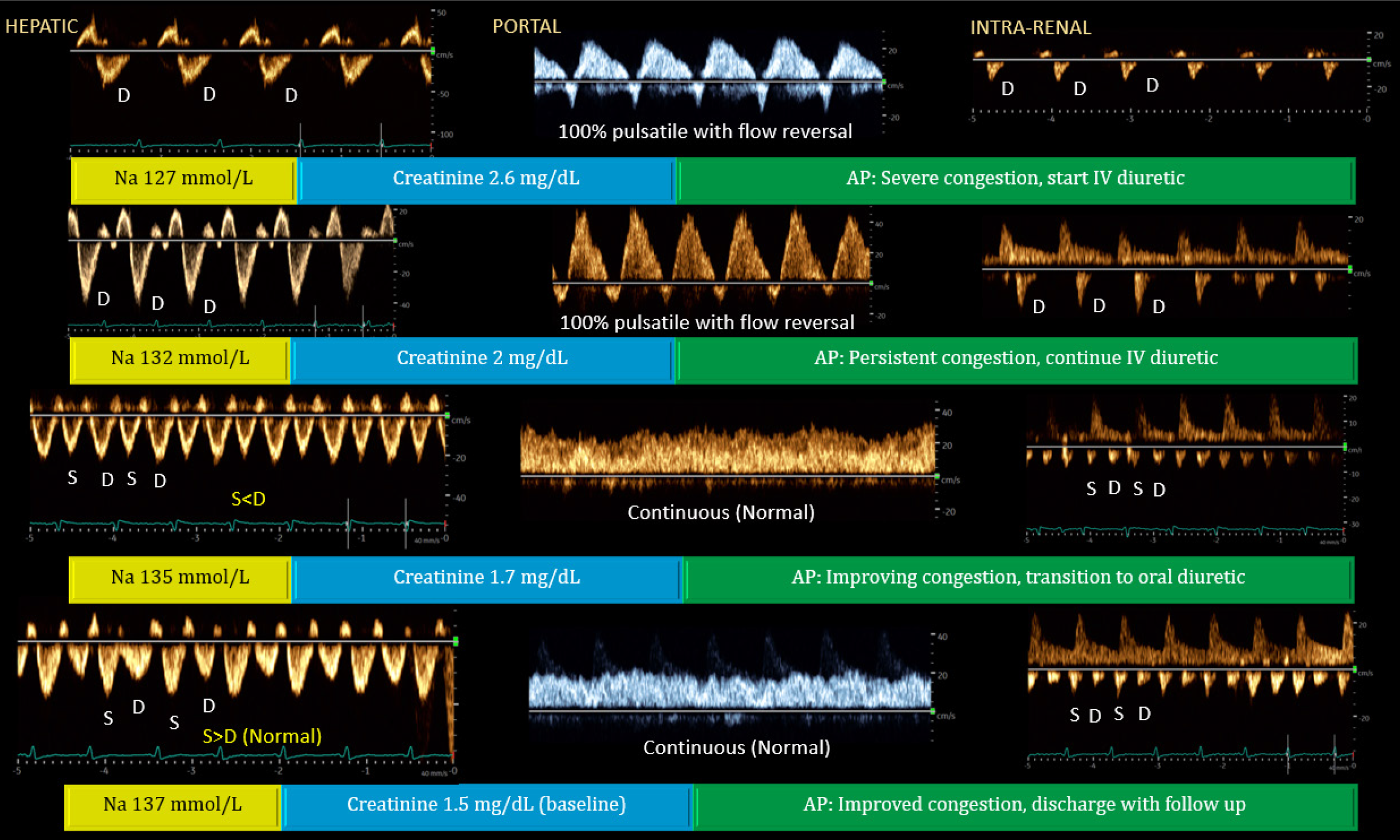
Figure 6 Serial venous Doppler waveforms demonstrate stepwise improvement, from top to bottom, in a patient with acute kidney injury and hyponatremia, accompanied by parallel improvement in serum sodium and creatinine levels.
As shown, recovery of portal venous flow typically precedes normalization of hepatic and intrarenal venous waveforms, while renal venous abnormalities may persist longer due to residual interstitial edema. Na: Serum sodium; AP: Assessment and plan; S wave: Systolic wave; D wave: Diastolic wave. Citation: Koratala A, Ronco C, Kazory A. Multi-Organ Point-Of-Care Ultrasound in Acute Kidney Injury. Blood Purif 2022; 51: 967-971. Copyright © 2022, © 2022 S. Karger AG, Basel. Published by Karger Publishers. The authors have obtained the permission for figure using from the Karger Publishers (Supplementary material).
- Citation: Shah C, Shah D, Koratala A. Venous excess doppler ultrasound: What radiologists should know in 2026. World J Radiol 2026; 18(6): 119110
- URL: https://www.wjgnet.com/1949-8470/full/v18/i6/119110.htm
- DOI: https://dx.doi.org/10.4329/wjr.119110