
















Copyright: ©Author(s) 2026.
World J Radiol. Mar 28, 2026; 18(3): 118143
Published online Mar 28, 2026. doi: 10.4329/wjr.v18.i3.118143
Published online Mar 28, 2026. doi: 10.4329/wjr.v18.i3.118143
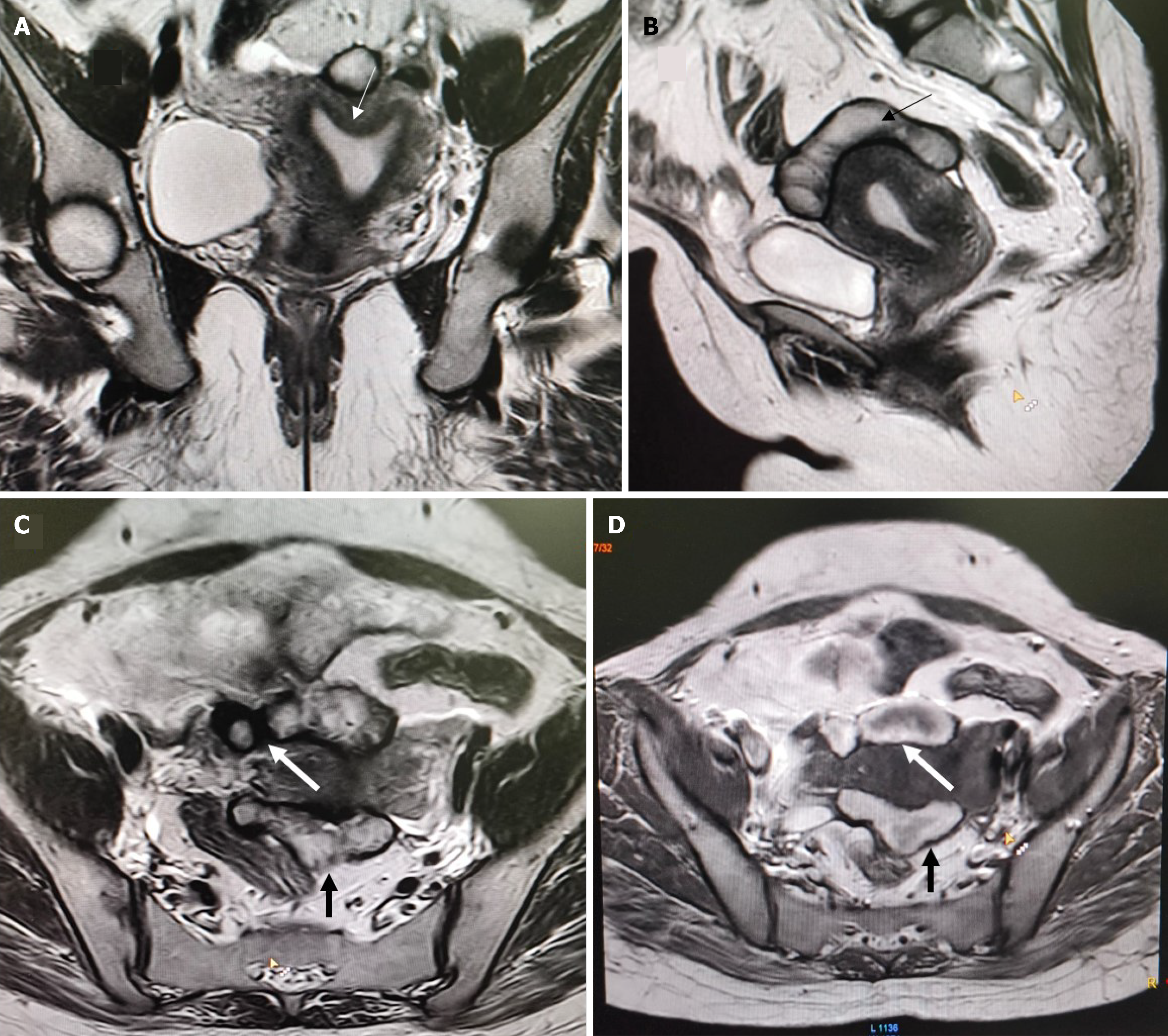
Figure 1 Arcuate uterus.
A: Coronal T2W image showing arcuate uterus morphology of internal indentation < 1 cm (arrow); B: Sagittal T2W image showing dilated left fallopian tube with hypointense rim and hematosalpinx (black arrow); C and D: Axial T2W (C) and axial T1W images (D) showing right (white thick arrows) and left (black thick arrow) endometriotic complex cysts coursing along anterior and posterior margins of uterus respectively with T1/T2 hyperintense signal consistent with blood products.
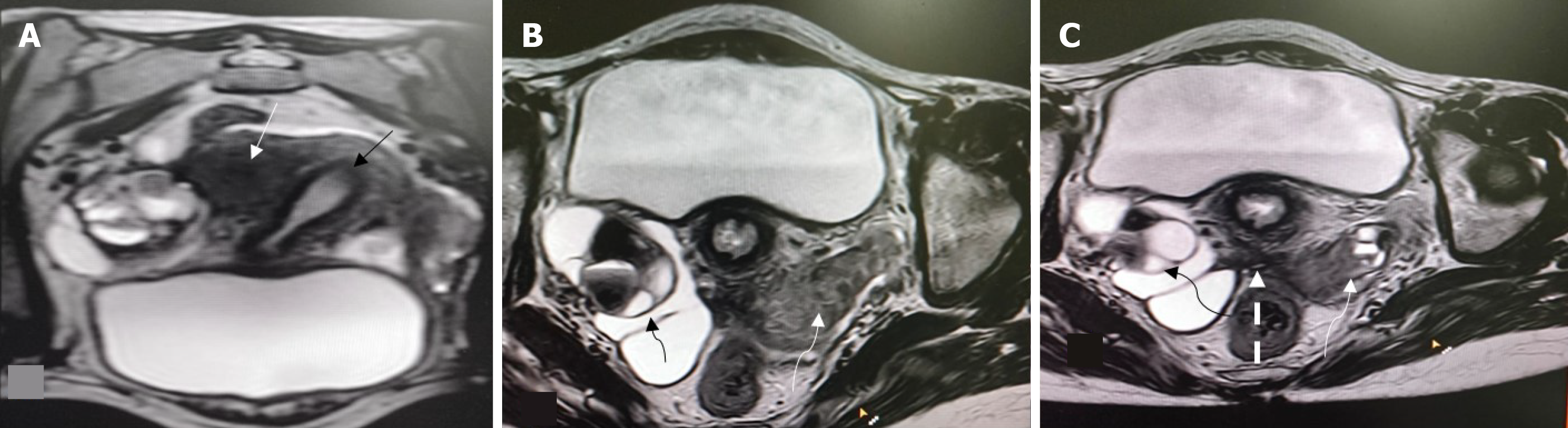
Figure 2 Unicornuate uterus with rudimentary horn.
A: Axial T2W image showing left sided unicornuate uterus (black arrow) with non-communicating right rudimentary horn (white arrow); B and C: Axial T2W image showing right tubo-ovarian endometriotic complex with blood fluid level (curved black arrows) and left tubo-ovarian endometriotic complex (curved white arrow). Both ovaries are abutting (dash arrow in C) each other posterior to uterus (kissing ovary sign) suggestive of deep pelvic endometriosis.
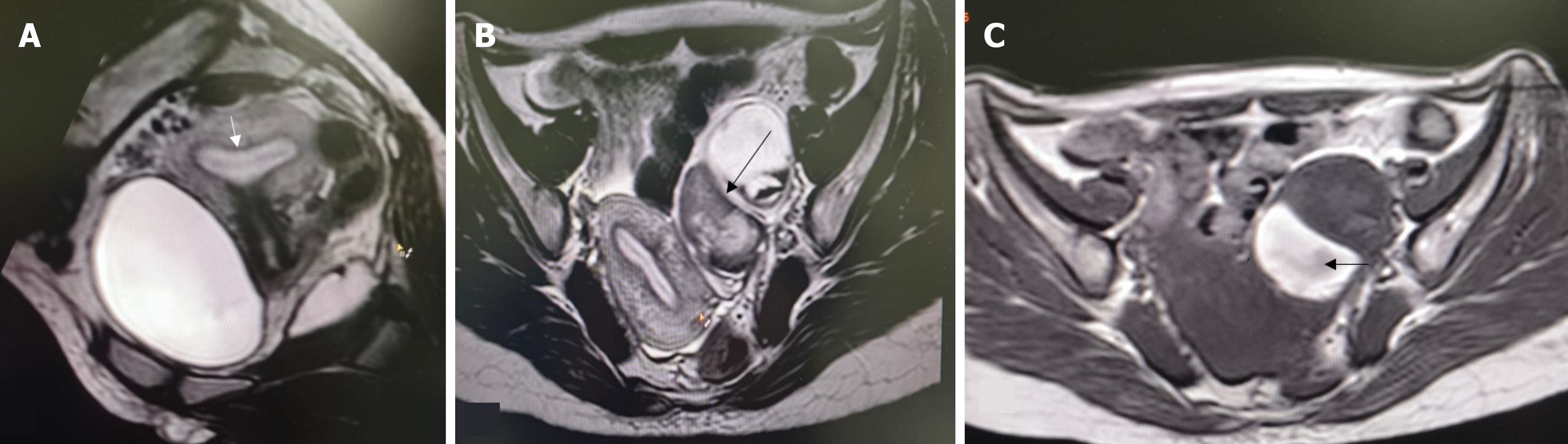
Figure 3 Arcuate uterus.
A: 3d T2W sagittal oblique image showing arcuate morphology of uterus (white arrow); B and C: Axial T2W image (B) and axial T1W image (C) showing left tubo-ovarian endometriotic complex with T1 hyperintense/T2 hypointense blood products (black arrow).
- Citation: Kumar I, Kumari S, Ojha R, Kumari R, Kushwaha K, Singh PK, Verma A. Characterization of endometriosis in patients with Mullerian anomalies using the Enzian classification: A retrospective cohort study. World J Radiol 2026; 18(3): 118143
- URL: https://www.wjgnet.com/1949-8470/full/v18/i3/118143.htm
- DOI: https://dx.doi.org/10.4329/wjr.v18.i3.118143