
















©The Author(s) 2026.
World J Cardiol. Jan 26, 2026; 18(1): 114108
Published online Jan 26, 2026. doi: 10.4330/wjc.v18.i1.114108
Published online Jan 26, 2026. doi: 10.4330/wjc.v18.i1.114108
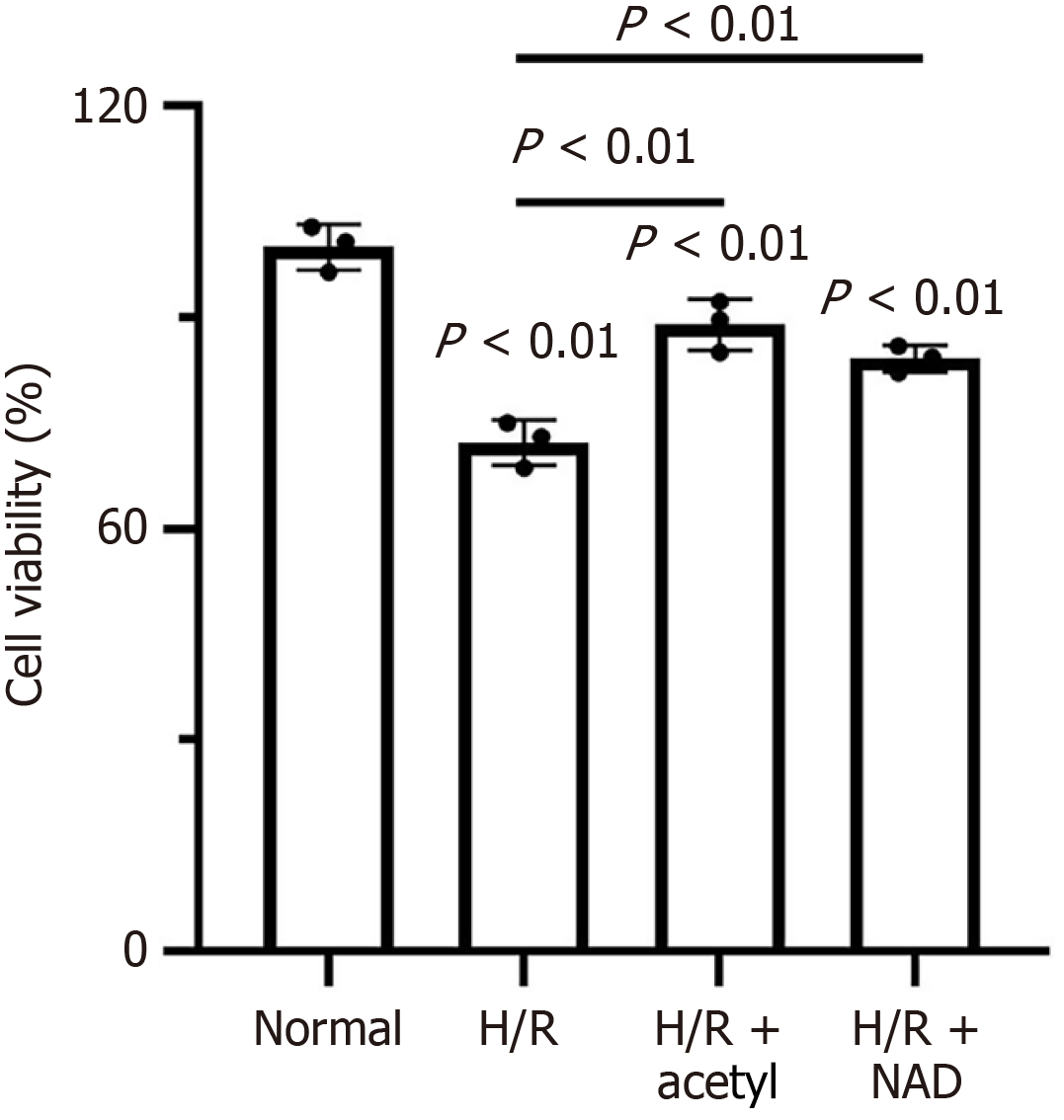
Figure 1 Effects of nicotinamide adenine dinucleotide oxidized form on the viability of H9c2 cells following hypoxia/re-oxygenation treatment, with or without acetylcysteine or nicotinamide adenine dinucleotide oxidized form (NAD+) (n = 3).
The normal group refers to H9c2 cells cultured in an incubator containing 21% oxygen and 5% CO2, and serves as the control group; the hypoxia/re-oxygenation (H/R) group refers to H9c2 cells subjected to H/R; the H/R + acetyl group refers to H9c2 cells cultured under an H/R procedure with acetylcysteine treatment; the H/R + nicotinamide adenine dinucleotide group refers to H9c2 cells cultured under an H/R procedure with nicotinamide adenine dinucleotide oxidized. H/R: Hypoxia/re-oxygenation; NAD: Nicotinamide adenine dinucleotide; NAD+: Nicotinamide adenine dinucleotide, oxidized form.

Figure 2 Assessment of cell viability and apoptosis in H9c2 cells after hypoxia/re-oxygenation injury.
A: Live/dead staining of H9c2 cells following hypoxia/re-oxygenation (H/R) treatment, with or without acetylcysteine or nicotinamide adenine dinucleotide oxidized form (NAD+) (n = 3); B: Terminal deoxynucleotidyl transferase-mediated deoxyuridine triphosphate nick end labeling assay results for H9c2 cells subjected to H/R treatment, with or without acetylcysteine or NAD+ (n = 3); C: Reactive oxygen species staining of H9c2 cells after H/R treatment with or without acetylcysteine or NAD+ (n = 3). H/R: Hypoxia/re-oxygenation; NAD: Nicotinamide adenine dinucleotide; NAD+: Nicotinamide adenine dinucleotide oxidized form.
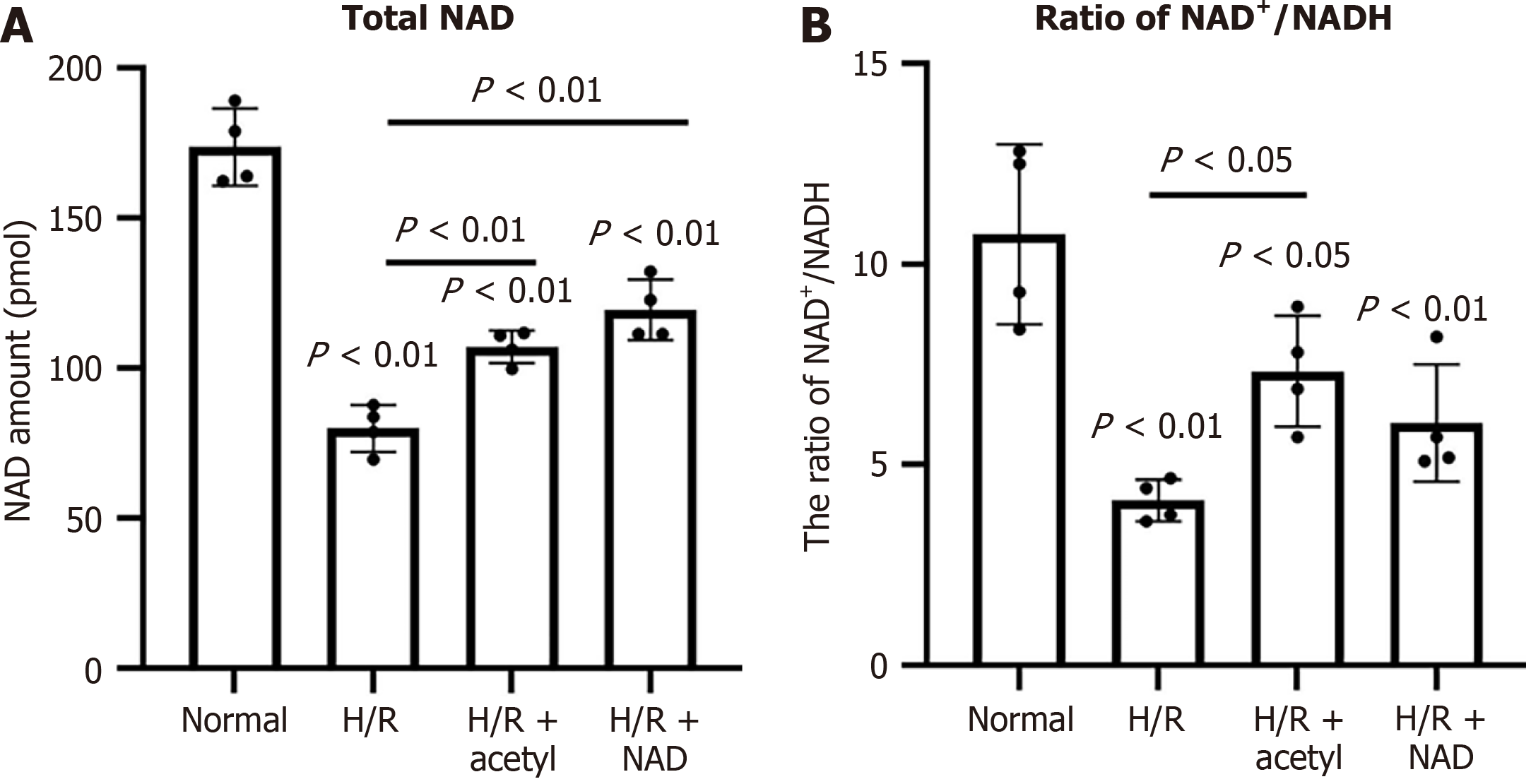
Figure 3 Measurement of total cellular nicotinamide adenine dinucleotide levels and the nicotinamide adenine dinucleotide oxidized form/nicotinamide adenine dinucleotide reduced form ratio in H9c2 cells after hypoxia/re-oxygenation treatment, with or without ace
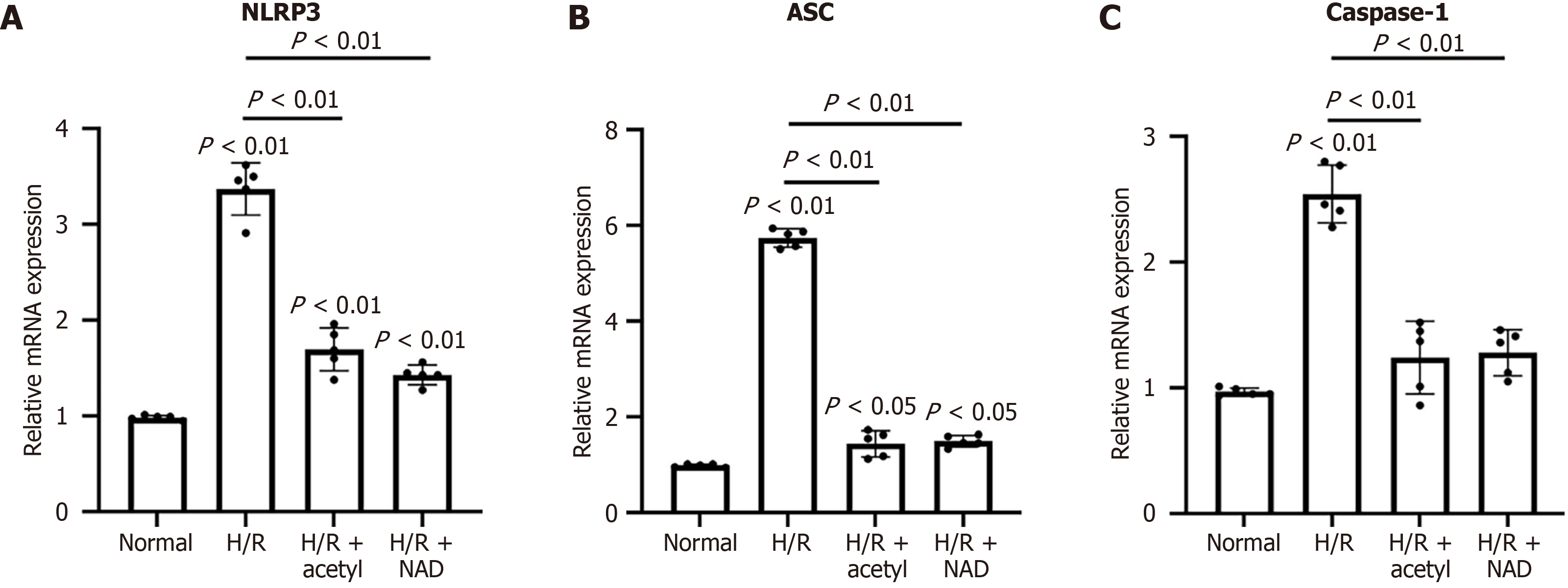
Figure 4 Effects of nicotinamide adenine dinucleotide oxidized form on the expression of NOD-like receptor pyrin domain-containing 3, associated speck-like protein containing a CARD, and caspase-1, reverse transcription polymerase chain reaction was used to analyze the gene expression of NOD-like receptor pyrin domain-containing 3, associated speck-like protein containing a CARD, and caspase-1 (n = 5).
The normal group refers to H9c2 cells cultured in an incubator containing 21% oxygen and 5% CO2, and serves as the control group; the hypoxia/re-oxygenation (H/R) group refers to H9c2 cells subjected to an H/R process; the H/R + acetyl group refers to H9c2 cells cultured under an H/R procedure with acetylcysteine treatment; the H/R + nicotinamide adenine dinucleotide group refers to H9c2 cells cultured under an H/R procedure with nicotinamide adenine dinucleotide oxidized form (NAD+) treatment. NLRP3: NOD-like receptor pyrin domain-containing 3; H/R: Hypoxia/re-oxygenation; ASC: Associated speck-like protein containing a CARD; NAD: Nicotinamide adenine dinucleotide; NAD+: Nicotinamide adenine dinucleotide oxidized form.
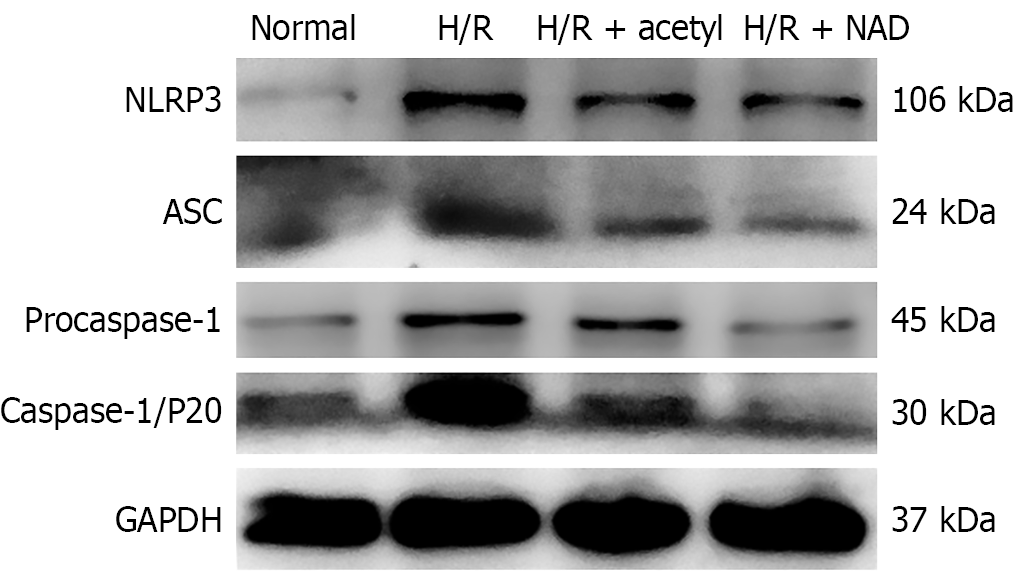
Figure 5 Western blot analysis of the protein levels of NOD-like receptor pyrin domain-containing 3, associated speck-like protein containing a CARD, and procaspase-1 in H9c2 cells after hypoxia/re-oxygenation treatment, with or without acetylcysteine or nico
- Citation: Dong S, Liu YQ, Tu YJ, Gao S, Liu YJ, Liu C, Pei ZW. Nicotinamide adenine dinucleotide inhibits the production of reactive oxygen species and myocardial cell pyroptosis caused by hypoxia/re-oxygenation injury. World J Cardiol 2026; 18(1): 114108
- URL: https://www.wjgnet.com/1949-8462/full/v18/i1/114108.htm
- DOI: https://dx.doi.org/10.4330/wjc.v18.i1.114108