
















©The Author(s) 2025.
World J Biol Chem. Dec 5, 2025; 16(4): 111110
Published online Dec 5, 2025. doi: 10.4331/wjbc.v16.i4.111110
Published online Dec 5, 2025. doi: 10.4331/wjbc.v16.i4.111110

Figure 1 Expression of GRP78 upon dithiothreitol treatment (0-10 mmol/L).
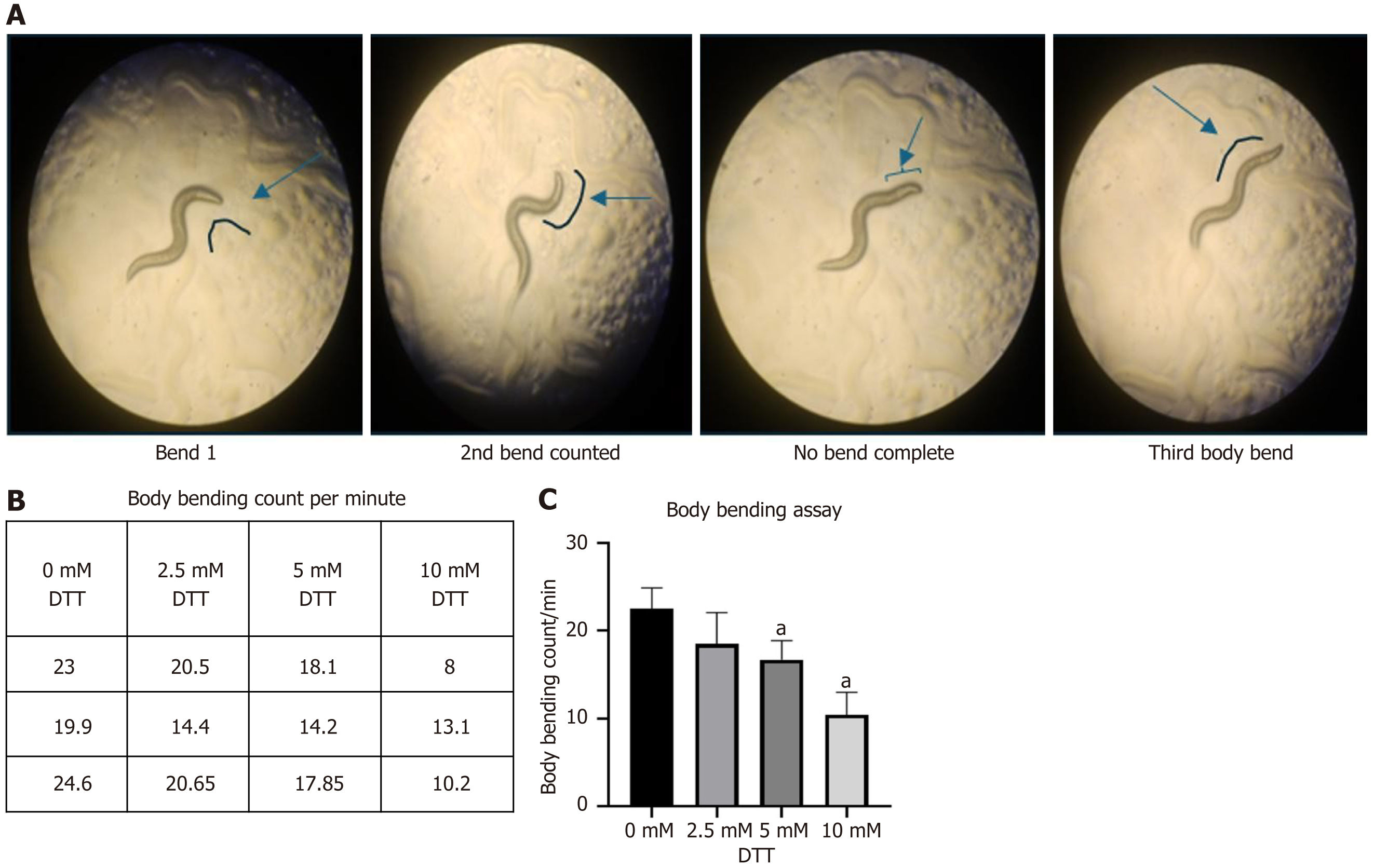
Figure 2 Body bending assay.
A: Counting criteria of body bend in Caenorhabditis elegans. From the left side, complete bends are seen in frames 1st, 2nd, and last and image 3rd show an incomplete bend; B: Average Body bend count per minute at 0-10 mmol/L dithiothreitol (DTT) concentration; C: The body bend graph indicates a declining count where animals were exposed to increasing concentrations of DTT (0–10 mmol/L). Data are presented as mean ± SEM (n = 3). Statistical analysis was performed using the Kruskal-Wallis test. aP < 0.01 vs control (0 mmol/L DTT). DTT: Dithiothreitol.
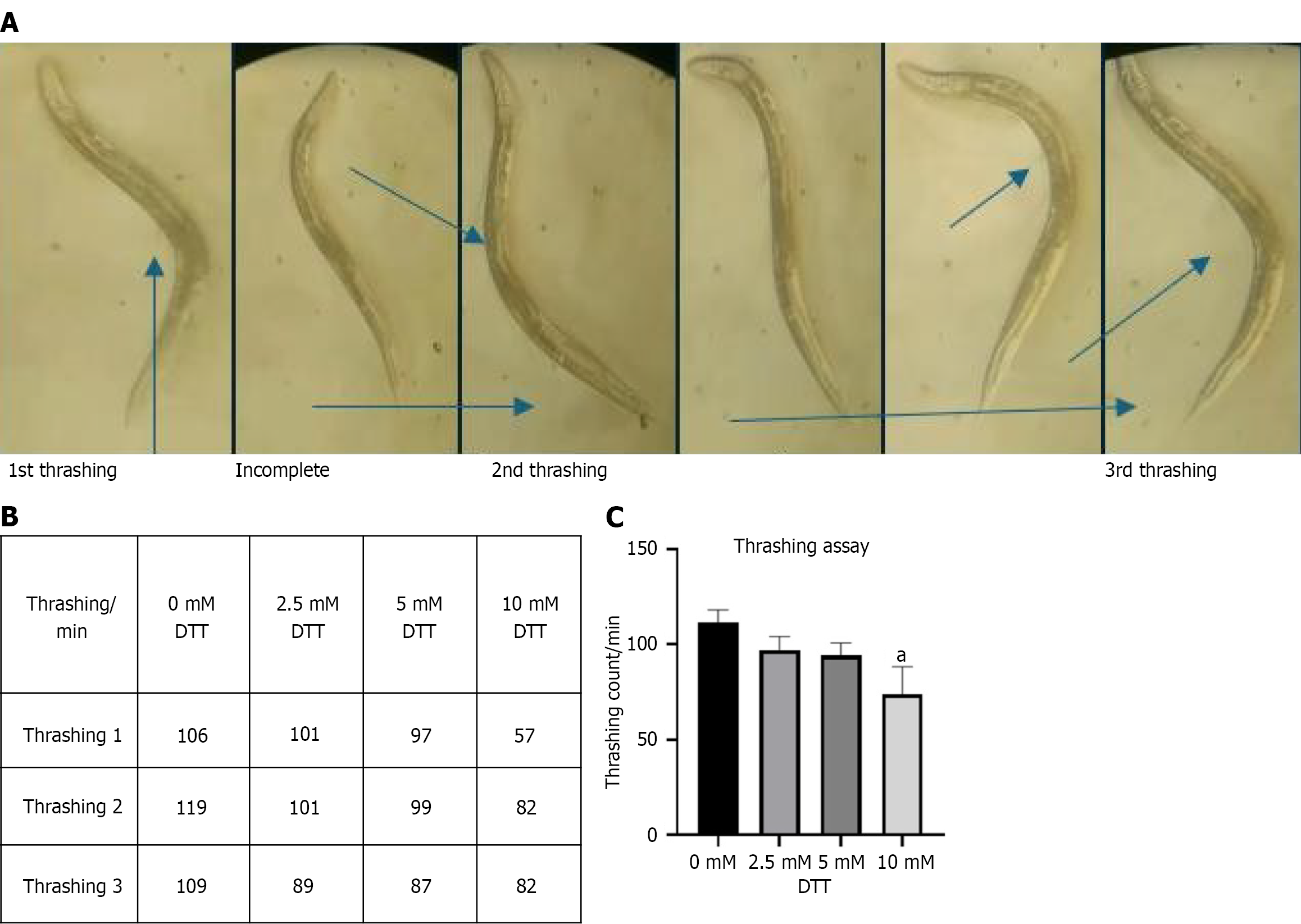
Figure 3 Thrashing assay.
A: Thrashing count analysis starting from the left: The first, 3rd, and last image shows the worm in complete thrashing. The second, 4th, and 5th frame shows an incomplete movement where the worm does not fully bend to the opposite side; B: Average thrashing count per minute at different dithiothreitol (DTT) concentrations (0-10 mmol/L); C: The thrashing graph shows the decline in count where animals were exposed to increasing concentrations of DTT (0–10 mmol/L). Data are presented as mean ± SEM. Statistical analysis was performed using the Kruskal-Wallis test. aP < 0.001 vs control (0 mmol/L DTT). DTT: Dithiothreitol.
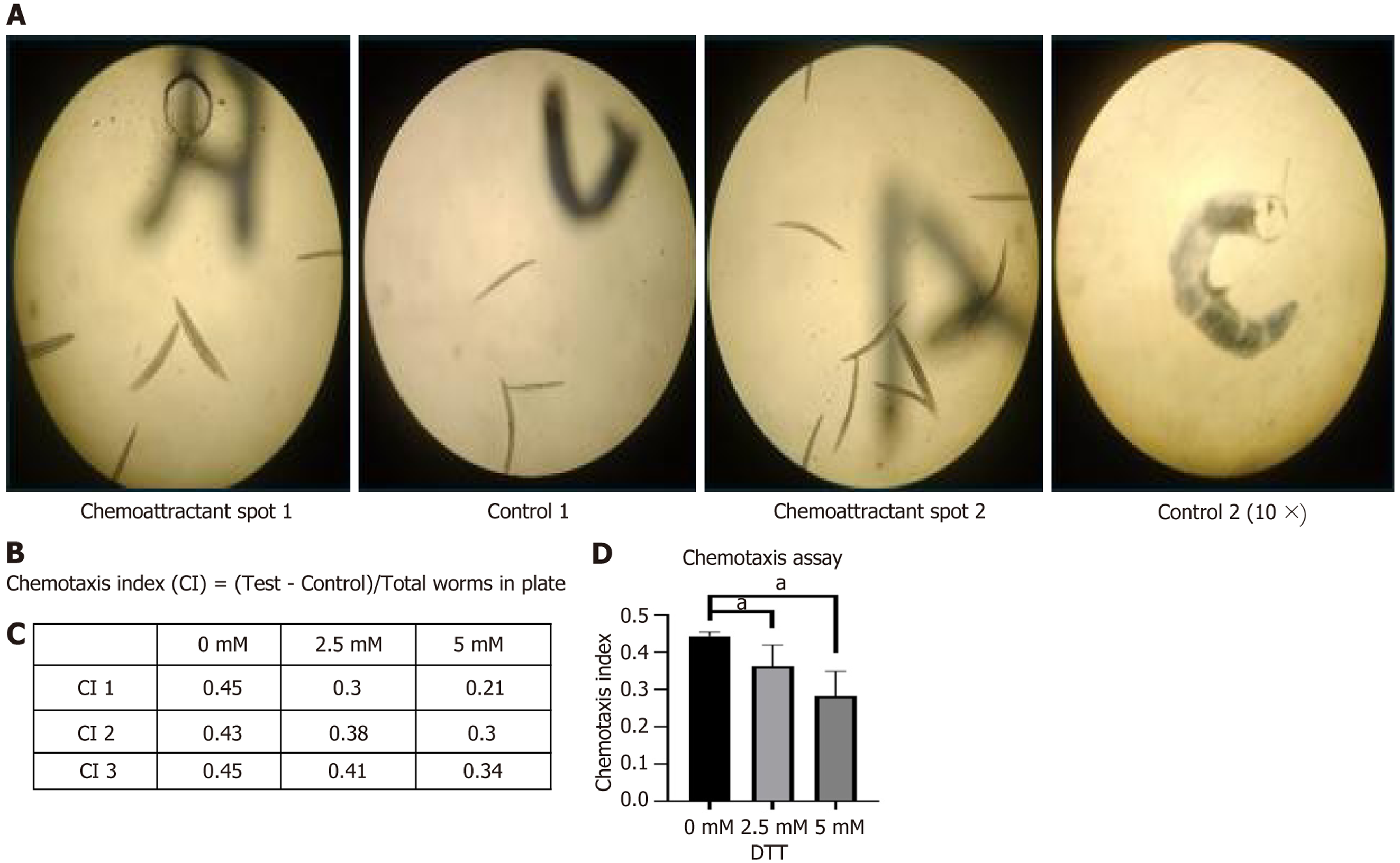
Figure 4 Chemotaxis assay.
A: Collect data by counting the number of worms on the attractant (test) and the number on the control spots (10 × microscopic images); B: The formula for calculating chemotaxis index; C: Triplicate data of chemotaxis index at different concentrations of dithiothreitol (DTT); D: A significant reduction in chemotaxis was observed at five mM DTT as compared to control (0 mmol/L). Data represent mean ± SEM (n = 3). Statistical significance was determined using Brown-Forsythe and Welch one-way analysis of variance, followed by Dunnett's T3 post hoc test and Kruskal-Wallis test; aP < 0.05. DTT: Dithiothreitol.
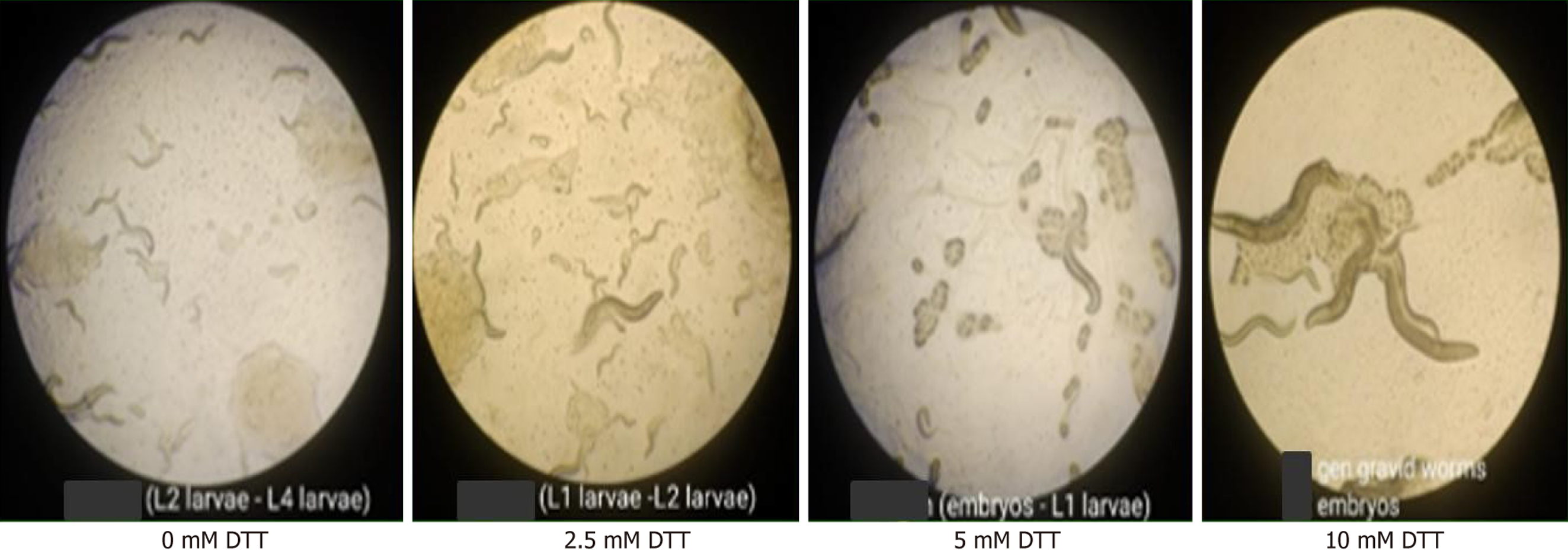
Figure 5 Effect of dithiothreitol on growth and reproductive activity in Caenorhabditis elegans.
Representative microscopic images showing developmental stages of worms after 5–7 days of exposure to increasing concentrations of dithiothreitol (DTT). Worms on control plates (0 mmol/L DTT) reached L2–L4 larval stages, while 25 mmol/L DTT-treated worms were mostly in L1–L2 stages. At five mM DTT, early L1 larvae and embryos were predominant, indicating developmental delay. Exposure to 10 mmol/L DTT resulted in the presence of gravid adults and embryos with minimal larval development, suggesting reproductive and developmental impairment in a dose-dependent manner. DTT: Dithiothreitol.
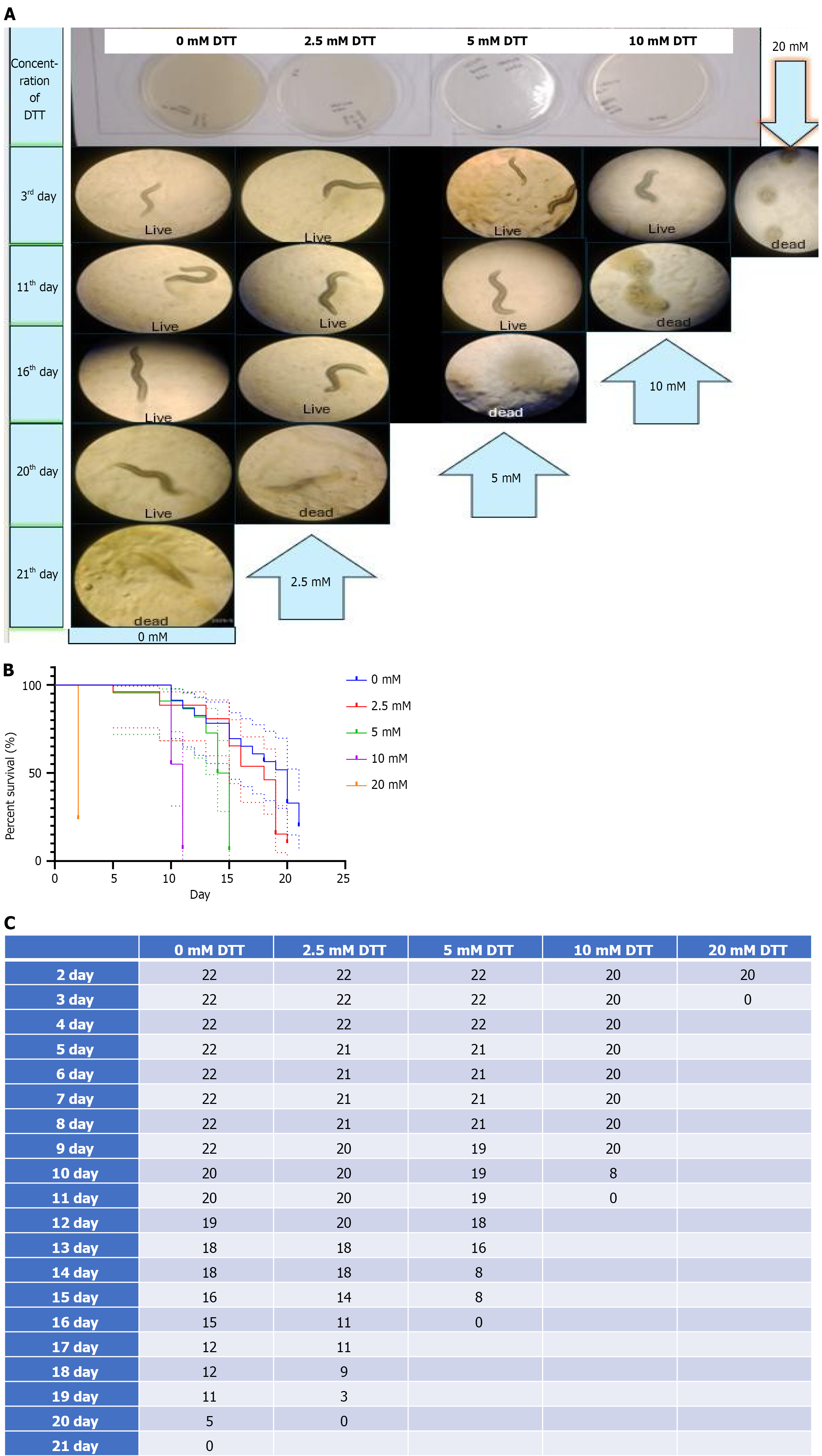
Figure 6 Effect of dithiothreitol on worms lifespan and survival.
A: Dithiothreitol (DTT) treatment reduces worm lifespan in a dose-dependent manner 10 × Microscopic images showing worm survival over days; B: Kaplan–Meier plot reveals significant lifespan reduction, with complete mortality within one day at 20 mmol/L; C: Survival table showing the number of live Caenorhabditis elegans counted daily after transfer to DTT-treated and control plates. On Day 2, approximately 20 synchronized L4-stage worms were transferred to each plate containing 0, 2.5, 5, 10, or 20 mmol/L DTT. The table records the number of surviving worms over 21 days, demonstrating a concentration-dependent decrease in lifespan, with complete mortality observed within 24 hours at 20 mmol/L DTT. DTT: Dithiothreitol.
- Citation: Raj G, Kumar M, Shreya S, Bhardwaj S, Priya R, Mangalhara KC, Jain BP. Dithiothreitol induced endoplasmic reticulum stress and its role in neurodegeneration in Caenorhabditis elegans. World J Biol Chem 2025; 16(4): 111110
- URL: https://www.wjgnet.com/1949-8454/full/v16/i4/111110.htm
- DOI: https://dx.doi.org/10.4331/wjbc.v16.i4.111110