
















©The Author(s) 2026.
World J Gastrointest Surg. Jan 27, 2026; 18(1): 113046
Published online Jan 27, 2026. doi: 10.4240/wjgs.v18.i1.113046
Published online Jan 27, 2026. doi: 10.4240/wjgs.v18.i1.113046
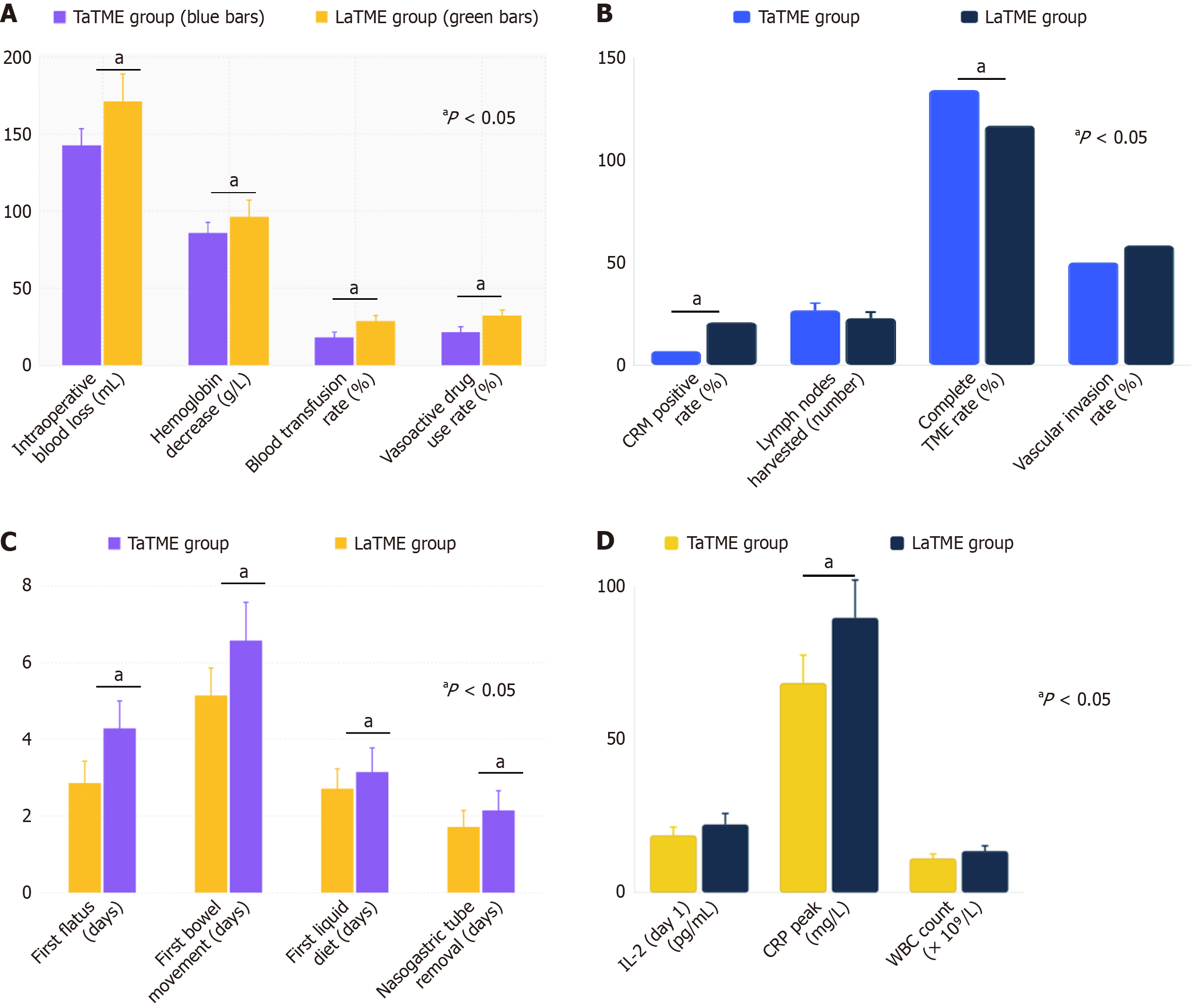
Figure 1 Comparison of transanal total mesorectal excision and laparoscopic total mesorectal excision groups.
A: Intraoperative blood loss and related parameters; B: Pathological parameters; C: Gastrointestinal recovery time; D: Postoperative inflammatory response [inflammatory cytokines (postoperative day 2)]. CRM: Circumferential resection margin; CRP: C-reactive protein; IL-2: Interleukin-2; LaTME: Laparoscopic total mesorectal excision; TaTME: Transanal total mesorectal excision; TME: Total mesorectal excision; WBC: White blood cell.
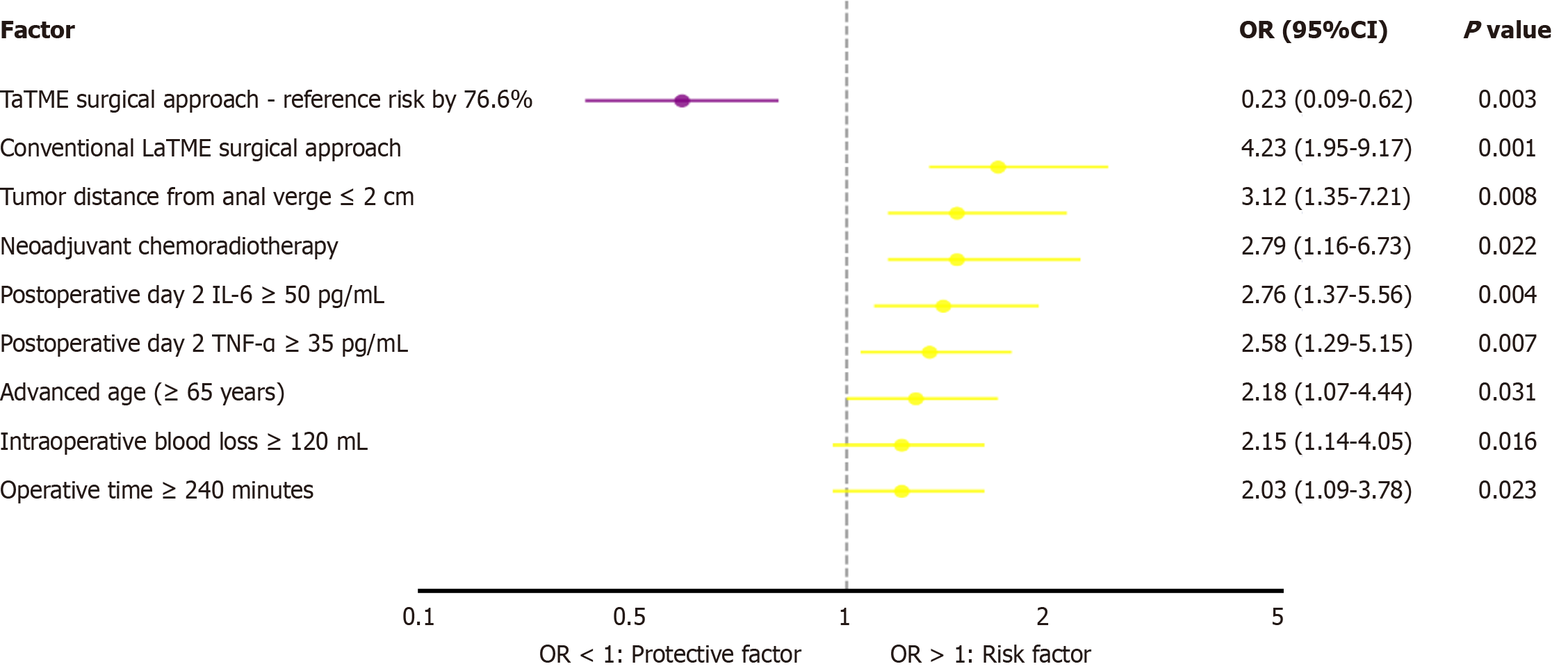
Figure 2 Forest plot of risk factors for poor anal function at 3 months postoperatively (Wexner score > 10).
Using laparoscopic total mesorectal excision (LaTME) surgical approach as the reference, conventional LaTME surgical approach had an odds ratio (OR) of 4.23 (95%CI: 1.95-9.17, P < 0.001), representing the strongest risk factor. Other significant risk factors included tumor distance from anal verge ≤ 2 cm (OR = 3.12), neoadjuvant chemoradiotherapy (OR = 2.79), postoperative day 1 C-reactive protein ≥ 5.50 mg/mL (OR = 2.76), postoperative day 2 tumor necrosis factor-alpha ≥ 15 pg/mL (OR = 2.58), advanced age ≥ 65 years (OR = 2.16), intraoperative blood loss ≥ 150 mL (OR = 2.15), and operation time ≥ 240 minutes (OR = 2.03). All factors showed statistical significance with P < 0.05. The dashed line represents the null line at OR = 1, where OR > 1 indicates risk factors and OR < 1 indicates protective factors. IL-6: Interleukin-6; LaTME: Laparoscopic total mesorectal excision; OR: Odds ratio; TaTME: Transanal total mesorectal excision; TNF-α: Tumor necrosis factor-alpha.
- Citation: Huang Q, Li Y, Feng SD, Fang YC, Zhou YH, Li DW, Liao ZW. Short-term outcomes of laparoscopic-assisted transanal vs laparoscopic total mesorectal excision for mid-to-low rectal cancer. World J Gastrointest Surg 2026; 18(1): 113046
- URL: https://www.wjgnet.com/1948-9366/full/v18/i1/113046.htm
- DOI: https://dx.doi.org/10.4240/wjgs.v18.i1.113046