
















©The Author(s) 2026.
World J Diabetes. Feb 15, 2026; 17(2): 116056
Published online Feb 15, 2026. doi: 10.4239/wjd.v17.i2.116056
Published online Feb 15, 2026. doi: 10.4239/wjd.v17.i2.116056
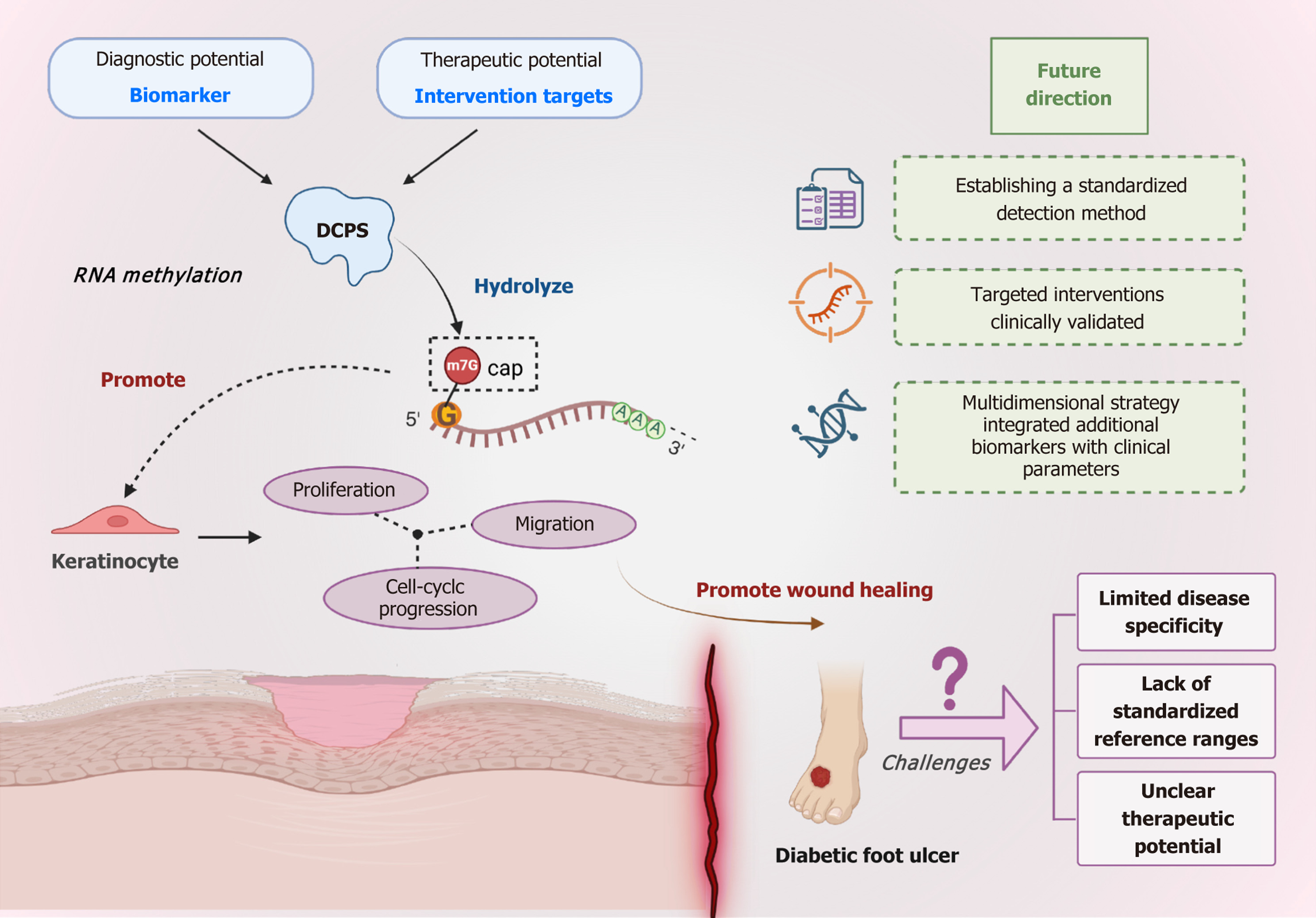
Figure 1 Overview of the diagnostic and therapeutic potential of decapping scavenger enzyme in diabetic foot ulcer and the associated clinical challenges.
Decapping scavenger enzyme (DCPS), a key regulator in N7-methylguanosine RNA metabolism, has emerged as a promising biomarker and therapeutic target for diabetic foot ulcer (DFU). Reduced DCPS expression impairs keratinocyte proliferation, migration, and cell-cycle progression, directly linking RNA methylation to dysfunctional wound repair. However, the clinical translation of DCPS faces significant hurdles, including limited disease specificity due to variable expression in patients with metabolic or inflammatory comorbidities, a lack of standardized detection methods and reference ranges for reliable quantification, and uncertain in vivo therapeutic efficacy of DCPS modulation. This figure highlights the necessity of developing multi-faceted strategies that integrate DCPS with other clinical parameters and molecular biomarkers to enhance diagnostic accuracy and therapeutic potential. Future research must focus on establishing standardized assays, elucidating DCPS regulatory mechanisms, and validating targeted interventions through robust preclinical and clinical studies to advance its application in personalized DFU management. DCPS: Decapping scavenger enzyme; m7G: N7-methylguanosine. Created in BioRender (Supplementary material).
- Citation: Huang XL, Wang Y, Chen DF, Duan JN, Michael N, Jiang R, Ge YS, Wang B. Decapping scavenger enzyme as a promising biomarker in diabetic foot ulcers: A need for cautious interpretation. World J Diabetes 2026; 17(2): 116056
- URL: https://www.wjgnet.com/1948-9358/full/v17/i2/116056.htm
- DOI: https://dx.doi.org/10.4239/wjd.v17.i2.116056