
















©The Author(s) 2025.
World J Diabetes. Dec 15, 2025; 16(12): 115435
Published online Dec 15, 2025. doi: 10.4239/wjd.v16.i12.115435
Published online Dec 15, 2025. doi: 10.4239/wjd.v16.i12.115435
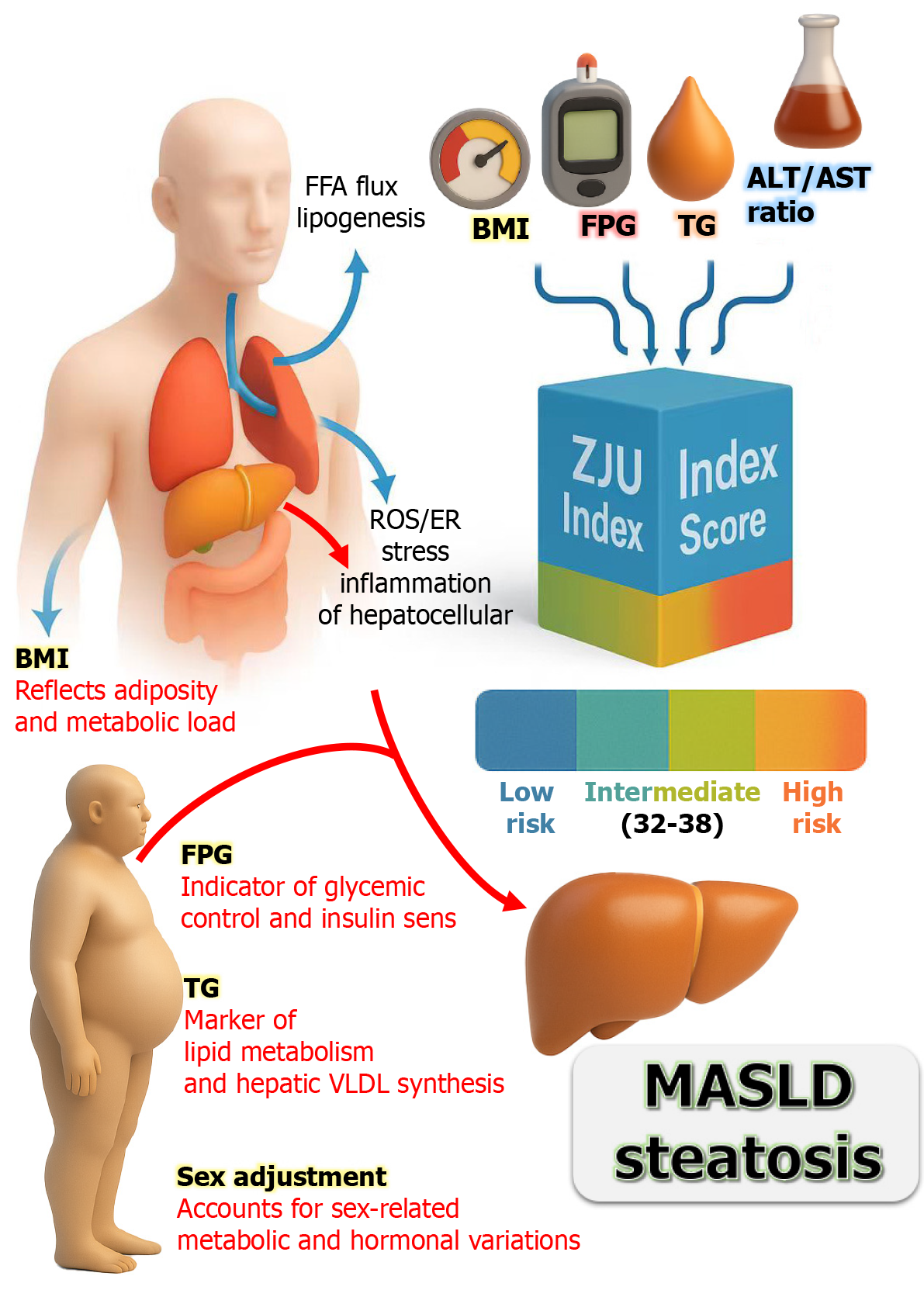
Figure 1 Schematic illustration demonstrating the integrated metabolic and clinical mechanisms of the Zhejiang University index in assessing metabolic dysfunction-associated steatotic liver disease risk.
The figure highlights how body mass index (BMI), fasting plasma glucose (FPG), triglycerides (TG), and alanine aminotransferase (ALT)/aspartate aminotransferase (AST) ratio collectively contribute to the Zhejiang University index (ZJU index) score for stratifying the risk of metabolic dysfunction-associated steatotic liver disease (MASLD). Increased BMI reflects adiposity and metabolic load, elevated FPG indicates impaired glycemic control and insulin sensitivity, high TG represents dysregulated lipid metabolism and hepatic very-low-density lipoprotein synthesis, and the ALT/AST ratio reflects hepatocellular injury. The ZJU index integrates these variables into a continuous score that classifies patients into low, intermediate (32-38), and high-risk categories for MASLD development. FFA: Free fatty acid; BMI: Body mass index; FPG: Fasting plasma glucose; TG: Triglyceride; ALT: Alanine aminotransferase; AST: Aspartate aminotransferase; ZJU index: Zhejiang University index; ROS: Reactive oxygen species; ER: Endoplasmic reticulum; VLDL: Very-low-density lipoprotein; MASLD: Metabolic dysfunction-associated steatotic liver disease.
- Citation: Gouda MM. From fatty liver indices to the Zhejiang University index: Re-shaping risk stratification of metabolic liver disease in diabetes. World J Diabetes 2025; 16(12): 115435
- URL: https://www.wjgnet.com/1948-9358/full/v16/i12/115435.htm
- DOI: https://dx.doi.org/10.4239/wjd.v16.i12.115435