
















©The Author(s) 2025.
World J Diabetes. Dec 15, 2025; 16(12): 110494
Published online Dec 15, 2025. doi: 10.4239/wjd.v16.i12.110494
Published online Dec 15, 2025. doi: 10.4239/wjd.v16.i12.110494
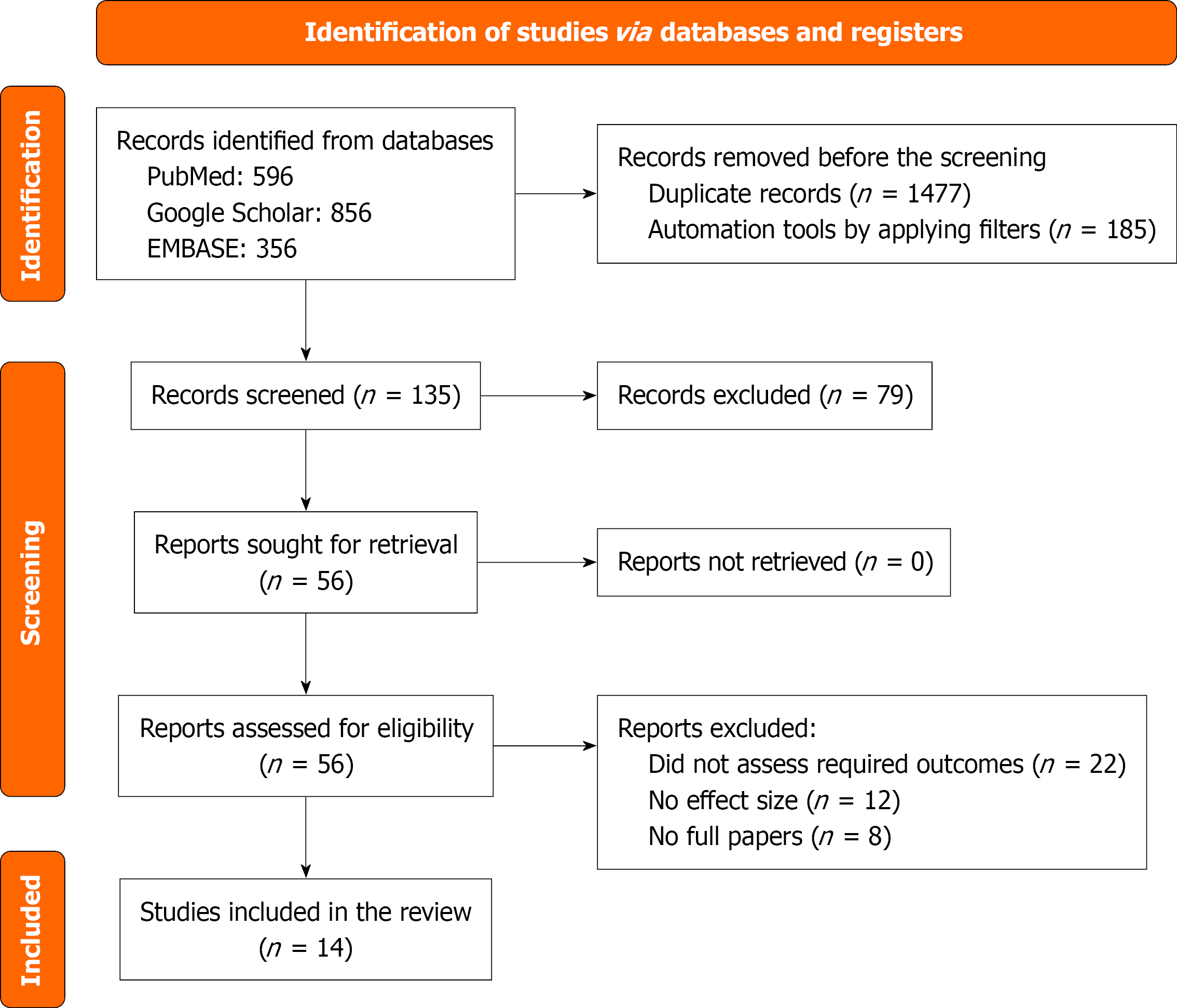
Figure 1 PRISMA flow chart.
PRISMA flow diagram detailing the study selection process for this systematic review. A total of 1808 records were identified through database searches (PubMed: 596; Google Scholar: 856; EMBASE: 356). After removing 1477 duplicates and 185 records using automation filters, 135 records were screened. Seventy-nine were excluded, and 56 full-text articles were assessed for eligibility. Of these, 42 were excluded due to irrelevant outcomes (n = 22), lack of effect size data (n = 12), or unavailability of full texts (n = 8). Ultimately, 14 studies met the inclusion criteria and were included in the final review.
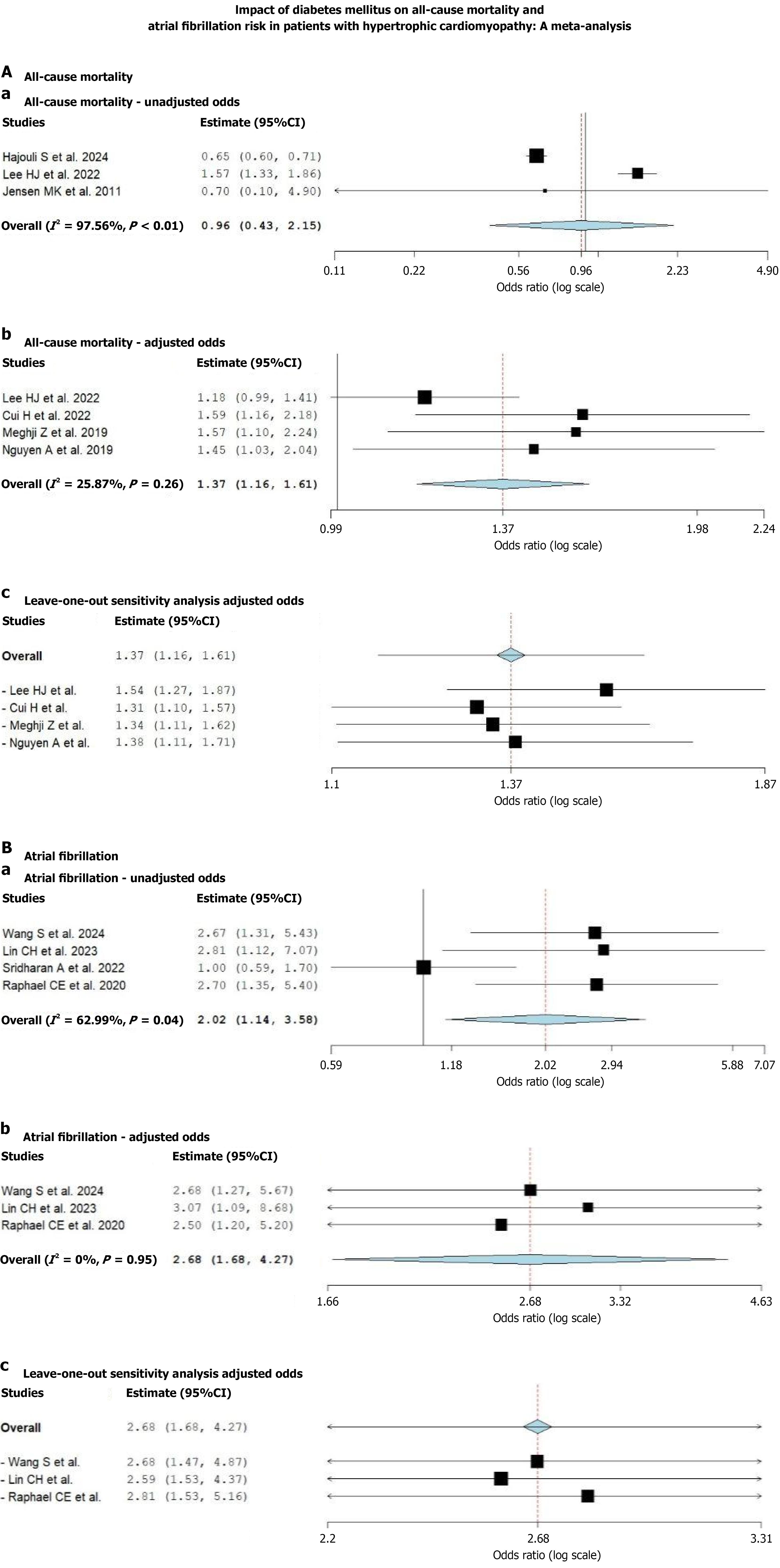
Figure 2 Forest plot showing the results of all-cause mortality and atrial fibrillation with leave-one-out sensitivity analysis.
A: All-cause mortality. Unadjusted odds from 3 studies; no significant association [odds ratio (OR) = 0.96; 95% confidence interval (CI): 0.43-2.15], with high heterogeneity (I2 = 97.56%) (a); Adjusted odds from 4 studies; significant increased risk (OR = 1.37; 95%CI: 1.16-1.61), low heterogeneity (I2 = 25.87%) (b); Leave-one-out analysis confirms robustness (OR range: 1.31-1.54) (c); B: Atrial fibrillation. Unadjusted odds from 4 studies; significant association (OR = 2.02; 95%CI: 1.14-3.58), moderate heterogeneity (I2 = 62.99%) (a); Adjusted odds from 3 studies; consistent significant risk (OR = 2.68; 95%CI: 1.68-4.27), no heterogeneity (I2 = 0%) (b); Sensitivity analysis supports stability (OR range: 2.59-2.81) (c). CI: Confidence interval.
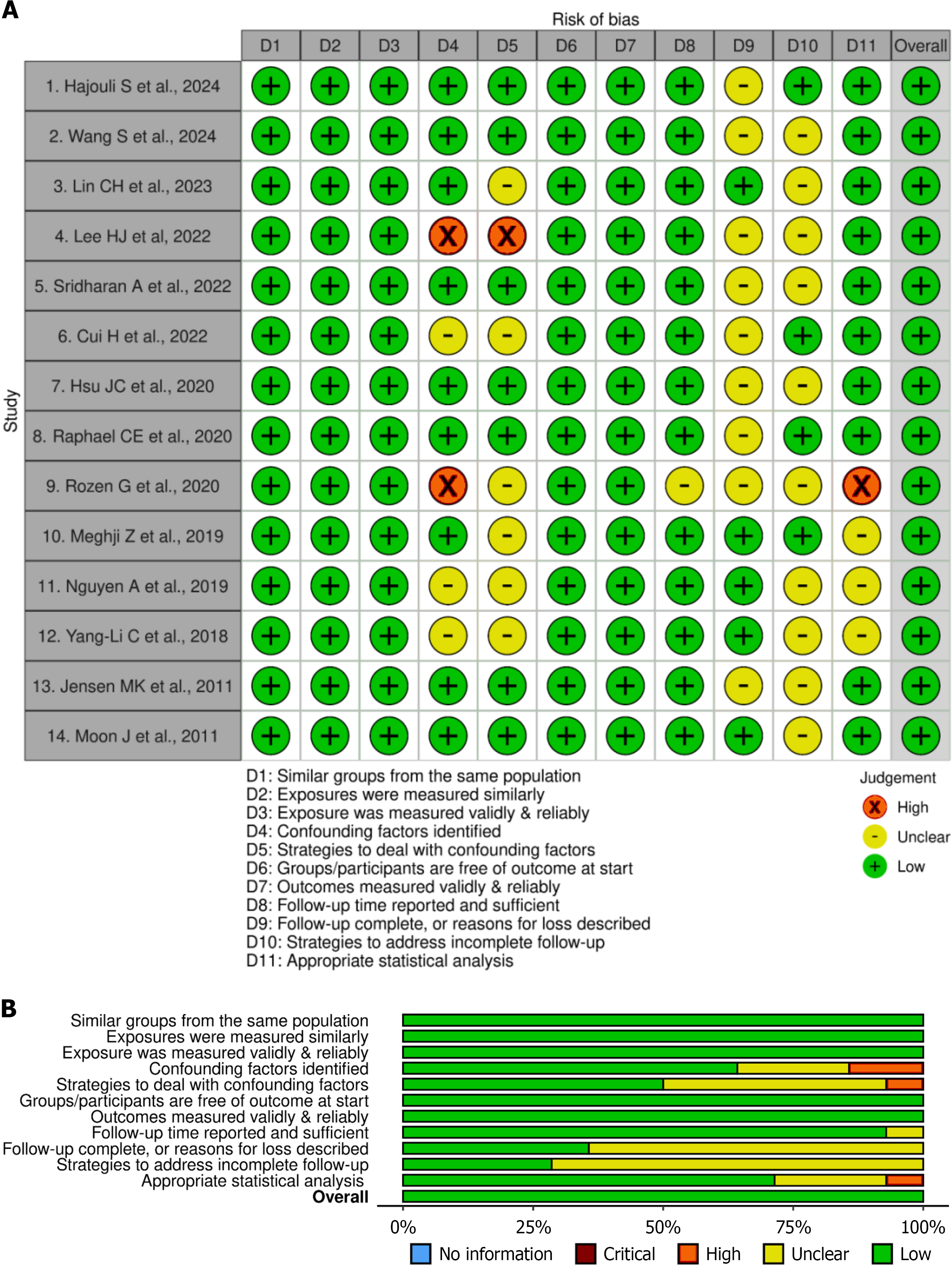
Figure 3 Traffic light and summary plot based on the Joanna Briggs Institute quality appraisal tool.
A: The traffic light plot displays the risk of bias assessment across the 14 included cohort studies using the Joanna Briggs Institute tool. Most studies demonstrated low risk across key domains, particularly in population selection, exposure measurement, and outcome assessment. However, moderate concerns were noted in domains related to confounding factors (D4, D5) and follow-up completeness (D9, D10), where several studies received “unclear” judgments. Notably, two studies (Lee et al[16] and Rozen et al[21]) showed high risk in confounding factor identification. Despite these limitations, 12 studies were rated overall as high quality (green), while two were moderate quality (yellow), supporting the robustness of the review; B: The summary plot of the risk of bias assessment across all included studies, based on the Joanna Briggs Institute tool. Each horizontal bar represents the proportion of studies judged as low (green), unclear (yellow), or high (red) risk of bias for each of the 11 quality domains. Most domains, including population similarity, exposure measurement, and statistical analysis, were consistently rated as low risk. However, domains related to confounding factors (D4-D5) and follow-up reporting (D9-D10) showed notable proportions of unclear and high-risk ratings. Overall, the majority of studies demonstrated sound methodological quality.
- Citation: Damarlapally N, Vempati R, Doshi KM, Singh M, Prajapati K, Modi D, Singh P, Desai R. Impact of diabetes mellitus on mortality and atrial fibrillation in hypertrophic cardiomyopathy: A systematic review and meta-analysis. World J Diabetes 2025; 16(12): 110494
- URL: https://www.wjgnet.com/1948-9358/full/v16/i12/110494.htm
- DOI: https://dx.doi.org/10.4239/wjd.v16.i12.110494