
















Copyright: ©Author(s) 2026.
World J Gastrointest Oncol. Aug 15, 2026; 18(8): 120005
Published online Aug 15, 2026. doi: 10.4251/wjgo.120005
Published online Aug 15, 2026. doi: 10.4251/wjgo.120005
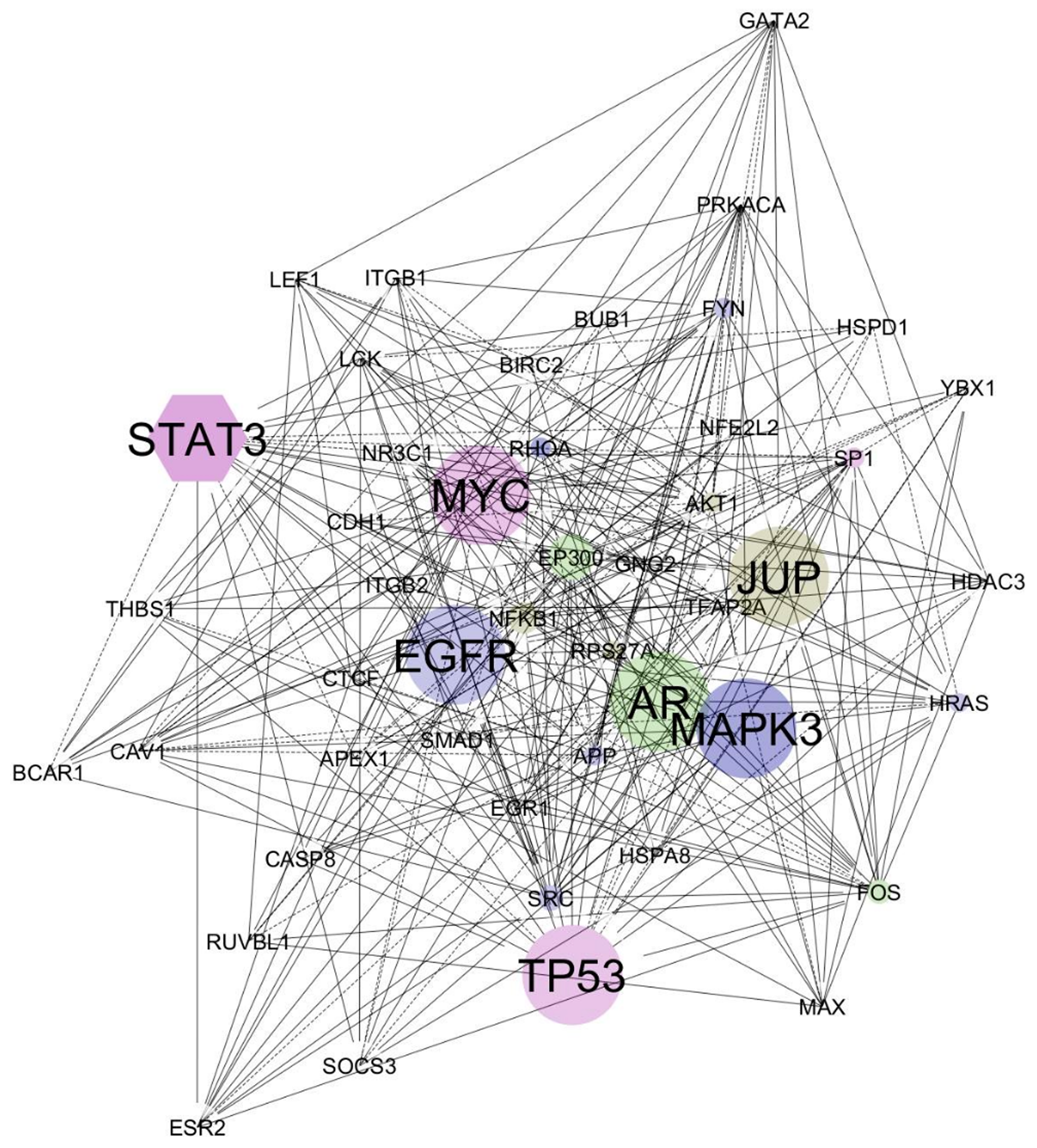
Figure 1 Hub gene interaction network of esophageal squamous cell carcinoma associated genes.
Nodes represent genes and edges represent functional interactions. Node size corresponds to degree centrality highlighting major regulatory genes STAT3, TP53, MYC, EGFR, MAPK3, and AR.
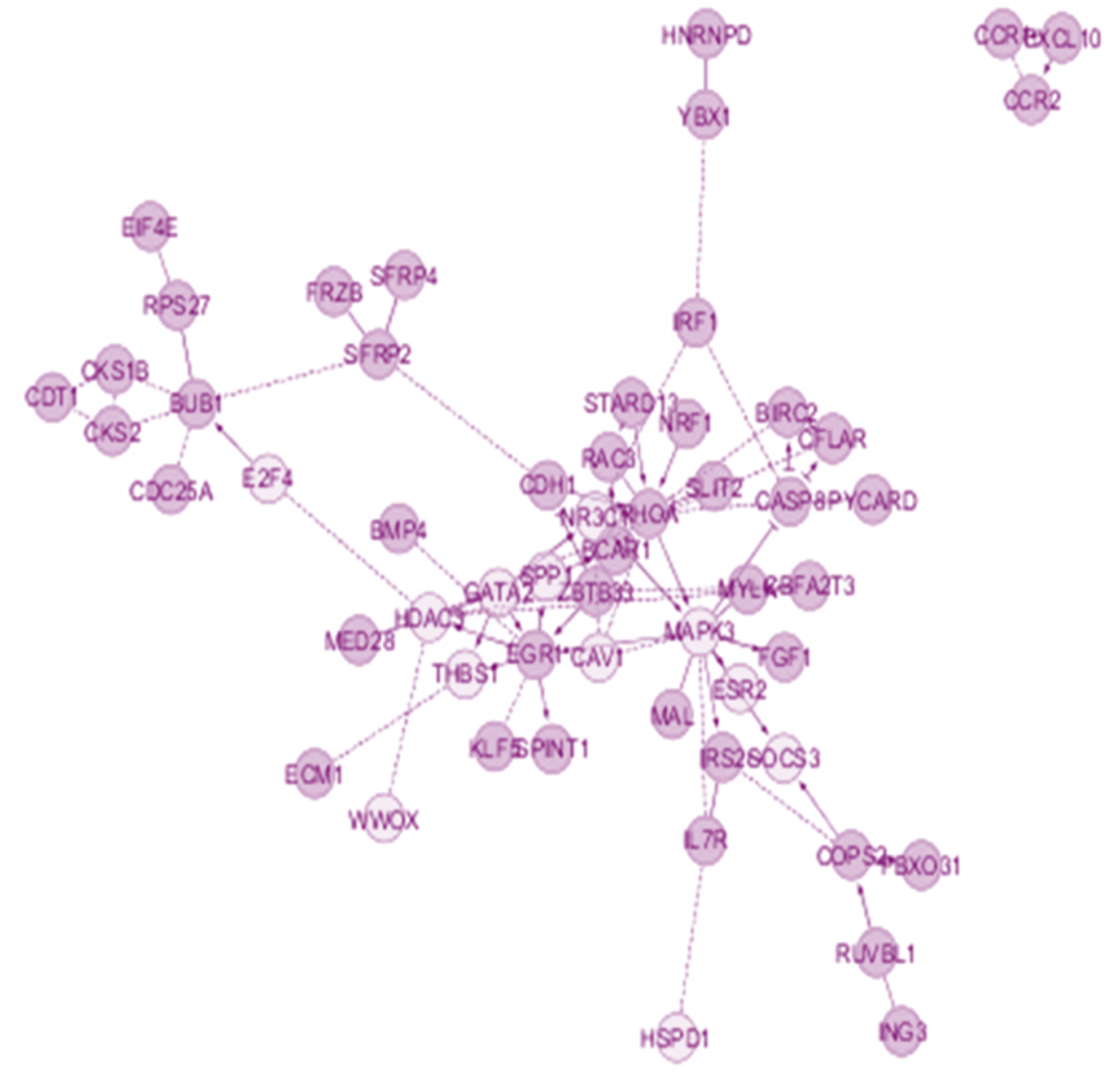
Figure 2
Functional interaction subnetwork showing the genes as highlighted in yellow that are enriched in the RNA polymerase II transcription pathway in esophageal cancer.
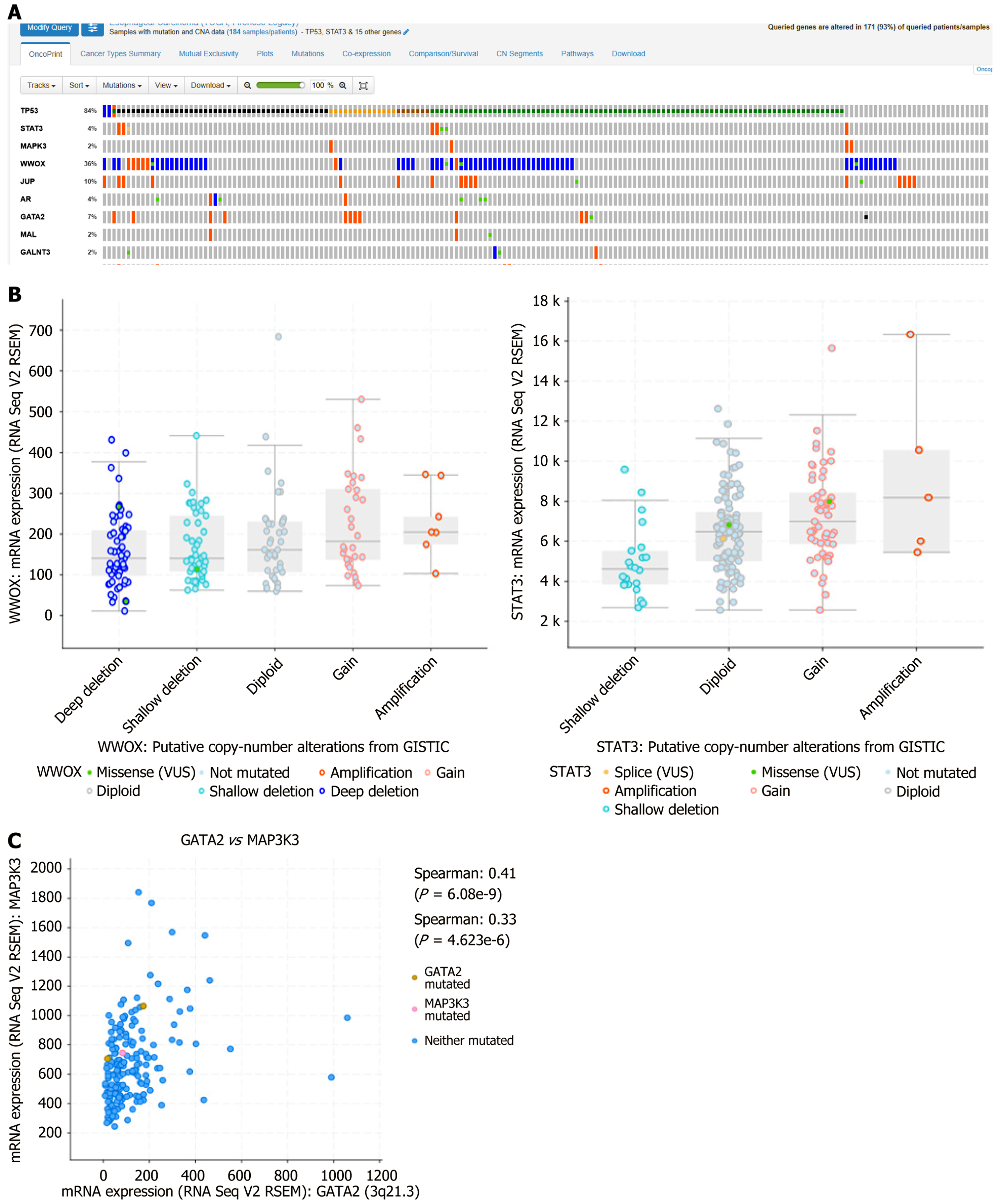
Figure 3 The Cancer Genome Atlas Validation of Cytogenetically Derived Genes in esophageal squamous cell carcinoma.
A: OncoPrint demonstrating genomic alterations across The Cancer Genome Atlas esophageal squamous cell carcinoma tumors; B: Copy number-dependent expression changes for STAT3 and WWOX; C: Co-expression analysis showing significant correlation between GATA2 and MAPK3 (Spearman ρ = 0.41, P < 0.001).
- Citation: Kaur J, Sambyal V, Guleria K, Uppal MS, Sudan M. Integration of cytogenetic aberrations and in silico pathway enrichment identifies novel candidate genes in esophageal squamous cell carcinoma. World J Gastrointest Oncol 2026; 18(8): 120005
- URL: https://www.wjgnet.com/1948-5204/full/v18/i8/120005.htm
- DOI: https://dx.doi.org/10.4251/wjgo.120005