
















Copyright: ©Author(s) 2026.
World J Gastrointest Oncol. Jul 15, 2026; 18(7): 121817
Published online Jul 15, 2026. doi: 10.4251/wjgo.v18.i7.121817
Published online Jul 15, 2026. doi: 10.4251/wjgo.v18.i7.121817
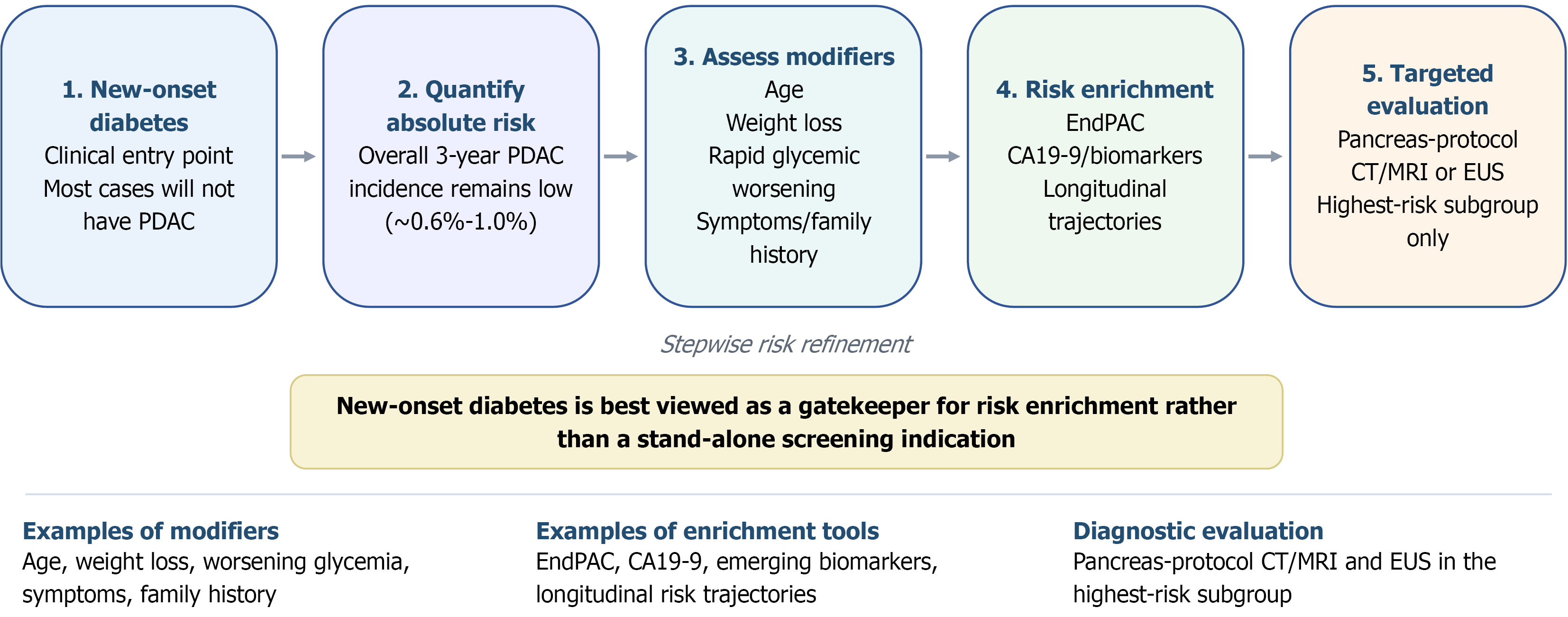
Figure 1 Stepwise framework for translating new-onset diabetes into pancreatic cancer risk enrichment.
New-onset diabetes should be interpreted as an entry signal rather than a screening indication. After identification of new-onset diabetes, risk should be refined sequentially using age, time since diabetes onset, weight change, glycemic trajectory, family history, pancreatitis-related history, and validated clinical models. Biomarkers and targeted pancreatic imaging should be reserved for the highest-risk subgroup in whom absolute risk is clinically actionable. PDAC: Pancreatic ductal adenocarcinoma; EUS: Endoscopic ultrasound; END-PAC: Enriching new-onset diabetes for pancreatic cancer; CT: Computed tomography; MRI: Magnetic resonance imaging; CA19-9: Carbohydrate antigen 19-9.
- Citation: Kim SH. New-onset diabetes and pancreatic cancer: Current evidence on absolute risk and screening feasibility. World J Gastrointest Oncol 2026; 18(7): 121817
- URL: https://www.wjgnet.com/1948-5204/full/v18/i7/121817.htm
- DOI: https://dx.doi.org/10.4251/wjgo.v18.i7.121817