
















Copyright: ©Author(s) 2026.
World J Gastrointest Oncol. Mar 15, 2026; 18(3): 117278
Published online Mar 15, 2026. doi: 10.4251/wjgo.v18.i3.117278
Published online Mar 15, 2026. doi: 10.4251/wjgo.v18.i3.117278
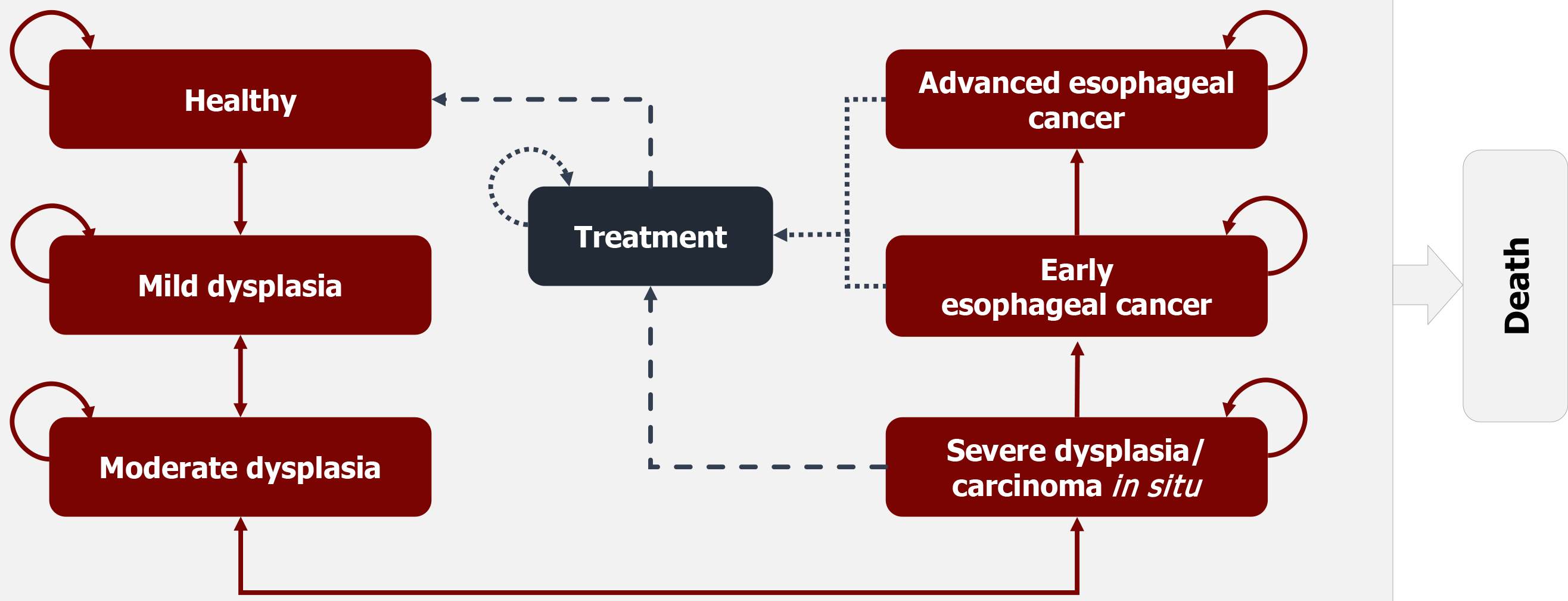
Figure 1 Markov model structure illustrating the natural history and treatment-related transitions of esophageal squamous cell car
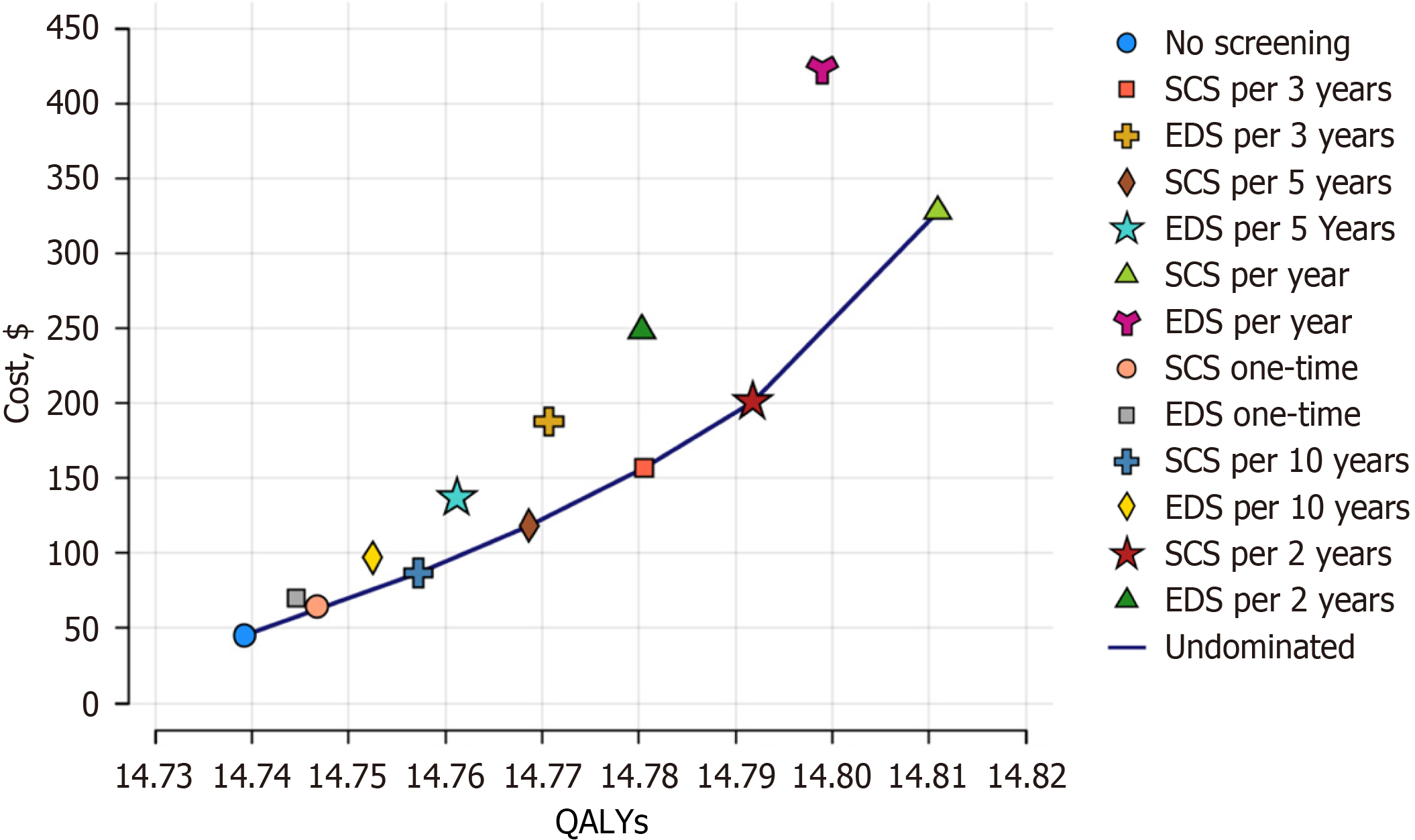
Figure 2 Cost-effectiveness plot.
Undominated, positive incremental cost-effective ratios are regarded as undominated. EDS: Endoscopic screening; SCS: Sponge cytology screening; QALY: Quality-adjusted life year.
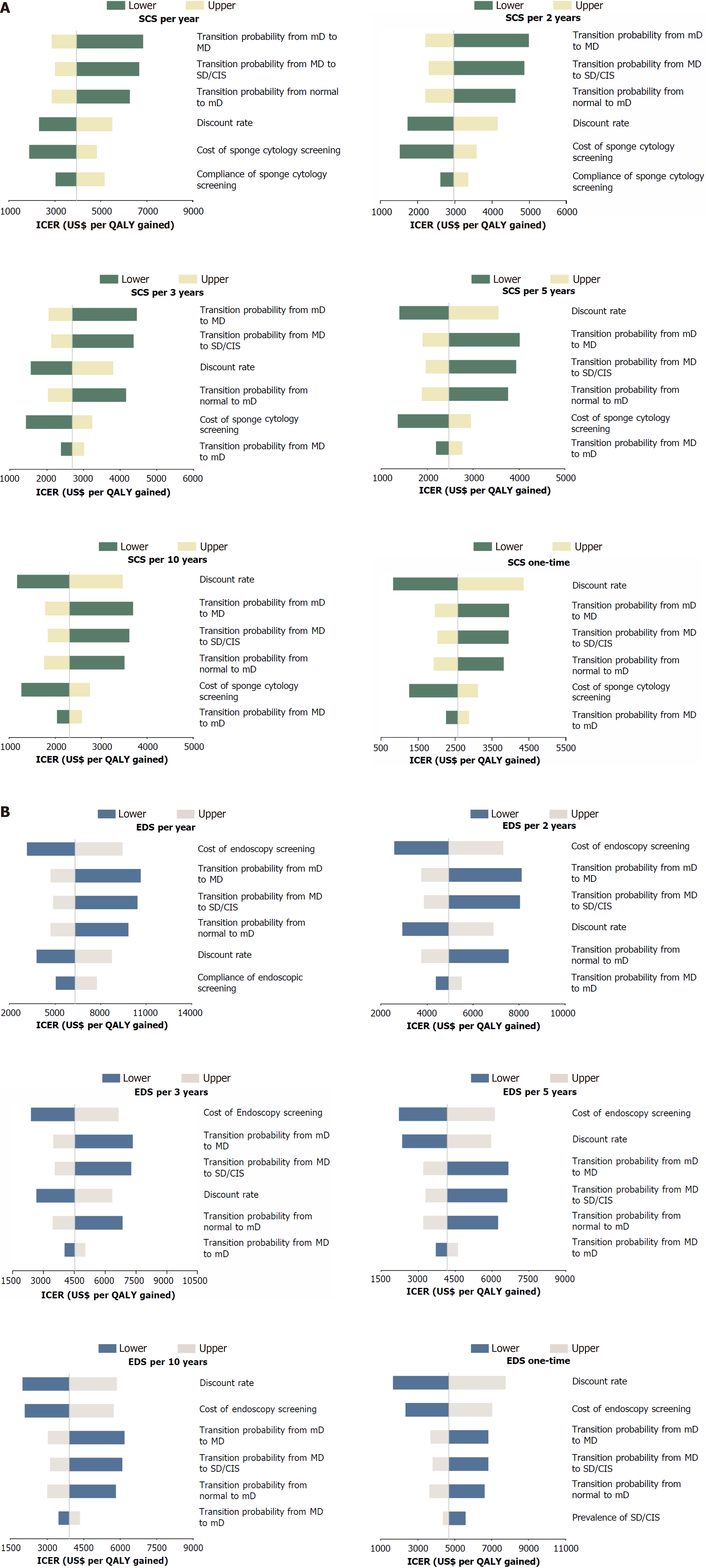
Figure 3 Tornado diagrams.
A: One-way sensitivity analysis Tornado diagrams for sponge cytology strategies within different screening intervals; B: One-way sensitivity analysis Tornado diagrams for endoscopy screening strategies within different screening intervals. mD: Mild dysplasia; MD: Moderate dysplasia; SD/CIS: Severe dysplasia/carcinoma in situ; EEC: Early esophageal cancer; AEC: Advanced esophageal cancer; EDS: Endoscopic screening; SCS: Sponge cytology screening; ICER: Incremental cost-effective ratio; QALY: Quality-adjusted life year.
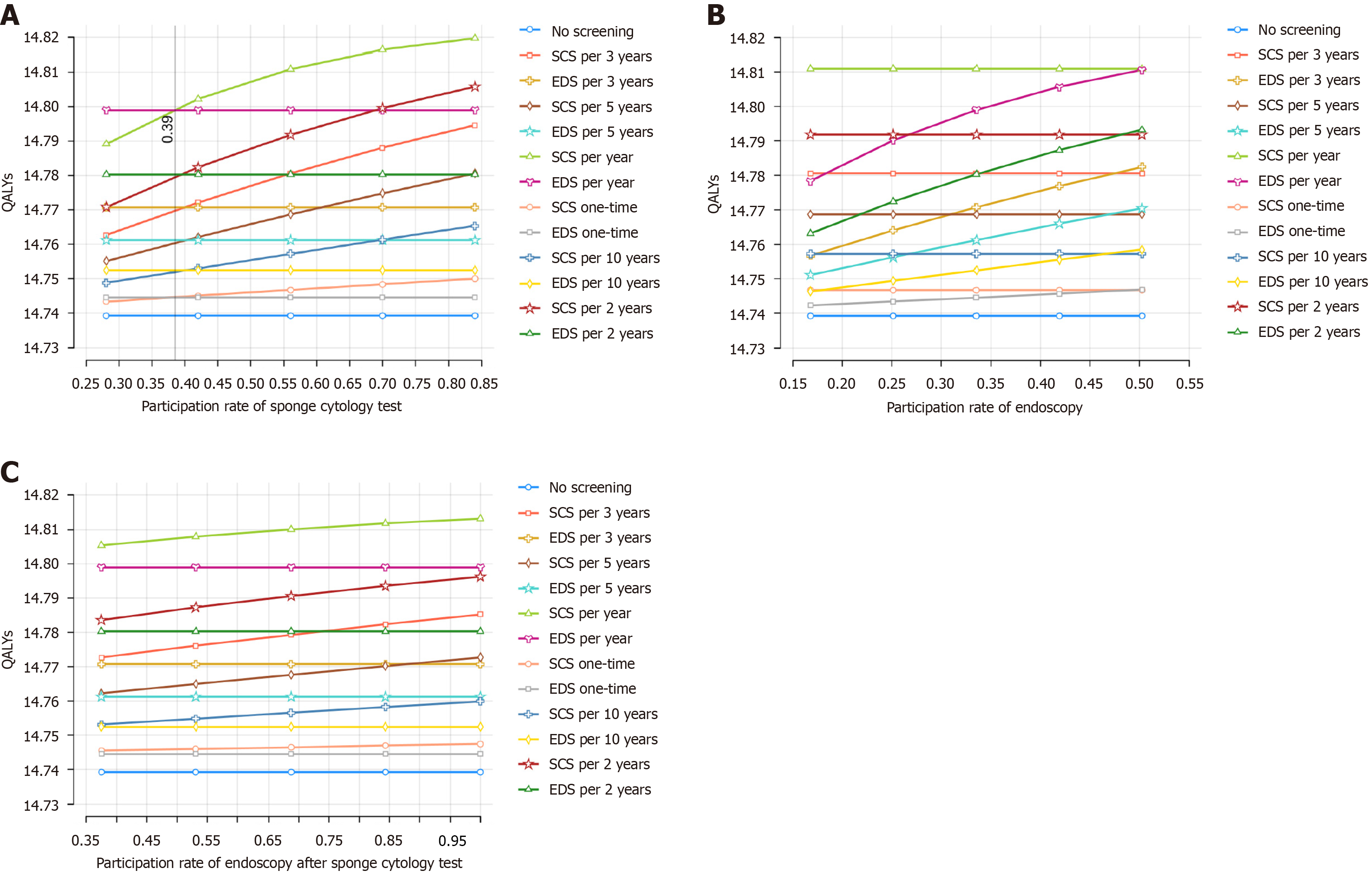
Figure 4 One-way sensitivity effectiveness chart.
A: One-way sensitivity effectiveness chart for various participation rates of sponge cytology test; B: One-way sensitivity effectiveness chart for various participation rates of endoscopy; C: One-way sensitivity effectiveness chart for various participation rates of endoscopy after sponge cytology test. EDS: Endoscopic screening; SCS: Sponge cytology screening; QALY: Quality-adjusted life year.
- Citation: Xu YS, Gao Y, Jiao YF, Yu CT, Wang W, Wang TL, Chu C, Lin H, Xu JF, Xin L, Wang LW. Cost-effectiveness of sponge cytology test vs endoscopy for esophageal squamous cell carcinoma screening in high-risk areas. World J Gastrointest Oncol 2026; 18(3): 117278
- URL: https://www.wjgnet.com/1948-5204/full/v18/i3/117278.htm
- DOI: https://dx.doi.org/10.4251/wjgo.v18.i3.117278