
















Copyright: ©Author(s) 2026.
World J Gastrointest Oncol. Mar 15, 2026; 18(3): 115905
Published online Mar 15, 2026. doi: 10.4251/wjgo.v18.i3.115905
Published online Mar 15, 2026. doi: 10.4251/wjgo.v18.i3.115905
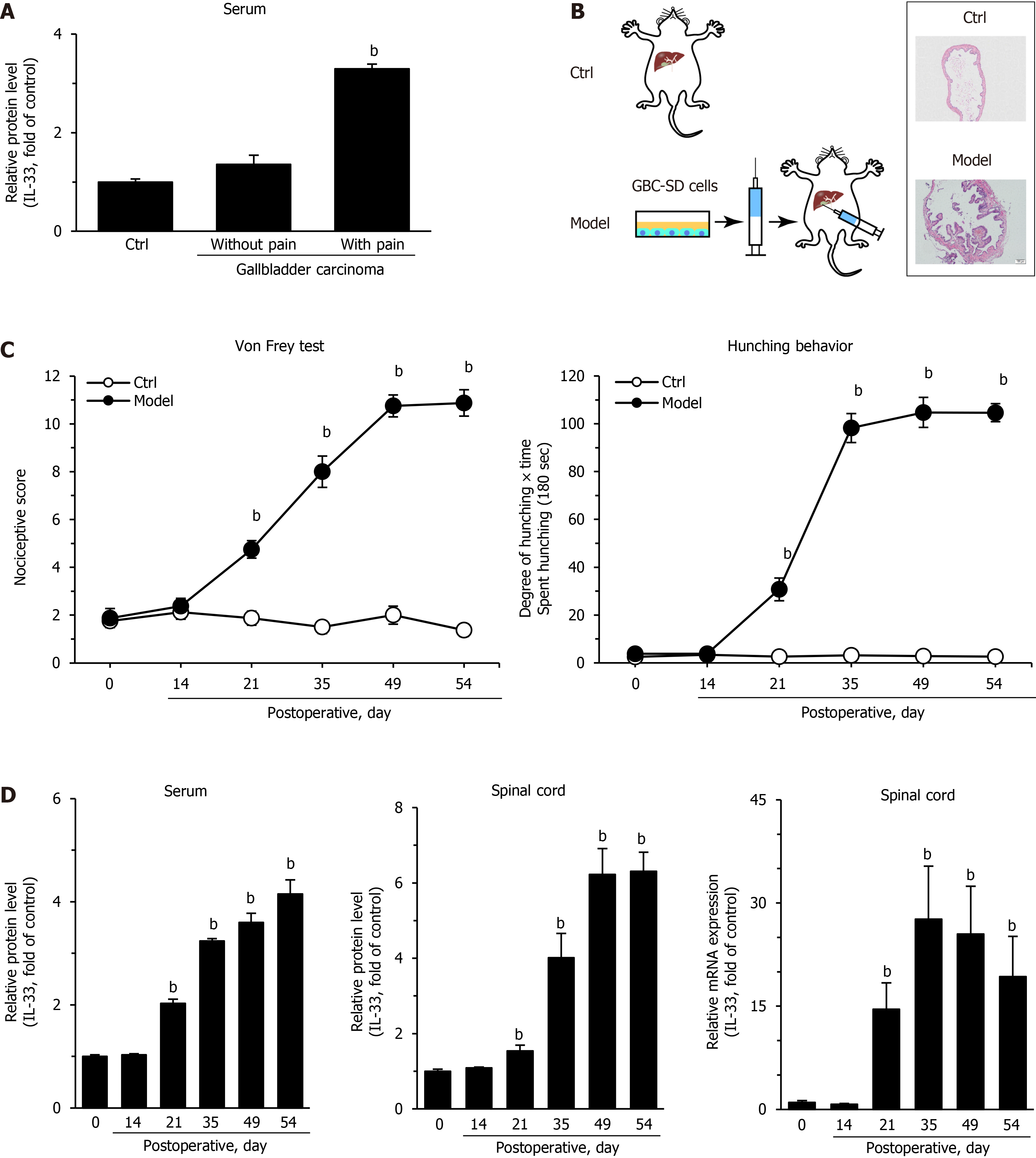
Figure 1 Levels of interleukin-33 in gallbladder carcinoma-induced chronic pain.
A: Enzyme-linked immunosorbent assay (ELISA) showing the level of interleukin (IL)-33 in the serum of gallbladder carcinoma (GBC) patients with pain; B: Haematoxylin and eosin staining of the gallbladders of nude mice; C: Animals with gallbladder carcinoma in situ presented numerous pain-related behaviors such as hypersensitivity of the abdomen to mechanical stimulation and spontaneous visceral pain-related behavior; D: ELISA showing the level of IL-33 in the serum of patients with GBC-induced chronic pain; E and F: ELISA and real-time polymerase chain reaction analysis of IL-33 levels in the spinal cords of model animals with GBC-induced chronic pain. Six samples were included in each of the groups (A, D, E, and F). Twelve mice were included in each of the groups (C). Two-way ANOVA. bP < 0.01 vs gallbladder carcinoma patients without pain (A) or 0 day (C-F). IL-33: Interleukin-33; GBC: Gallbladder carcinoma.
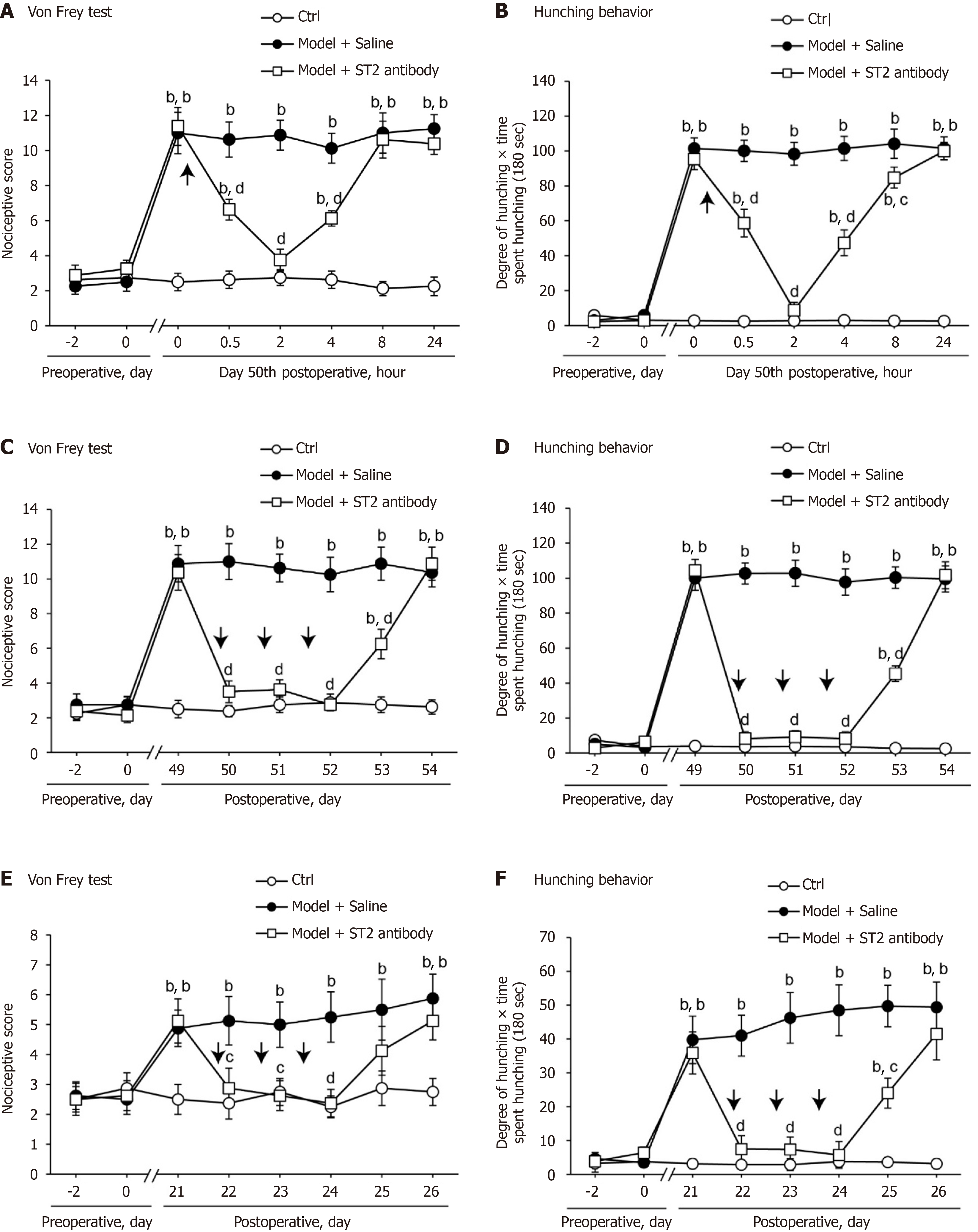
Figure 2 The intrathecal administration of an interleukin-33/suppression of tumorigenicity 2 signaling blocking agent suppressed gallbladder carcinoma-induced chronic pain in nude mice.
A and B: A single dose of an anti-suppression of tumorigenicity 2 (anti-ST2) antibody (300 ng) administered 50 days after the operation significantly inhibited the established hypersensitivity of the abdomen to mechanical stimulation and spontaneous visceral pain-related behavior; C and D: Repetitive administration of the anti-ST2 antibody (300 ng, daily for three consecutive days) at postoperative days 50, 51, and 52 abrogated the established hypersensitivity of the abdomen to mechanical stimulation and spontaneous visceral pain-related behavior; E and F: Repetitive administration of the anti-ST2 antibody (300 ng, daily for three consecutive days) at 22, 23 and 24 days after the operation abrogated the hypersensitivity of the abdomen to mechanical stimulation and spontaneous visceral pain-related behavior. Twelve mice were included in each of the groups. Drug administration is indicated by the arrow(s) on the corresponding day. Two-way ANOVA. bP < 0.01 vs control, cP < 0.05 vs control, and dP < 0.01 vs model + saline. ST2: Suppression of tumorigenicity 2.
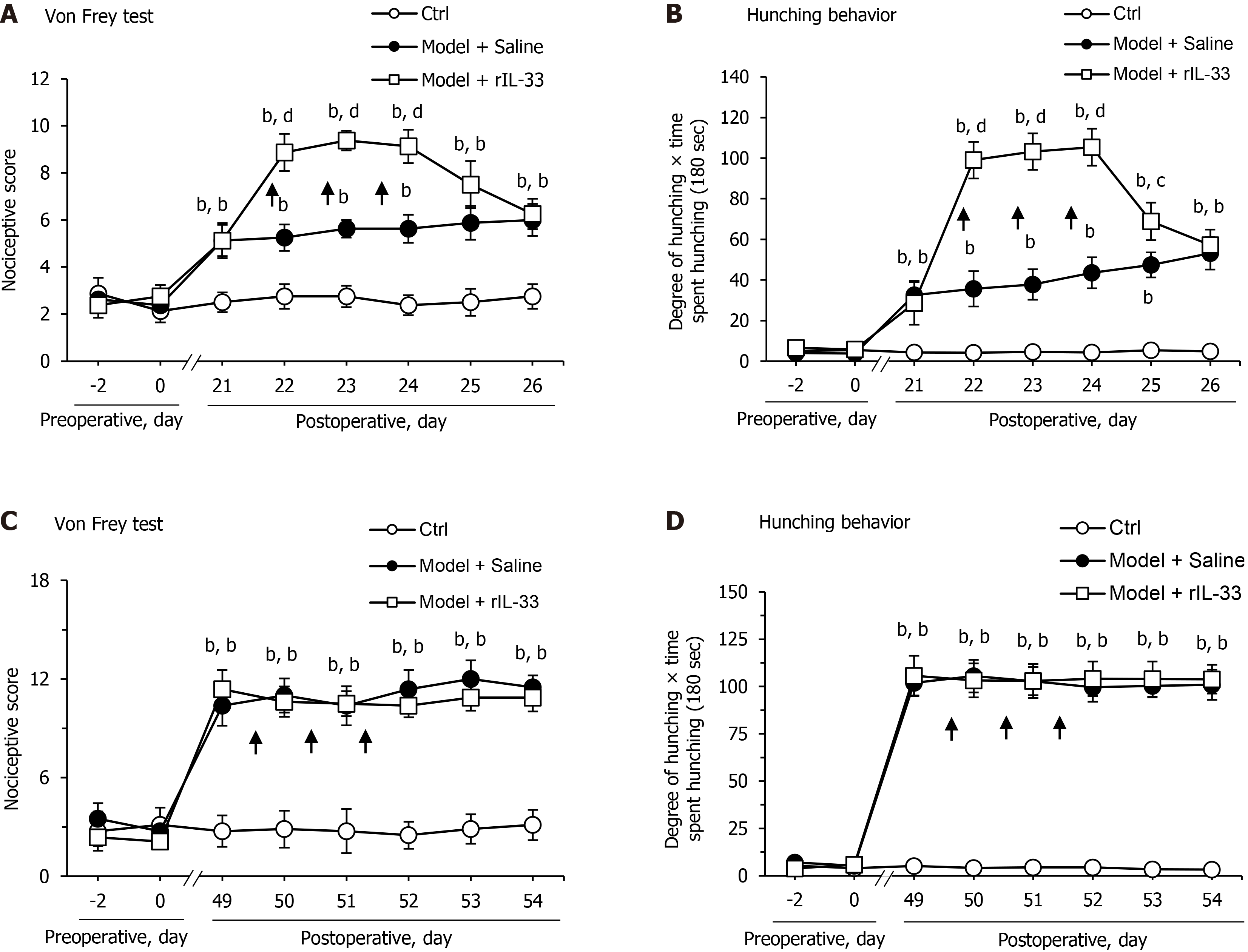
Figure 3 Intrathecal administration of an interleukin-33/suppression of tumorigenicity 2 signaling activator promoted the induction of gallbladder carcinoma-induced chronic pain in nude mice.
A and B: Repetitive administration of recombinant interleukin-33 (90 ng, daily for three consecutive days) at 22, 23 and 24 days after the operation promoted hypersensitivity of the abdomen to mechanical stimulation and spontaneous visceral pain-related behavior; C and D: Repetitive administration of recombinant interleukin-33 (90 ng, daily for three consecutive days) at postoperative days 50, 51, and 52 did not exacerbate hypersensitivity of the abdomen to mechanical stimulation or promote spontaneous visceral pain-related behavior. Twelve mice were included in each of the groups. Drug administration is indicated by the arrow(s) on the corresponding day. Two-way ANOVA. bP < 0.01 vs control, cP < 0.05 vs control, and dP < 0.01 vs model + saline. rIL-33: Recombinant interleukin-33.
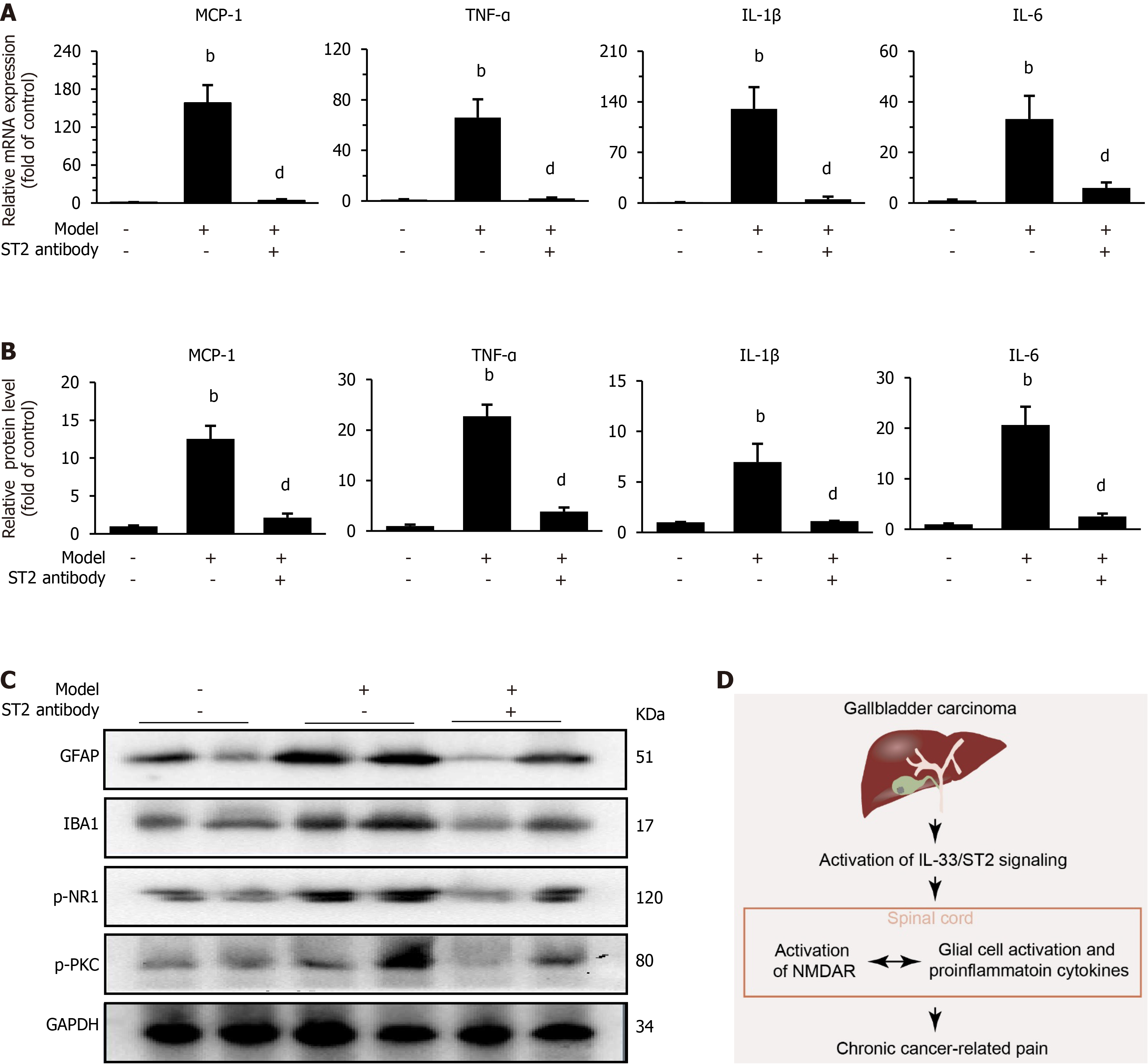
Figure 4 Intrathecal administration of the anti-suppression of tumorigenicity 2 antibody suppresses glial cell activation, proinflammatory cytokine release and phosphorylation of the N-methyl-D-aspartate receptor subunit 1 and protein kinase C in the spinal cords of animals with gallbladder carcinoma-induced chronic pain.
A and B: MRNA and protein levels of monocyte chemoattractant protein 1, tumour necrosis factor-α, interleukin (IL)-1β, and IL-6 in the spinal cords of model mice with gallbladder carcinoma-induced chronic pain; C: Western blot analysis showing the effects of repeated intrathecal injections of the anti-suppression of tumorigenicity 2 antibody (300 ng, daily for three consecutive days 50-52 days after the operation) on the expression of glial fibrillary acidic protein, ionized calcium-binding adaptor molecule 1, p-N-methyl-D-aspartate receptor subunit 1, and p-protein kinase C; D: Proposed mechanisms of action by which IL-33/suppression of tumorigenicity 2 signaling promotes gallbladder carcinoma-induced chronic pain. Tissues were collected on the 52nd day, 2 hours after the last injection. Six spinal cord segments were included in each of the groups. One-way ANOVA. bP < 0.01 vs control, and dP < 0.01 vs model + saline. ST2: Suppression of tumorigenicity 2; MCP-1: Monocyte chemoattractant protein 1; TNF: Tumour necrosis factor; IL: Interleukin; GFAP: Glial fibrillary acidic protein; IBA1: Ionized calcium-binding adaptor molecule 1; NR1: N-methyl-D-aspartate receptor subunit 1; PKC: Protein kinase C; GAPDH: Glyceraldehyde 3-phosphate dehydrogenase; NMDAR: N-methyl-D-aspartic acid receptor.
- Citation: Ge XX, Dong XM, Yang Y, Zhang W, Zhou W, Deng XT. Activation of interleukin-33/suppression of tumorigenicity 2 signaling contributes to gallbladder carcinoma-induced chronic pain. World J Gastrointest Oncol 2026; 18(3): 115905
- URL: https://www.wjgnet.com/1948-5204/full/v18/i3/115905.htm
- DOI: https://dx.doi.org/10.4251/wjgo.v18.i3.115905