
















Copyright: ©Author(s) 2026.
World J Gastrointest Endosc. Apr 16, 2026; 18(4): 118361
Published online Apr 16, 2026. doi: 10.4253/wjge.v18.i4.118361
Published online Apr 16, 2026. doi: 10.4253/wjge.v18.i4.118361
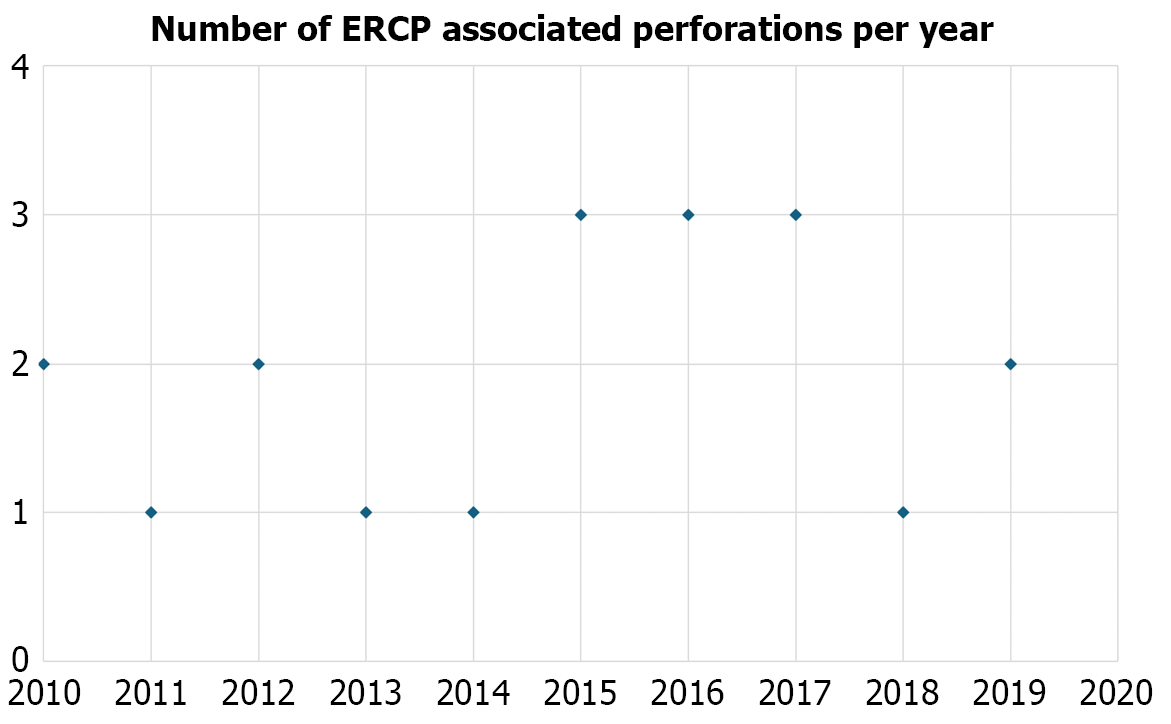
Figure 1 Number of endoscopic retrograde cholangiopancreatography associated perforations per year.
ERCP: Endoscopic retrograde cholangiopancreatography.
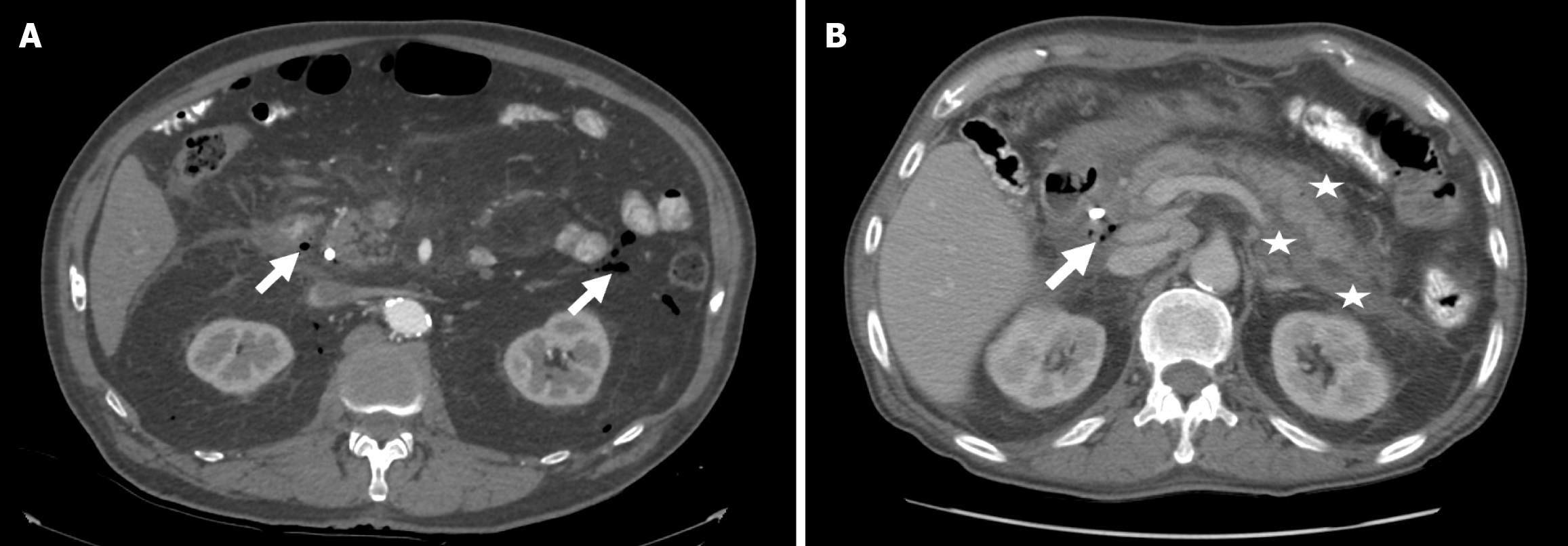
Figure 2 Computed tomography image.
A: Axial oral and intravenous contrast-enhanced computed tomography (CT) image shows free air in the retroperitoneal space (white arrows) after iatrogenic duodenal perforation during endoscopic retrograde cholangiopancreatography and bile duct stenting; B: Axial intravenous contrast-enhanced CT image two days after common bile duct stentings shows free air and fluid (white arrow) posterior to the common bile duct and peripancreatic infiltration (white asterisk) likely due to bile duct perforation and pancreatitis.
- Citation: Dieninyte E, Pliuskute K, Jarasunas J, Stanaitis J, Poskus T. Endoscopic retrograde cholangiopancreatography associated perforations: 10-year experience of a large volume center. World J Gastrointest Endosc 2026; 18(4): 118361
- URL: https://www.wjgnet.com/1948-5190/full/v18/i4/118361.htm
- DOI: https://dx.doi.org/10.4253/wjge.v18.i4.118361