
















Copyright: ©Author(s) 2026.
World J Gastrointest Endosc. Apr 16, 2026; 18(4): 117389
Published online Apr 16, 2026. doi: 10.4253/wjge.v18.i4.117389
Published online Apr 16, 2026. doi: 10.4253/wjge.v18.i4.117389
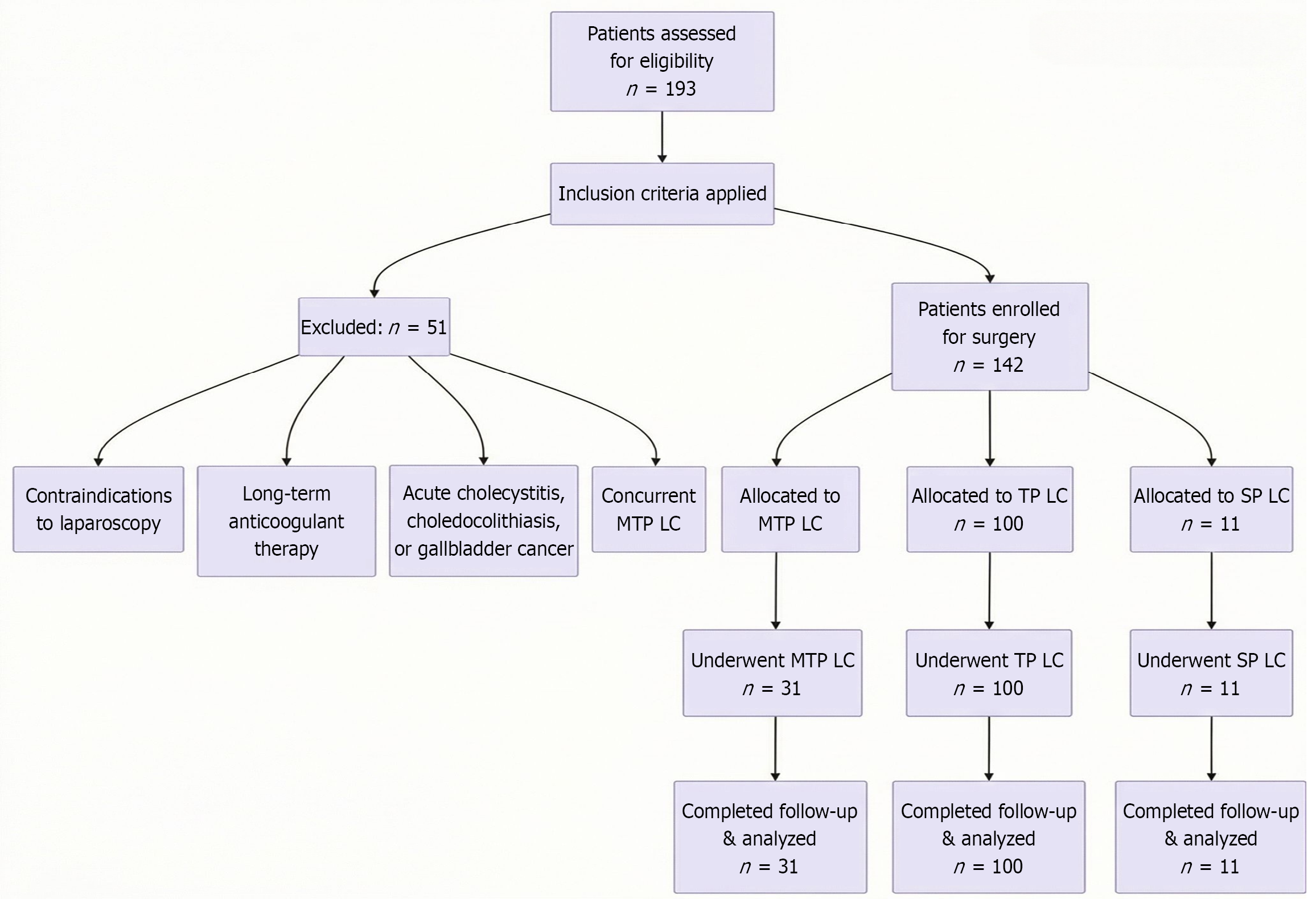
Figure 1
The patient selection process.
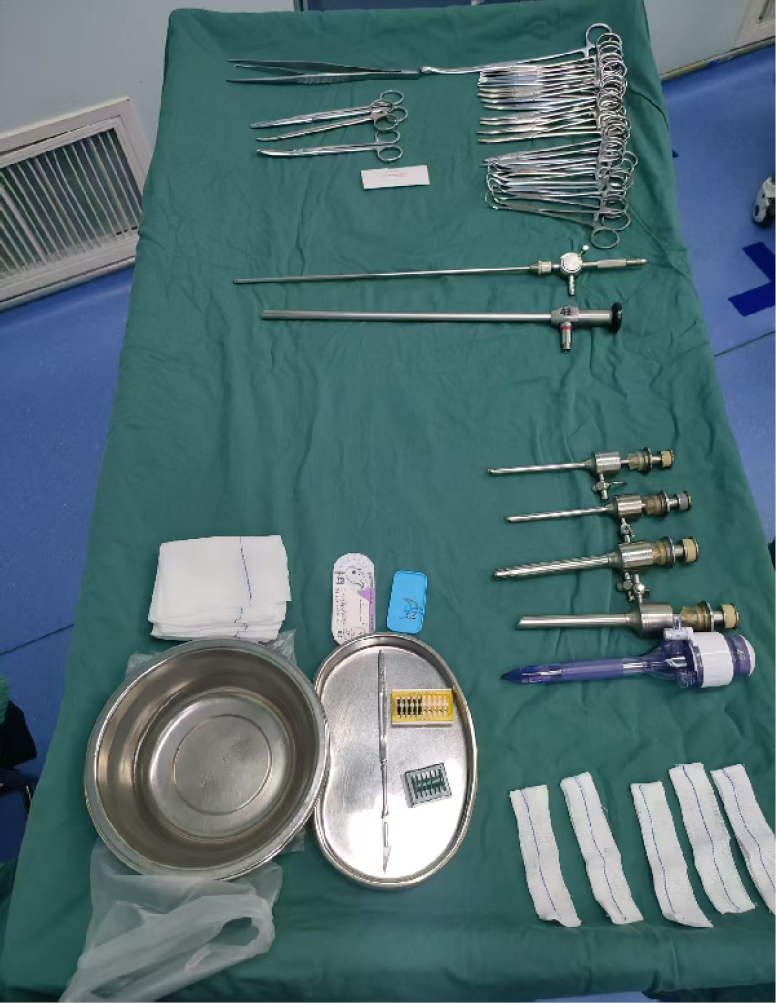
Figure 2
Surgical instruments used.
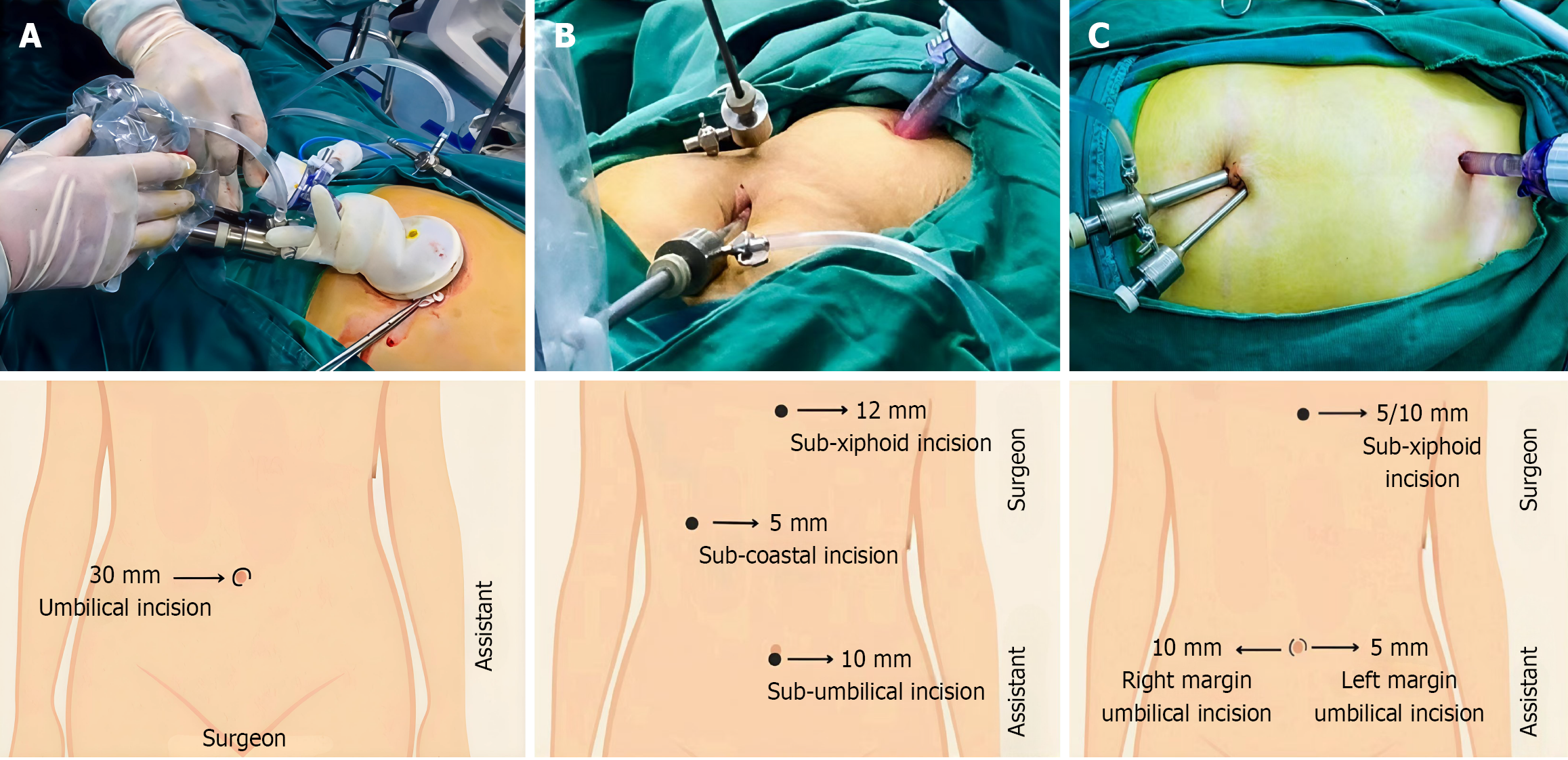
Figure 3 Placement of surgical instruments.
A: Placement of surgical instruments in single-port technique; B: Placement of surgical instruments in three-port technique; C: Placement of surgical instruments in modified two-port technique.
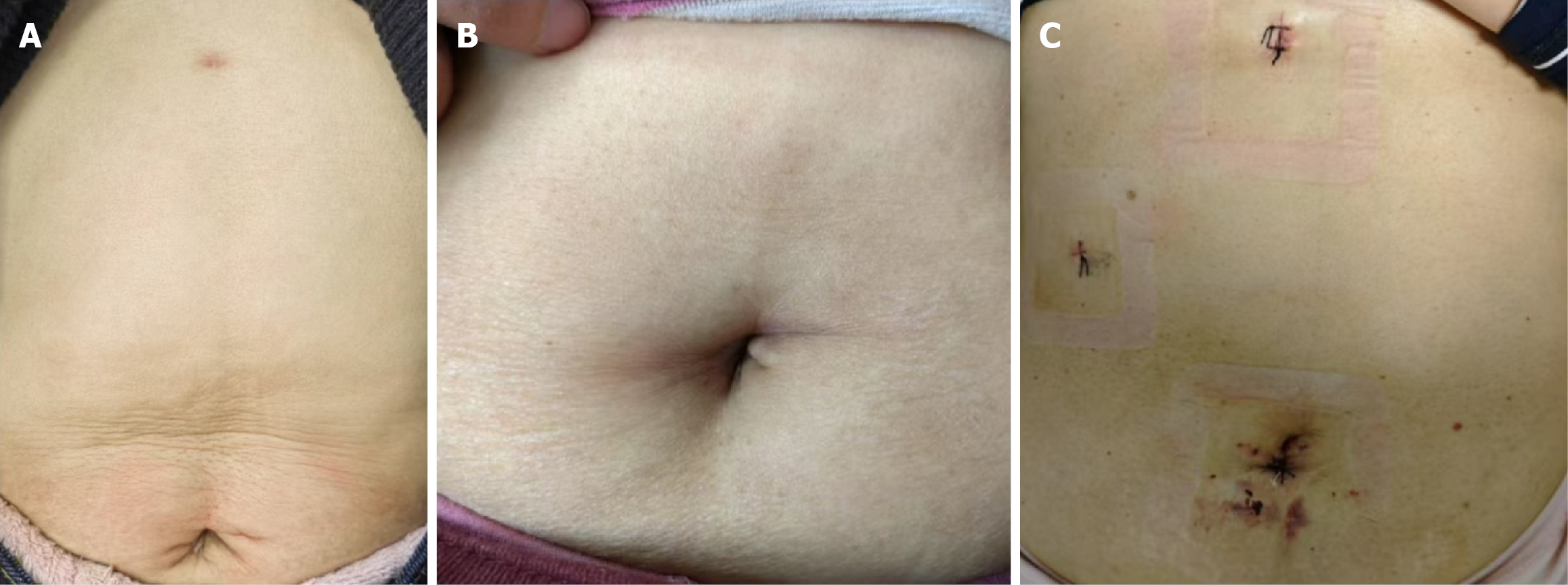
Figure 4 Postoperative scar appearance.
A: Postoperative scar appearance 1 month after modified two-port laparoscopic cholecystectomy: Umbilical and sub-xiphoid incisions with minimal visibility; B: Postoperative scar appearance 1 month after single-port laparoscopic cholecystectomy: Umbilical incisions with minimal visibility; C: Postoperative scar appearance 10 days after three-port laparoscopic cholecystectomy: Umbilical and sub-xiphoid incisions with mild bruise and early signs of healing.
- Citation: Hawanga GD, Zhang XL, Li ZX, Li MX, Pan J, Wang KM, Qian DH. Clinical outcomes of single-port, modified two-port, and three-port laparoscopic cholecystectomy: A comparative retrospective cohort study. World J Gastrointest Endosc 2026; 18(4): 117389
- URL: https://www.wjgnet.com/1948-5190/full/v18/i4/117389.htm
- DOI: https://dx.doi.org/10.4253/wjge.v18.i4.117389