
















Copyright: ©Author(s) 2026.
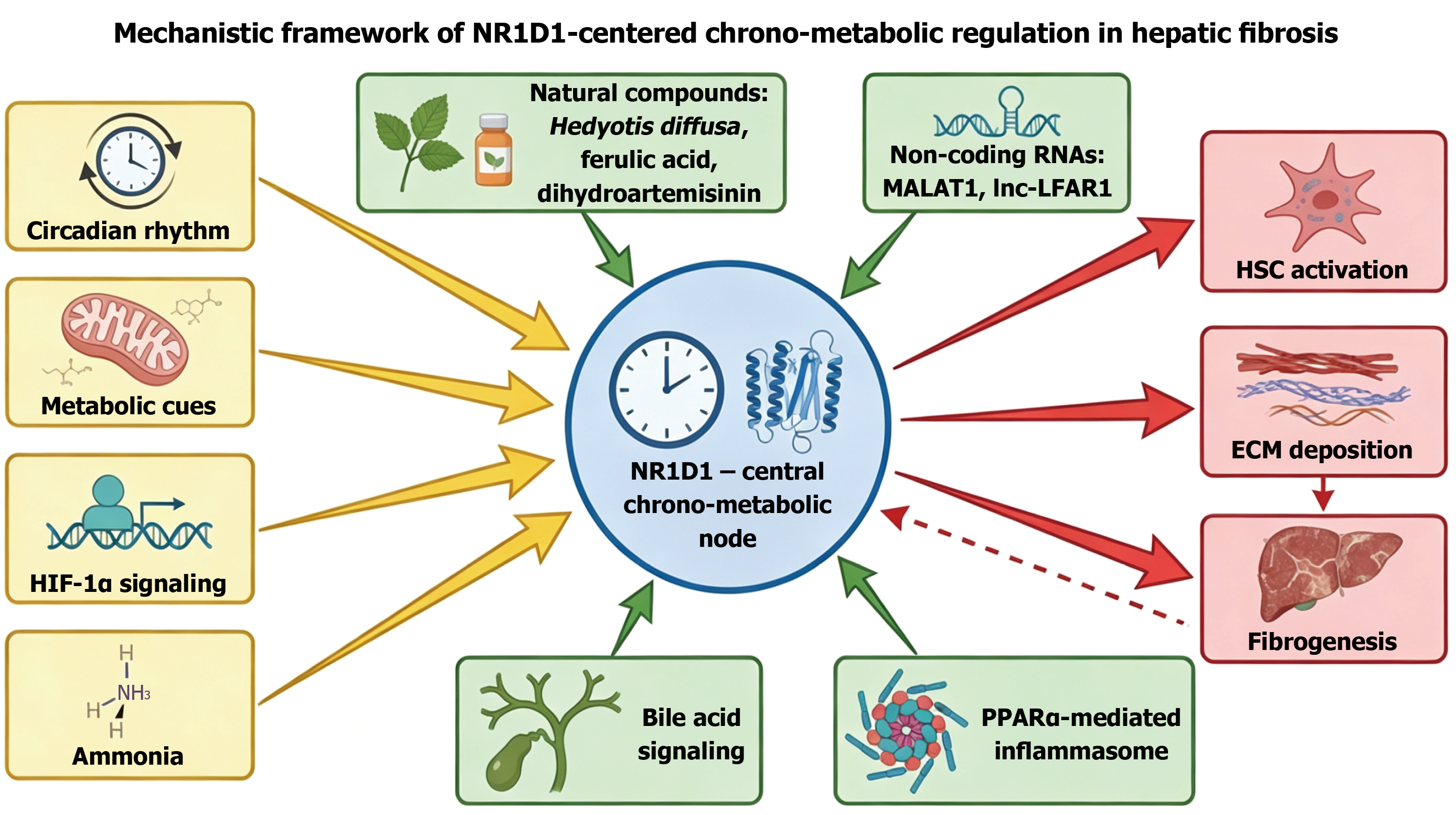
Figure 1 Mechanistic framework of NR1D1-centered chrono-metabolic regulation in hepatic fibrosis.
NR1D1 acts as a central circadian-metabolic node, inhibiting HIF-1α signaling and reducing ammonia-induced hepatic stellate cell activation, thereby mitigating fibrogenesis. Pharmacological and natural compounds (e.g., Hedyotis diffusa, ferulic acid, and dihydroartemisinin) restore NR1D1 expression and downstream pathways. Additional modulatory nodes, including bile acid signaling, non-coding RNAs (MALAT1 and lnc-LFAR1), and PPARα-mediated inflammasome regulation, further refine temporal and metabolic control. HSC: Hepatic stellate cell; ECM: Extracellular matrix.
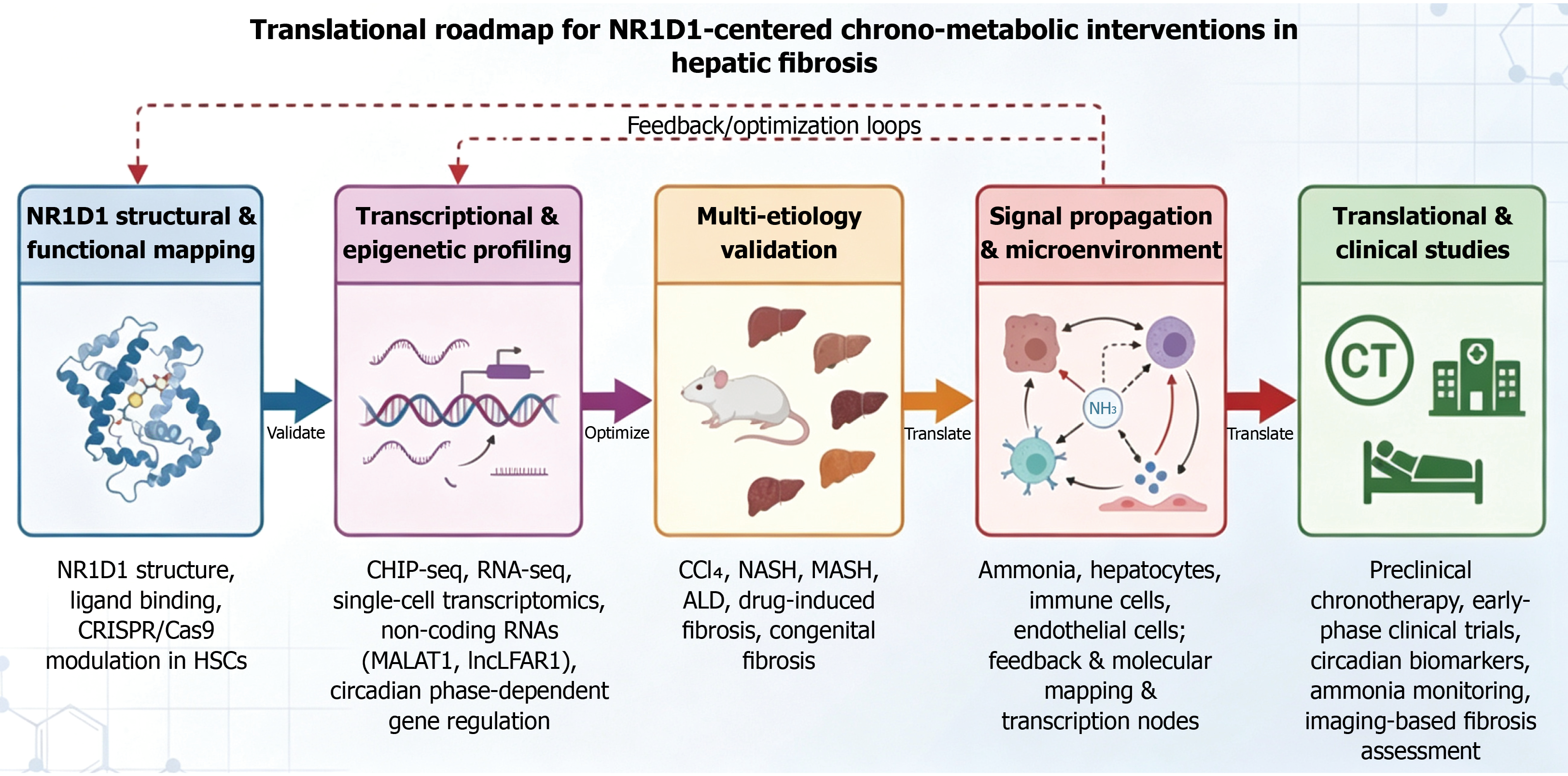
Figure 2 Translational roadmap for NR1D1-centered chrono-metabolic interventions in hepatic fibrosis.
This framework integrates molecular mapping, transcriptional and epigenetic decoding, multi-etiology validation, signal translation within the hepatic microenvironment, and preclinical and early-phase clinical studies. Each stage represents a step toward translating mechanistic insights into chrono-metabolic therapies, highlighting points for intervention, validation, and optimization from bench to bedside. NASH: Nonalcoholic steatohepatitis; MASH: Metabolic dysfunction-associated steatohepatitis; ALD: Alcoholic liver disease.
- Citation: Tu HS, Chen ML, Hong J, He L. Chrono-metabolic regulation of hepatic fibrosis via NR1D1-mediated hepatic stellate cell activation. World J Hepatol 2026; 18(8): 118194
- URL: https://www.wjgnet.com/1948-5182/full/v18/i8/118194.htm
- DOI: https://dx.doi.org/10.4254/wjh.118194