
















Copyright: ©Author(s) 2026.
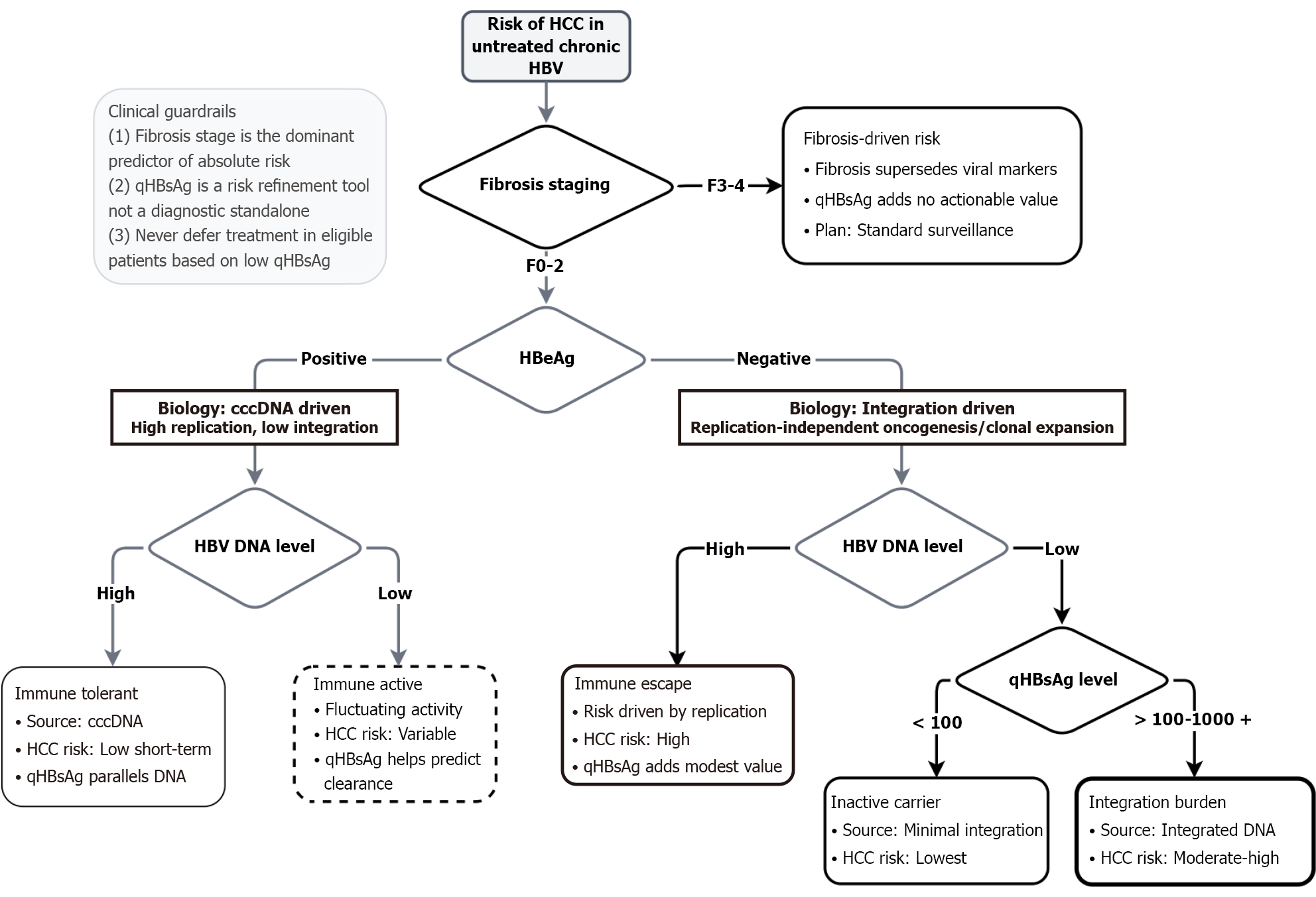
Figure 1 This schematic illustrates the evolving risk of hepatocellular carcinoma in untreated chronic hepatitis B, progressing from left (hepatitis B e antigen-positive) to right (hepatitis B e antigen-negative) phases.
The dominant biology shifts from covalently closed circular DNA-driven replication to integration-driven, replication-independent oncogenesis. Fibrosis stage (F0-2 vs F3-4) is the primary determinant of absolute risk. The clinical utility of quantitative hepatitis B surface antigen (qHBsAg) varies by phase: It parallels hepatitis B virus DNA and offers limited prognostic value in hepatitis B e antigen-positive and high-replication states, but serves as a key risk-refinement tool in hepatitis B e antigen-negative patients with low viremia (< 2000 IU/mL), where elevated qHBsAg (> 1000 IU/mL sustained over ≥ 1 year) reflects an increased integration burden and clonal hepatocyte expansion, signaling elevated hepatocellular carcinoma risk independent of viral load. Integration burden is not directly measurable in clinical practice; persistently elevated qHBsAg serves as its surrogate marker. cccDNA: Covalently closed circular DNA; HBeAg: Hepatitis B e antigen; HBV: Hepatitis B virus; HCC: Hepatocellular carcinoma; qHBsAg: Quantitative hepatitis B surface antigen.
- Citation: Omari Y, Almeqdadi M. Phase-dependent interpretation of quantitative hepatitis B surface antigen and hepatocellular carcinoma risk in chronic hepatitis B infection. World J Hepatol 2026; 18(6): 119837
- URL: https://www.wjgnet.com/1948-5182/full/v18/i6/119837.htm
- DOI: https://dx.doi.org/10.4254/wjh.119837