
















Copyright: ©Author(s) 2026.
World J Hepatol. May 27, 2026; 18(5): 118804
Published online May 27, 2026. doi: 10.4254/wjh.v18.i5.118804
Published online May 27, 2026. doi: 10.4254/wjh.v18.i5.118804
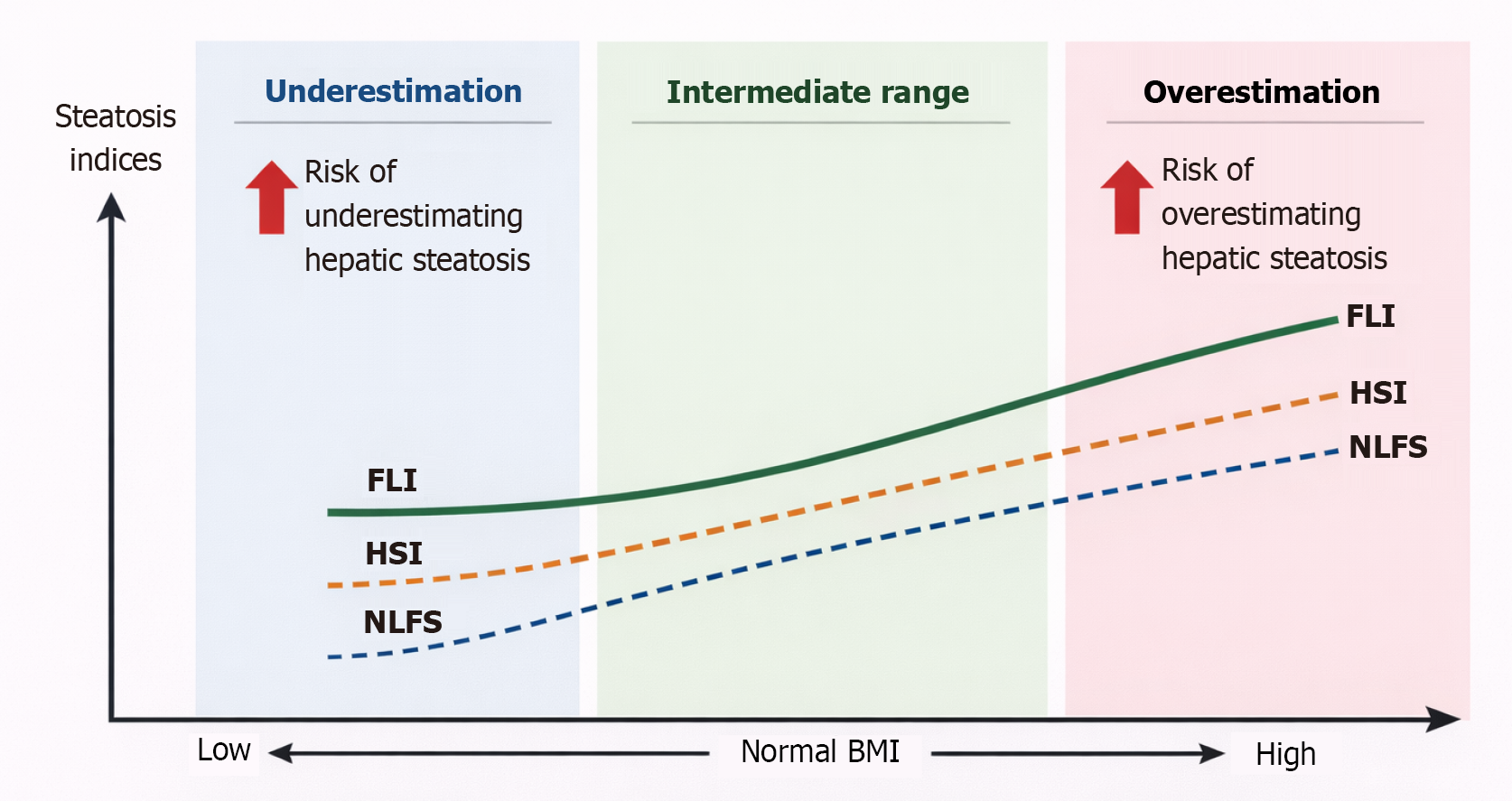
Figure 1 Conceptual illustration of misclassification of hepatic steatosis across the body mass index spectrum.
Commonly used non-invasive indices for hepatic steatosis – such as the fatty liver index (FLI), hepatic steatosis index (HSI), and nonalcoholic fatty liver disease liver fat score (NLFS) – include body mass index (BMI) or BMI-related components as key elements in their calculation. In individuals with lower BMI, these indices tend to yield lower values, reducing sensitivity and leading to underestimation of steatosis. Conversely, in individuals with higher BMI, these indices yield elevated values independent of hepatic fat content, resulting in overestimation. The arrows indicate the direction of increasing misclassification risk across the BMI spectrum. It illustrates the structural dependence of these indices on BMI and the resulting bidirectional misclassification.
- Citation: Moriyama K. Rethinking noninvasive steatosis indices: Structural limitations and misclassification across the body mass index spectrum. World J Hepatol 2026; 18(5): 118804
- URL: https://www.wjgnet.com/1948-5182/full/v18/i5/118804.htm
- DOI: https://dx.doi.org/10.4254/wjh.v18.i5.118804