
















Copyright: ©Author(s) 2026.
World J Hepatol. May 27, 2026; 18(5): 118303
Published online May 27, 2026. doi: 10.4254/wjh.v18.i5.118303
Published online May 27, 2026. doi: 10.4254/wjh.v18.i5.118303
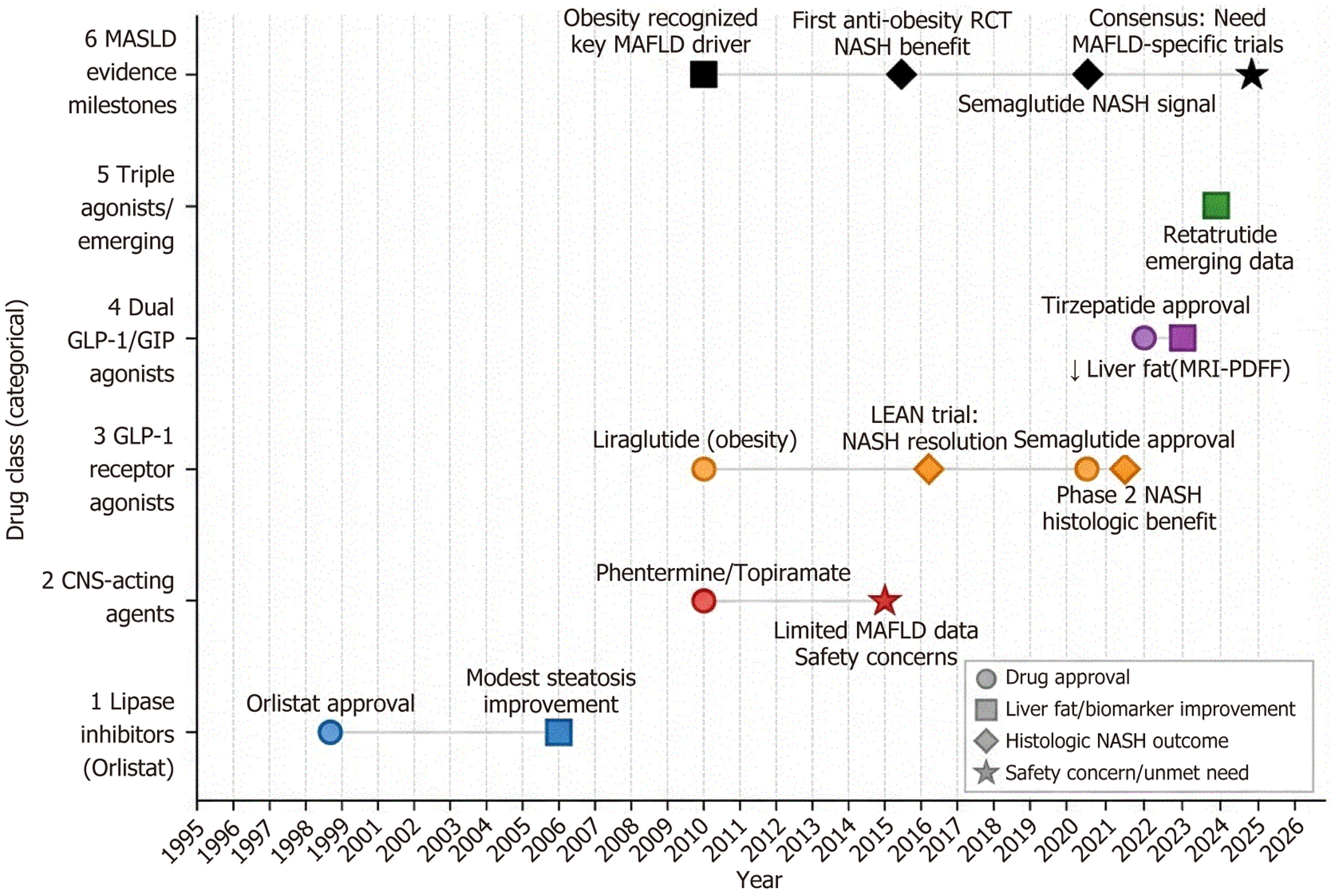
Figure 1 Historical evolution of anti-obesity pharmacotherapy and its application in metabolic associated steatotic liver disease and met
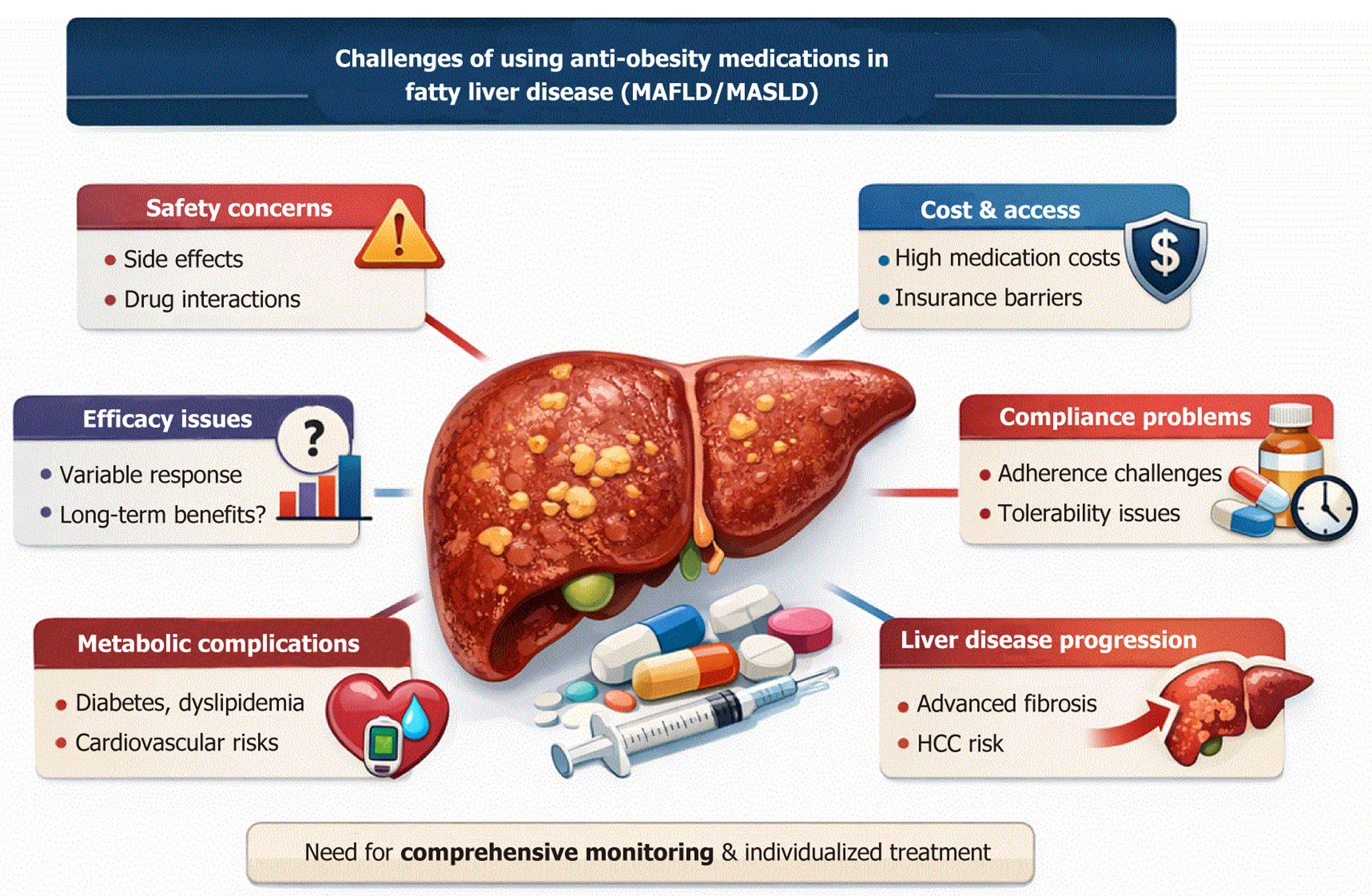
Figure 2 Challenges and obstacles to the use of anti-obesity medications in metabolic dysfunction-associated fatty liver disease and metabolic associated steatotic liver disease.
MAFLD: Metabolic dysfunction-associated fatty liver disease; MASLD: Metabolic associated steatotic liver disease; HCC: Hepatocellular carcinoma.
- Citation: Fouad Y, Abdelghany WA, El Sheemy R. Anti-obesity medications, the new frontiers in metabolic dysfunction-associated fatty liver disease: Efficacy, limitations, and future directions. World J Hepatol 2026; 18(5): 118303
- URL: https://www.wjgnet.com/1948-5182/full/v18/i5/118303.htm
- DOI: https://dx.doi.org/10.4254/wjh.v18.i5.118303