
















©The Author(s) 2026.
World J Hepatol. Jan 27, 2026; 18(1): 113475
Published online Jan 27, 2026. doi: 10.4254/wjh.v18.i1.113475
Published online Jan 27, 2026. doi: 10.4254/wjh.v18.i1.113475
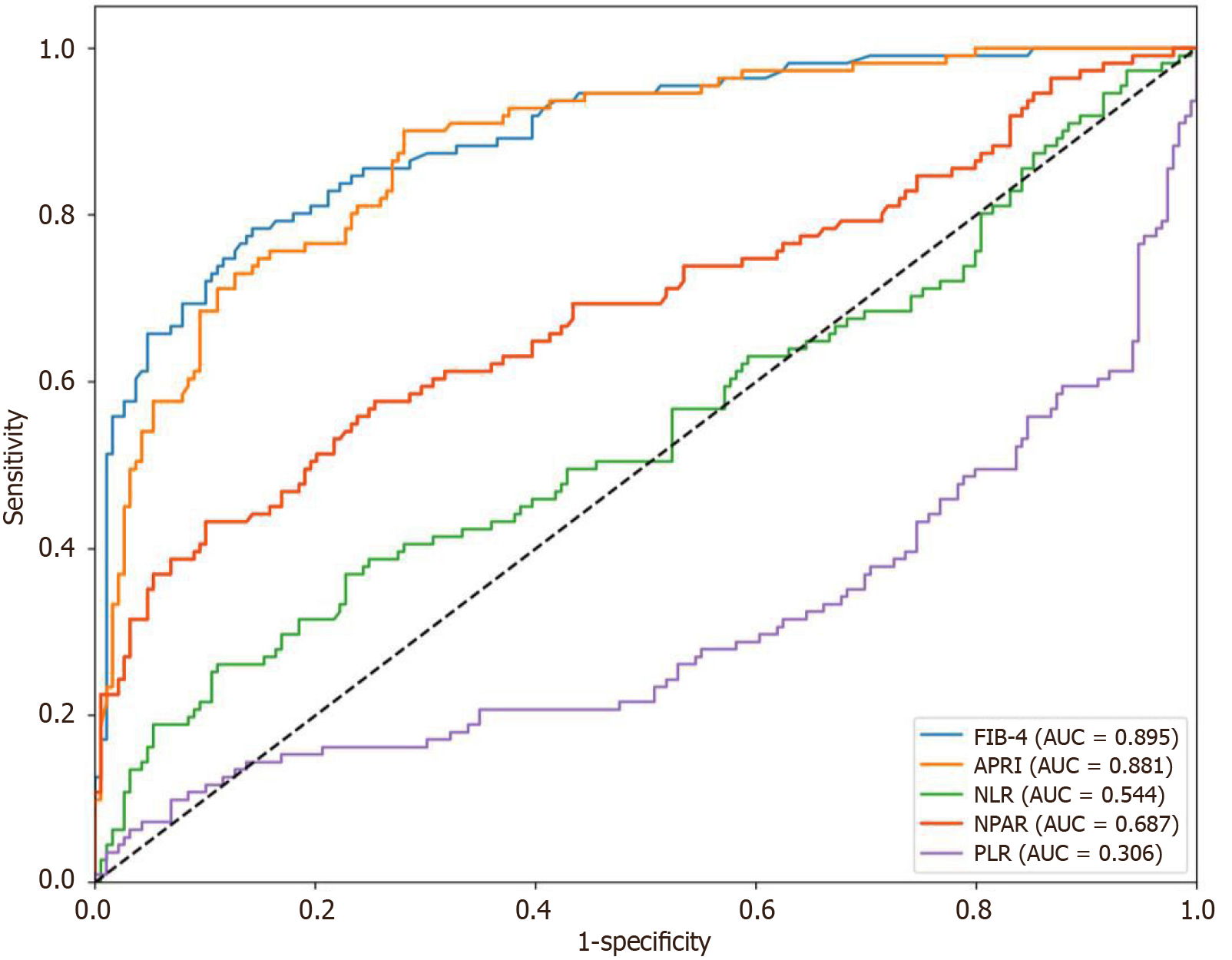
Figure 1 Receiver operating characteristic curves for blood-based markers in differentiating advanced fibrosis (F3-F4) from lower stages (F0-F2).
FIB-4: Fibrosis 4; APRI: Aspartate transaminase to platelet ratio index; NLR: Neutrophil-lymphocyte ratio; PLR: Platelet-to-lymphocyte ratio; NPAR: Neutrophil percentage-to-albumin ratio; AUC: Area under curve; ROC: Receiver operating characteristic.
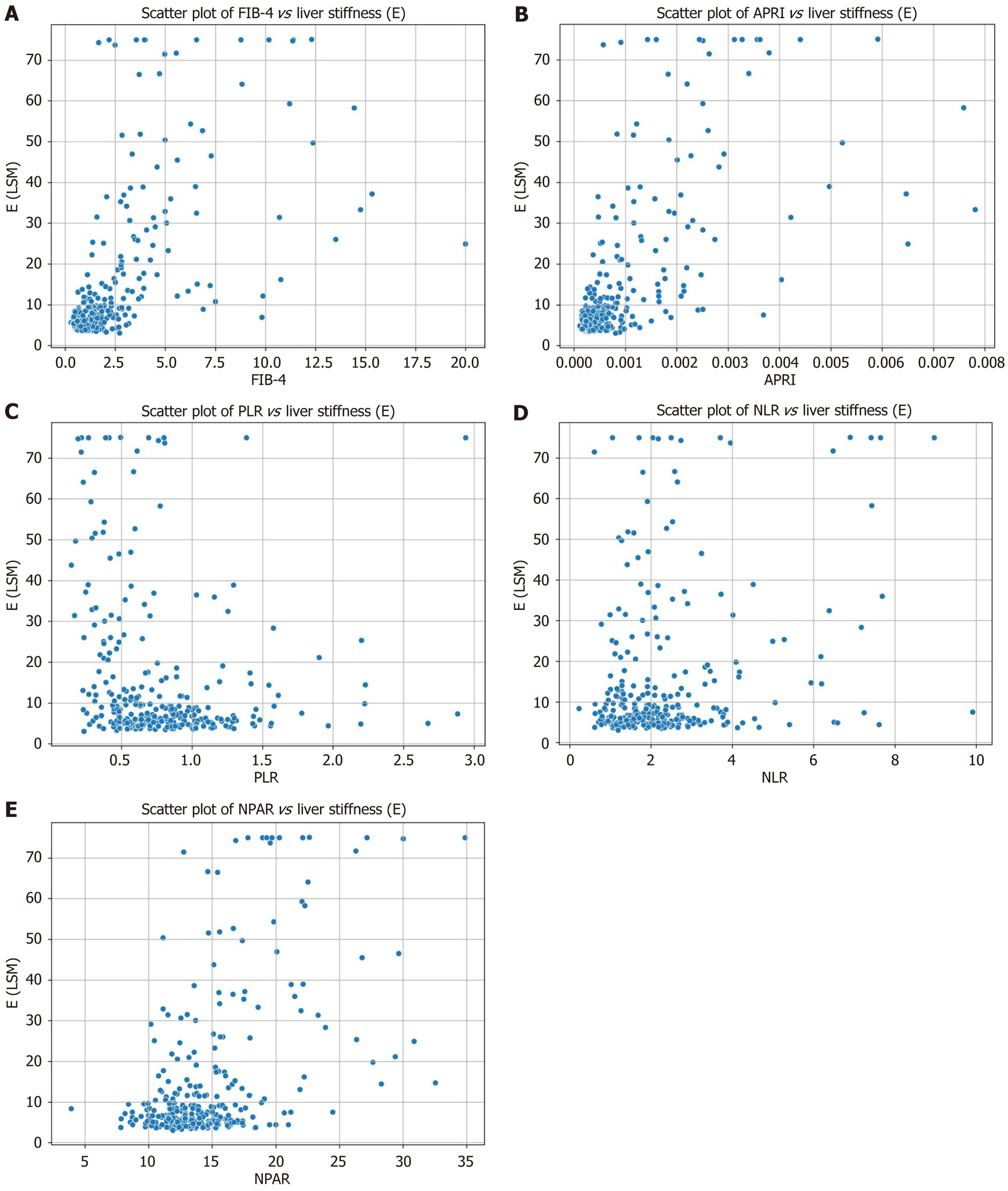
Figure 2 Scatter plot demonstrating.
A: Scatter plot demonstrating correlation between fibrosis 4 and liver stiffness measurement; B: Scatter plot demonstrating correlation between aspartate transaminase to platelet ratio index and liver stiffness measurement; C: Scatter plot demonstrating correlation between platelet-to-lymphocyte ratio and liver stiffness measurement; D: Scatter plot demonstrating correlation between neutrophil-lymphocyte ratio and liver stiffness measurement; E: Scatter plot demonstrating correlation between neutrophil percentage-to-albumin ratio and liver stiffness measurement. FIB-4: Fibrosis 4; APRI: Aspartate transaminase to platelet ratio index; LSM: Liver stiffness measurement; E: Elasticity measurement in kilopascals; PLR: Platelet-to-lymphocyte ratio; NLR: Neutrophil-lymphocyte ratio; NPAR: Neutrophil percentage-to-albumin ratio.
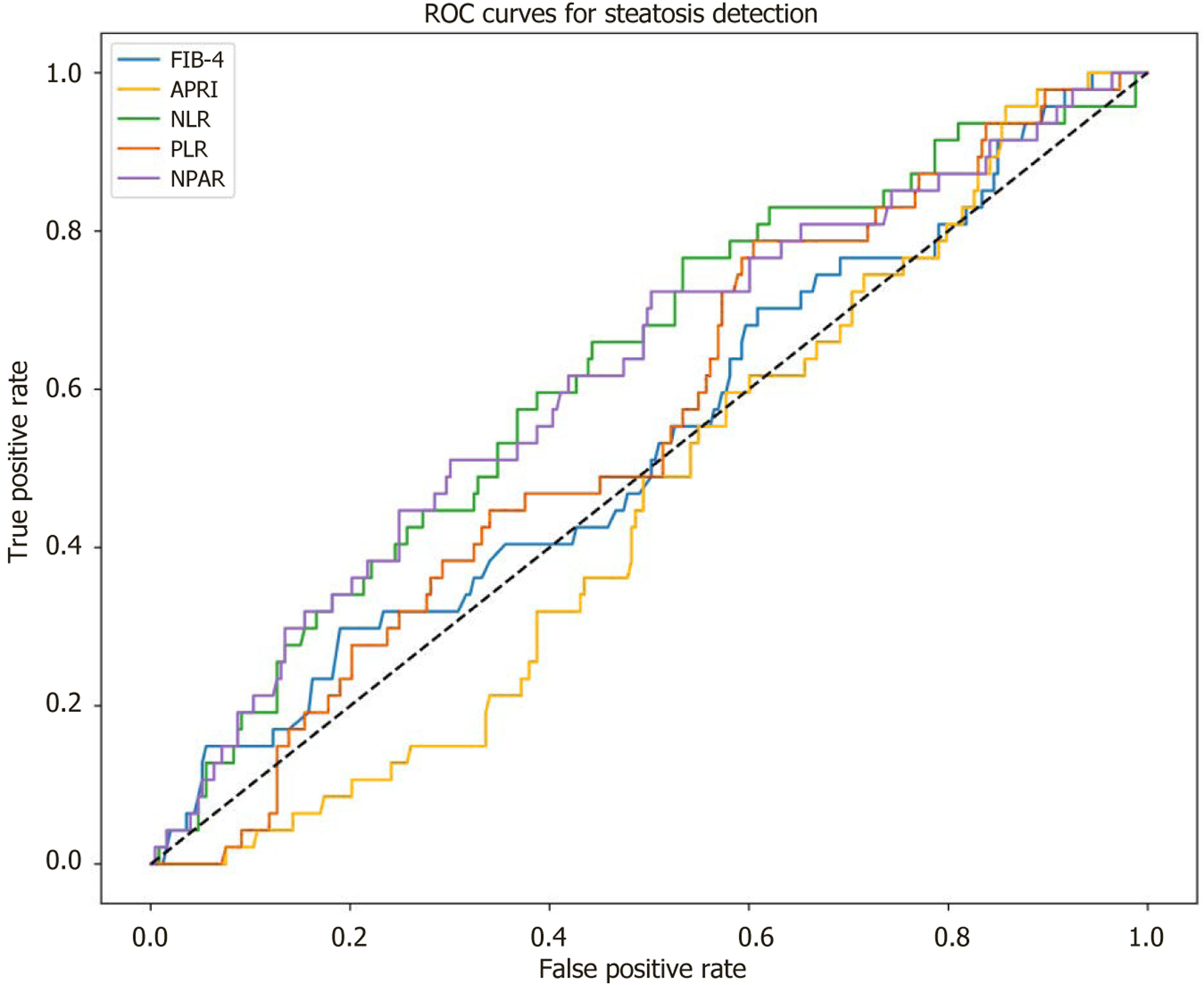
Figure 3 Receiver operating characteristic curves for blood-based markers in differentiating severe steatosis (S3) from lower grades (S2 and below).
FIB-4: Fibrosis index based on four factors; APRI: Aspartate transaminase to platelet ratio index; NLR: Neutrophil-lymphocyte ratio; PLR: Platelet-to-lymphocyte ratio; NPAR: Neutrophil percentage-to-albumin ratio; ROC: Receiver operating characteristic.
- Citation: Joseph A, Mathew S, Nair HR. Blood markers vs transient elastography for liver stiffness and steatosis in metabolic dysfunction-associated steatotic liver disease. World J Hepatol 2026; 18(1): 113475
- URL: https://www.wjgnet.com/1948-5182/full/v18/i1/113475.htm
- DOI: https://dx.doi.org/10.4254/wjh.v18.i1.113475