
















©The Author(s) 2026.
World J Hepatol. Jan 27, 2026; 18(1): 113247
Published online Jan 27, 2026. doi: 10.4254/wjh.v18.i1.113247
Published online Jan 27, 2026. doi: 10.4254/wjh.v18.i1.113247
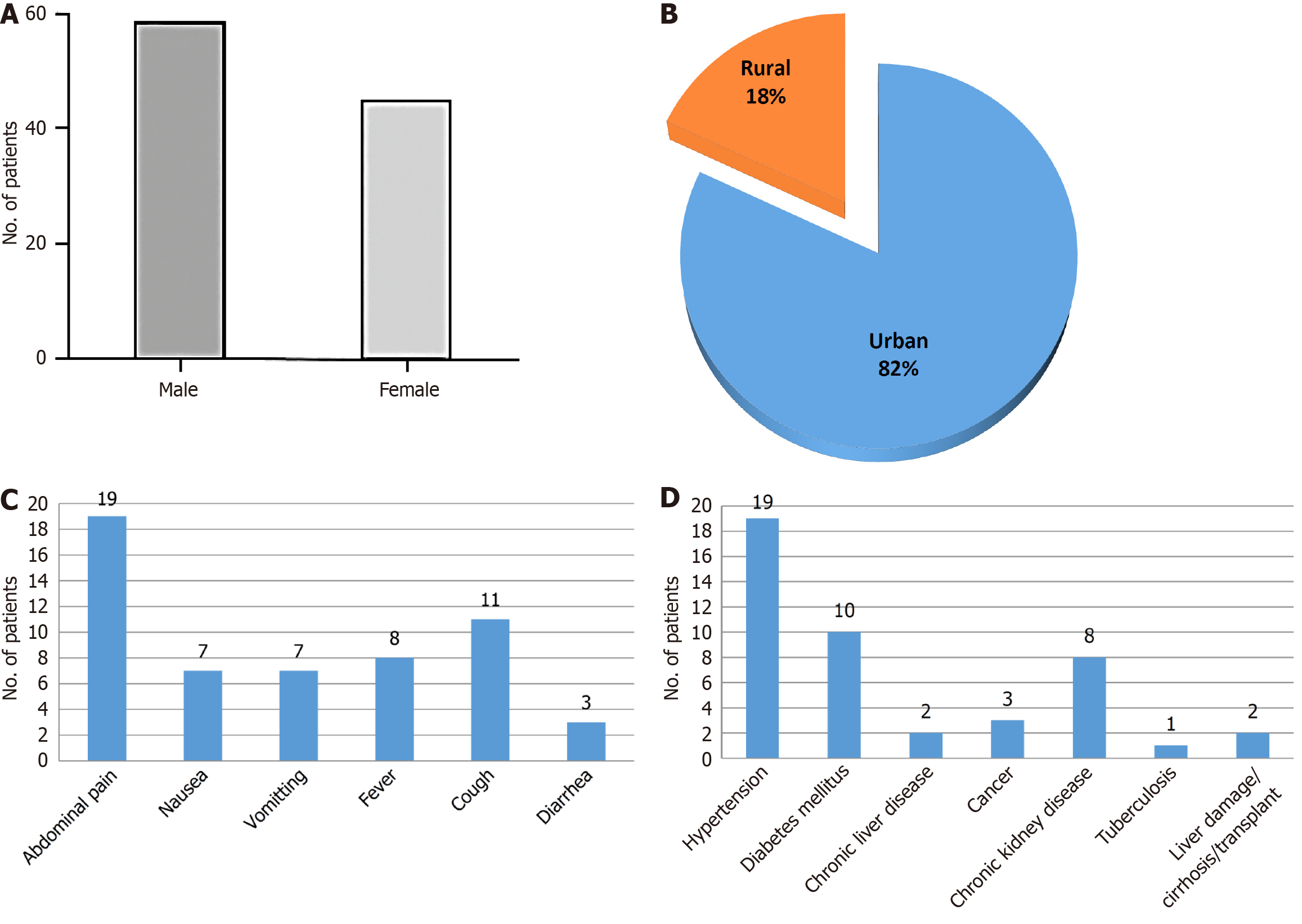
Figure 1 Study population statistics.
A: Gender distribution in the hepatitis B virus positive group, showing male predominance (male:female approximately 1.8:1); B: Distribution of patient by urban and rural areas; C: Clinical presentations of enrolled study patients; D: Prevalence of co-morbidities in the study population. Data represent the number of patients with specific co-existing medical conditions (e.g., hypertension, diabetes mellitus, chronic liver disease, cancer, chronic kidney disease, tuberculosis and liver damage/cirrhosis/transplant) at the time of enrollment.
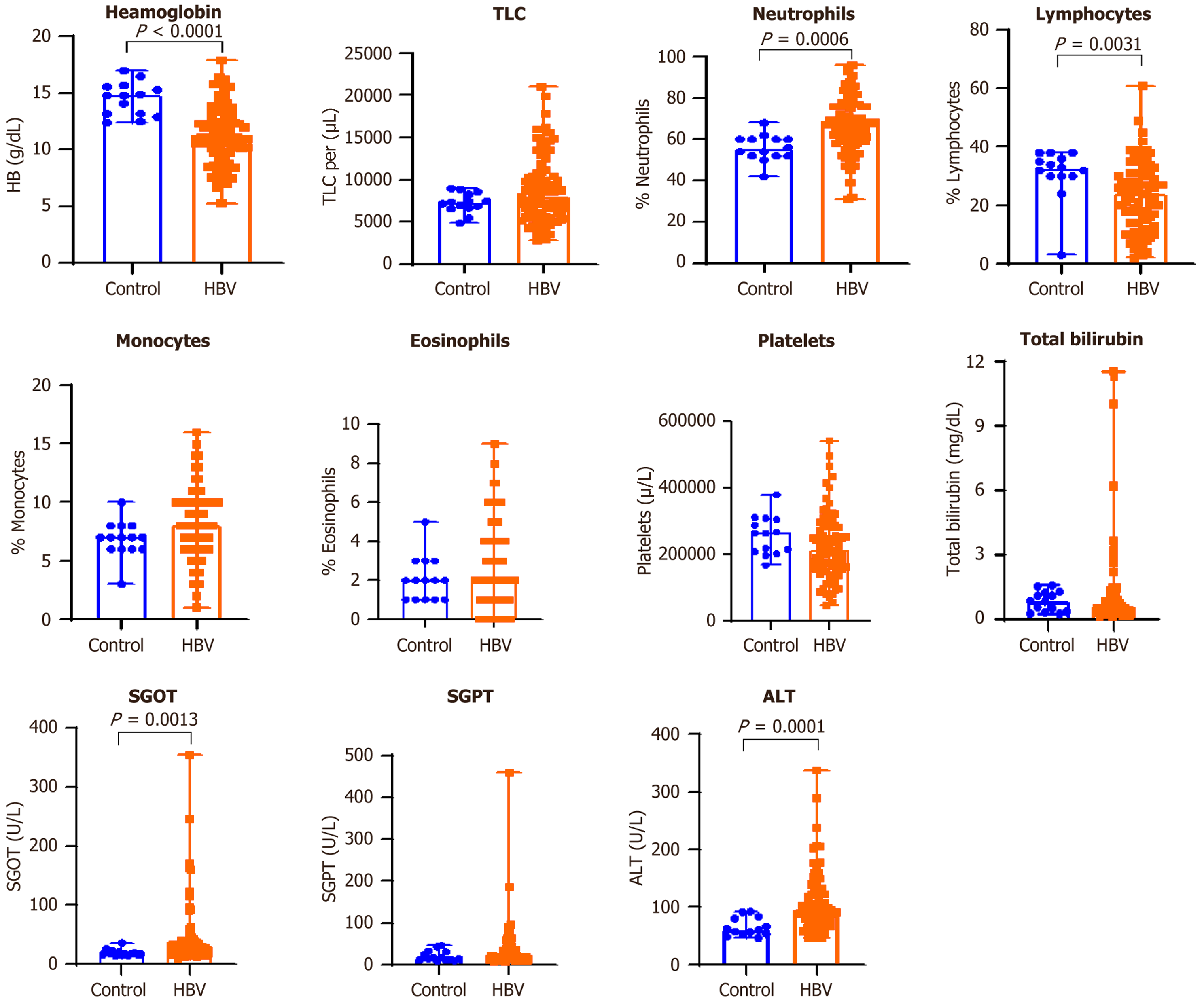
Figure 2 Comparison of heamatological parameters between the hepatitis B virus positive patients and healthy controls.
HB: Heamoglobin; HBV: Hepatitis B virus; TLC: Total leukocyte count; SGOT: Serum glutamic-oxaloacetic transaminas; SGPT: Serum glutamic-pyruvic transaminase; ALT: Alanine aminotransferase.
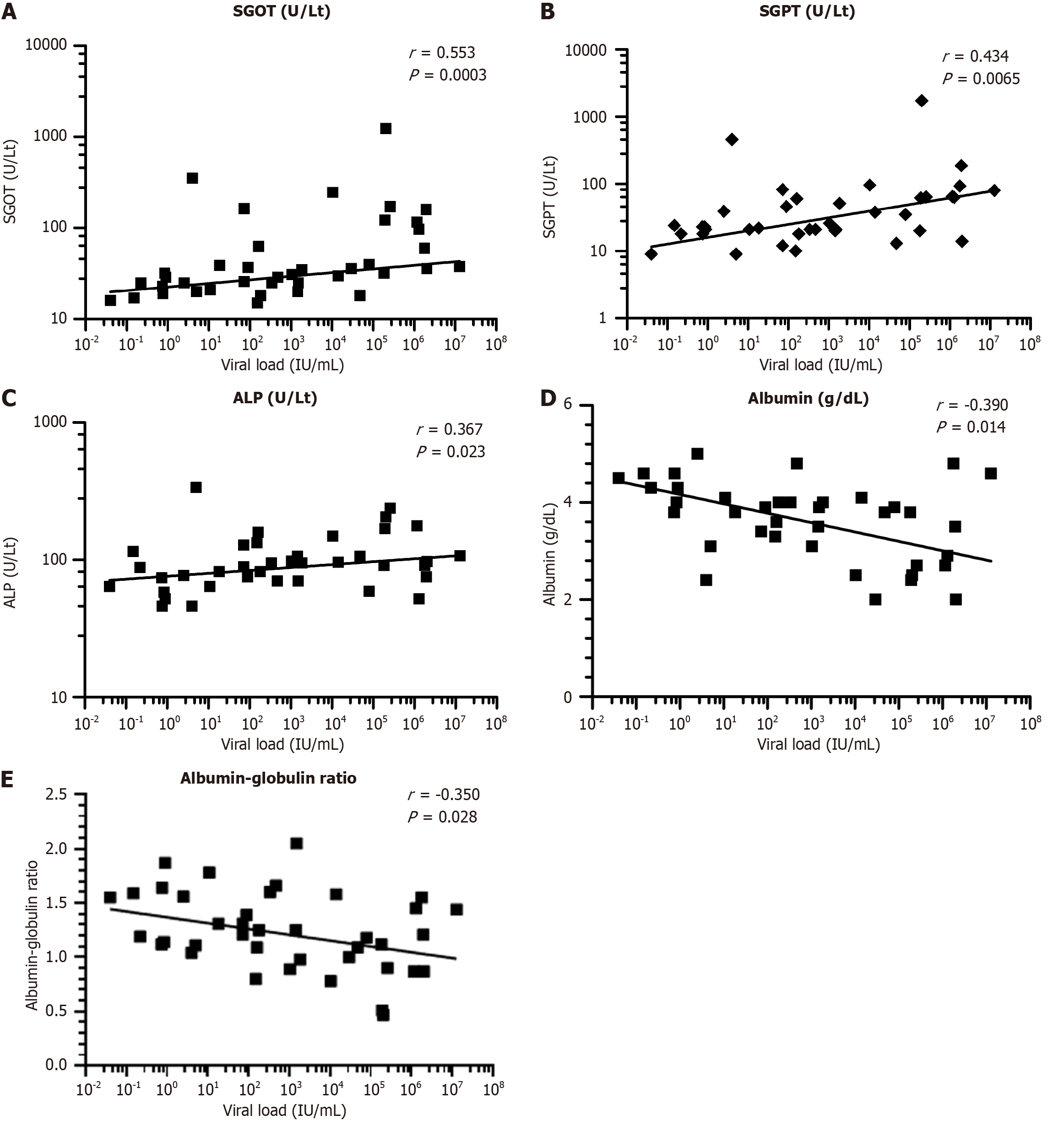
Figure 3 Correlation analysis between biochemical markers and hepatitis B virus viral load.
A: Correlation between hepatitis B virus (HBV) viral load and serum glutamic-oxaloacetic transaminas; B: Correlation between HBV viral load and serum glutamic-pyruvic transaminase; C: Correlation between HBV viral load and alkaline phosphatase; D: Correlation between HBV viral load and albumin; E: Correlation between HBV viral load and albumin-globulin ratio. r was calculated using Graphpad prism V 8.0.1 software. SGOT: Serum glutamic-oxaloacetic transaminas; SGPT: Serum glutamic-pyruvic transaminase; ALP: Alkaline phosphatase.
- Citation: Ratnaparkhi MM, Vyawahare CR, Ratnakar PJ, Gandham NR, Suryawanshi PV. Uncovering silent carriers: Hematological insights and viral burden in incidentally detected hepatitis B virus infection. World J Hepatol 2026; 18(1): 113247
- URL: https://www.wjgnet.com/1948-5182/full/v18/i1/113247.htm
- DOI: https://dx.doi.org/10.4254/wjh.v18.i1.113247