
















Copyright: ©Author(s) 2026.
World J Stem Cells. Aug 26, 2026; 18(8): 121077
Published online Aug 26, 2026. doi: 10.4252/wjsc.121077
Published online Aug 26, 2026. doi: 10.4252/wjsc.121077
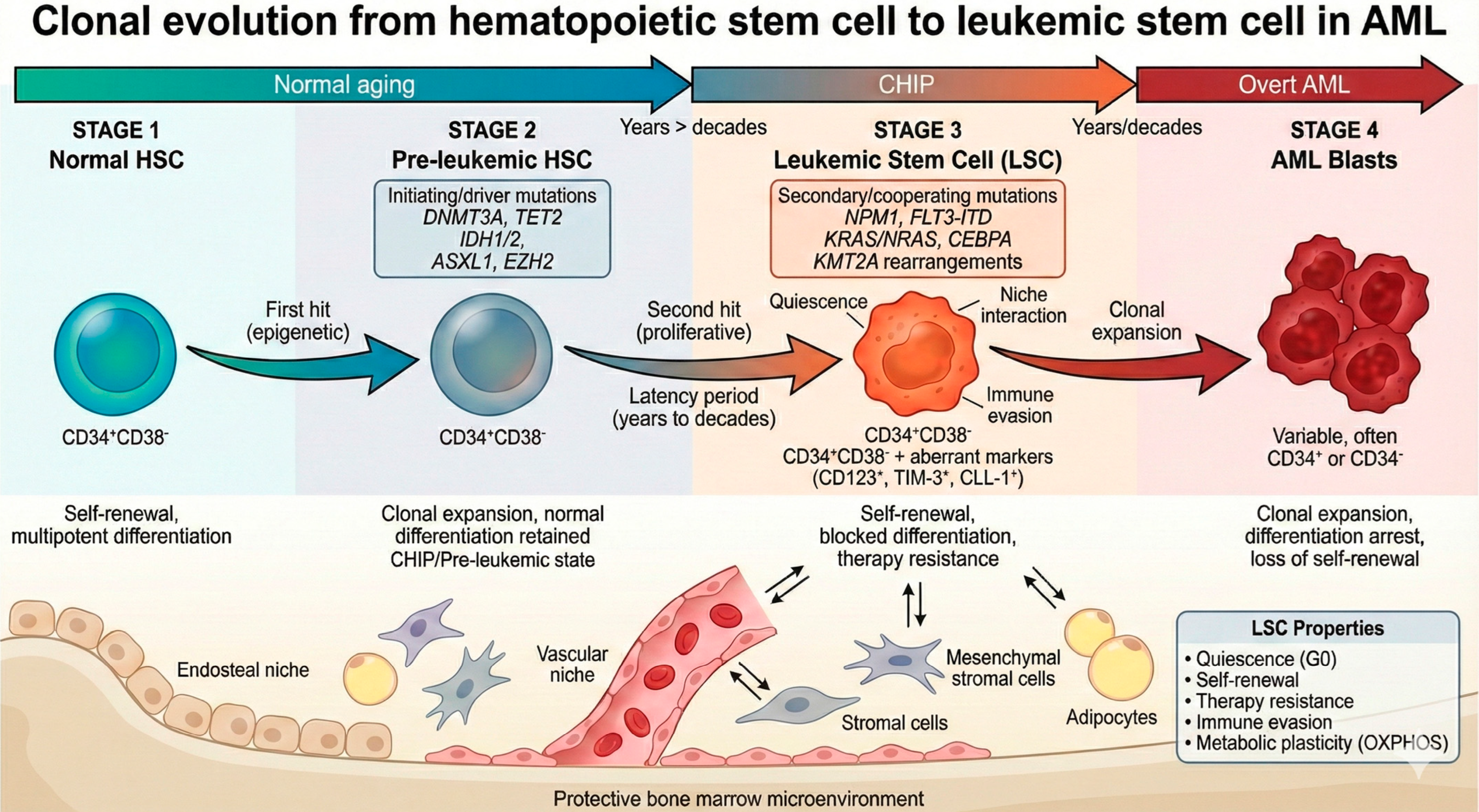
Figure 1 Acute myeloid leukemia multistep clonal evolution from normal hematopoietic stem cells to leukemic stem cells.
Normal hematopoietic stem cells (HSCs) acquire initiating mutations in epigenetic modifier genes (DNMT3A, TET2, IDH1/2, ASXL1), resulting in pre-leukemic HSCs that clonally multiply while preserving differentiation potential, a condition known as clonal hematopoiesis of indeterminate potential. Following a latency period spanning years to decades, the acquisition of secondary mutations in proliferation-associated genes (NPM1, FLT3-ITD, KRAS/NRAS, KMT2A rearrangements) converts pre-leukemic HSC into leukemic stem cells (LSCs) capable of initiating overt leukemia. LSCs inhabit protected bone marrow niches and demonstrate quiescence, self-renewal, therapeutic resistance, and immune evasion. LSCs generate rapidly proliferating leukemic blasts that exhibit inhibited differentiation. Atypical surface markers (CD123, T-cell immunoglobulin and mucin-domain containing-3, C-type lectin-like molecule-1) differentiate LSCs from normal HSCs and signify possible treatment targets. AML: Acute myeloid leukemia; CHIP: Clonal hematopoiesis of indeterminate potential; HSC: Hematopoietic stem cell; TIM-3: T-cell immunoglobulin and mucin-domain containing-3; CLL-1: C-type lectin-like molecule-1. Citation: Apostolidou E, Georgoulis V, Leonardos D, Benetatos L, Kapsali E, Hatzimichael E. Decoding Leukemic Stem Cells in AML: From Identification to Targeted Eradication. Diseases 2026; 14: 50. Copyright© The Author(s) 2026. Published by MDPI. This article is an open access article distributed under the terms and conditions of the Creative Commons Attribution (CC BY) license, which permits unrestricted use, distribution, and reproduction in any medium, provided the original work is properly cited.
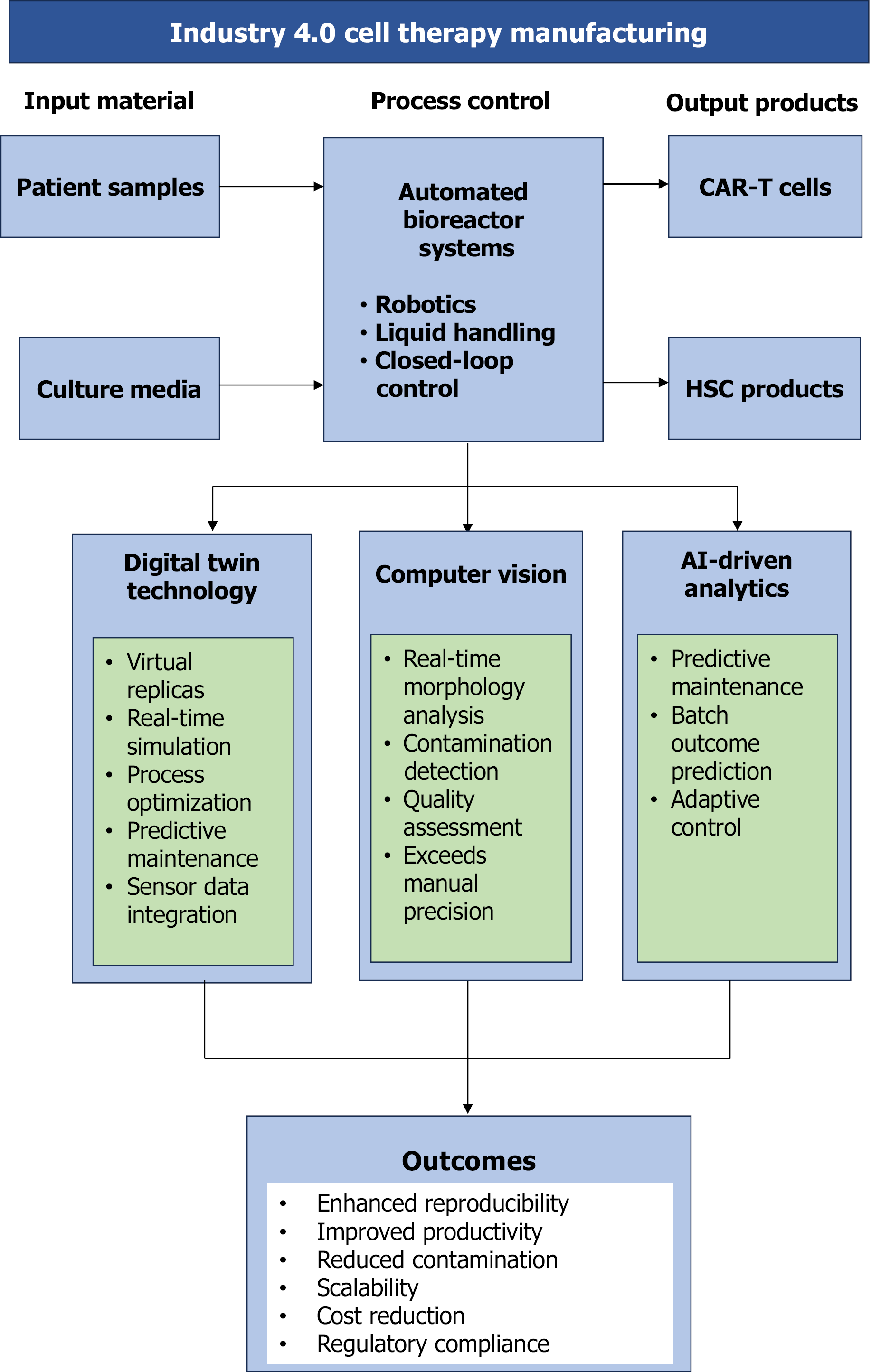
Figure 2 Schematic representation of the artificial intelligence-driven biomanufacturing pipeline for cell therapies incorporating Industry 4.
0 principles. The manufacturing process integrates three key artificial intelligence technologies: (1) Digital twin technology for virtual process simulation, real-time optimization, and predictive maintenance of bioreactors; (2) Computer vision systems powered by deep learning for automated quality assessment, real-time morphological analysis, and contamination detection with precision exceeding manual inspection; (3) Artificial intelligence-driven analytics for predictive maintenance and adaptive process control. These technologies enable closed-loop manufacturing systems that minimize manual intervention, enhance reproducibility and productivity of chimeric antigen receptor-T and hematopoietic stem cell products, and facilitate scalable production suitable for commercial manufacturing. CAR-T: Chimeric antigen receptor-T; HSC: Hematopoietic stem cell; AI: Artificial intelligence.
- Citation: Abd El Ghaffar HA, Arafat AMA, Khattab EHA, Khattab MA, Khallaf AM, Mahgoub SMA. Artificial intelligence in hematopoietic stem cell research and associated malignancies: From disease modeling to cell manufacturing. World J Stem Cells 2026; 18(8): 121077
- URL: https://www.wjgnet.com/1948-0210/full/v18/i8/121077.htm
- DOI: https://dx.doi.org/10.4252/wjsc.121077