
















Copyright: ©Author(s) 2026.
World J Stem Cells. Jul 26, 2026; 18(7): 119893
Published online Jul 26, 2026. doi: 10.4252/wjsc.119893
Published online Jul 26, 2026. doi: 10.4252/wjsc.119893
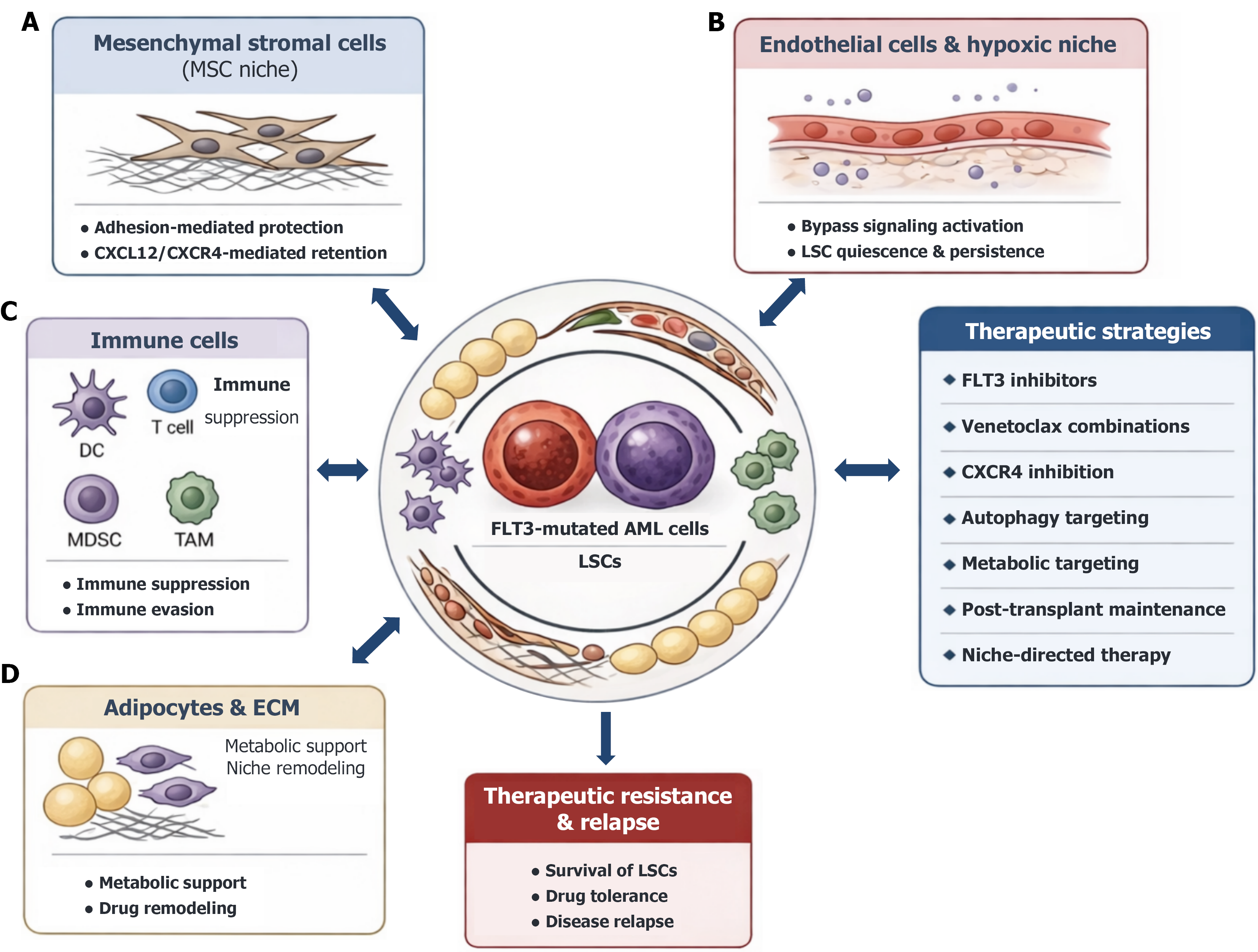
Figure 1 Schematic overview of bone marrow niche adaptation, leukemia stem cell persistence, and therapeutic resistance in FLT3-mutated acute myeloid leukemia.
A: Mesenchymal stromal cells promote leukemic cell survival through adhesion-mediated protection and C-X-C motif chemokine ligand 12/C-X-C chemokine receptor type 4-mediated retention; B: Endothelial and hypoxic niches support bypass signaling activation as well as leukemia stem cell quiescence and persistence; C: Immune-cell remodeling contributes to immunosuppression and immune evasion within the bone marrow microenvironment; D: Adipocytes and extracellular matrix provide metabolic support and promote microenvironment remodeling. Collectively, these microenvironmental adaptations support leukemia stem cell maintenance, therapeutic resistance, and disease relapse, while also providing potential targets for FLT3 inhibitors, venetoclax-based combinations, C-X-C chemokine receptor type 4 inhibition, autophagy targeting, metabolic intervention, post-transplant maintenance, and other niche-directed strategies. MSC: Mesenchymal stromal cell; CXCL12: C-X-C motif chemokine ligand 12; CXCR4: C-X-C chemokine receptor type 4; LSC: Leukemia stem cell; DC: Dendritic cell; MDSC: Myeloid-derived suppressor cell; TAM: Tumor-associated macrophages; ECM: Extracellular matrix; AML: Acute myeloid leukemia.
- Citation: Zhang HB, Jiang HH, Deng JC, Zhang N. Bone marrow niche adaptation, leukemic stem cell persistence, and therapeutic resistance in FLT3-mutated leukemia. World J Stem Cells 2026; 18(7): 119893
- URL: https://www.wjgnet.com/1948-0210/full/v18/i7/119893.htm
- DOI: https://dx.doi.org/10.4252/wjsc.119893