










Copyright: ©Author(s) 2026.
World J Stem Cells. Oct 26, 2026; 18(10): 125689
Published online Oct 26, 2026. doi: 10.4252/wjsc.125689
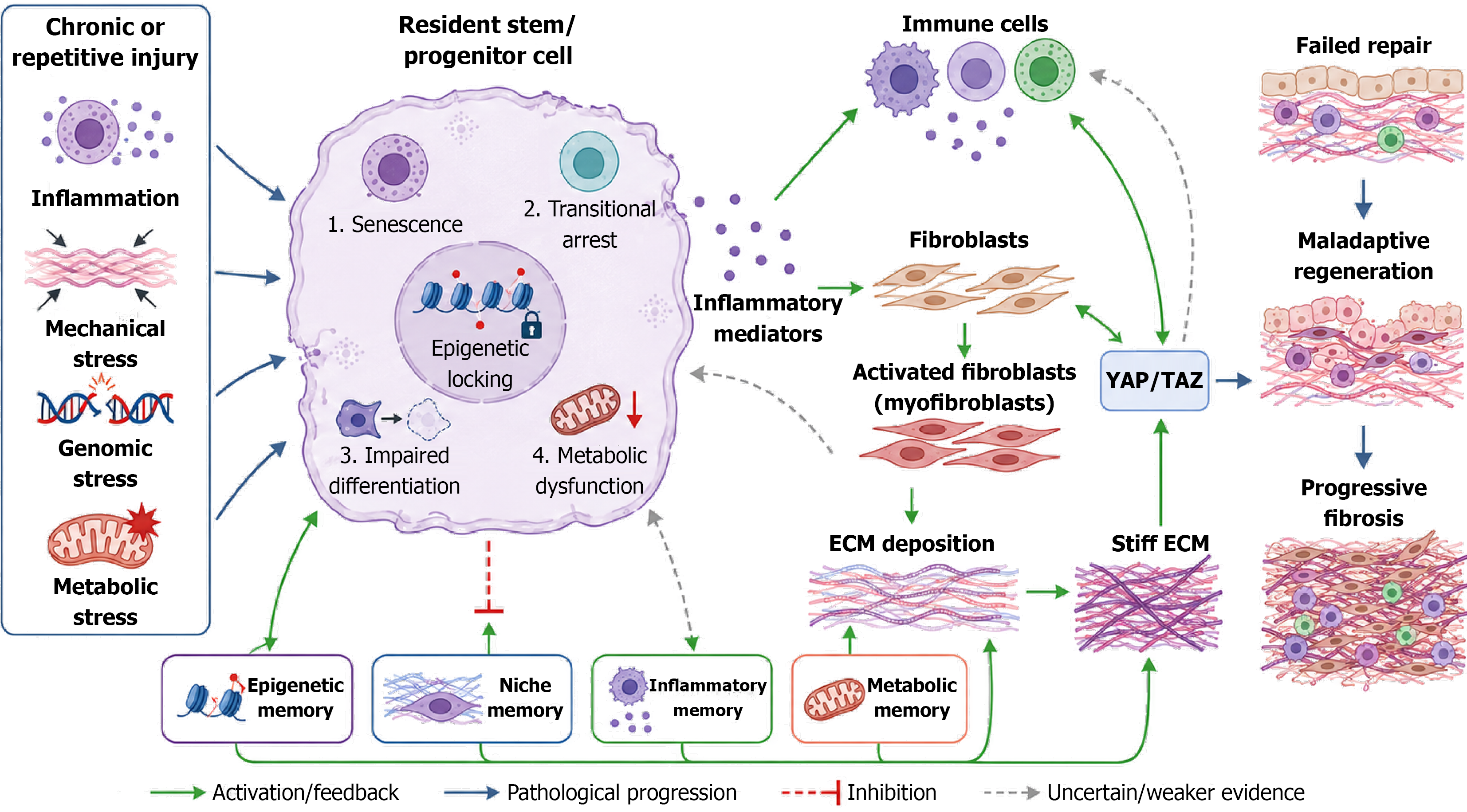
Figure 1 Schematic framework linking chronic injury, maladaptive regeneration, fibrotic memory, and progressive fibrosis.
Chronic or repe titive injury, including inflammatory, mechanical, genomic, and metabolic stress, disrupts regenerative cell function and promotes senescence, transitional arrest, impaired differentiation, metabolic dysfunction, and epigenetic locking. These maladaptive cellular states alter inflammatory signaling and interact with immune cells and fibroblasts, promoting fibroblast activation, extracellular matrix (ECM) deposition, matrix stiffening, and Yes-associated protein/transcriptional coactivator with PDZ-binding motif-dependent mechanotransduction. Reciprocal signaling among regenerative cells, immune cells, fibroblasts, and the ECM can reinforce failed repair, maladaptive regeneration, and progressive fibrosis. Epigenetic, niche, inflammatory, and metabolic memory are shown as candidate mechanisms that may sustain pathological responses after the initiating injury has been reduced. Green solid arrows indicate supported activation or feedback relationships, blue solid arrows indicate pathological progression, red dashed lines indicate inhibitory relationships, and gray dashed arrows indicate proposed or less well-established connections. The strength and persistence of these mechanisms are context-, cell type-, and organ-dependent, and the different memory layers should not be interpreted as having equivalent levels of evidence. ECM: Extracellular matrix; YAP/TAZ: Yes-associated protein/transcriptional coactivator with PDZ-binding motif.
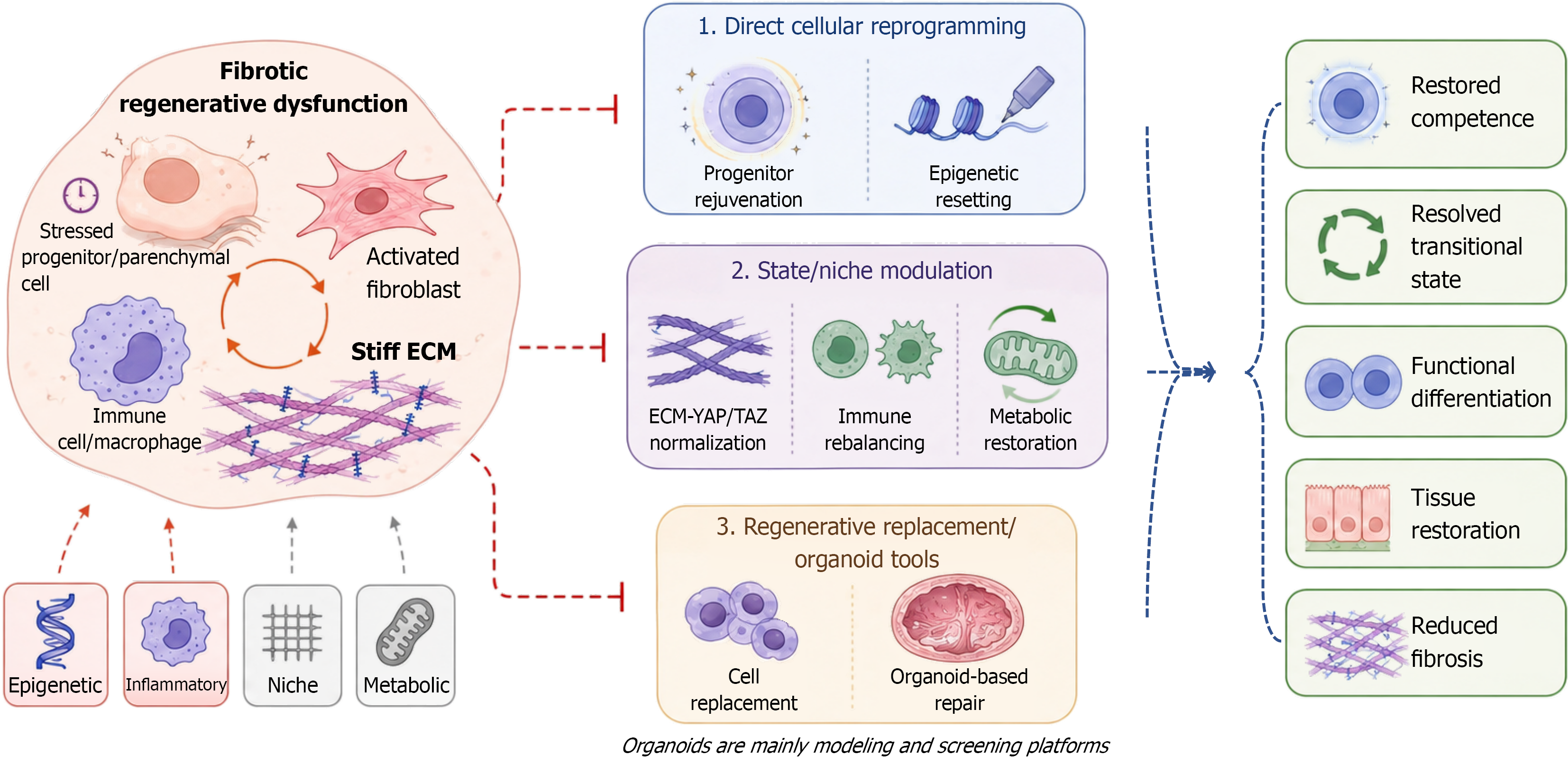
Figure 2 Therapeutic strategies targeting regenerative dysfunction and their conditional outcomes in organ fibrosis.
In this review, thera peutic reprogramming is reserved for interventions intended to produce a controlled and durable correction of a pathological cellular state, identity, or differentiation trajectory. Direct epigenetic reprogramming, lineage conversion, and durable progenitor-state rejuvenation meet this definition. Senolytic depletion, conventional pathway inhibition, extracellular matrix normalization, immunomodulation, cell replacement, and organoid testing are biologically distinct; they are classified as complementary state-modifying, niche-modifying, replacement, or research strategies rather than automatically labeled as reprogramming. Fibrotic regenerative dysfunction is sustained by pathological cellular states and altered epigenetic, inflammatory, mechanical/niche, and metabolic signals. Candidate interventions are grouped into three conceptually distinct categories: (1) Direct cellular reprogramming, including progenitor-state rejuvenation and epigenetic resetting; (2) State and niche modulation, including extracellular matrix-Yes-associated protein/transcriptional coactivator with PDZ-binding motif normalization, immune-state regulation, and metabolic restoration; and (3) Regenerative replacement and organoid-based approaches, including cell replacement and organoid-guided modeling or repair. These strategies are proposed to restore regenerative competence, promote resolution of maladaptive transitional states, recover functional differentiation, support tissue restoration, and reduce fibrosis. Dashed connections indicate hypothesized or experimentally testable relationships rather than established therapeutic effects. Durable benefit requires organ- and disease-stage-specific validation, persistence after treatment withdrawal, functional assessment, and safety evaluation. ECM: Extracellular matrix; YAP/TAZ: Yes-associated protein/transcriptional coactivator with PDZ-binding motif.
- Citation: Li JP, Chen XY, Wang Q, Du YY, Guo TT, Lin JN, Fu JY, Xie ML, Liu JH, Gao JL, Wang MM, Luo S. Regenerative-system dysfunction in organ fibrosis: Maladaptive regeneration, fibrotic memory, and therapeutic reprogramming. World J Stem Cells 2026; 18(10): 125689
- URL: https://www.wjgnet.com/1948-0210/full/v18/i10/125689.htm
- DOI: https://dx.doi.org/10.4252/wjsc.125689