
















©The Author(s) 2026.
World J Gastroenterol. Feb 21, 2026; 32(7): 115406
Published online Feb 21, 2026. doi: 10.3748/wjg.v32.i7.115406
Published online Feb 21, 2026. doi: 10.3748/wjg.v32.i7.115406
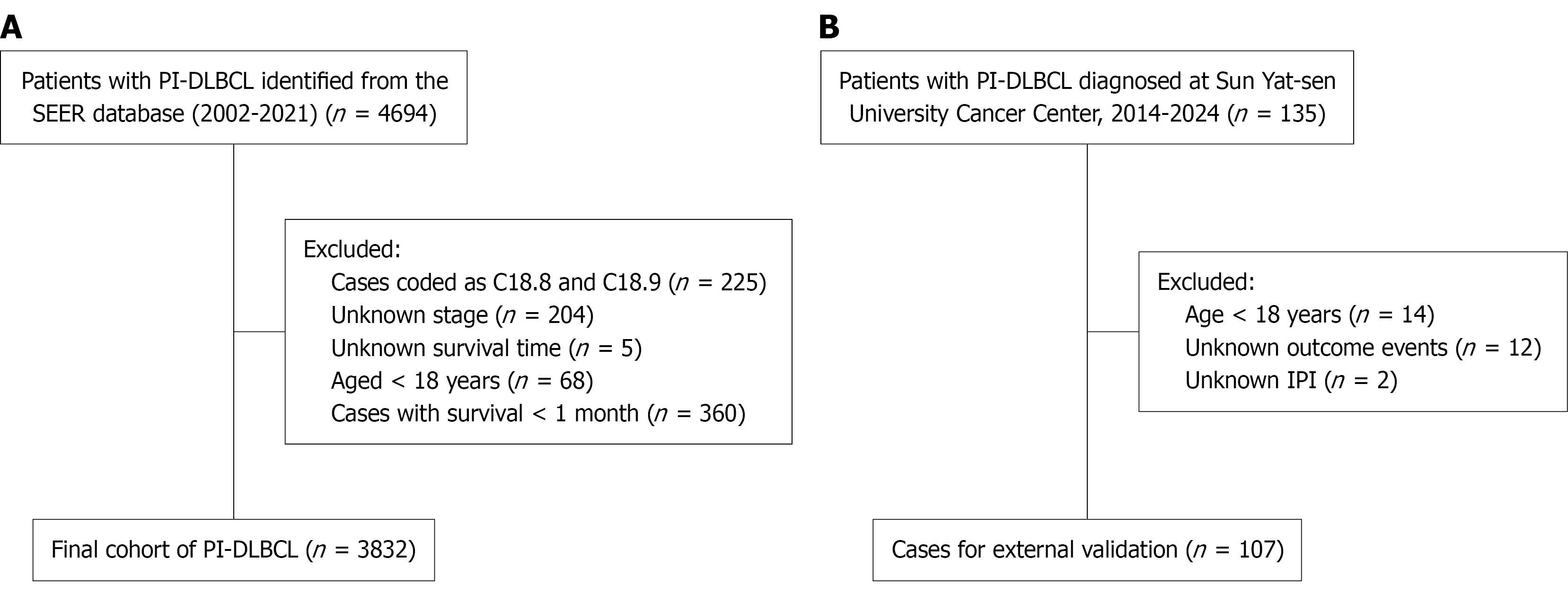
Figure 1 Patient selection flow for primary intestinal diffuse large B-cell lymphoma.
A: SEER training cohort; B: Sun Yat-sen University Cancer Center external validation cohort. PI: Primary intestinal; DLBCL: Diffuse large B-cell lymphoma; IPI: International prognostic index.
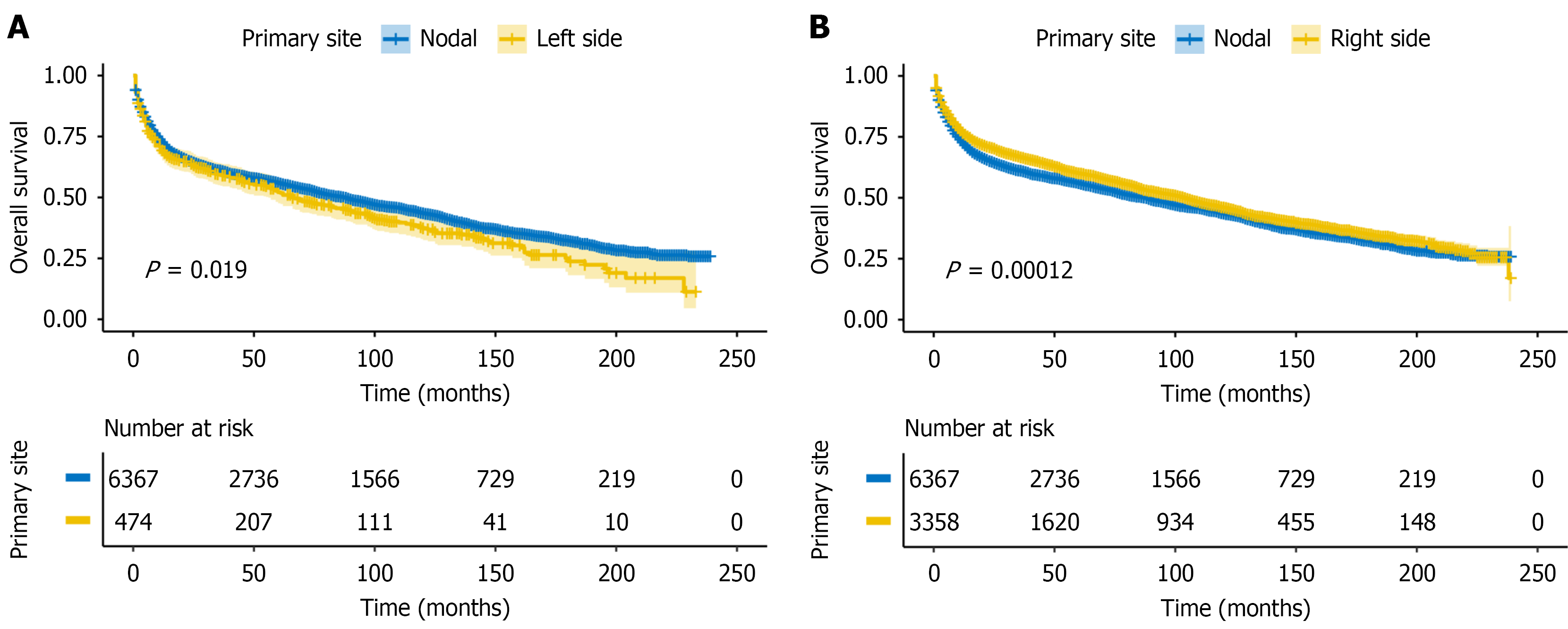
Figure 2 Overall survival in the SEER cohort.
A: Left-sided primary intestinal (PI) diffuse large B-cell lymphoma (DLBCL) vs intra-abdominal nodal DLBCL (N-DLBCL); B: Right-sided PI-DLBCL vs intra-abdominal N-DLBCL.
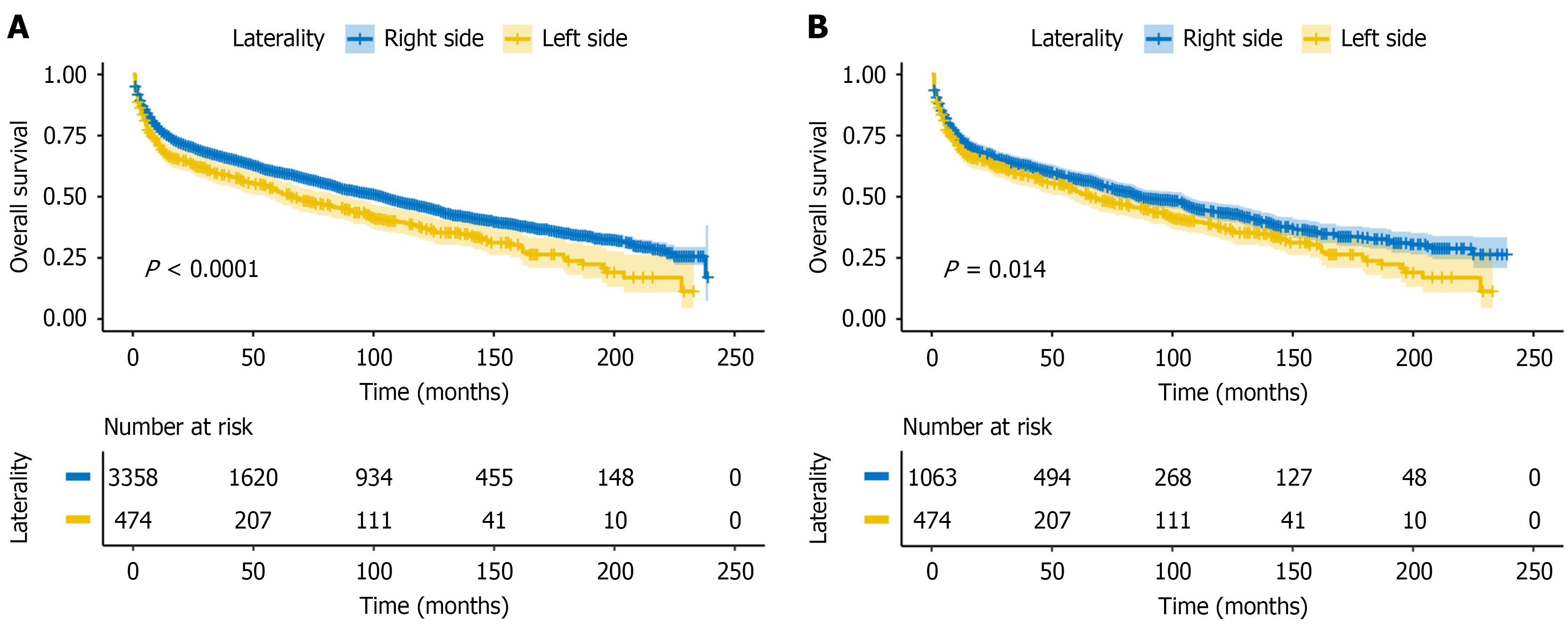
Figure 3 Overall survival in primary intestinal diffuse large B-cell lymphoma by laterality.
A: Pre-propensity score matching; B: Post-propensity score matching.
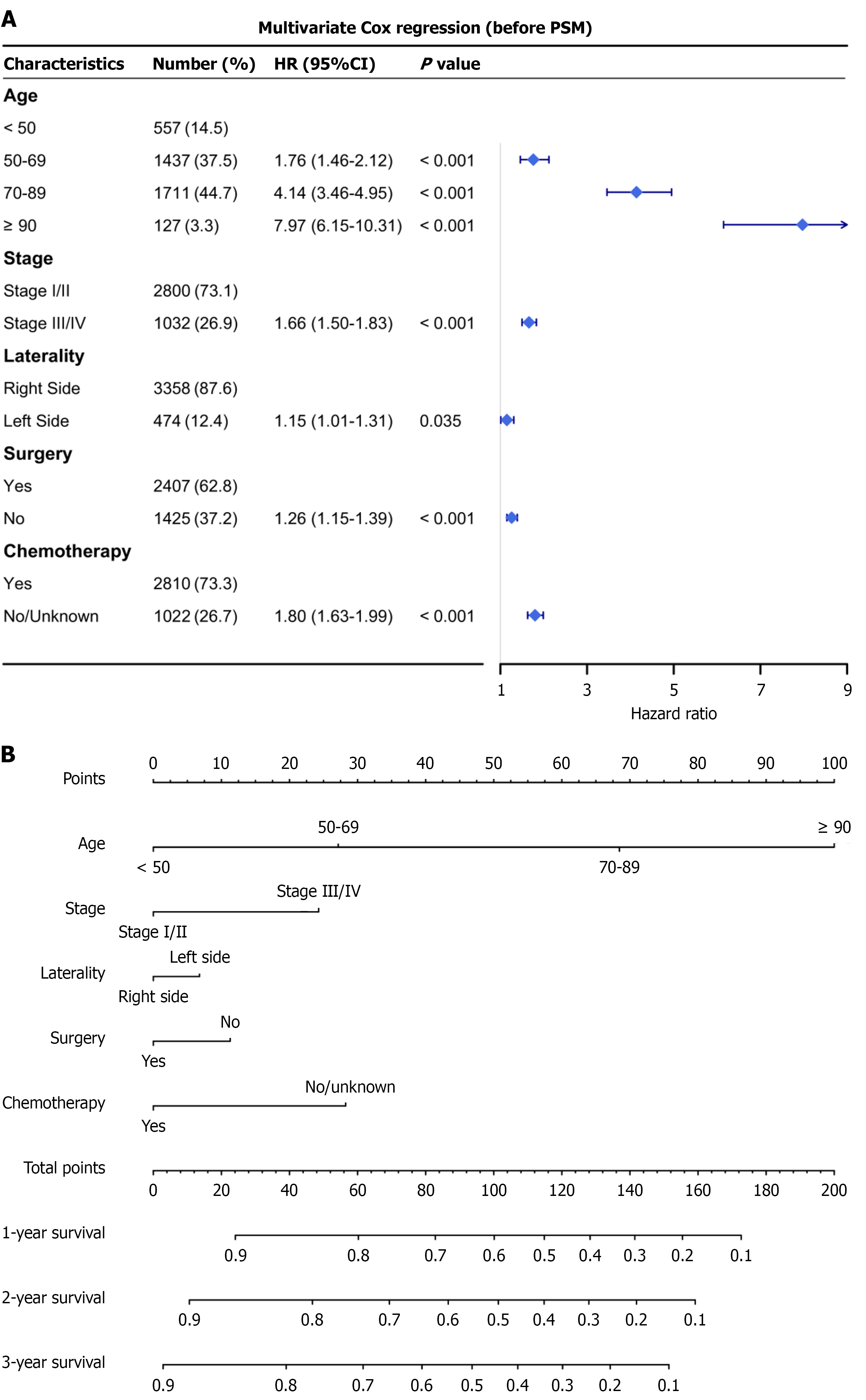
Figure 4 Multivariable Cox model and nomogram.
A: Forest plot; B: Nomogram predicting 1-, 2-, and 3-year overall survival. PSM: Propensity score matching; HR: Hazard ratio; CI: Confidence interval.
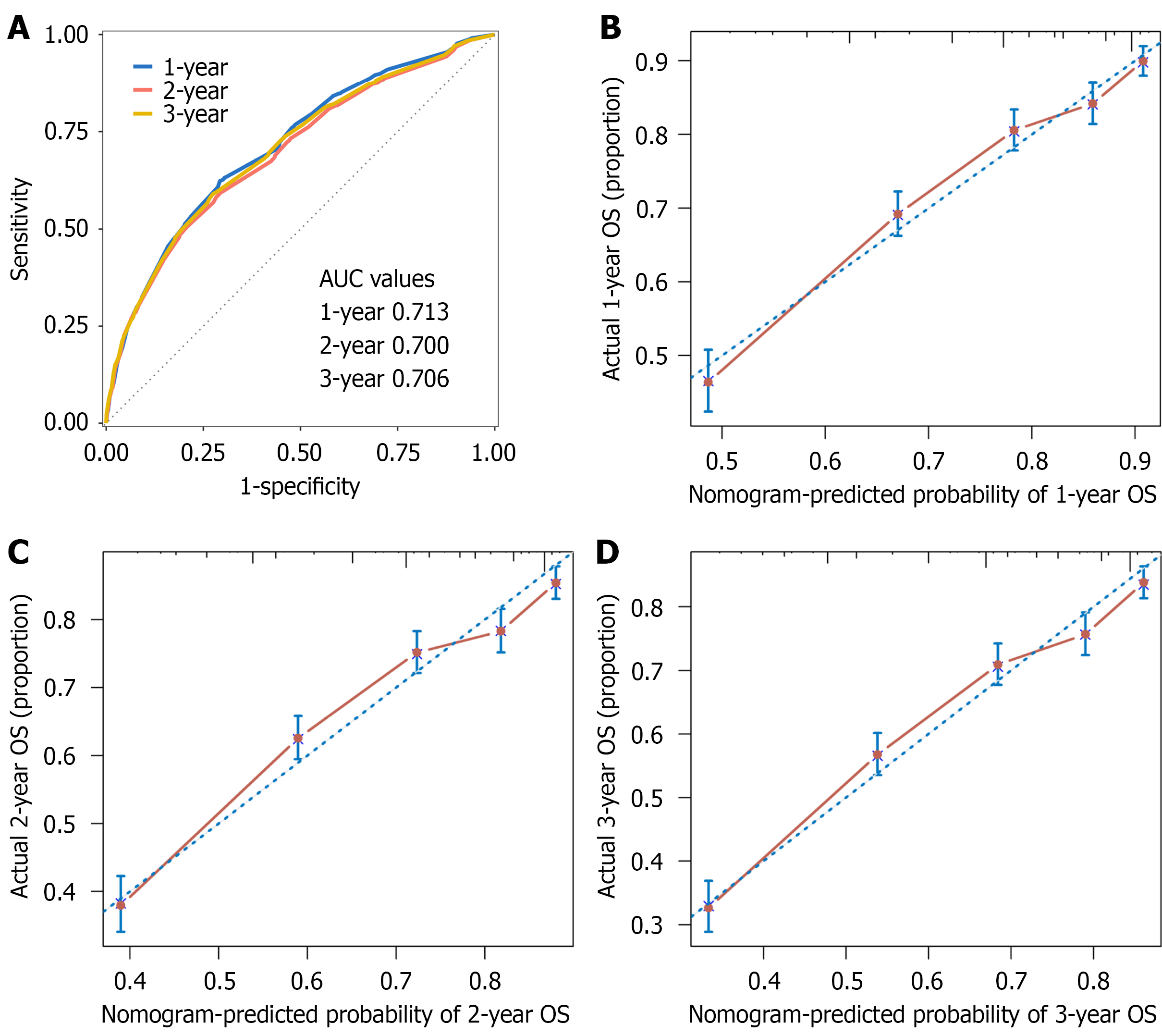
Figure 5 Training cohort performance.
A: Time-dependent receiver operating characteristic curves (1-, 2-, 3-year); B: 1-year calibration; C: 2-year calibration; D: 3-year calibration. AUC: Area under the curve; OS: Overall survival.
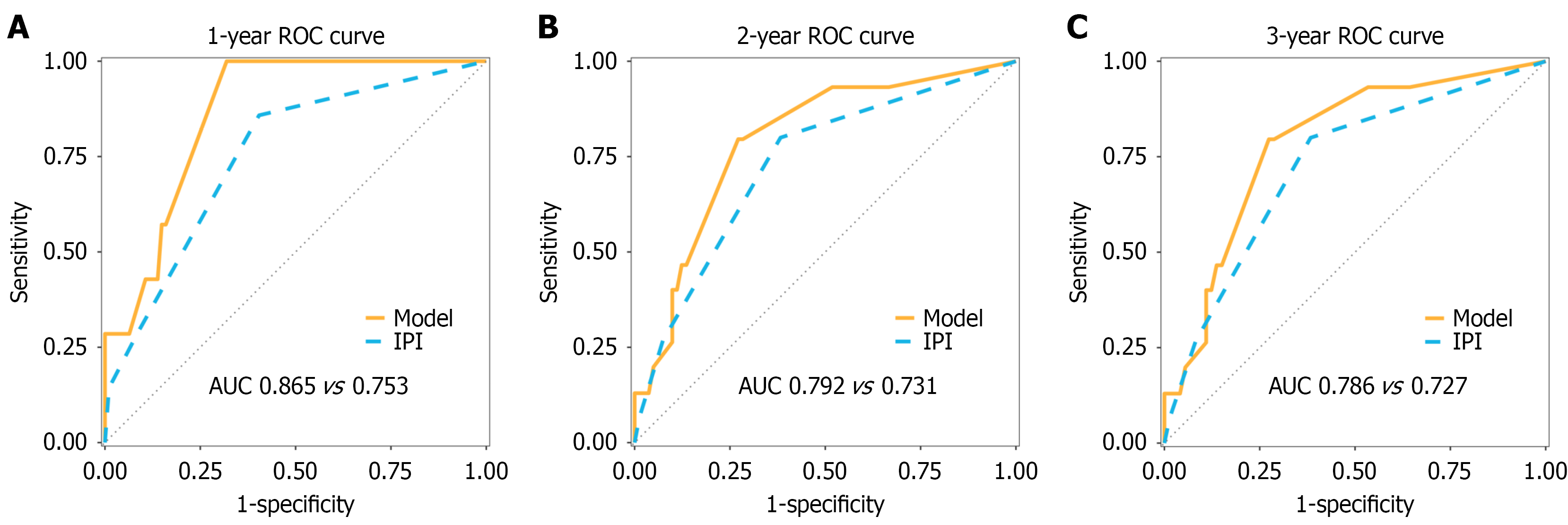
Figure 6 External validation.
Receiver operating characteristic comparison of the nomogram vs international prognostic index at: A: 1 year; B: 2 years; C: 3 years. ROC: Receiver operating characteristic; AUC: Area under the curve; IPI: International prognostic index.
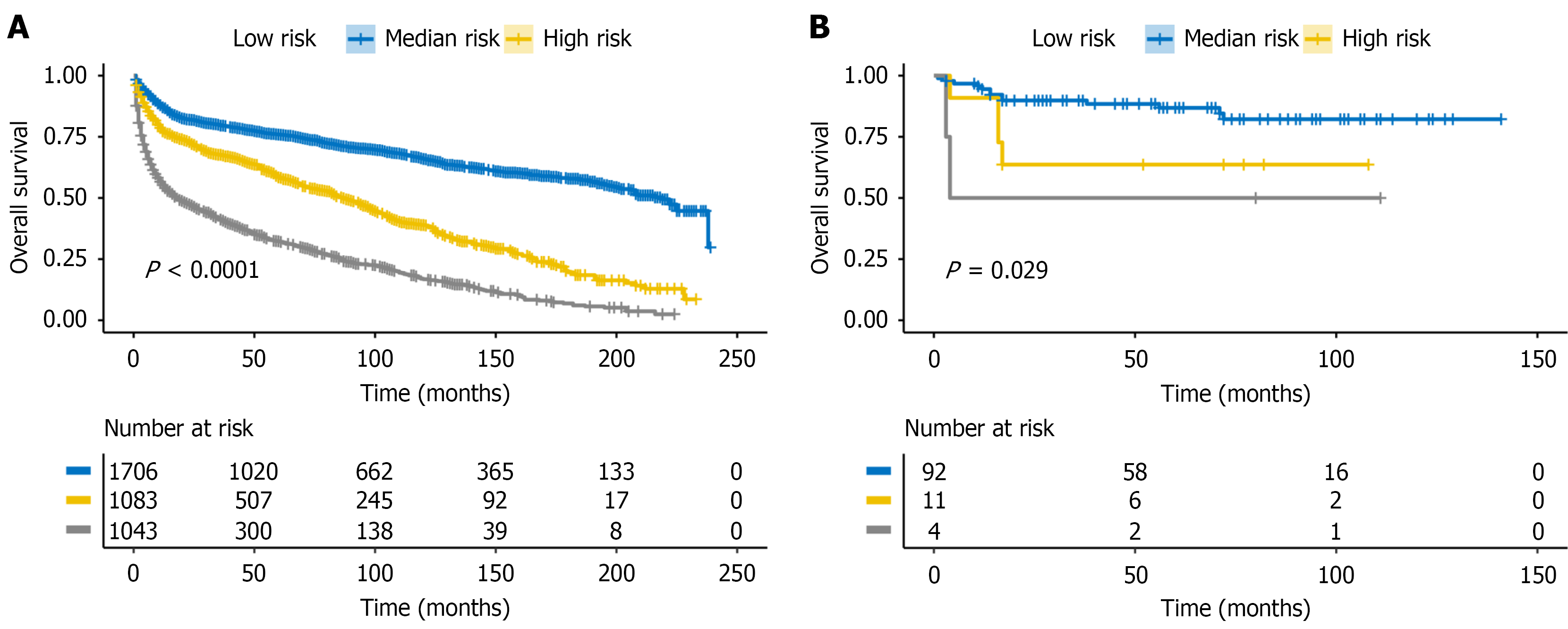
Figure 7 Nomogram-based risk stratification.
A: SEER training cohort; B: External validation cohort.
- Citation: Zeng RX, Wang CQ, Yang H, Sun P, Liu PP, Wei LC, Chen TT, Wang Z, Huang H, Li ZM, Tian XP, Wang Y. Anatomical laterality of primary intestinal diffuse large B-cell lymphoma independently stratifies survival: New prognostic nomogram incorporating tumor location. World J Gastroenterol 2026; 32(7): 115406
- URL: https://www.wjgnet.com/1007-9327/full/v32/i7/115406.htm
- DOI: https://dx.doi.org/10.3748/wjg.v32.i7.115406