











Copyright: ©Author(s) 2026.
World J Gastroenterol. Sep 7, 2026; 32(33): 118638
Published online Sep 7, 2026. doi: 10.3748/wjg.118638
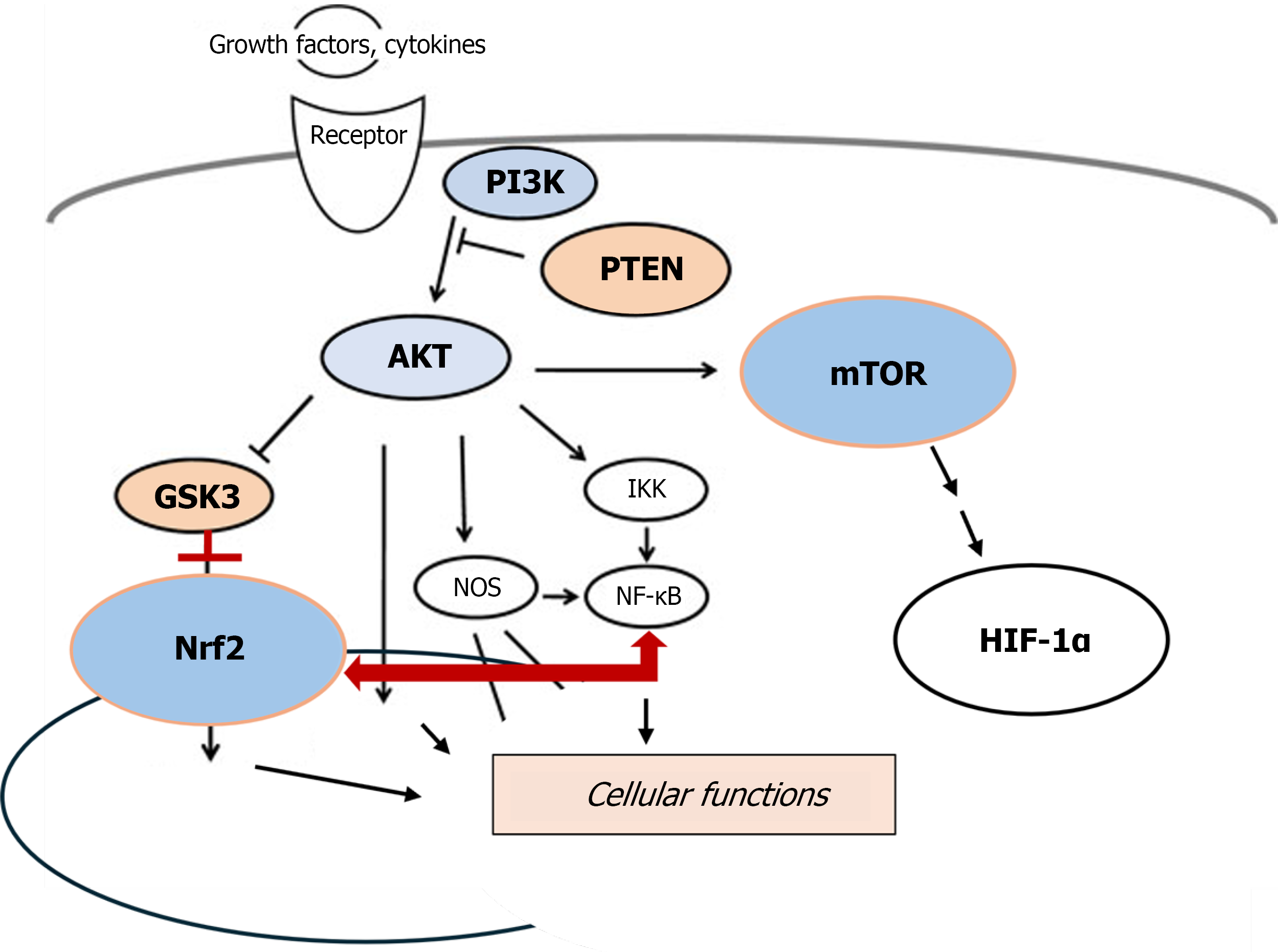
Figure 1 Schematic illustration of the interplay between the phosphatidylinositol 3-kinase/protein kinase B/ mammalian target of rapa mycin and nuclear factor erythroid 2-related factor 2 signaling pathways.
Phosphatidylinositol 3-kinase activation induces protein kinase B phosphorylation, leading to mammalian target of rapamycin signaling and regulation of cell proliferation, survival, and cell cycle progression, while phosphatidylinositol-3,4,5-trisphosphate 3-phosphatase acts as a negative regulator. Mammalian target of rapamycin also influences hypoxia-inducible factor 1-alpha activity. Oxidative stress impairs nuclear factor erythroid 2-related factor 2 nuclear translocation, reducing antioxidant responses. Interactions involving glycogen synthase kinase 3 and nuclear factor kappa B further link these pathways to inflammation and cell fate regulation. PI3K: Phosphatidylinositol 3-kinase; AKT: Protein kinase B; PTEN: Phosphatidylinositol-3,4,5-trisphosphate 3-phosphatase; HIF-1α: Hypoxia-inducible factor 1-alpha; GSK3: Glycogen synthase kinase 3; mTOR: Mammalian target of rapamycin; Nrf2: Nuclear factor erythroid 2-related factor 2; NF-κB: Nuclear factor kappa B; NOS: Nitric oxide synthase.
- Citation: Maier I. Synergistic antitumor effects of quercetin and triptolide in hepatocellular carcinoma via modulation of PI3K/AKT/mTOR and Nrf2 signaling pathways. World J Gastroenterol 2026; 32(33): 118638
- URL: https://www.wjgnet.com/1007-9327/full/v32/i33/118638.htm
- DOI: https://dx.doi.org/10.3748/wjg.118638