
















Copyright: ©Author(s) 2026.
World J Gastroenterol. Aug 14, 2026; 32(30): 118010
Published online Aug 14, 2026. doi: 10.3748/wjg.118010
Published online Aug 14, 2026. doi: 10.3748/wjg.118010
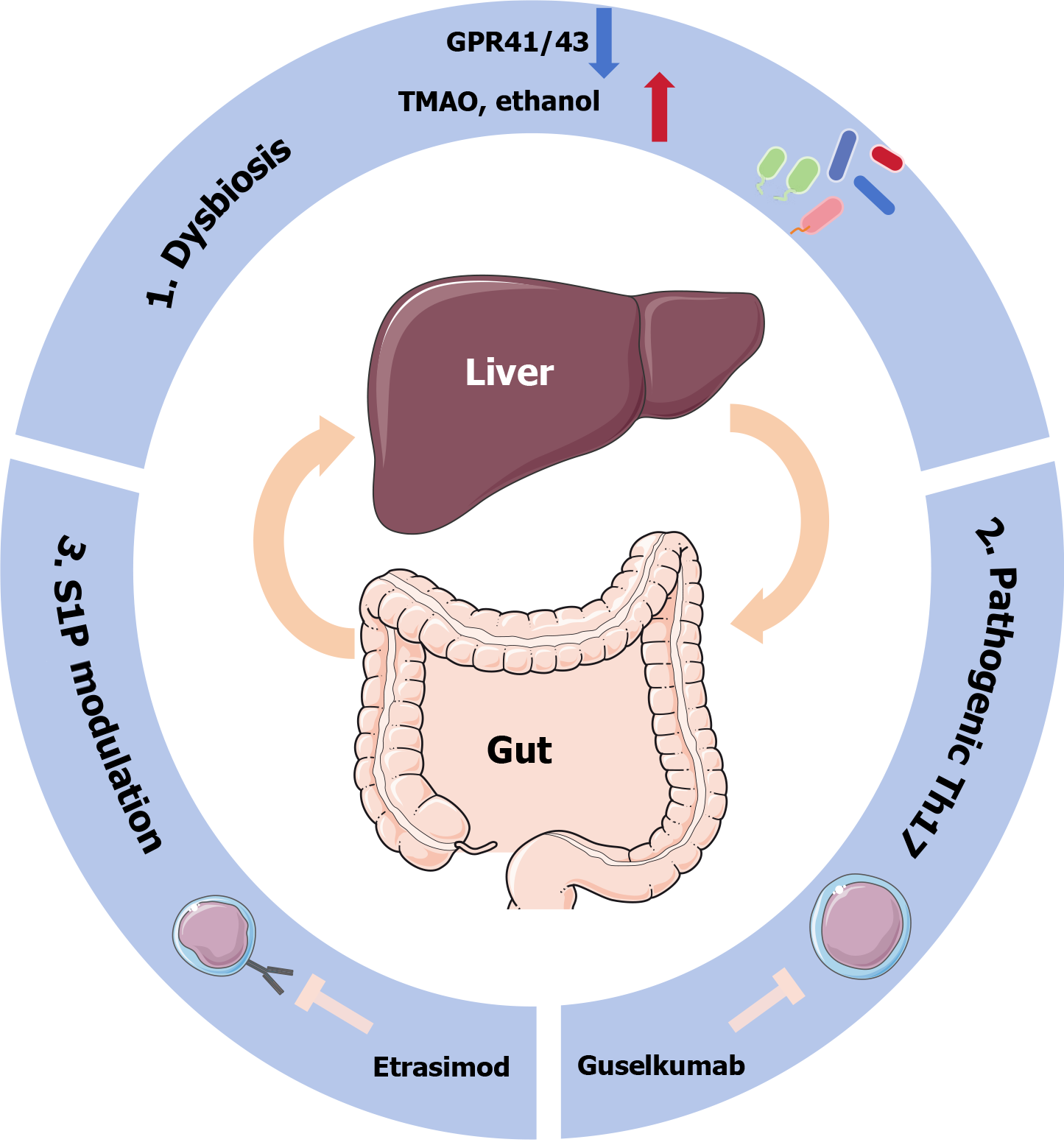
Figure 1 Schematic representation of the immunometabolic crosstalk in the gut-liver axis linking inflammatory bowel disease and metabolic dysfunction-associated steatotic liver disease.
The diagram illustrates three critical mechanisms: (1) Dysbiosis: In the inflammatory bowel disease gut, dysbiosis leads to the production of pathogenic metabolites (e.g., trimethylamine N-oxide, endogenous ethanol) and a functional downregulation of short-chain fatty acid receptors (G protein-coupled receptors 41 and 43), creating a pro-inflammatory environment; (2) Pathogenic Th17: An interleukin (IL)-23-rich milieu promotes the differentiation of pathogenic Th17 cells. This axis can be therapeutically targeted by the IL-23 inhibitor Guselkumab; and (3) Sphingosine-1-phosphate modulation: Sphingosine-1-phosphate receptor modulators, such as Etrasimod, prevent lymphocyte egress from lymphoid tissues, thereby reducing immune cell infiltration into the liver. Center (gut-liver crosstalk): These metabolites and immune cells translocate via the portal vein to the liver, driving hepatic inflammation and steatosis. GPR: G protein-coupled receptors; S1P: Sphingosine-1-phosphate; TMAO: Trimethylamine N-oxide. Parts of this figure were adapted from Servier Medical Art (https://smart.servier.com/) (Supplementary material).
- Citation: Chen ZK, Shi M, Wu YB, Zhao JW, Wang YG. Letter to the Editor: Microbial metabolites and immune regulation in inflammatory bowel disease and metabolic dysfunction-associated steatotic liver disease. World J Gastroenterol 2026; 32(30): 118010
- URL: https://www.wjgnet.com/1007-9327/full/v32/i30/118010.htm
- DOI: https://dx.doi.org/10.3748/wjg.118010