
















Copyright: ©Author(s) 2026.
World J Gastroenterol. Aug 14, 2026; 32(30): 117813
Published online Aug 14, 2026. doi: 10.3748/wjg.117813
Published online Aug 14, 2026. doi: 10.3748/wjg.117813
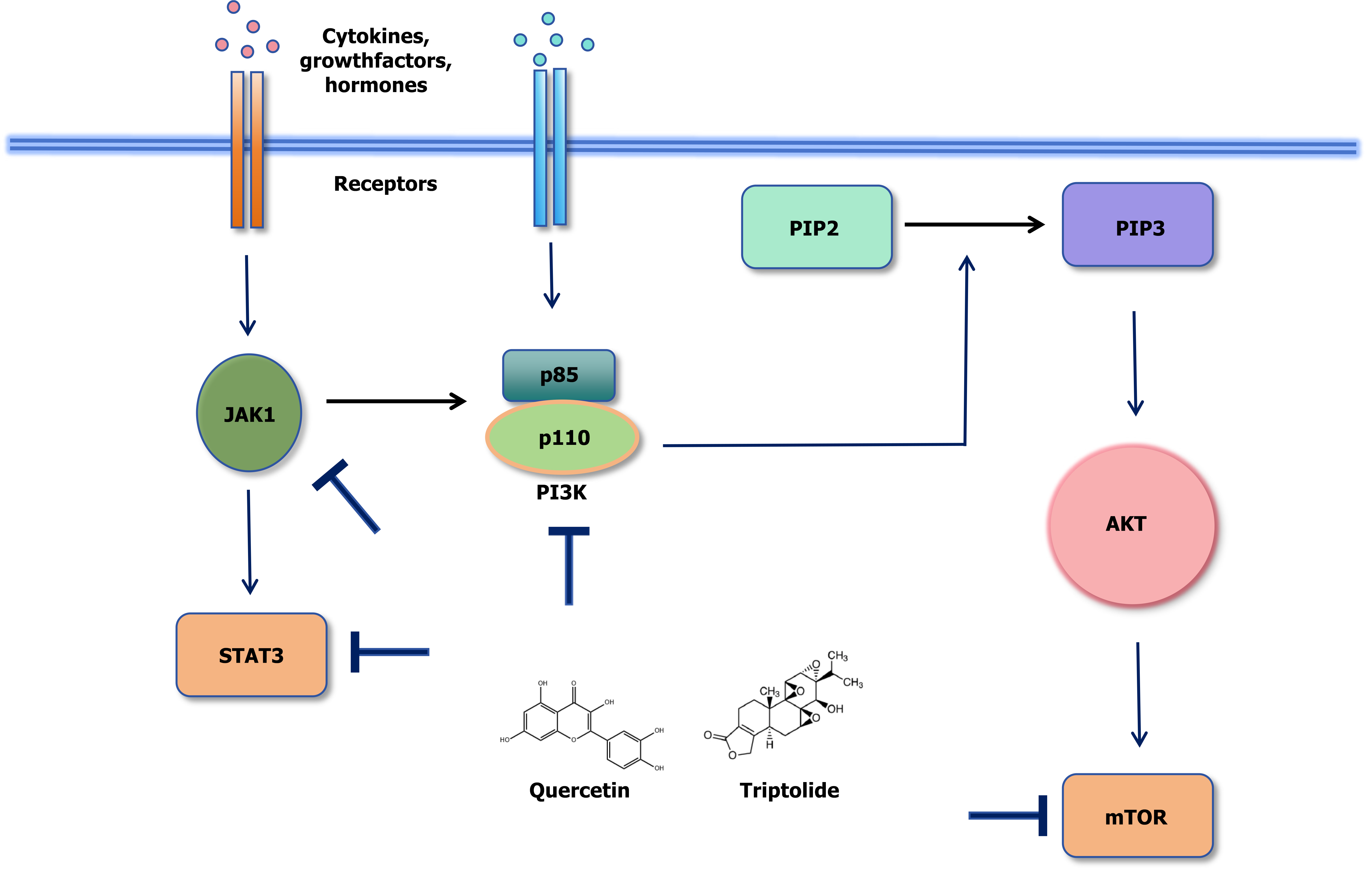
Figure 1 Model showing how triptolide and quercetin regulate the Janus kinase-signal transducer and activator of transcription and mammalian target of rapamycin signaling pathways.
This schematic illustrates the molecular mechanisms through which triptolide and quercetin may exert their anticancer effects. Both triptolide and quercetin can physically bind to Janus kinase 1, signal transducer and activator of transcription 3, phosphoinositide 3-kinases and mammalian target of rapamycin proteins. This multitarget inhibition disrupts oncogenic signaling. JAK1: Janus kinase; STAT3: Signal transducer and activator of transcription; PI3K: Phosphoinositide 3-kinases; AKT: Protein kinase B; mTOR: Mammalian target of rapamycin; PIP2: Phosphatidylinositol 4,5-bisphosphate; PIP3: Phosphatidylinositol-3,4,5-trisphosphate.
- Citation: Liu H, Jiang WY, Mao FF. Letter to the Editor: Advancing the clinical translation of triptolide and quercetin in hepatocellular carcinoma: A commentary on dual JAK-STAT/mTOR inhibition. World J Gastroenterol 2026; 32(30): 117813
- URL: https://www.wjgnet.com/1007-9327/full/v32/i30/117813.htm
- DOI: https://dx.doi.org/10.3748/wjg.117813