
















Copyright: ©Author(s) 2026.
World J Gastroenterol. Aug 7, 2026; 32(29): 119106
Published online Aug 7, 2026. doi: 10.3748/wjg.119106
Published online Aug 7, 2026. doi: 10.3748/wjg.119106
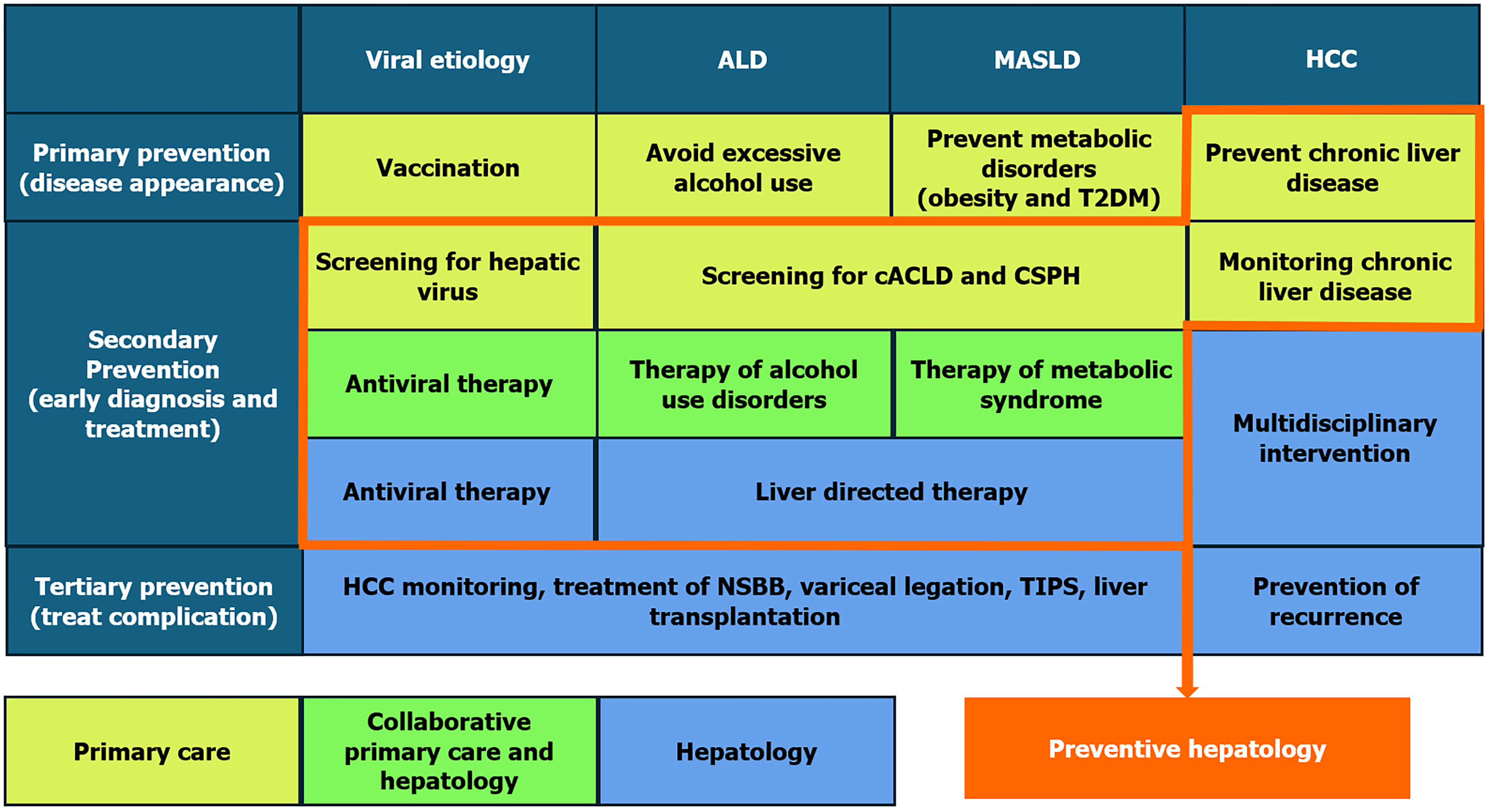
Figure 1 Preventive hepatology.
Preventive hepatology is divided into primary, secondary, and tertiary levels of prevention. While primary prevention focuses on reducing liver disease risk, secondary prevention emphasizes early detection and management to halt disease progression. Tertiary prevention aims to minimize complications and enhance the quality of life in advanced liver disease. Key preventive strategies (highlighted in orange) can be implemented in primary care, by hepatologists, or through collaborative efforts. ALD: Alcohol-associated liver disease; cACLD: Compensated advanced chronic liver disease; CSPH: Clinically significant portal hypertension; HCC: Hepatocellular carcinoma; MASLD: Metabolic-dysfunction associated steatotic liver disease; NSBBs: Nonselective beta blockers; T2DM: Type 2 diabetes mellitus; TIPS: Transjugular intrahepatic portosystemic shunt.
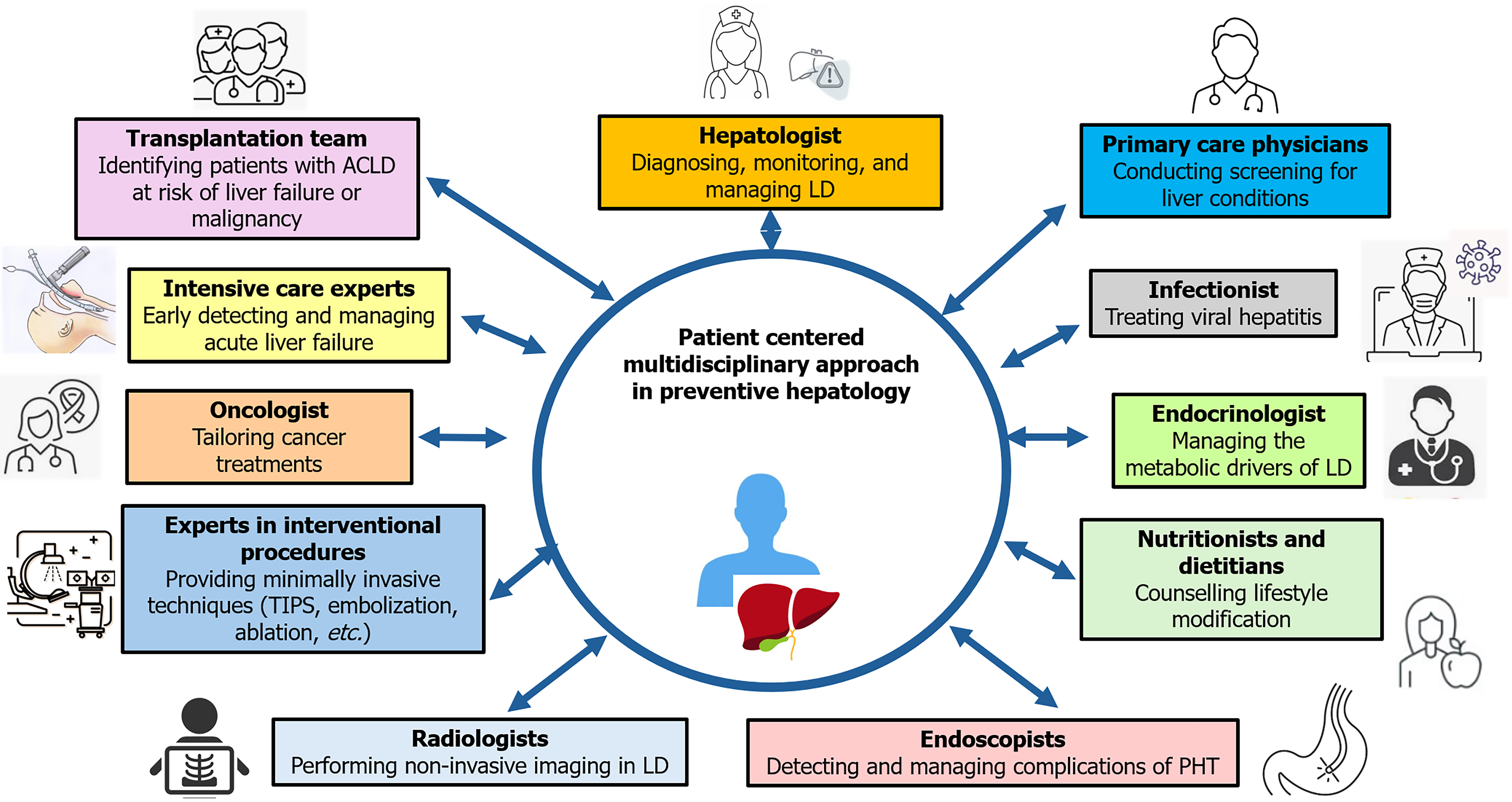
Figure 2 Multidisciplinary approach in preventive hepatology.
ACLD: Advanced chronic liver disease; LD: Liver disease; PHT: Portal hypertension; TIPS: Transjugular intrahepatic portosystemic shunt.
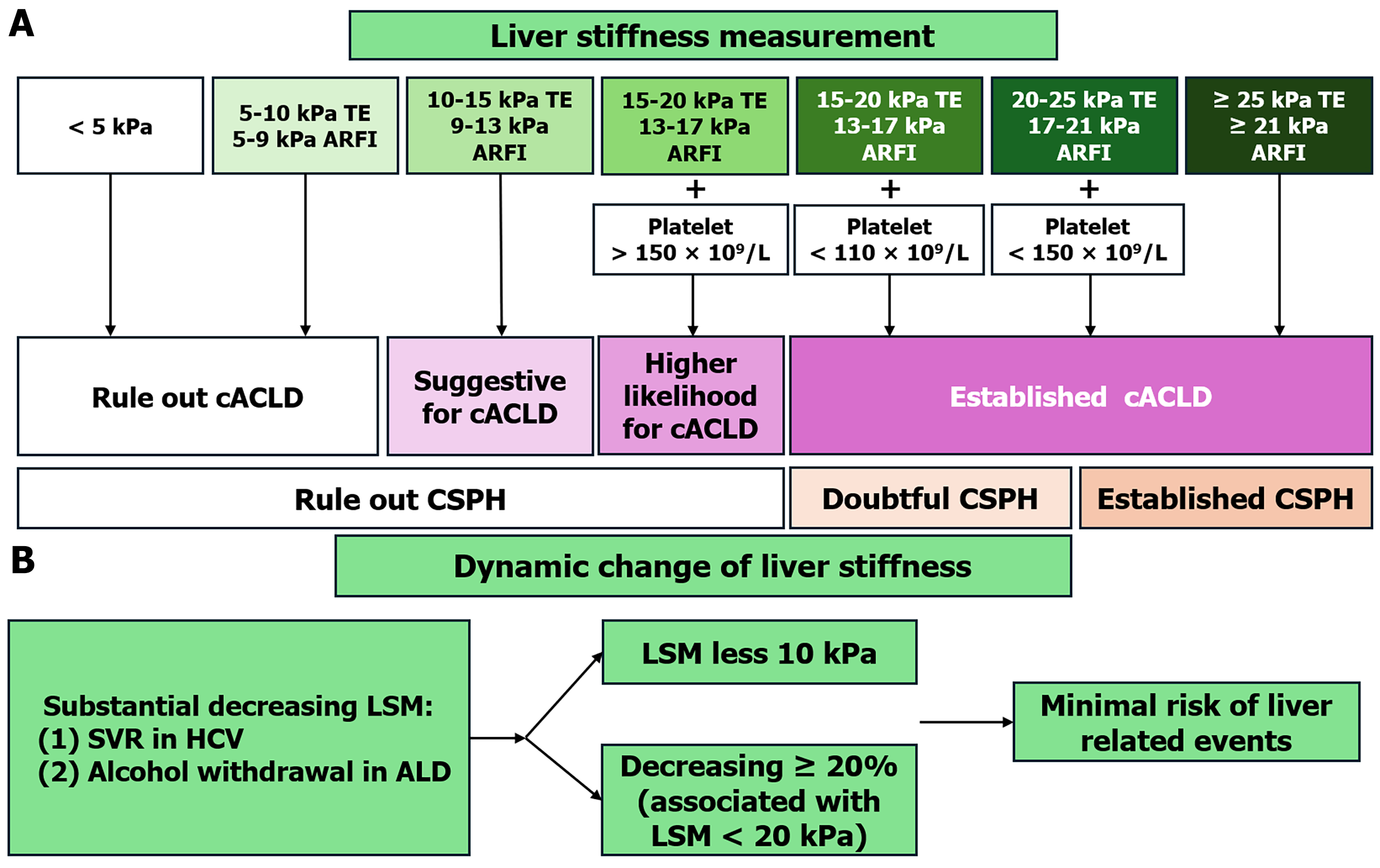
Figure 3 Liver stiffness measurement and dynamic change of liver stiffness.
A: Use of the liver stiffness measurement (LSM) according to the rule five for transient elastography (TE) and rule of four for acoustic radiation force impulse (ARFI) to determine compensated advanced chronic liver disease (cACLD) and clinically significant portal hypertension (CSPH). Patients with an LSM < 10 kPa excludes cACLD in the absence of other clinical/imaging signs. LSM values between 10 kPa and 15 kPa for TE and 9 kPa and 13 kPa for ARFI are suggestive of cACLD. LSM measured by vibration-controlled TE (VCTE) > 15 kPa and > 13 kPa by ARFI are considered a high likelihood of cACLD for all etiologies. LSM ≤ 15 kPa for VCTE and ≤ 13 kPa for ARFI plus platelets ≥ 150 × 109/L exclude CSPH for most etiologies. Patients with intermediate values of LSM between 15 kPa and 25 kPa for VCTE and 13 kPa and 21 kPa for ARFI are in the gray zone of CSPH. The best cutoff to determine the presence of CSPH is an LSM ≥ 25 kPa (specificity and positive predictive value > 90%) in alcoholic liver disease, chronic hepatitis B, chronic hepatitis C, and patients without obesity with hepatic steatosis; B: A dynamic change in liver stiffness is considered significant if there is a reduction of ≥ 20%, particularly when accompanied by an LSM < 20 kPa or any decrease that brings the LSM to < 10 kPa. TE: Transient elastography; cACLD: Compensated advanced chronic liver disease; CSPH: Clinically significant portal hypertension; LSM: Liver stiffness measurement; ALD: Alcohol-associated liver disease; ARFI: Acoustic radiation force impulse; HCV: Hepatic C virus; SVR: Sustained virological response.
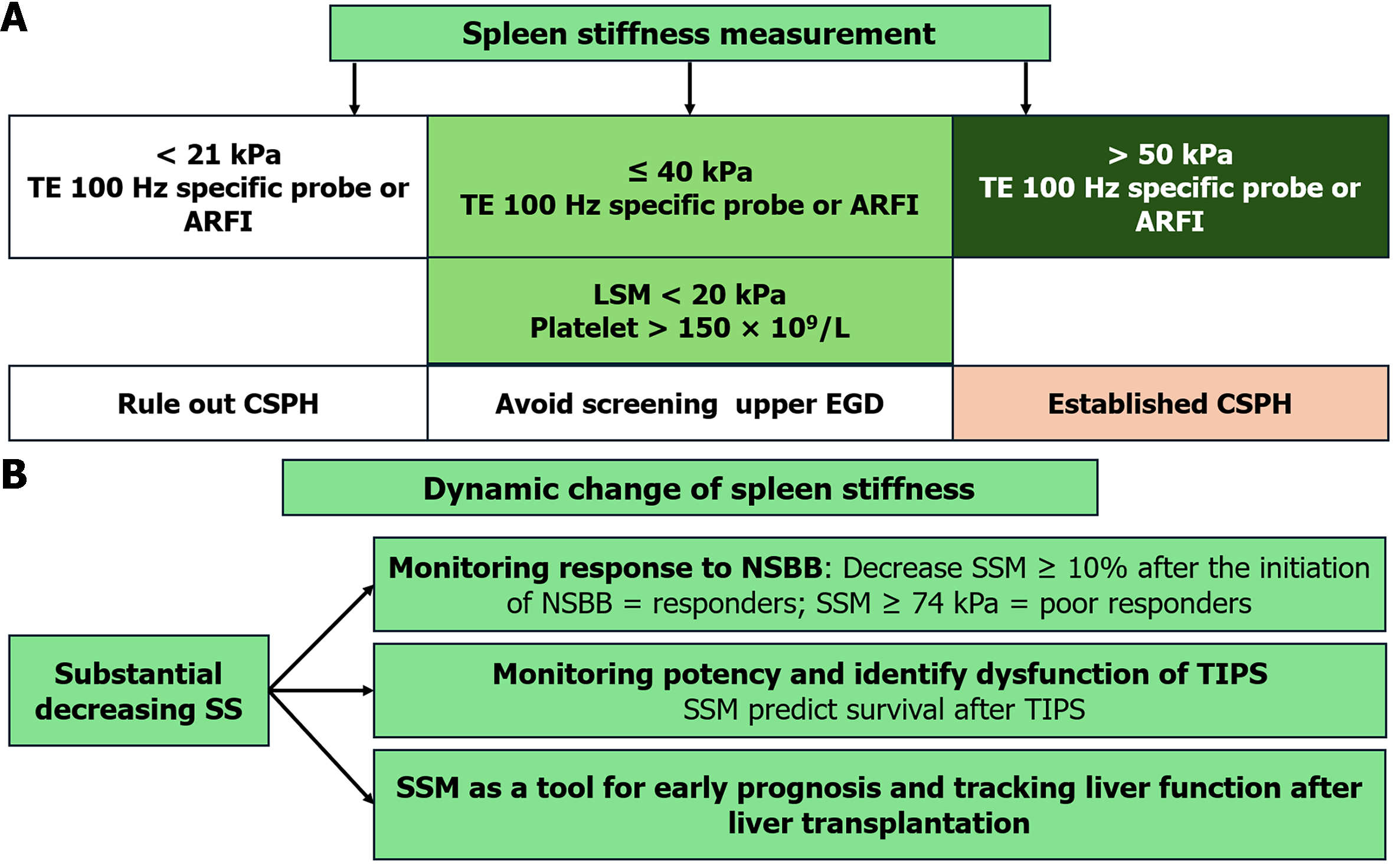
Figure 4 Spleen stiffness measurement and dynamic change of spleen stiffness.
A: Spleen stiffness measurement (SSM). The transient elastography (TE) SSM value < 21 kPa can rule out clinically significant portal hypertension (CSPH), while a value of more than 50 kPa confirms CSPH in patients with viral hepatitis-related compensated advanced chronic liver disease. An SSM of ≤ 40 kPa, a liver stiffness measurement of < 20 kPa, and a platelet count of ≥ 150 × 109/L allow for the omission of upper endoscopy screening; B: Dynamic change of spleen stiffness. A change in SSM ≥ 10% after the initiation of nonselective beta blockers (NSBBs) demonstrates excellent accuracy in identifying NSBBs responders. A SSM of ≥ 74 kPa by TE demonstrates outstanding performance in predicting a poor response to NSBBs. SSM is essential for noninvasively monitoring transjugular intrahepatic portosystemic shunt patency and identifying dysfunction. SSM is a useful tool for early prognosis and tracking liver function after liver transplantation. ARFI: Acoustic radiation force impulse; EGD: Esophagogastroduodenoscopy; TE: Transient elastography; LSM: Liver stiffness measurement; CSPH: Clinically significant portal hypertension; NSBB: Nonselective beta blockers; SSM: Spleen stiffness measurement; TIPS: Transjugular intrahepatic portosystemic shunt; SS: Spleen stiffness.
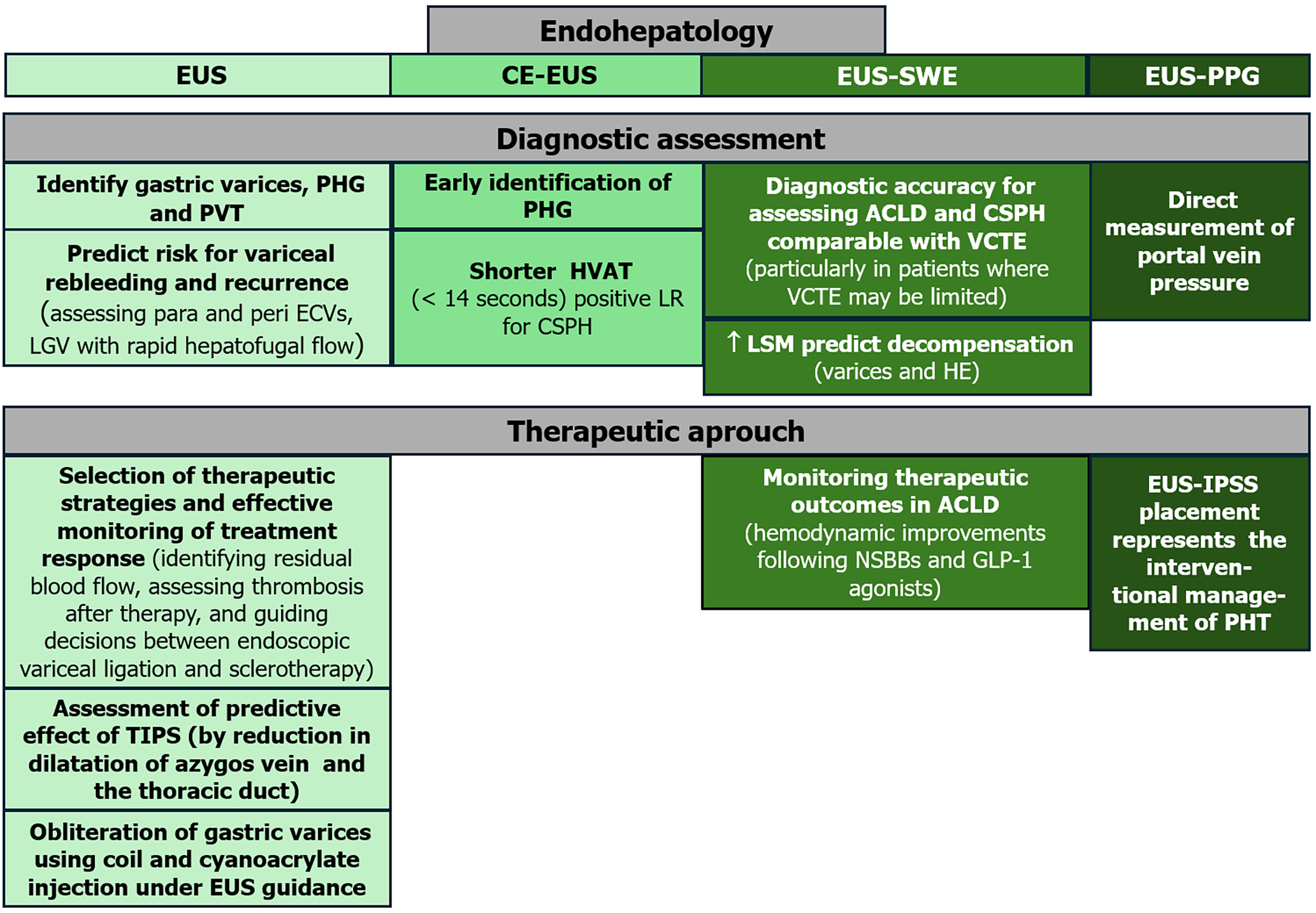
Figure 5 Endohepatology assessment of portal hypertension.
Endoscopic ultrasound (EUS) is equivalent to conventional upper endoscopy for detecting esophageal varices but is superior for identifying gastric varices and portal hypertensive gastropathy. Evaluating para-esophageal collateral veins (ECVs), peri-ECVs, and left gastric vein predicts the risk of variceal rebleeding and recurrence. EUS has potential utility in monitoring the effectiveness of transjugular intrahepatic portosystemic shunt. When combined with contrast-enhanced ultrasound, it is a valuable tool for assessing portal hypertension. EUS-shear wave elastography is comparable with transient elastography for evaluating compensated advanced chronic liver disease and clinically significant portal hypertension. EUS-portal pressure gradient directly measures portal vein pressure. EUS: Enhanced endoscopic ultrasound; ACLD: Advanced chronic liver disease; CE-EUS: Contrast-enhanced endoscopic ultrasound; CSPH: Clinically significant portal hypertension; GLP-1: Glucagon-like peptide-1; HE: Hepatic encephalopathy; HVAT: Hepatic venous arrival time; LGV: Left gastric vein; LR: Likelihood ratio; LSM: Liver stiffness measurement; NSBBs: Nonselective beta blockers; PHG: Portal hypertensive gastropathy; PHT: Portal hypertension; PPG: Portal pressure gradient; PVT: Portal vein thrombosis; SWE: Shear wave elastography; TIPS: Transjugular intrahepaticportosystemic shunt; VCTE: Vibration-controlled transient elastography; ECVs: Esophageal collateral veins; IPSS: Intrahepatic portosystemic shunt.
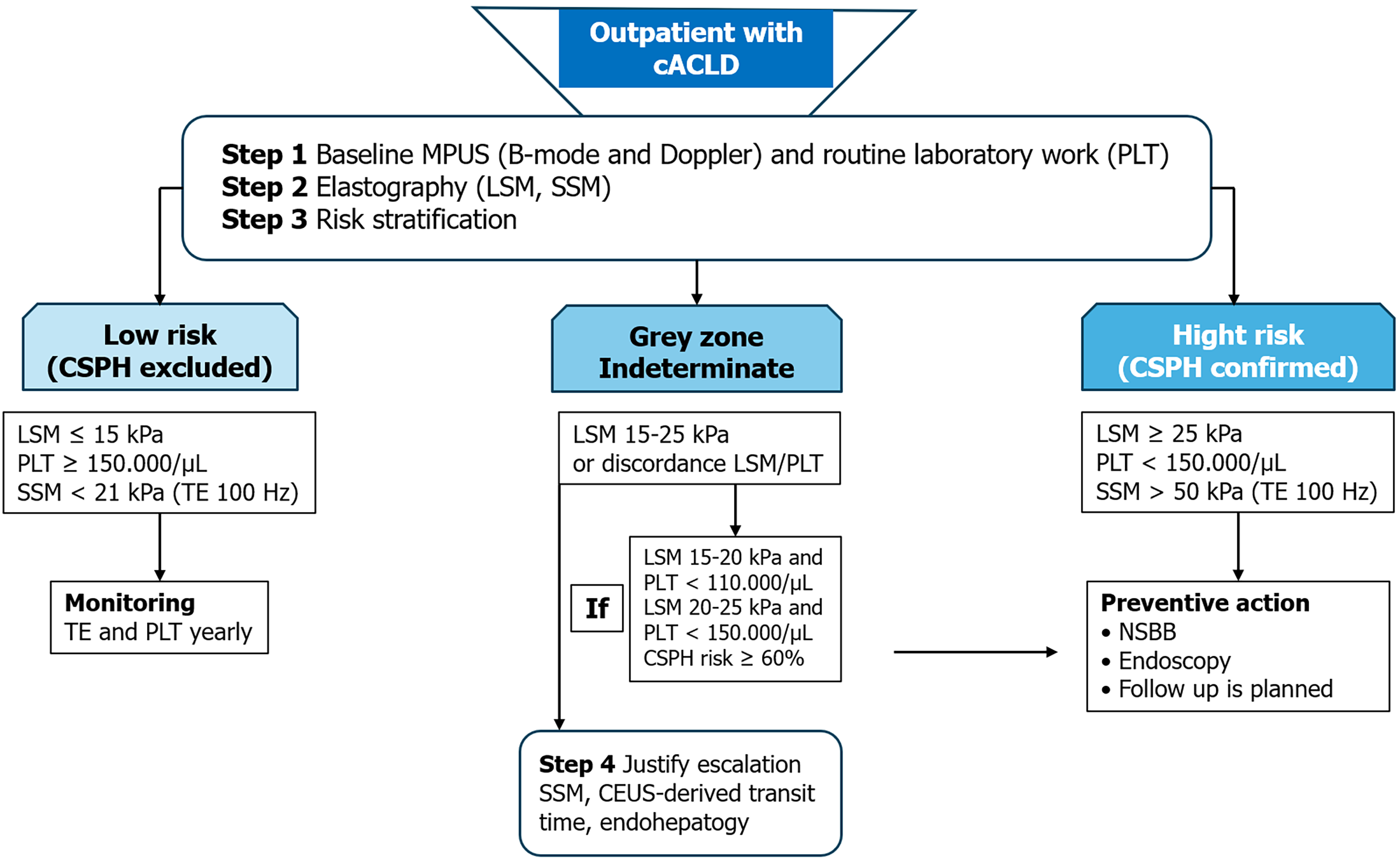
Figure 6 Multiparametric ultrasound-based algorithm for noninvasive risk stratification of compensated advanced liver disease and clinically significant portal hypertension and linkage to preventive interventions.
Proposed stepwise decision algorithm for ambulatory patients with compensated advanced liver disease. Step 1: Baseline multiparametric ultrasonography, including B-mode and Doppler ultrasound, along with routine blood tests with platelet count as a surrogate of portal hypertension. Step 2: Liver stiffness measurement and spleen stiffness measurement. Step 3: Risk stratification into low risk, gray zone/indeterminate risk, and high risk. Step 4: Associated preventive outputs, including initiation of nonselective beta blockers and/or endoscopy with intensified follow-up for patients with confirmed clinically significant portal hypertension. PLT: Platelet; CSPH: Clinically significant portal hypertension; SSM: Spleen stiffness measurement; LSM: Liver stiffness measurement; NSBBs: Nonselective beta blockers; cACLD: Compensated advanced chronic liver disease; CEUS: Contrast-enhanced ultrasound; MPUS: Multiparametric ultrasound; TE: Transient elastography.
- Citation: Peltec A, Sporea I. Preventive strategies in hepatology: Role of multiparametric assessment of portal hypertension in chronic liver disease. World J Gastroenterol 2026; 32(29): 119106
- URL: https://www.wjgnet.com/1007-9327/full/v32/i29/119106.htm
- DOI: https://dx.doi.org/10.3748/wjg.119106