
















Copyright: ©Author(s) 2026.
World J Gastroenterol. Jul 21, 2026; 32(27): 118009
Published online Jul 21, 2026. doi: 10.3748/wjg.118009
Published online Jul 21, 2026. doi: 10.3748/wjg.118009
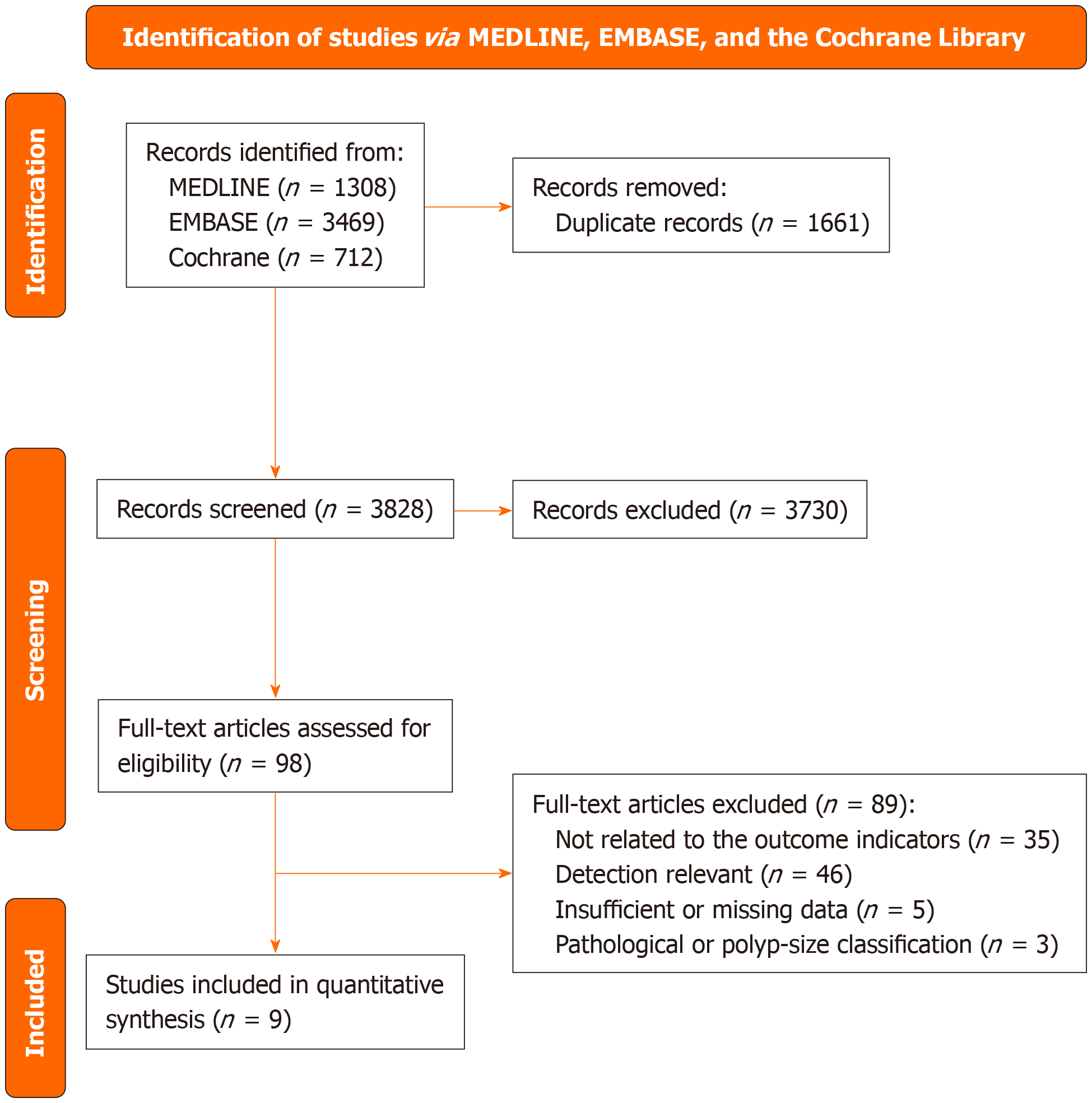
Figure 1
Flowchart of included studies.
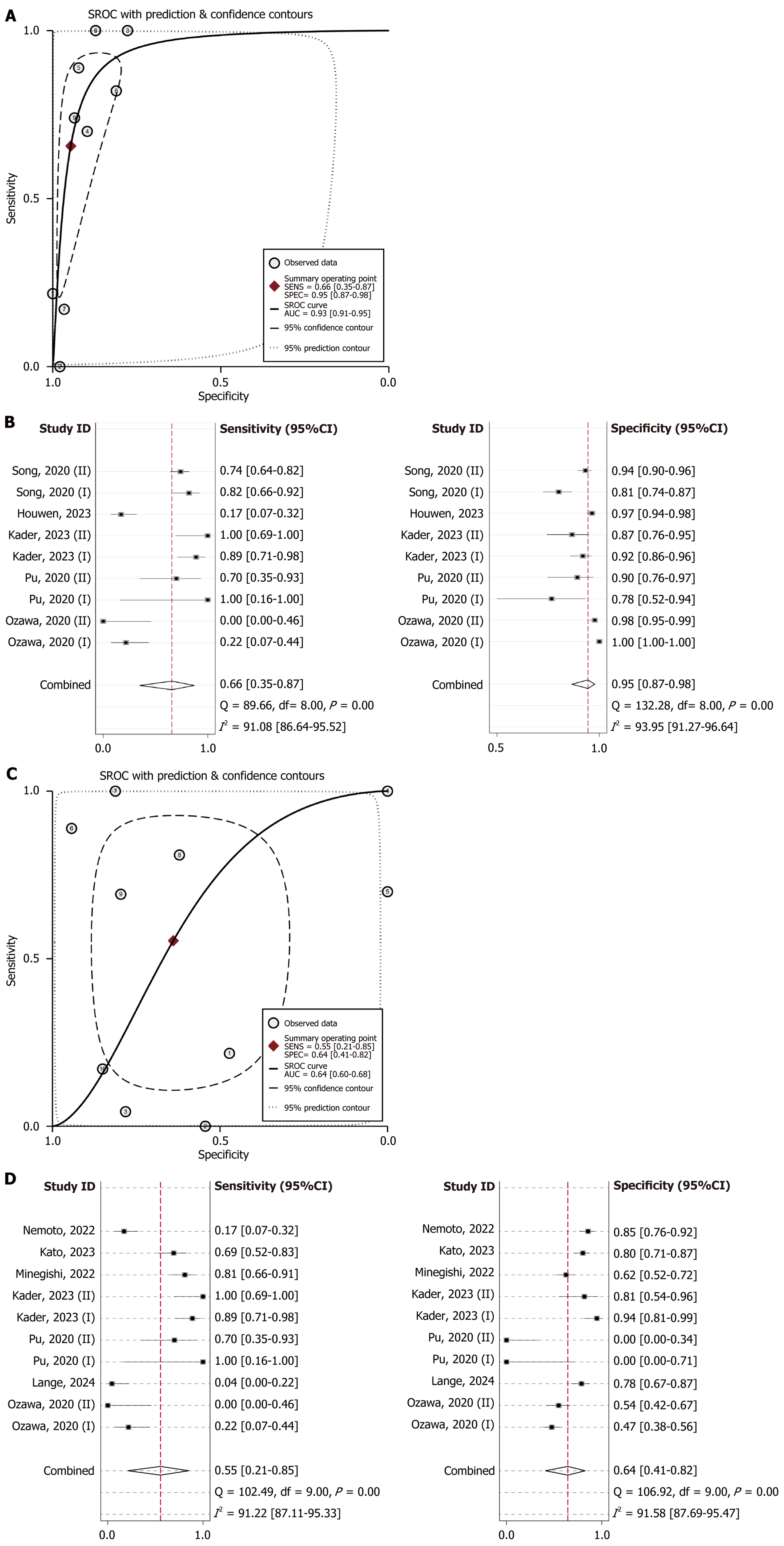
Figure 2 Receiver operating characteristic curve and forest plots of sensitivity and specificity.
A and B: In differentiating sessile serrated lesions (SSLs) from non-SSLs; A: Summary receiver operating characteristic curve for differentiating SSLs from non-SSLs; B: Forest plots of sensitivity and specificity in differentiating SSLs from non-SSLs; C and D: In differentiating SSLs from hyperplastic polyps (HPs); C: Summary receiver operating characteristic curve for differentiating SSLs from HPs; D: Forest plots of sensitivity and specificity in differentiating SSLs from HPs. SROC: Summary receiver operating characteristic; SENS: Sensitivity; SPEC: Specificity; AUC: Area under the curve; CI: Confidence interval.
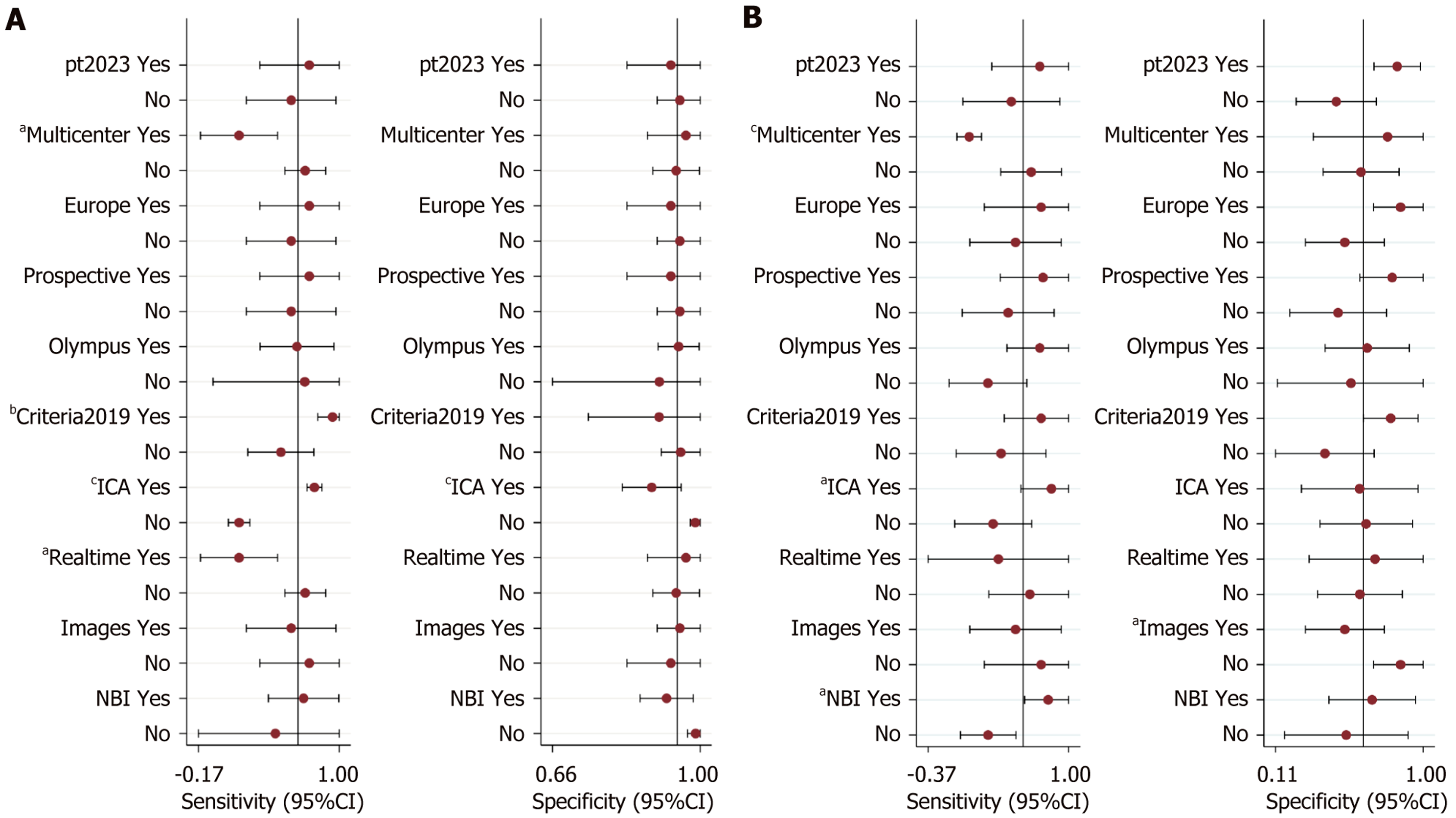
Figure 3 Forest plots of subgroup analysis.
A: Sessile serrated lesions (SSLs) vs non-SSLs; B: SSLs vs hyperplastic polyps. aP < 0.05. bP < 0.01. cP < 0.001. CI: Confidence interval; pt: Publication time; ICA: Image classification algorithms; NBI: Narrow band imaging.
- Citation: Zhang S, Wang SH, Zhao YD, Wei JH, Sui XY, Li X, Zhang HW, Huang ZY, Wang CL, Hu H, Zhang J, Li ZS, Zhao SB, Bai Y. Performance of computer-aided diagnosis for colorectal sessile serrated lesions: A systematic review and meta-analysis. World J Gastroenterol 2026; 32(27): 118009
- URL: https://www.wjgnet.com/1007-9327/full/v32/i27/118009.htm
- DOI: https://dx.doi.org/10.3748/wjg.118009