
















Copyright: ©Author(s) 2026.
World J Gastroenterol. Jul 21, 2026; 32(27): 117268
Published online Jul 21, 2026. doi: 10.3748/wjg.117268
Published online Jul 21, 2026. doi: 10.3748/wjg.117268
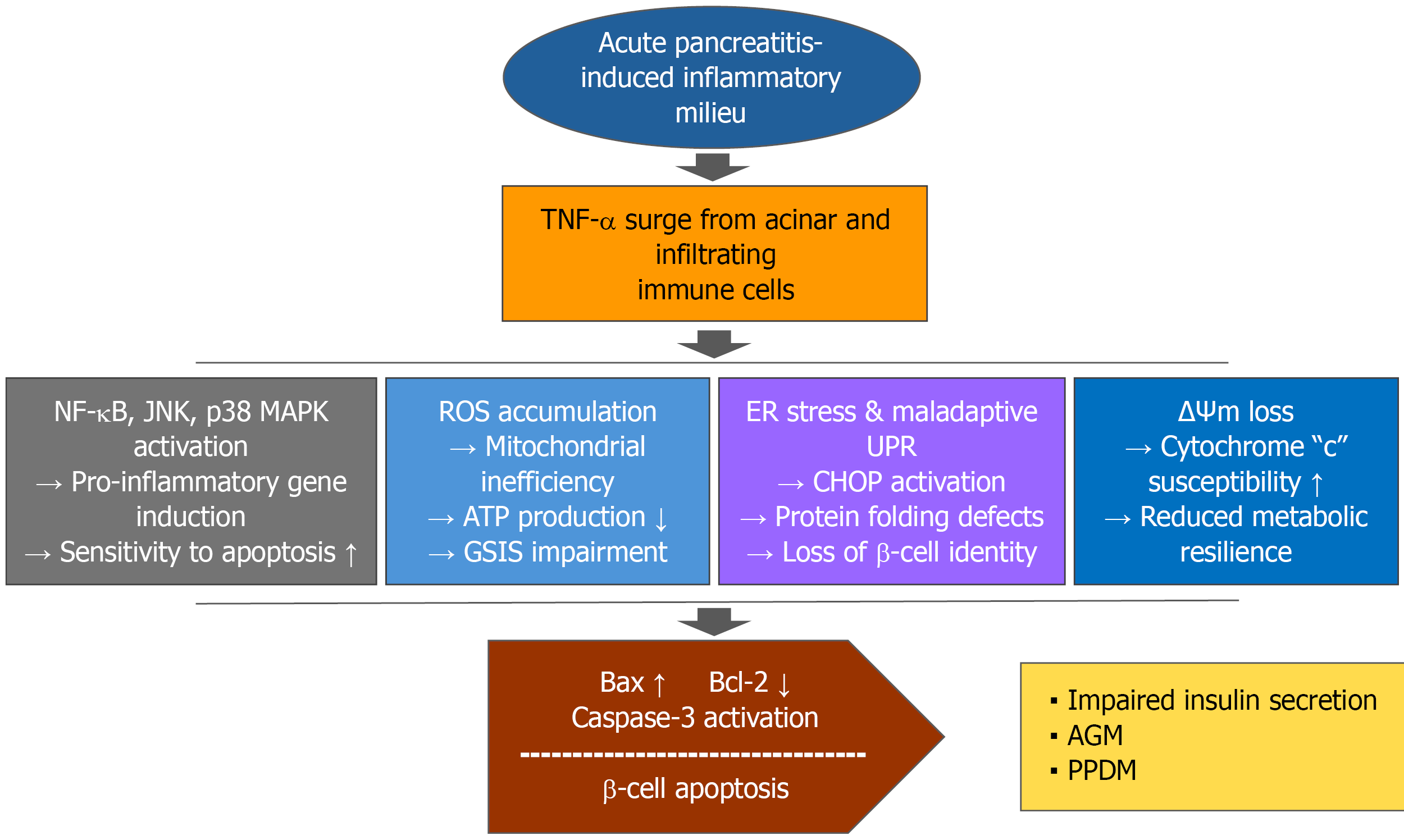
Figure 1 Integrated model of tumor necrosis factor-α-mediated β-cell stress during acute pancreatitis.
Acute pancreatitis induces a strong inflammatory milieu that triggers a surge of tumor necrosis factor-α (TNF-α) released from acinar and infiltrating immune cells. TNF-α activates several convergent β-cell stress pathways, including nuclear factor kappa B, JNK and p38 mitogen-activated protein kinase signaling; accumulation of reactive oxygen species and mitochondrial inefficiency; maladaptive endoplasmic reticulum stress and activation of the unfolded protein response (UPR), with induction of C/EBP homologous protein, a key pro-apoptotic UPR effector; and loss of mitochondrial membrane potential (ΔΨm), increasing susceptibility to cytochrome-c-dependent apoptosis. Together, these pathways amplify Bax upregulation, Bcl-2 downregulation and caspase-3 activation, ultimately driving β-cell apoptosis. These processes impair insulin secretion, contribute to abnormal glucose metabolism, and increase the risk of post-pancreatitis diabetes mellitus. The figure illustrates the proposed “upstream hub” model, in which TNF-α integrates multiple convergent stress signals rather than acting as a single downstream effector. AGM: Abnormal glucose metabolism; GSIS: Glucose-stimulated insulin secretion; PPDM: Post-pancreatitis diabetes mellitus; NF-κB: Nuclear factor kappa B; MAPK: Mitogen-activated protein kinases.
- Citation: Lizzi L, Massimi M. Letter to the Editor: Tumor necrosis factor-α signaling and β-cell apoptosis in acute pancreatitis - integrating molecular mechanisms and metabolic implications. World J Gastroenterol 2026; 32(27): 117268
- URL: https://www.wjgnet.com/1007-9327/full/v32/i27/117268.htm
- DOI: https://dx.doi.org/10.3748/wjg.117268