
















Copyright: ©Author(s) 2026.
World J Gastroenterol. Jul 14, 2026; 32(26): 119398
Published online Jul 14, 2026. doi: 10.3748/wjg.v32.i26.119398
Published online Jul 14, 2026. doi: 10.3748/wjg.v32.i26.119398
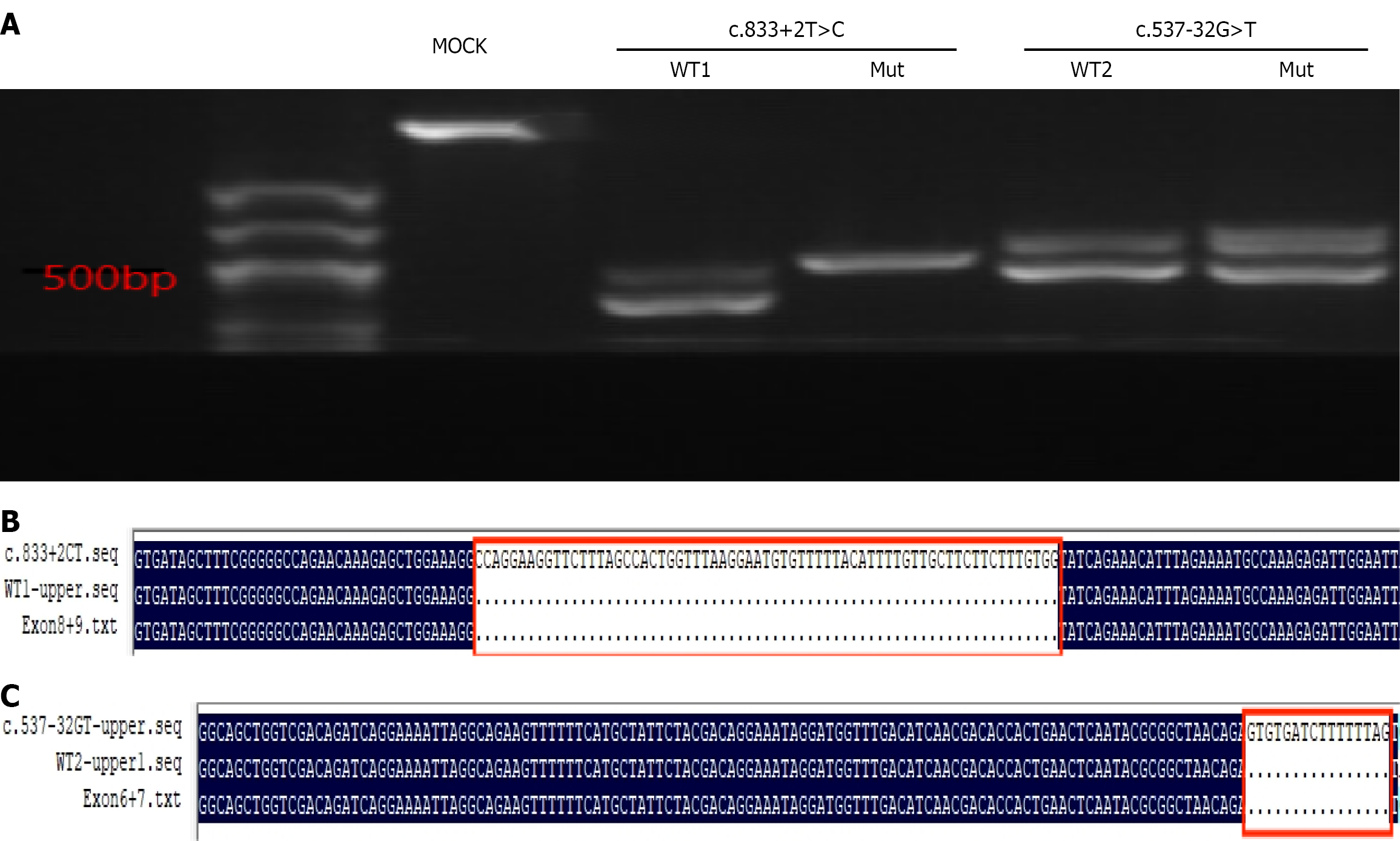
Figure 1 Minigene splice assays in variants of c.
537-32G>T and c.833+2T>C. A: Agarose gel electrophoresis of real-time polymerase chain reaction products; B: Multiple sequence alignment of the variant c.833+2T>C [mutation, wild-type (WT) 1, and exon 8 + exon 9 of ABCB4] demonstrates the retention of a 67-bp intronic sequence; C: Multiple sequence alignment of the c.537-32G>T variant (mutation, WT2, and exon 6 + exon 7 of ABCB4) demonstrates the retention of a 16-bp intronic sequence. MOCK: PcDNA3.1 empty vector plasmid; WT: Wild-type; Mut: Mutation.
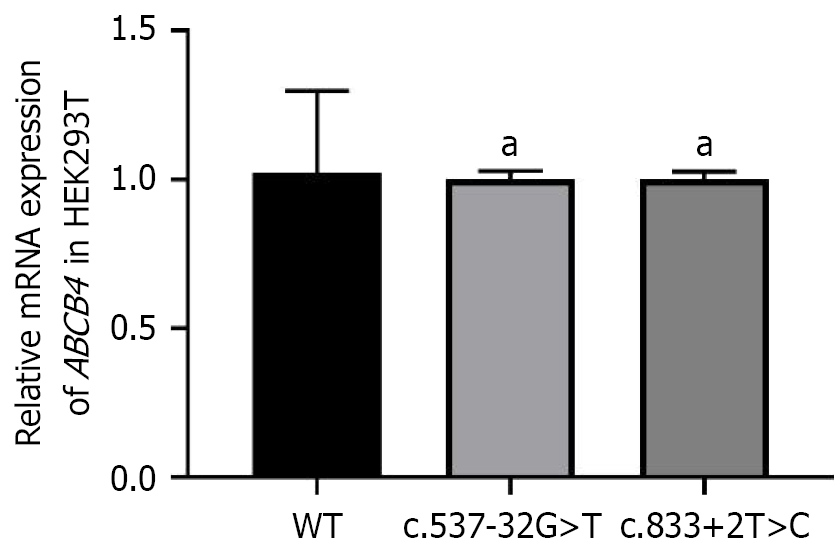
Figure 2 Messenger RNA expression levels of wild-type and intron mutants in ABCB4.
Relative quantity analysis was performed with reference to glyceraldehyde-3-phosphate dehydrogenase. These values represent the average ± SD of the four independent experiments. The data were analyzed in GraphPad Prism 9.5.1. aP < 0.05. WT: Wild-type; mRNA: Messenger RNA.
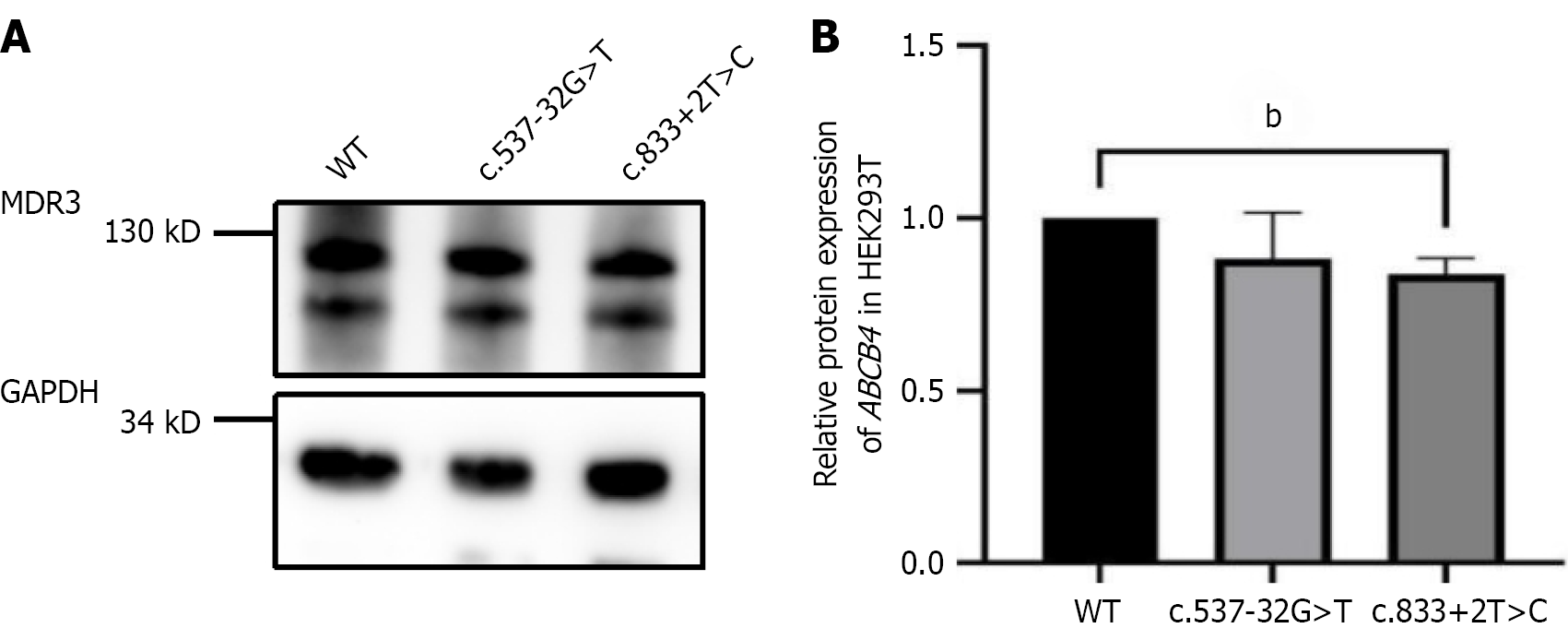
Figure 3 Multidrug resistance protein 3 expression levels of wild-type and intron mutants in ABCB4.
A: Western blot bands of ABCB4-wild-type (WT) and two intron mutants. Among them, WT was transfected with ABCB4 WT plasmid, and c.537-32G>T and c.833+2T>C were transfected with mutant plasmids, respectively; B: Analysis of multidrug resistance protein 3 (MDR3) expression level. The ratio of MDR3 to glyceraldehyde-3-phosphate dehydrogenase was taken as a relative quantity, and the data were standardized against the WT. These data are the average ± SD of three independent experiments. The grayscale value of the western blot strip was measured using Image J software. The data were analyzed in GraphPad Prism 9.5.1. bP < 0.05. WT: Wild-type; MDR3: Multidrug resistance protein 3; GAPDH: Glyceraldehyde-3-phosphate dehydrogenase.
- Citation: Zheng YF, Weng YH, Li SX, Yang YF. Two novel intronic variants in ABCB4: Clinical features, molecular mechanisms, and literature review. World J Gastroenterol 2026; 32(26): 119398
- URL: https://www.wjgnet.com/1007-9327/full/v32/i26/119398.htm
- DOI: https://dx.doi.org/10.3748/wjg.v32.i26.119398