
















Copyright: ©Author(s) 2026.
World J Gastroenterol. Jun 21, 2026; 32(23): 118142
Published online Jun 21, 2026. doi: 10.3748/wjg.v32.i23.118142
Published online Jun 21, 2026. doi: 10.3748/wjg.v32.i23.118142
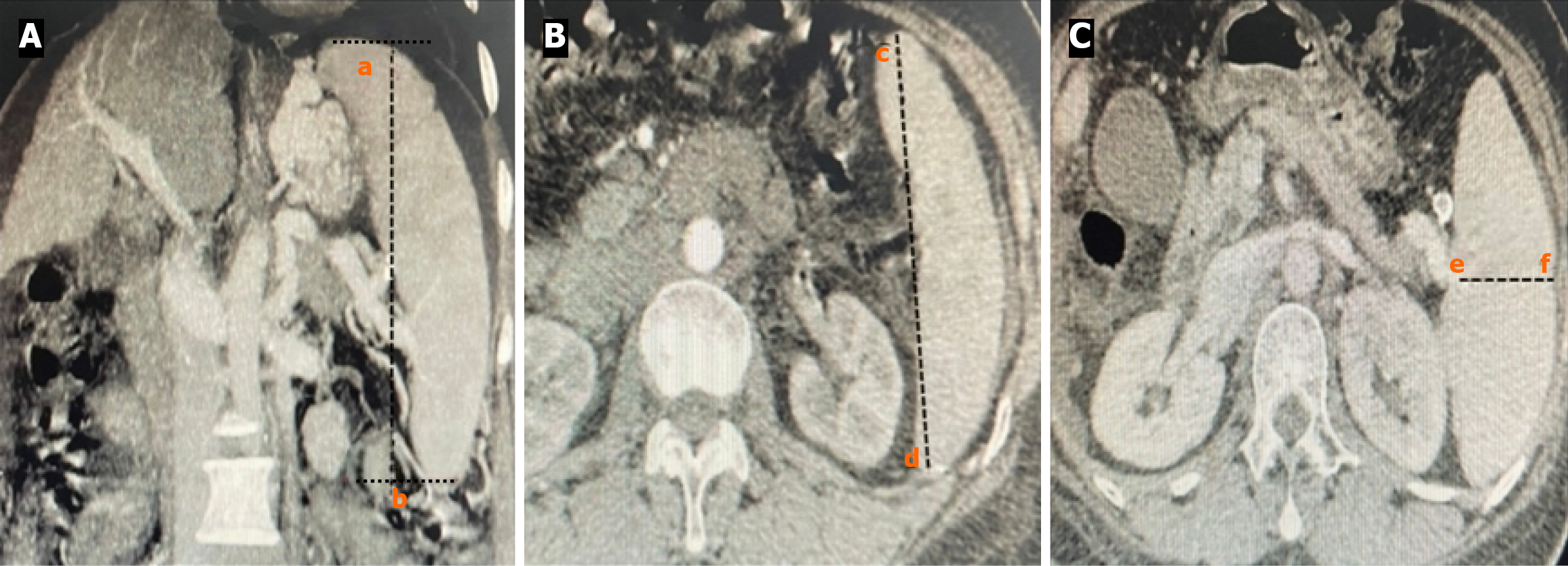
Figure 1 Computed tomography images.
A: Measurements of the length of the spleen (a-b); B: The maximal width (c-d); C: The thickness at the hilum (e-f) determined on a plane perpendicular to the maximal splenic width and through the hilum.
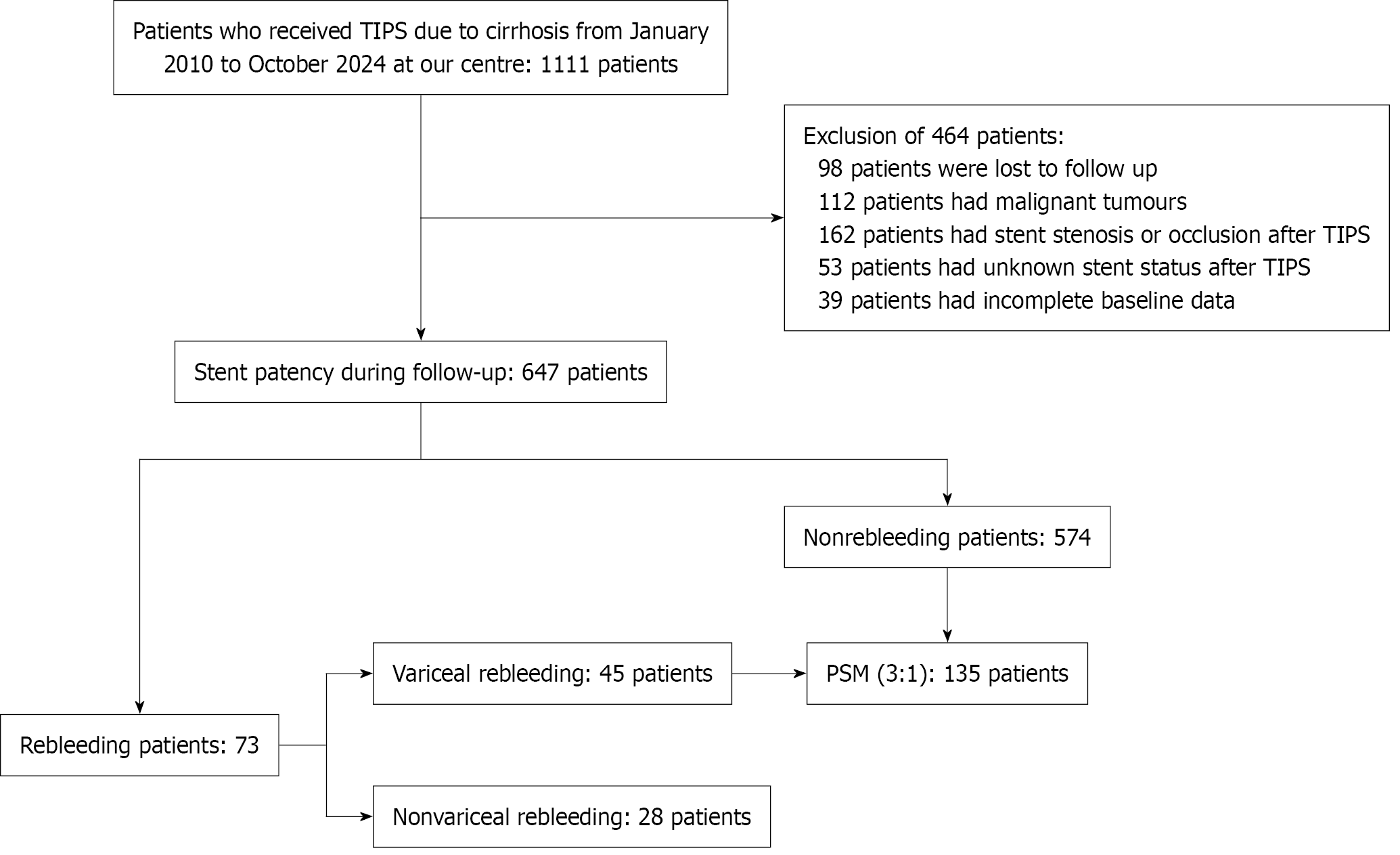
Figure 2 Flowchart of patient enrolment and study design.
TIPS: Transjugular intrahepatic portosystemic shunt; PSM: Propensity score matching.
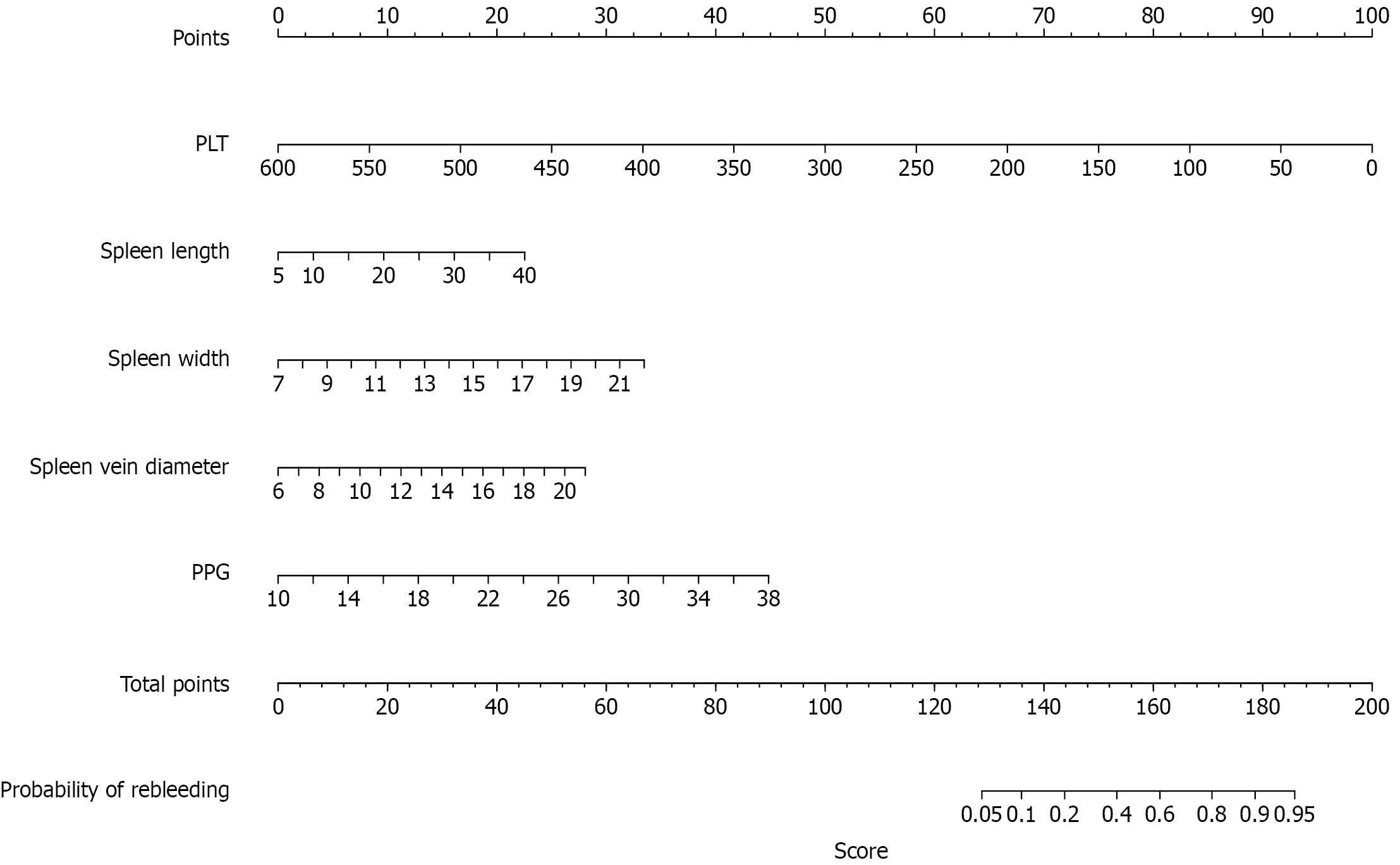
Figure 3 Nomogram for predicting the probability of rebleeding.
This nomogram integrates five predictors platelet count, spleen length, spleen width, splenic vein diameter, and portal pressure gradient to estimate the individual risk of rebleeding. For each predictor, the corresponding patient value is located on its respective axis and converted to points using the “points” scale at the top. The sum of all points yields the “total points”, which maps to the predicted probability of re-bleeding shown on the bottom scale. This model provides a quantitative tool to sup-port clinical risk assessment. PLT: Platelet; PPG: Portacaval pressure gradient.
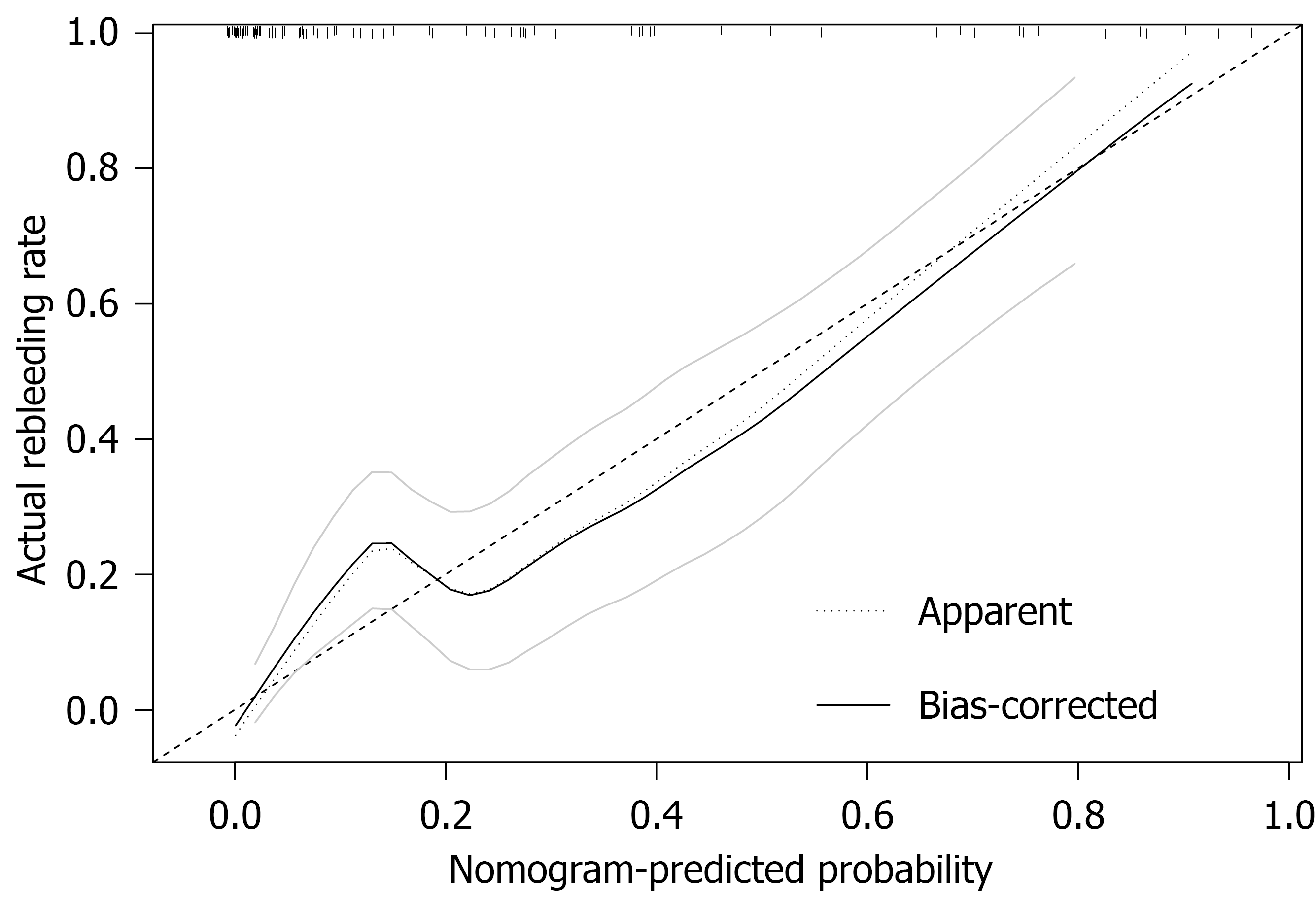
Figure 4 Calibration plot of the nomogram model.
This figure illustrates the agreement between the nomogram-predicted probability of rebleeding and the actual observed rebleeding rate. The dotted line (apparent) represents the model’s performance on the original dataset, while the solid line (bias-corrected) shows the boot-strap-corrected calibration curve based on 1000 resamples, indicating the model’s internal stability. The diagonal line denotes perfect calibration. The mean absolute error was 0.046 (n = 180), demonstrating good concordance between predicted and observed outcomes.
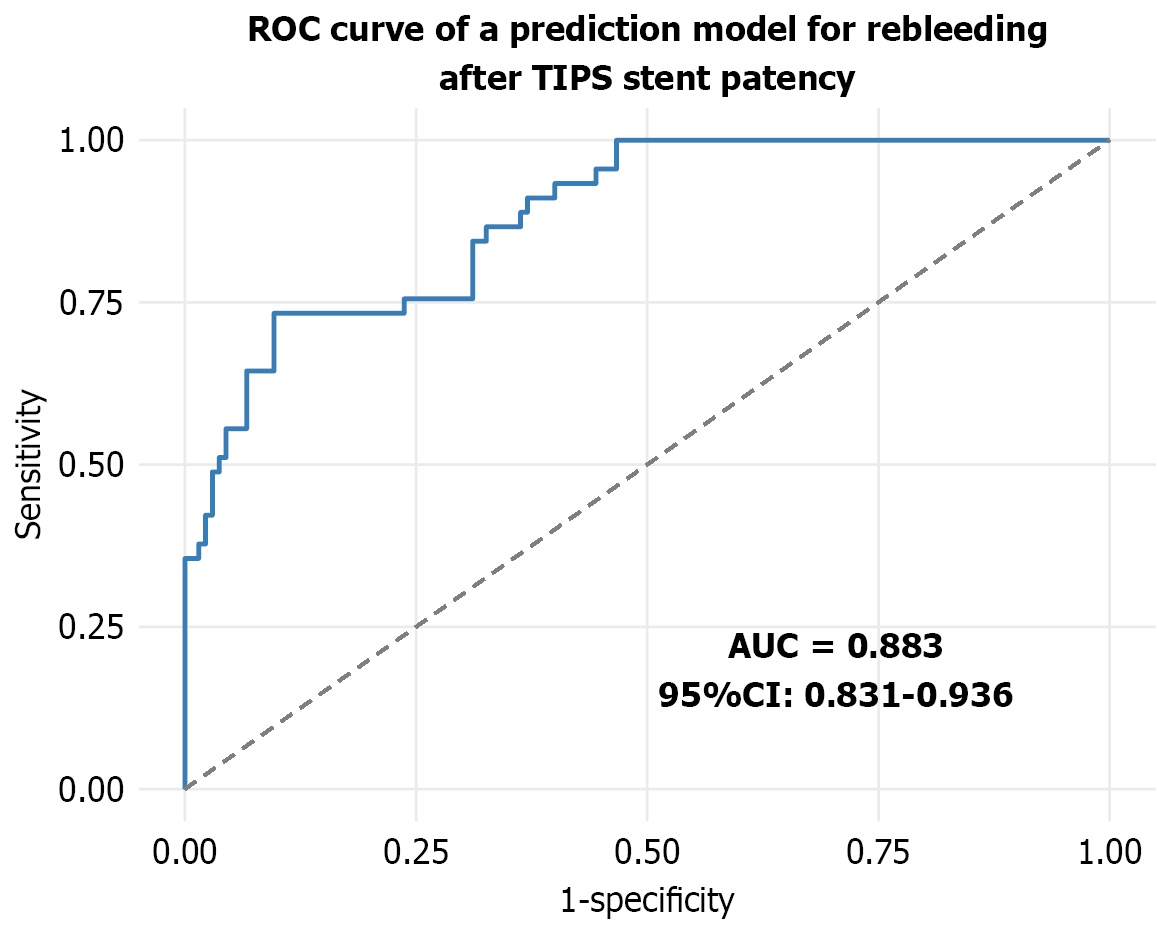
Figure 5 Receiver operating characteristic curve of the rebleeding risk pre-diction model.
This receiver operating characteristic curve evaluates the discriminatory ability of the model to distinguish patients with rebleeding from those without. The area under the curve was 0.883, with a 95% confidence interval of 0.831-0.936, indicating excellent discriminative performance. The dashed line represents the reference line of a random classifier. ROC: Receiver operating characteristic; AUC: Area under the curve; CI: Confidence interval; TIPS: Transjugular intrahepatic portosystemic shunt.
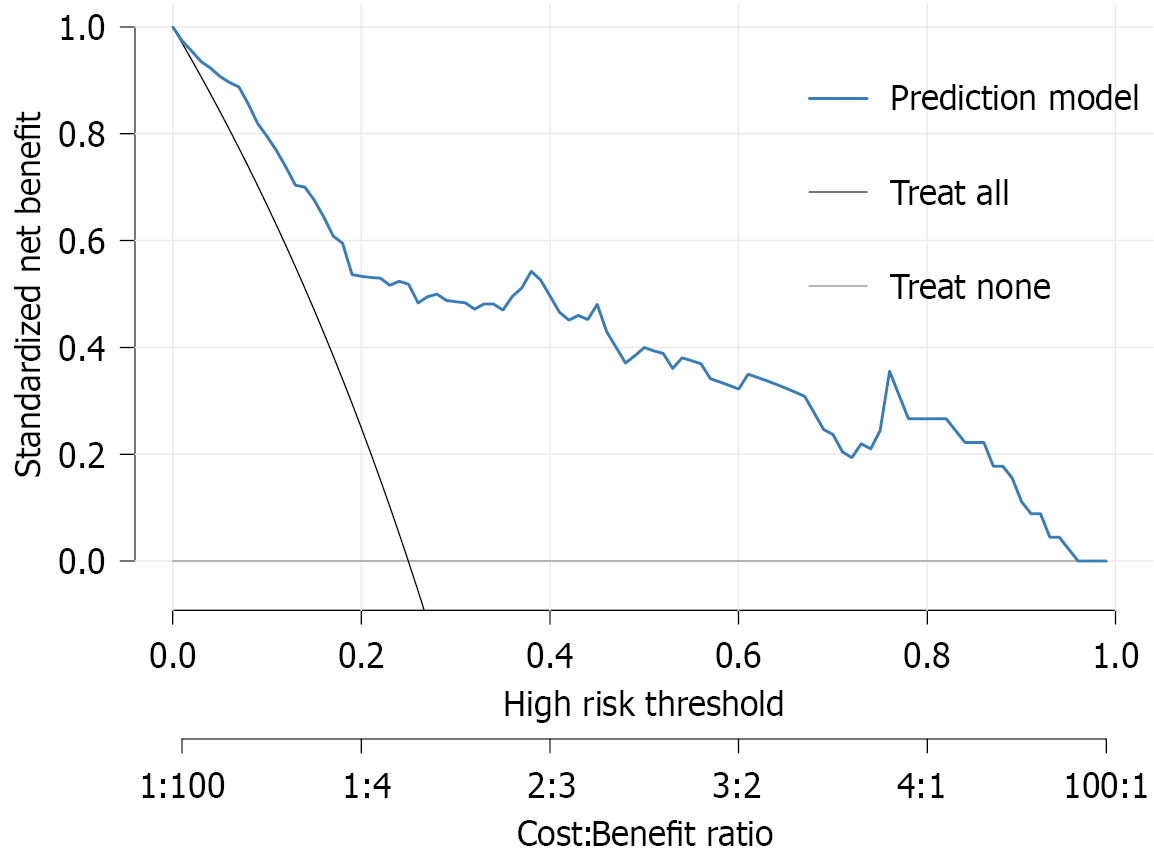
Figure 6 The blue curve represents the net benefit of the prediction model incorporating platelet count, spleen length, spleen width, splenic vein diameter, and portal pressure gradient.
The grey and black lines correspond to the “treat all” and “treat none” strategies, respectively. Across a wide range of high-risk thresholds, the model demonstrates a consistently greater standardized net benefit compared with the two default strategies, indicating its potential clinical utility in guiding individualized risk-based decision-making.
- Citation: Ren YT, Wen JY, Tu JJ, Zhang H, Ding CF, Xiao JQ, Zhuge YZ. Development and validation of a nomogram predicting rebleeding in cirrhotic patients with patent transjugular intrahepatic portosystemic shunt. World J Gastroenterol 2026; 32(23): 118142
- URL: https://www.wjgnet.com/1007-9327/full/v32/i23/118142.htm
- DOI: https://dx.doi.org/10.3748/wjg.v32.i23.118142