
















Copyright: ©Author(s) 2026.
World J Gastroenterol. Jun 7, 2026; 32(21): 116527
Published online Jun 7, 2026. doi: 10.3748/wjg.v32.i21.116527
Published online Jun 7, 2026. doi: 10.3748/wjg.v32.i21.116527
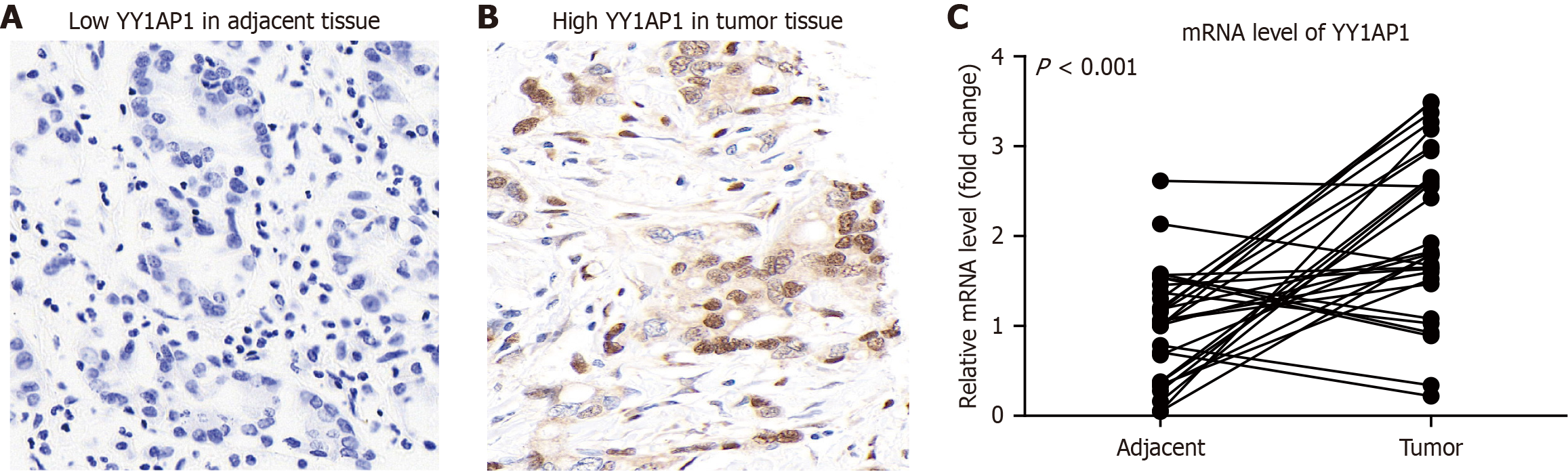
Figure 1 Immunohistochemical analysis and reverse transcription-quantitative polymerase chain reaction of Yin Yang 1-associated protein 1 in gastric adenocarcinoma.
A and B: High Yin Yang 1-associated protein 1 protein expression is evident in tumor tissues compared to adjacent non-tumor tissues, as shown by the intensity of immunohistochemical staining; C: Reverse transcription-quantitative polymerase chain reaction revealed the different mRNA level of Yin Yang 1-associated protein 1 in tumor tissues compared to adjacent non-tumor tissues. YY1AP1: Yin Yang 1-associated protein 1.
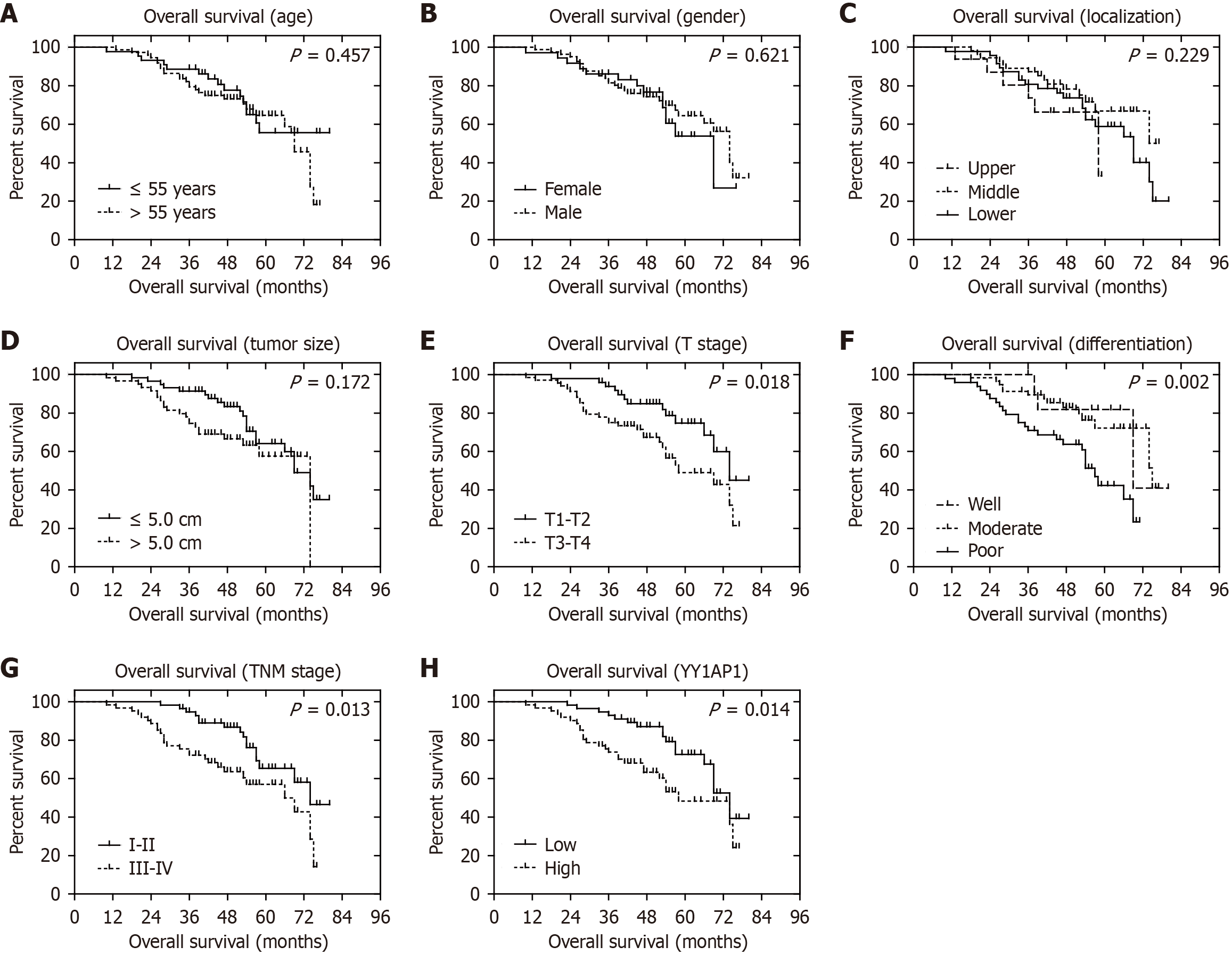
Figure 2 Kaplan-Meier survival curves regarding cancer-specific survival in gastric adenocarcinoma patients were plotted and compared using log-rank test.
A: Age; B: Gender; C: Tumor localization; D: Tumor size; E: T stage; F: Tumor differentiation; G: Tumor-node-metastasis stage; H: Yin Yang 1-associated protein 1 level. YY1AP1: Yin Yang 1-associated protein 1; TNM: Tumor-node-metastasis.
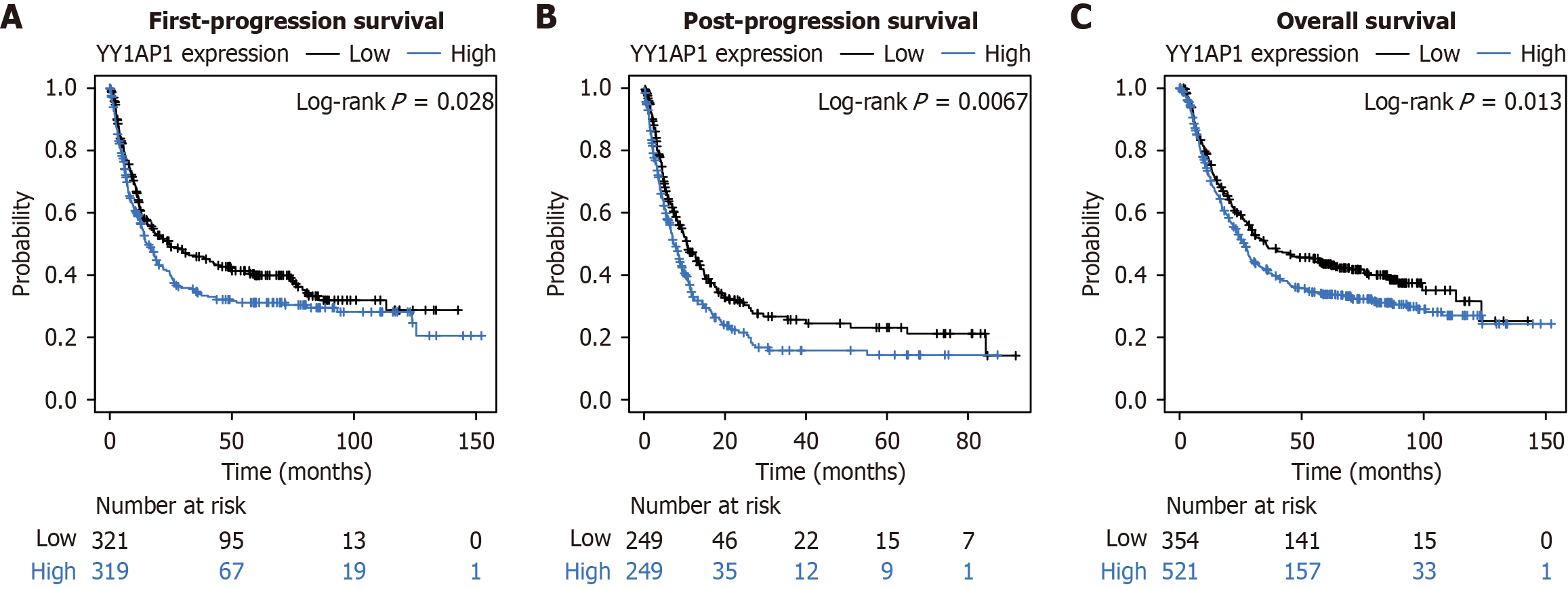
Figure 3 Kaplan-Meier survival curves based on Yin Yang 1-associated protein 1 expression in patients.
A: First-progression survival: Patients with high Yin Yang 1-associated protein 1 (YY1AP1) expression exhibited significantly shorter first-progression survival compared to those with low YY1AP1 expression (P = 0.028); B: Post-progression survival: High YY1AP1 expression was associated with reduced post-progression survival compared to low expression (P = 0.0067); C: Overall survival: High YY1AP1 expression correlated with worse overall survival (P = 0.013). The X-axis represents survival time in months, while the Y-axis shows the survival probability. Below each plot, the number of patients at risk is indicated for each group at specific time points. Data were extracted from GSE14210, GSE15459, GSE22377, GSE29272, GSE51105, and GSE62254. YY1AP1: Yin Yang 1-associated protein 1.
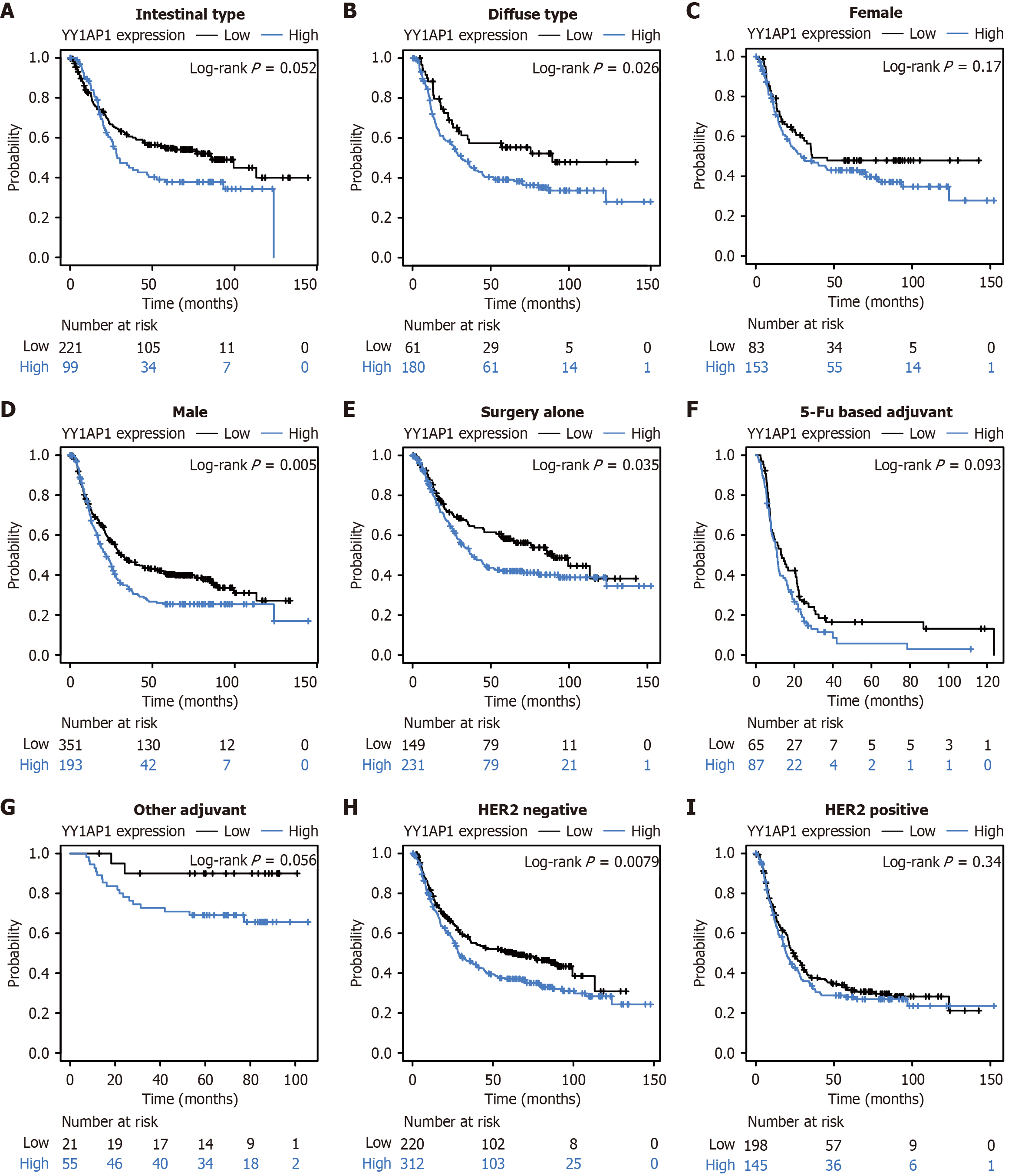
Figure 4 Kaplan-Meier survival analyses stratified by clinicopathological features based on Yin Yang 1-associated protein 1 expression.
A: High Yin Yang 1-associated protein 1 (YY1AP1) expression showed a trend toward shorter survival, though not statistically significant (P = 0.052) in gastric cancers with intestinal type; B: High YY1AP1 expression was associated with significantly worse survival (P = 0.026) in gastric cancers with diffuse type; C: No significant survival difference between high and low YY1AP1 expression groups (P = 0.17) in female patients; D: High YY1AP1 expression was linked to shorter survival (P = 0.005) in male patients; E: High YY1AP1 expression correlated with poorer outcomes (P = 0.035) in the gastric cancer patients who only accepted surgery treatment; F: No significant survival difference based on YY1AP1 expression (P = 0.093) for those patients who underwent 5-fluorouracil based adjuvant therapy after surgical treatment; G: A marginal survival trend was noted for high expression (P = 0.056), however without significance those patients who underwent other adjuvant therapy after surgical treatment; H: In human epidermal growth factor receptor 2-negative patients, high YY1AP1 expression was significantly associated with worse survival (P = 0.0079); I: In human epidermal growth factor receptor 2-positive patients, no significant difference in survival outcomes (P = 0.34). Data were extracted from GSE14210, GSE15459, GSE22377, GSE29272, GSE51105, and GSE62254. YY1AP1: Yin Yang 1-associated protein 1; 5-Fu: 5-fluorouracil; HER2: Human epidermal growth factor receptor 2.
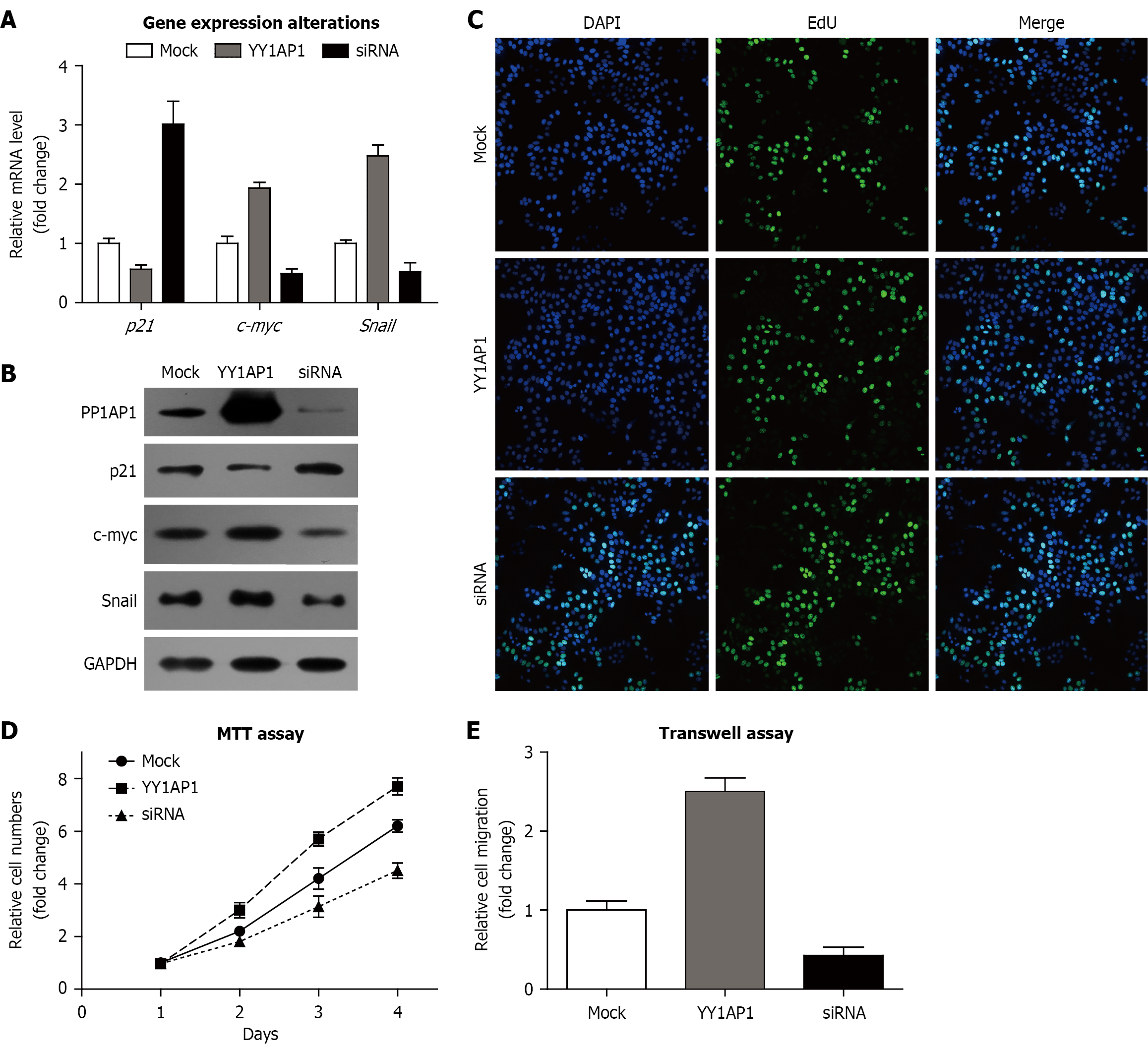
Figure 5 Effects of Yin Yang 1-associated protein 1 overexpression and knockdown in MKN45 cells on key cancer-related markers and cellular behaviors were tested.
A and B: The data on mRNA and protein expression levels of Yin Yang 1-associated protein 1 (YY1AP1), p21, c-myc, and snail; C and D: EdU experiments showed that overexpressing YY1AP1 can significantly promote gastric cancer cell proliferation while silencing YY1AP1 exerts opposite effects, which had also been confirmed by MTT assays; E: Transwell assays showed the migration and invasion impacts of YY1AP1 in gastric cancer cells. YY1AP1: Yin Yang 1-associated protein 1; siRNA: Small interfering RNA; GAPDH: Glyceraldehyde-3-phosphate dehydrogenase.
- Citation: Gu YC, Li X, Zhao YJ, Wu T, Zhou CG, Hu WL, Fu ZW, Huang JH, Ren ZY. Yin Yang 1-associated protein 1: Clinical significance and underlying functional mechanisms in gastric cancer. World J Gastroenterol 2026; 32(21): 116527
- URL: https://www.wjgnet.com/1007-9327/full/v32/i21/116527.htm
- DOI: https://dx.doi.org/10.3748/wjg.v32.i21.116527