
















Copyright: ©Author(s) 2026.
World J Gastroenterol. Jun 7, 2026; 32(21): 116363
Published online Jun 7, 2026. doi: 10.3748/wjg.v32.i21.116363
Published online Jun 7, 2026. doi: 10.3748/wjg.v32.i21.116363
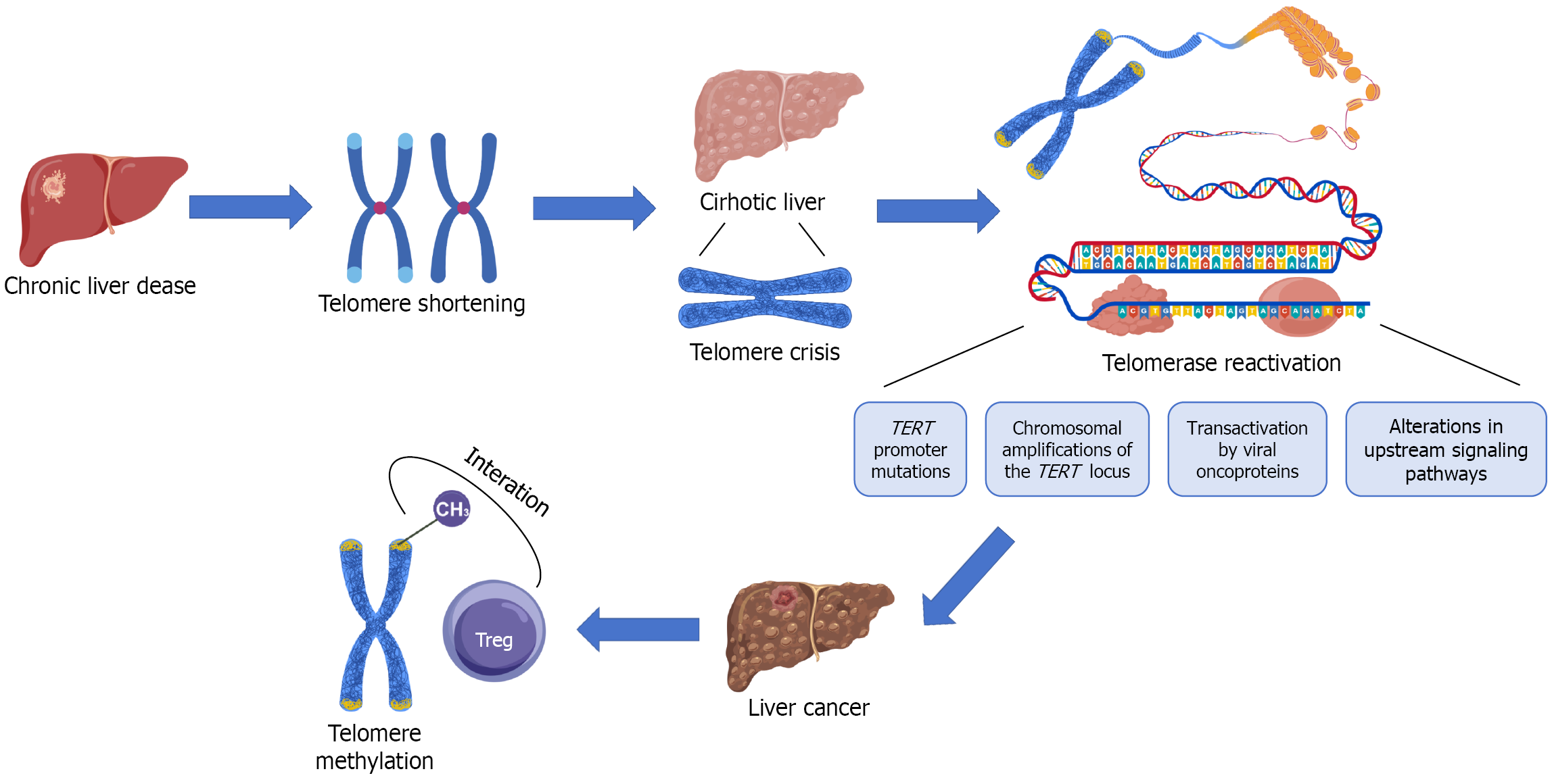
Figure 1 The core mechanism of telomere biology in the multistep development of hepatocellular carcinoma[50].
Chronic liver injury leads to repeated hepatocyte death and regeneration, resulting in progressive telomere shortening, which ultimately exhausts the liver’s regenerative reserve and induces cirrhosis. In the setting of cirrhosis, genomic instability caused by telomere crisis forms the foundation for carcinogenesis. To survive, hepatic precursor cells achieve telomerase reactivation through various mechanisms, most notably via TERT gene promoter mutations, thereby bypassing senescence or apoptosis, acquiring immortality, and completing malignant transformation. Following the establishment of hepatocellular carcinoma, telomere biology interacts with epigenetic regulation (e.g., telomere region methylation) to influence the tumor immune microenvironment, collectively promoting tumor heterogeneity and progression. Treg: Regulatory T cell; CH3: Methyl.
- Citation: Lu XY, Wang YG, Wang H. Telomere and telomerase: Traditional tumor targets regain their applications for liver cancer diagnosis and prognosis. World J Gastroenterol 2026; 32(21): 116363
- URL: https://www.wjgnet.com/1007-9327/full/v32/i21/116363.htm
- DOI: https://dx.doi.org/10.3748/wjg.v32.i21.116363