
















©The Author(s) 2026.
World J Gastroenterol. Jan 14, 2026; 32(2): 111996
Published online Jan 14, 2026. doi: 10.3748/wjg.v32.i2.111996
Published online Jan 14, 2026. doi: 10.3748/wjg.v32.i2.111996
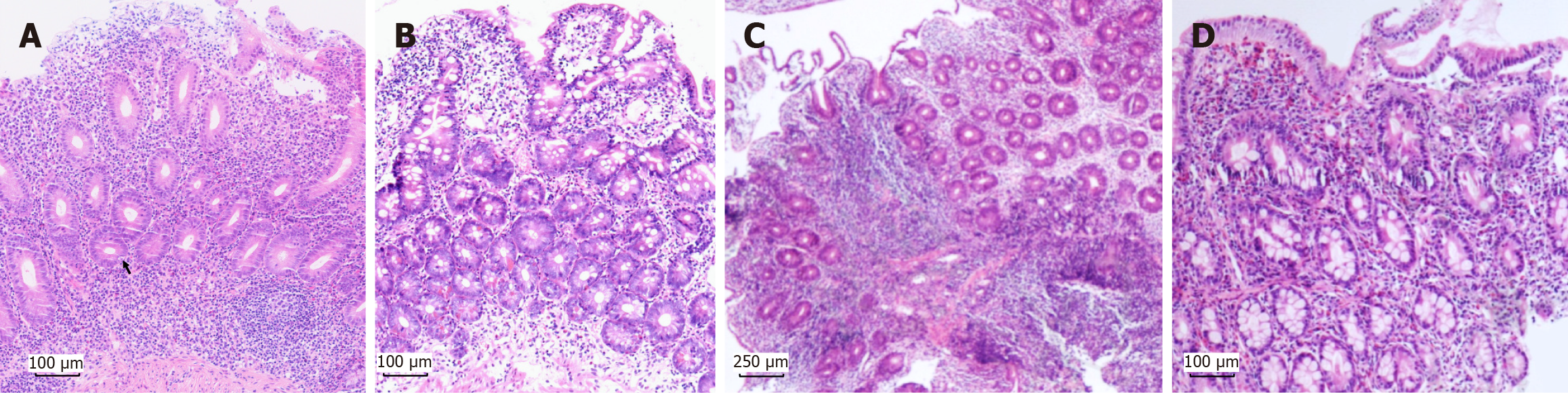
Figure 1 Representative histopathological features of small intestinal villous atrophy disorders.
A: Duodenal biopsy from a patient with autoimmune enteropathy showing complete villous atrophy, loss of goblet cells and Paneth cells, and apoptotic bodies (arrow) [hematoxylin & eosin (H&E), × 100]; B: Duodenal biopsy from a patient with common variable immunodeficiency showing blunted villi and absence of plasma cells (H&E, × 100); C: Ileal biopsy from a patient with monomorphic epitheliotropic intestinal T-cell lymphoma showing dense infiltration of small T lymphocytes (H&E, × 40); D: Duodenal biopsy from a patient with eosinophilic gastroenteritis showing marked eosinophilic infiltration (H&E, × 100).
- Citation: Li MH, Wang QP, Ou CZ, Xu TM, Chen Y, Tang H, Zhang Y, Lai YJ, Qin XZ, Li J, Zhou WX, Li JN. Diagnostic clues in patients with clinical malabsorption and pathological small intestinal villous atrophy: Immune-mediated type and beyond. World J Gastroenterol 2026; 32(2): 111996
- URL: https://www.wjgnet.com/1007-9327/full/v32/i2/111996.htm
- DOI: https://dx.doi.org/10.3748/wjg.v32.i2.111996