
















Copyright: ©Author(s) 2026.
World J Gastroenterol. Apr 21, 2026; 32(15): 114778
Published online Apr 21, 2026. doi: 10.3748/wjg.v32.i15.114778
Published online Apr 21, 2026. doi: 10.3748/wjg.v32.i15.114778
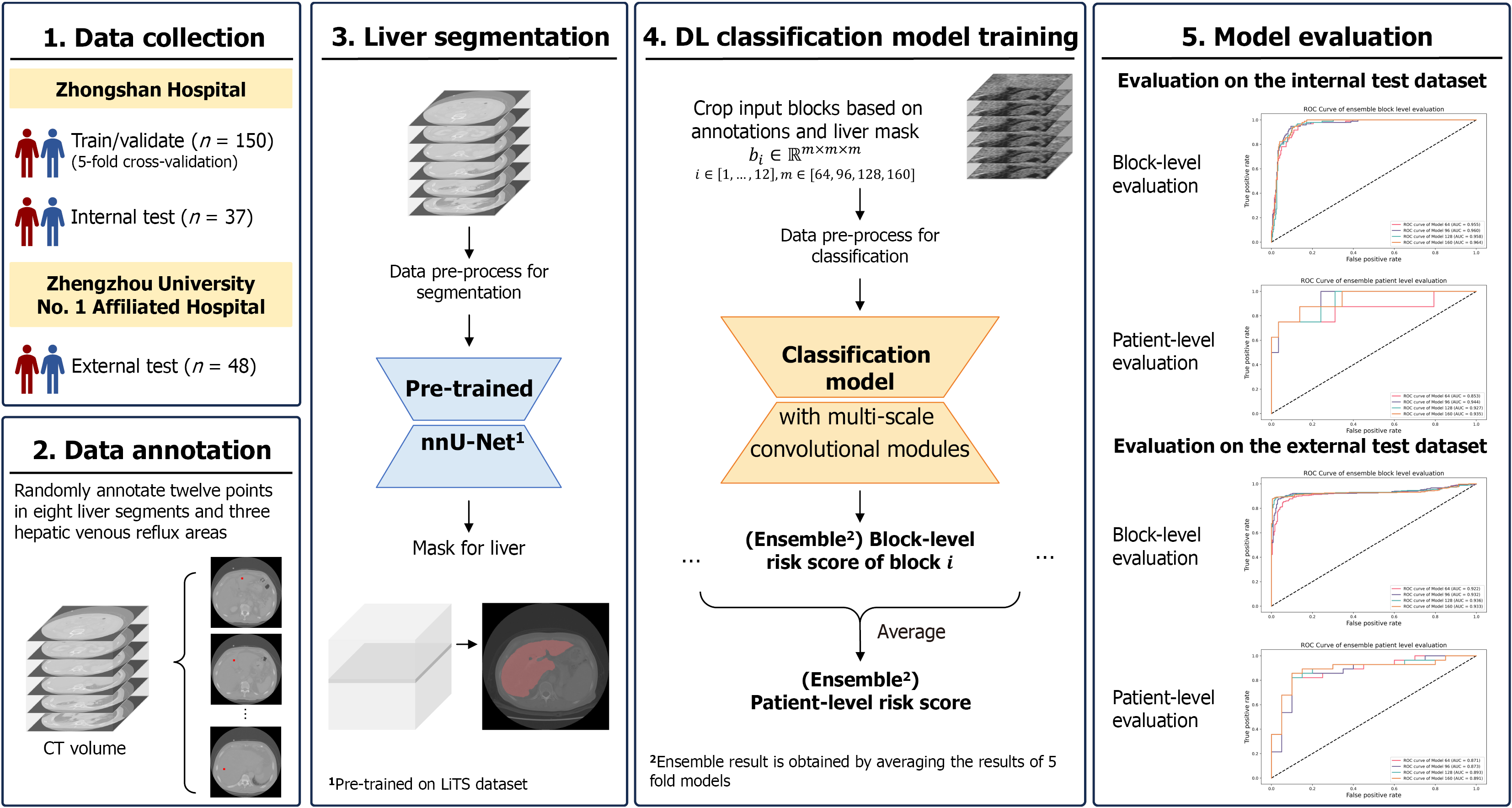
Figure 1 Pipeline of deep-learning-based pyrrolizidine-alkaloid induced hepatic sinusoidal obstruction syndrome classification based on computed tomography images.
CT: Computed tomography; DL: Deep learning; AUC: Area under the curve; ROC: Receiver operating characteristic.
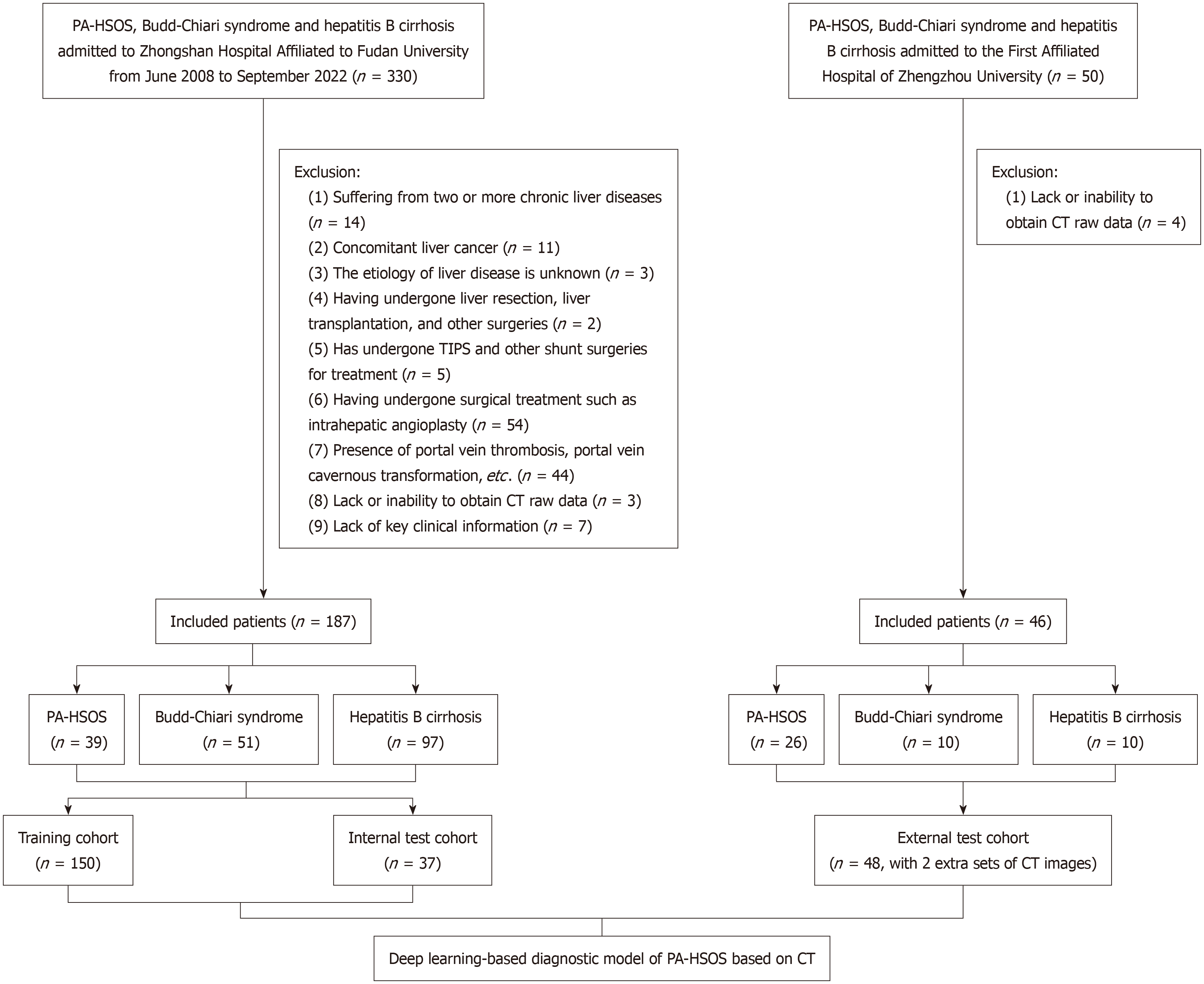
Figure 2 Flowchart of included patients.
PA-HSOS: Pyrrolizidine-alkaloid-induced hepatic sinusoidal obstruction syndrome; CT: Computed tomography.
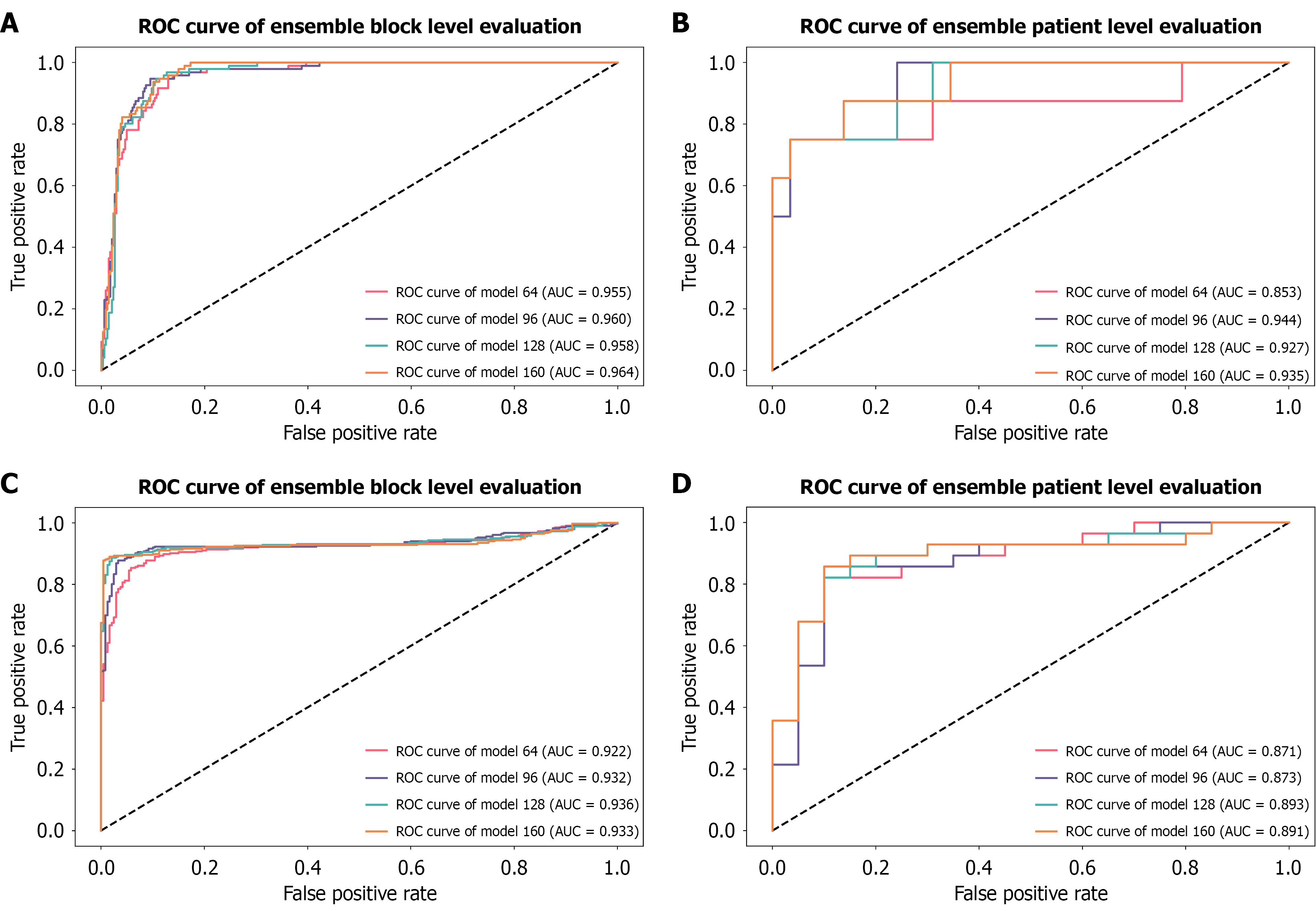
Figure 3 Receiver operating characteristic curves and area under the curve of the block-level and patient-level ensembled model results on the internal and external test cohort.
A and B: Based on the internal test cohort; C and D: Based on the external test cohort. A and C represent the block-level results, while B and D represent the patient-level results. AUC: Area under the curve; ROC: Receiver operating characteristic.
- Citation: Wang SY, Yin SQ, Yang JY, Ji MY, Zeng XQ, Rao SX, Lv MZ, Bao J, Wang MN, Gao H. Development and validation of a deep-learning-based diagnostic model for drug-induced liver injury using computed tomography images. World J Gastroenterol 2026; 32(15): 114778
- URL: https://www.wjgnet.com/1007-9327/full/v32/i15/114778.htm
- DOI: https://dx.doi.org/10.3748/wjg.v32.i15.114778