
















Copyright: ©Author(s) 2026.
World J Gastroenterol. Apr 7, 2026; 32(13): 115810
Published online Apr 7, 2026. doi: 10.3748/wjg.v32.i13.115810
Published online Apr 7, 2026. doi: 10.3748/wjg.v32.i13.115810
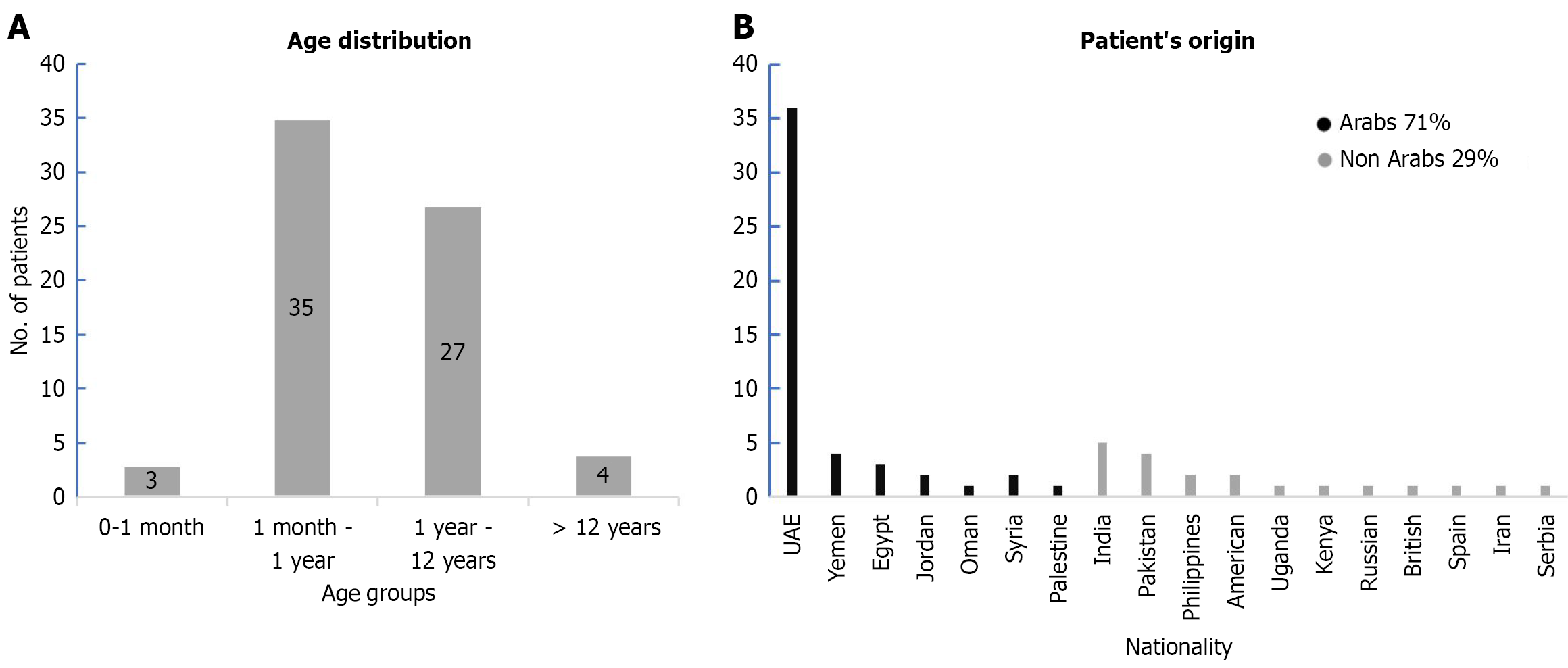
Figure 1 Patient demographics.
A: Distribution by age; B: Distribution by nationality and ancestry (Arab vs non-Arab). UAE: The United Arab Emirates.
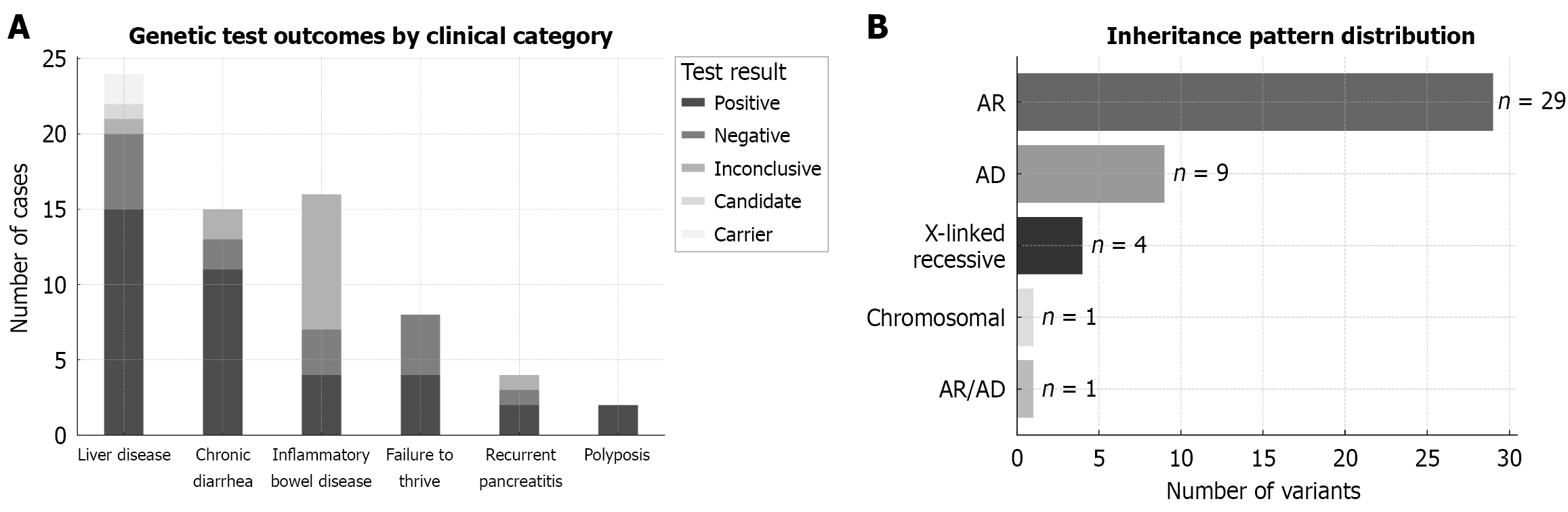
Figure 2 Genomic findings and diagnostic yield.
A: Genetic testing outcomes stratified by clinical category (disease groups); B: Breakdown of inheritance patterns in genes where pathogenic variants were identified. AR: Autosomal recessive; AD: Autosomal dominant.
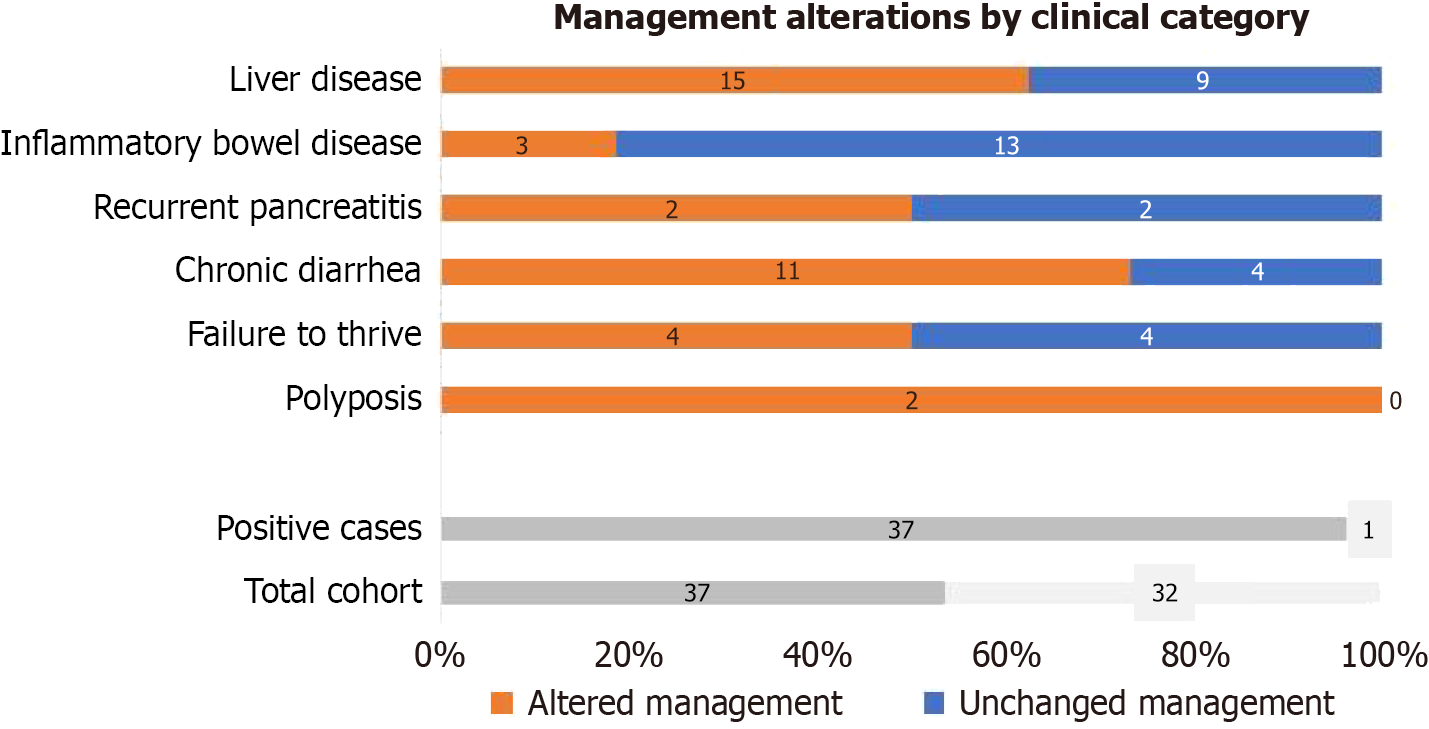
Figure 3
Rates of management changes per clinical category and across total and genetically positive cohort.
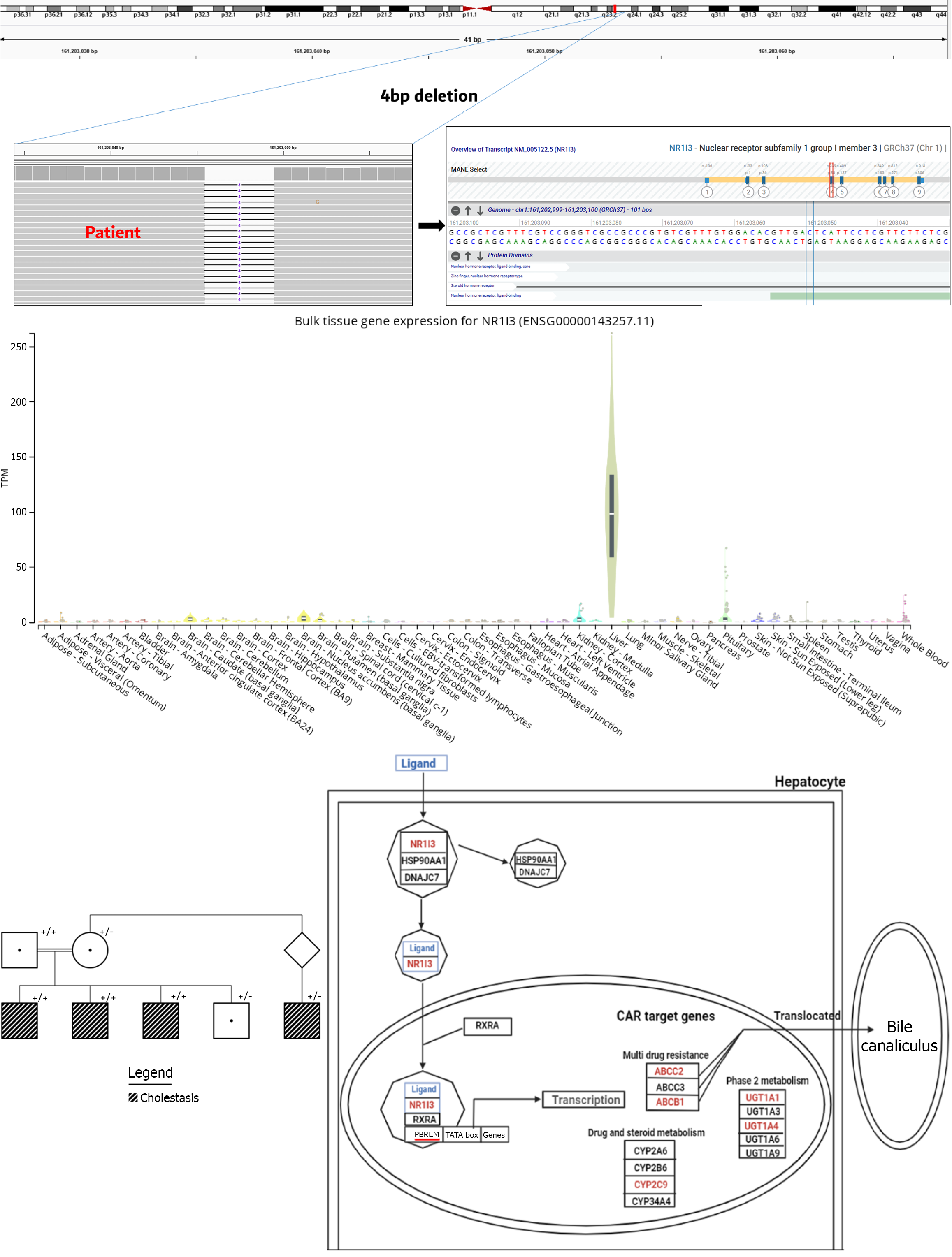
Figure 4 A novel gene potentially underlying a transient form of cholestasis.
Karyogram view of chromosome 1 vertical red bar marks the cytogenetic location (1q23.1) of the NR1I3 gene. Blue lines represent a zoomed-in view into the 4 bp deletion identified in the patient No. 29 with episodic cholestasis. The 4 bp deletion is shown in Integrated Genome Viewer where each horizonal grey bar represents a sequencing read while vertical grey bars representing depth of coverage at each genomic position. The 4 bp deletion is found on every read suggesting that it is homozygous in the patient as also shown by the lack of coverage across those positions. An Alamut software view on the right shows that this deletion is in exon 4 of NR1I3 transcript NM_005122.5. Bottom left, expression pattern from the Genotype-Tissue Expression project showing exclusive expression of the NR1I3 gene in the liver consistent with a role in bile acid metabolism. Bottom middle, family pedigree where squares represent males where circles representing females. Dashed symbols represent affected individuals while the “+” and “-“ signs represent presence or absence of the NR1I3 deletion, respectively, on either allele. Bottom right, a schematic showing the molecular interaction of the NR1I3 protein with other partners involved in bile acid clearance in the hepatocyte.
- Citation: Alsarhan A, Alloush R, Jain R, Abou Tayoun A, Tzivinikos C. Clinical utility of genomic investigations in a Middle Eastern pediatric gastroenterology disease cohort. World J Gastroenterol 2026; 32(13): 115810
- URL: https://www.wjgnet.com/1007-9327/full/v32/i13/115810.htm
- DOI: https://dx.doi.org/10.3748/wjg.v32.i13.115810