
















Copyright: ©Author(s) 2026.
World J Gastroenterol. Apr 7, 2026; 32(13): 114563
Published online Apr 7, 2026. doi: 10.3748/wjg.v32.i13.114563
Published online Apr 7, 2026. doi: 10.3748/wjg.v32.i13.114563
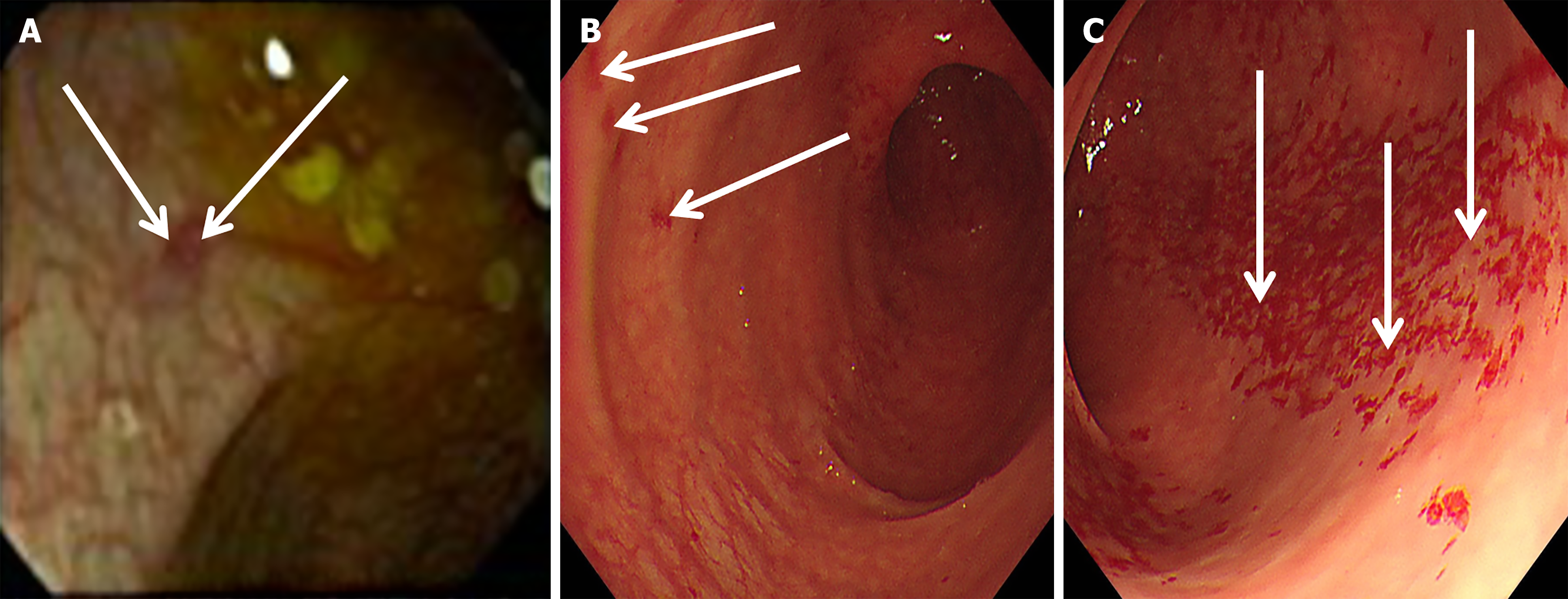
Figure 1 Electronic colonoscopy images on two occasions.
A: On day 8 of diarrhea, electronic colonoscopy (arrows) revealed a patchy erosion measuring approximately 4 mm × 3 mm in the transverse colon (hepatic flexure) (obtained by an experienced endoscopist). Image resolution is limited solely due to suboptimal bowel preparation; however, the colonic erosion remains discernible. The location of the erosion corresponded to the presentation of right upper quadrant pain; B and C: On day 64 of diarrhea, multiple erosions were observed in the ascending colon (arrows in B) and the transverse colon (arrows in C). Compared to panel A, the area of colonic mucosal erosion shown in panels B and C had significantly enlarged, which was consistent with the worsening diarrhea symptoms.
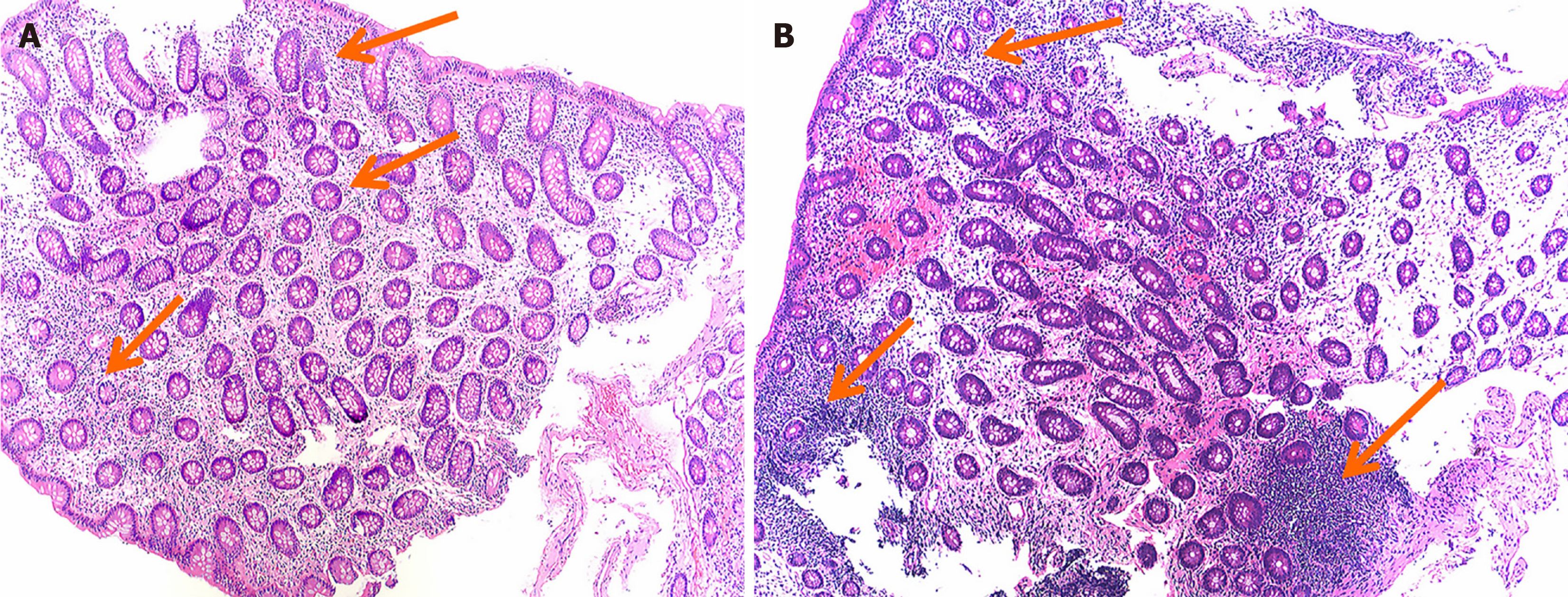
Figure 2 Pathological images.
A: The biopsy specimen from the transverse colon mucosa on day 8 of diarrhea shows chronic inflammation, characterized by a diffuse infiltrate of lymphocytes and plasma cells in the lamina propria, accompanied by lymphoid hyperplasia and stromal edema (arrows). This suggests that the patient may have had a persistent, long-term asymptomatic inflammatory reaction in the transverse colon even before the onset of diarrhea; B: The biopsy specimen from the transverse colon mucosa on day 64 of diarrhea reveals moderate chronic inflammation, with an increased density of lymphocytes and plasma cells in the lamina propria, accompanied by mild active inflammation as evidenced by the presence of scattered neutrophils in the colonic mucosa (arrows). No caseous necrosis or granulomatous lesions are observed. Compared with panel A, the mucosal inflammation in panel B shows a tendency of progression; however, neither panel A nor panel B supports diagnoses such as intestinal tuberculosis or inflammatory bowel disease.
- Citation: Guo T, Wang X, Wang SY, Lin TF. Isolated colonic aspergillosis in an immunocompetent individual diagnosed by metagenomic next-generation sequencing: A case report. World J Gastroenterol 2026; 32(13): 114563
- URL: https://www.wjgnet.com/1007-9327/full/v32/i13/114563.htm
- DOI: https://dx.doi.org/10.3748/wjg.v32.i13.114563