
















©The Author(s) 2025.
World J Gastroenterol. Dec 7, 2025; 31(45): 112318
Published online Dec 7, 2025. doi: 10.3748/wjg.v31.i45.112318
Published online Dec 7, 2025. doi: 10.3748/wjg.v31.i45.112318
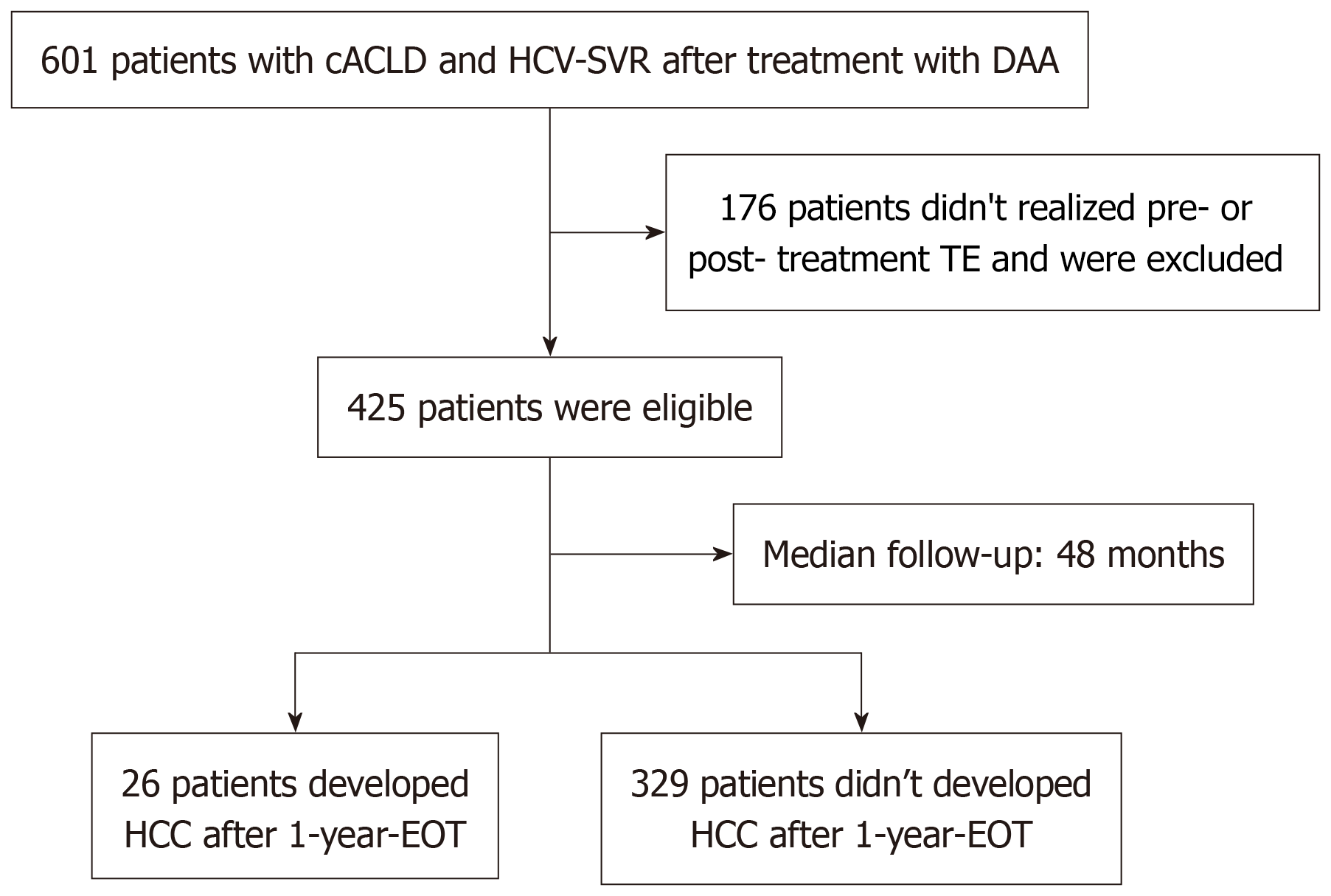
Figure 1 Flow chart of inclusion of patients in the study and development of hepatocellular carcinoma.
cACLD: Compensated advanced chronic liver disease; HCV: Hepatitis C virus; SVR: Sustained virological response; DAA: Direct-acting antivirals; HCC: Hepatocellular carcinoma; 1-year-EOT: One year after the end of treatment; TE: Transient elastography.
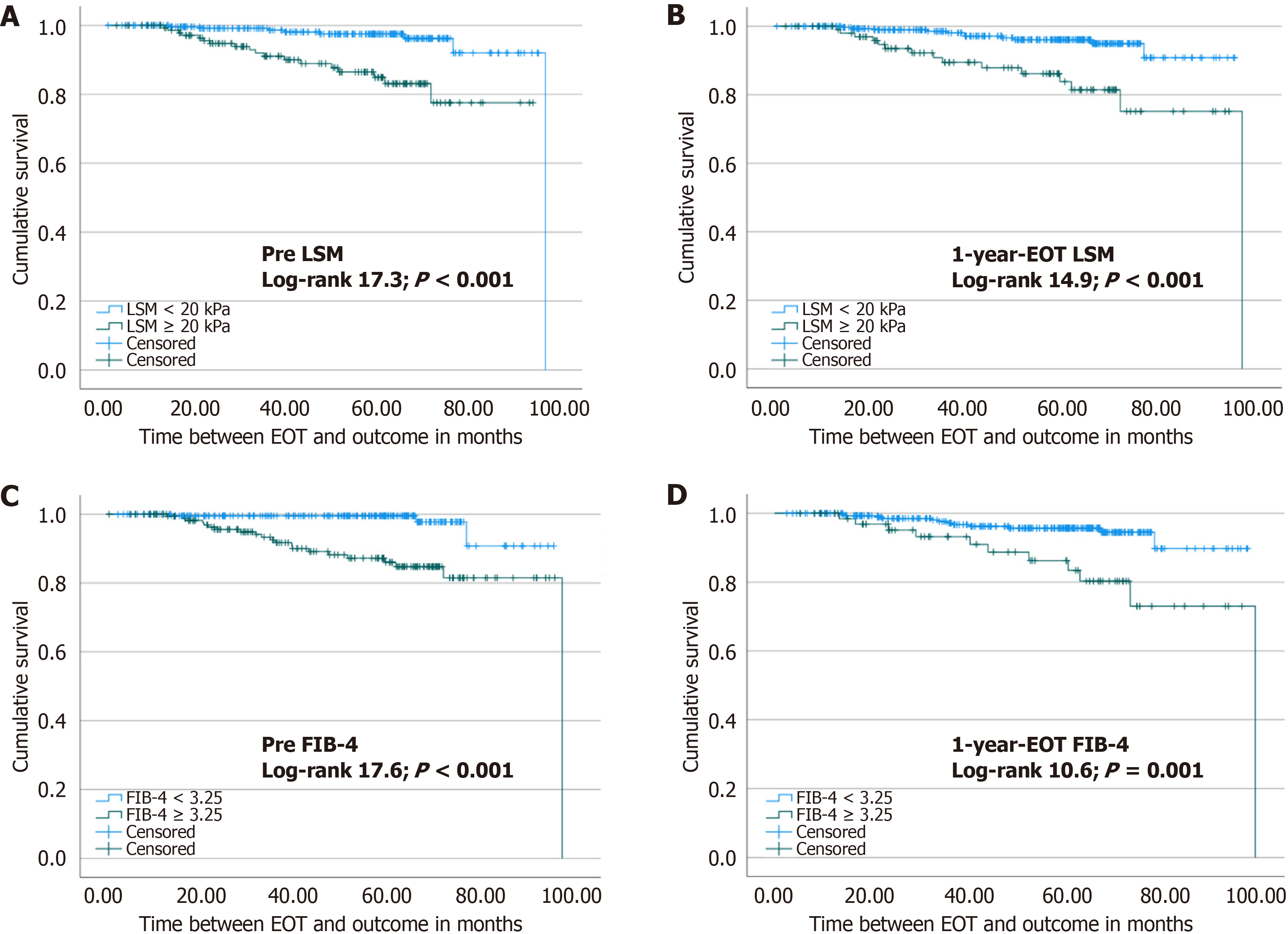
Figure 2 Kaplan Meier analysis regarding pre and 1-year-post-treatment liver stiffness measures and fibrosis-4 index score and hepatocellular carcinoma.
A: Pre-treatment liver stiffness measure (LSM) (cut-off: 20 kPa); B: 1-year end of treatment LSM (cut-off: 20 kPa); C: Pre-treatment fibrosis-4 index (cut-off: 3.25); D: 1-year end of treatment fibrosis-4 index (cut-off: 3.25). EOT: End of treatment; LSM: Liver stiffness measure; FIB-4: Fibrosis-4; 1-year-EOT: One year after the end of treatment.
- Citation: da Silva PGF, Barrocas JBP, Perazzo H, Villela-Nogueira L, Peixoto HR, Pereira GHS, Braga LNP, Chinzon M, de Silva JRL, Fernandes FF, Villela-Nogueira CA. Transient elastography and fibrosis-4 index as predictors of hepatocellular carcinoma in hepatitis C virus patients with sustained virological response. World J Gastroenterol 2025; 31(45): 112318
- URL: https://www.wjgnet.com/1007-9327/full/v31/i45/112318.htm
- DOI: https://dx.doi.org/10.3748/wjg.v31.i45.112318