
















©The Author(s) 2025.
World J Gastroenterol. Nov 28, 2025; 31(44): 113650
Published online Nov 28, 2025. doi: 10.3748/wjg.v31.i44.113650
Published online Nov 28, 2025. doi: 10.3748/wjg.v31.i44.113650
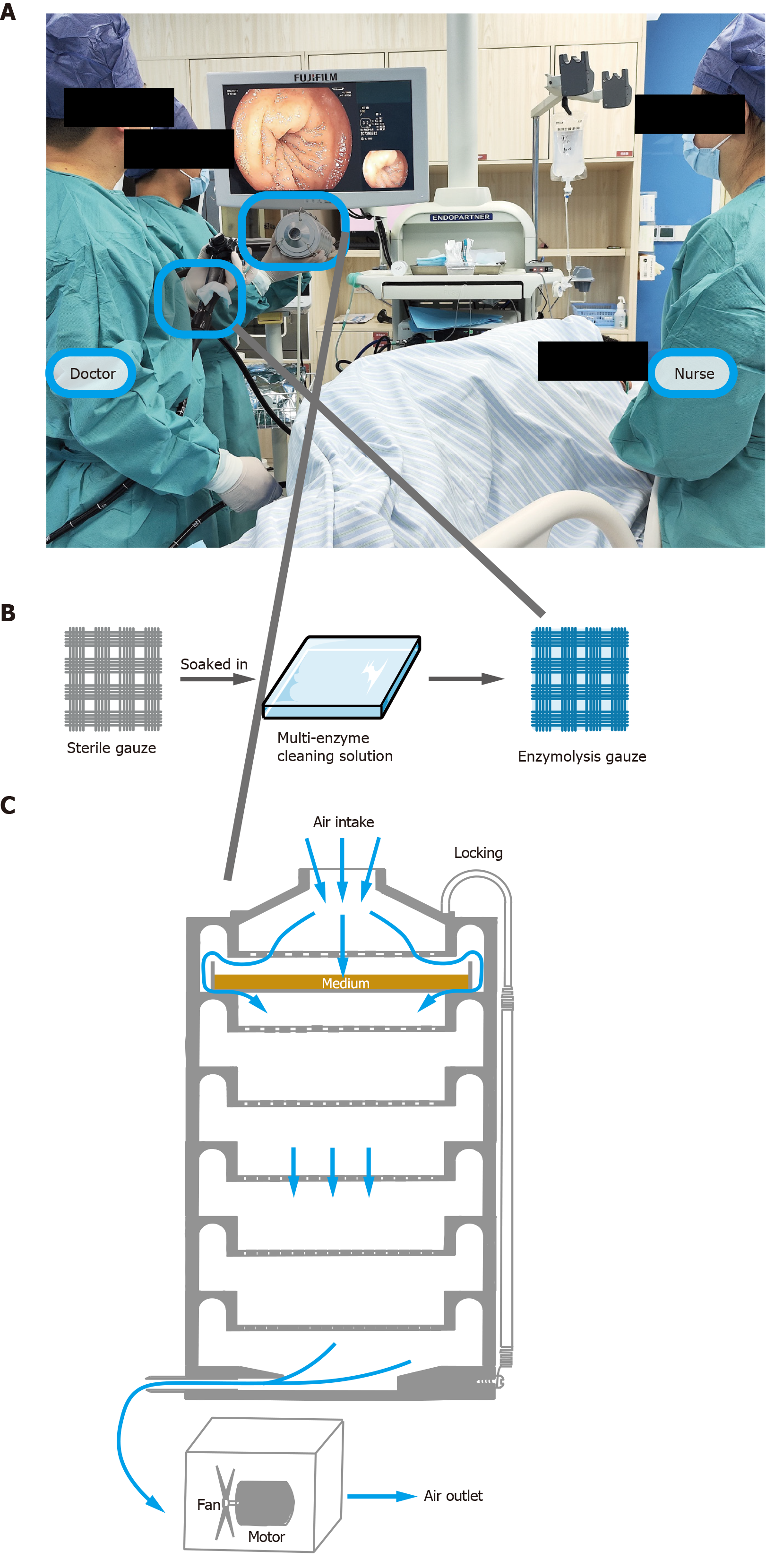
Figure 1 Schematic for air collection.
A: Endoscopic procedures; B: Enzymolysis gauze; C: Anderson six-stage impact microorganism sampler diagram. The device operates by directing air through a perforated screen plate to an agar plate.
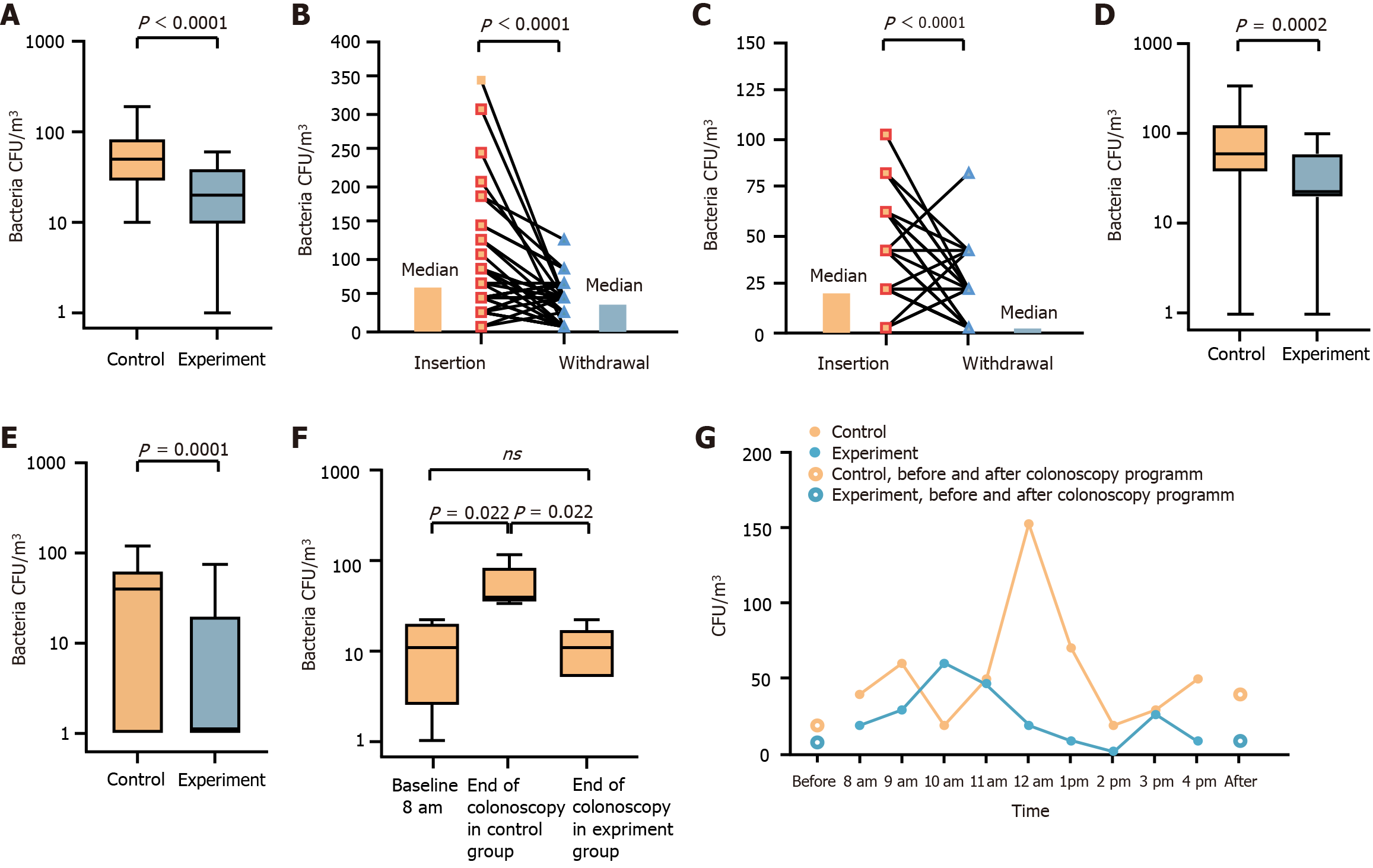
Figure 2 Quantification of airborne bacterial load.
A: Covering the biopsy hole check valve with enzymolysis gauze significantly reduced Gram-positive bacterial load near the endoscopist; B and C: In the control (B) and experimental (C) groups, bacterial load during insertion was higher than during withdrawal; D and E: Comparison of bacterial loads between the two groups during insertion (D) and withdrawal (E); F: Bacterial load (colony-forming unit/m3) before, during, and after a daily colonoscopy schedule; G: Bioaerosol accumulation during a representative endoscopy day. Lower aerosol levels were observed in the enzymolysis gauze group. CFU: Colony-forming unit.
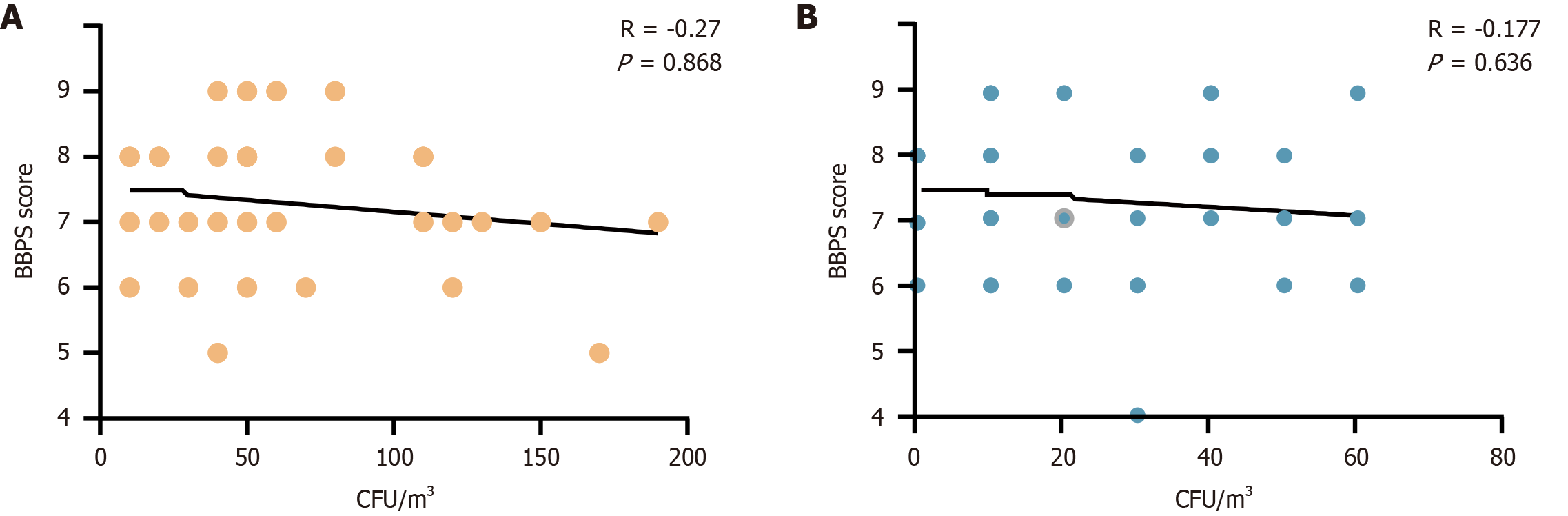
Figure 3 Correlation between intestinal cleanliness and bacterial load.
A: Control group; B: Experimental group. CFU: Colony-forming unit; BBPS: Boston Bowel Preparation Scale.
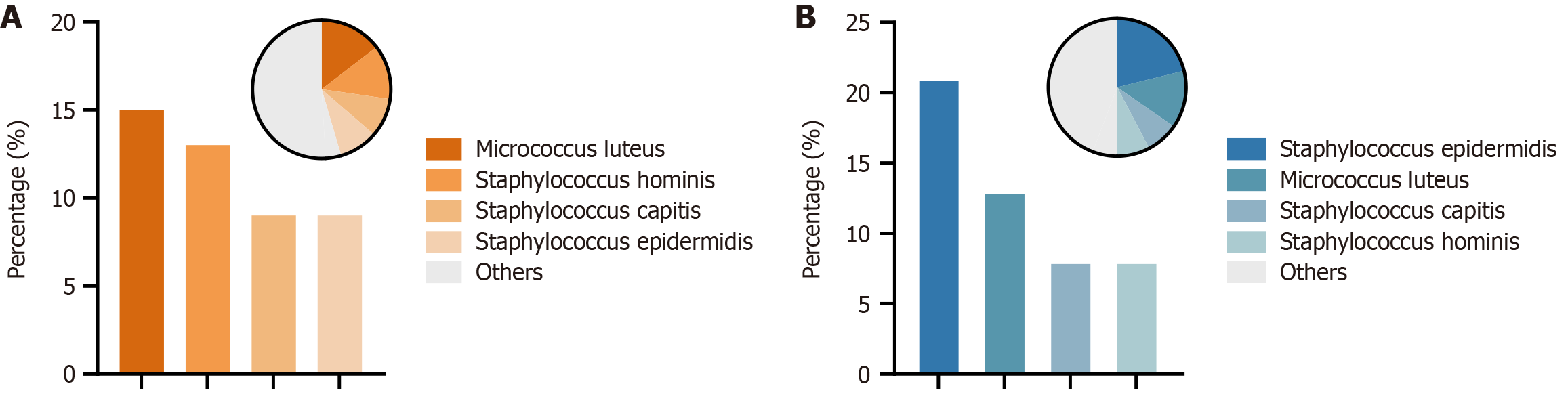
Figure 4 Proportion of bacterial species identified.
A: Top four bacterial species in the control group; B: Top four bacterial species in the experimental group.
- Citation: Xia HB, Hou YD, Zhang Y, Yu AY, Ding Q, Ruan WL, Mao YS, Feng SJ, Ding C, Zhou YF. Covering the biopsy hole check valve with “enzymolysis gauze” reduces bacterial contamination in the endoscopy room. World J Gastroenterol 2025; 31(44): 113650
- URL: https://www.wjgnet.com/1007-9327/full/v31/i44/113650.htm
- DOI: https://dx.doi.org/10.3748/wjg.v31.i44.113650