
















Copyright: ©Author(s) 2026.
World J Methodol. Sep 20, 2026; 16(3): 121456
Published online Sep 20, 2026. doi: 10.5662/wjm.121456
Published online Sep 20, 2026. doi: 10.5662/wjm.121456
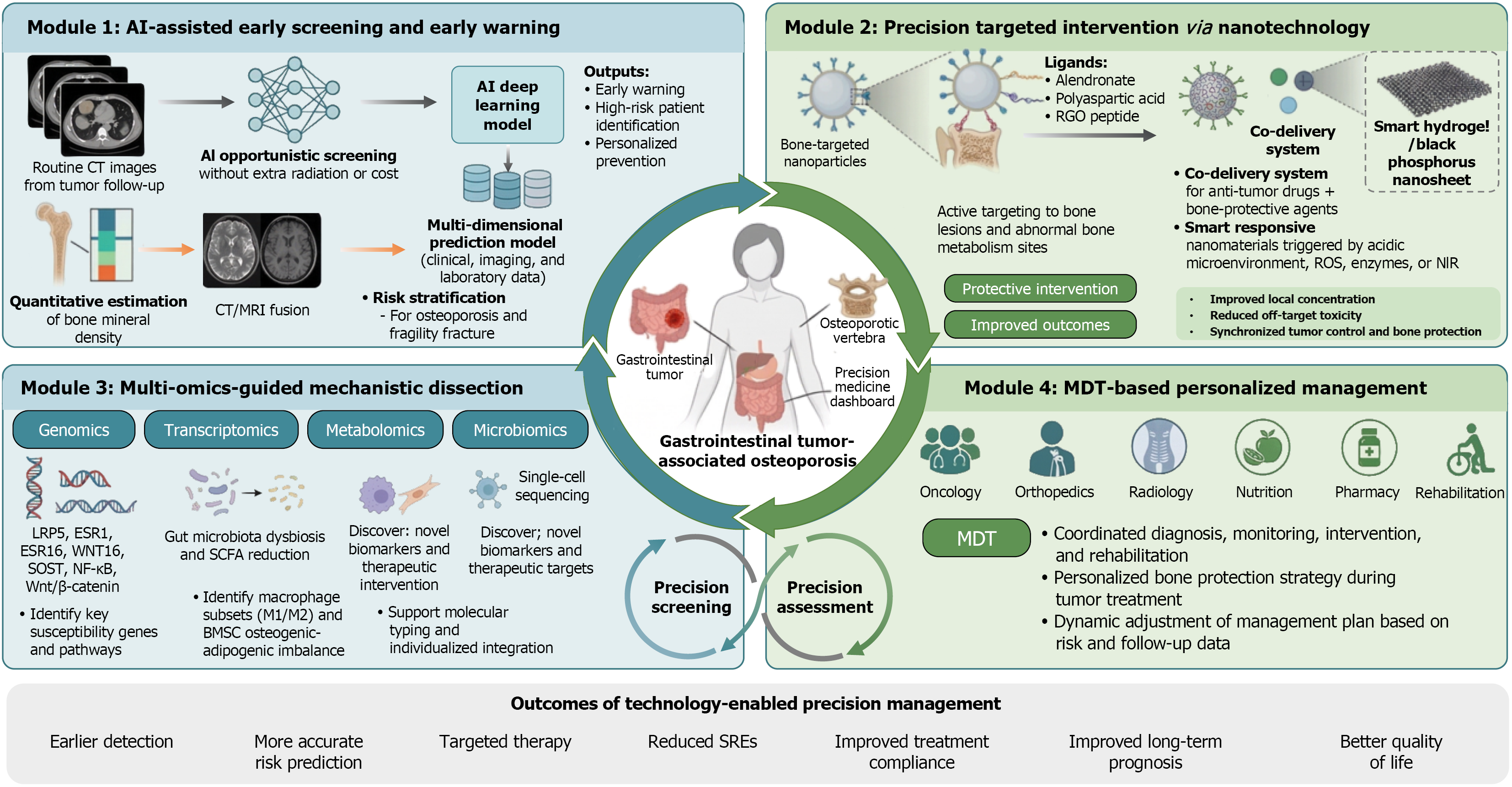
Figure 1 Technology-enabled precision management framework for gastrointestinal tumor-associated osteoporosis.
This schematic summarizes an integrated precision-management strategy for gastrointestinal tumor-associated osteoporosis. Module 1 illustrates artificial intelligence-assisted opportunistic screening, bone mineral density estimation, multimodal image fusion, and multidimensional risk prediction for early detection and warning. Module 2 shows nanotechnology-based targeted interventions, including bone-targeted nanoparticles, codelivery systems, and smart responsive biomaterials for synchronized tumor control and bone protection. Module 3 highlights multiomics-guided mechanistic dissection, including genomics, transcriptomics, metabolomics, microbiomics, and single-cell sequencing, for biomarker discovery and molecular stratification. Module 4 presents multidisciplinary team-based personalized management that integrates oncology, orthopedics, radiology, nutrition, pharmacy, and rehabilitation. Together, these approaches support precision screening, precision assessment, and individualized intervention, ultimately reducing skeletal-related events and improving long-term prognosis and quality of life. AI: Artificial intelligence; BMSC: Bone marrow mesenchymal stem cells; CT: Computed tomography; GTO: Gastrointestinal tumor-associated osteoporosis; MDT: Multidisciplinary team; MRI: Magnetic resonance imaging; NIR: Near-infrared; RGD: Arginine-glycine-aspartic acid peptide; ROS: Reactive oxygen species; SCFA: Short-chain fatty acids; SRE: Skeletal-related events.
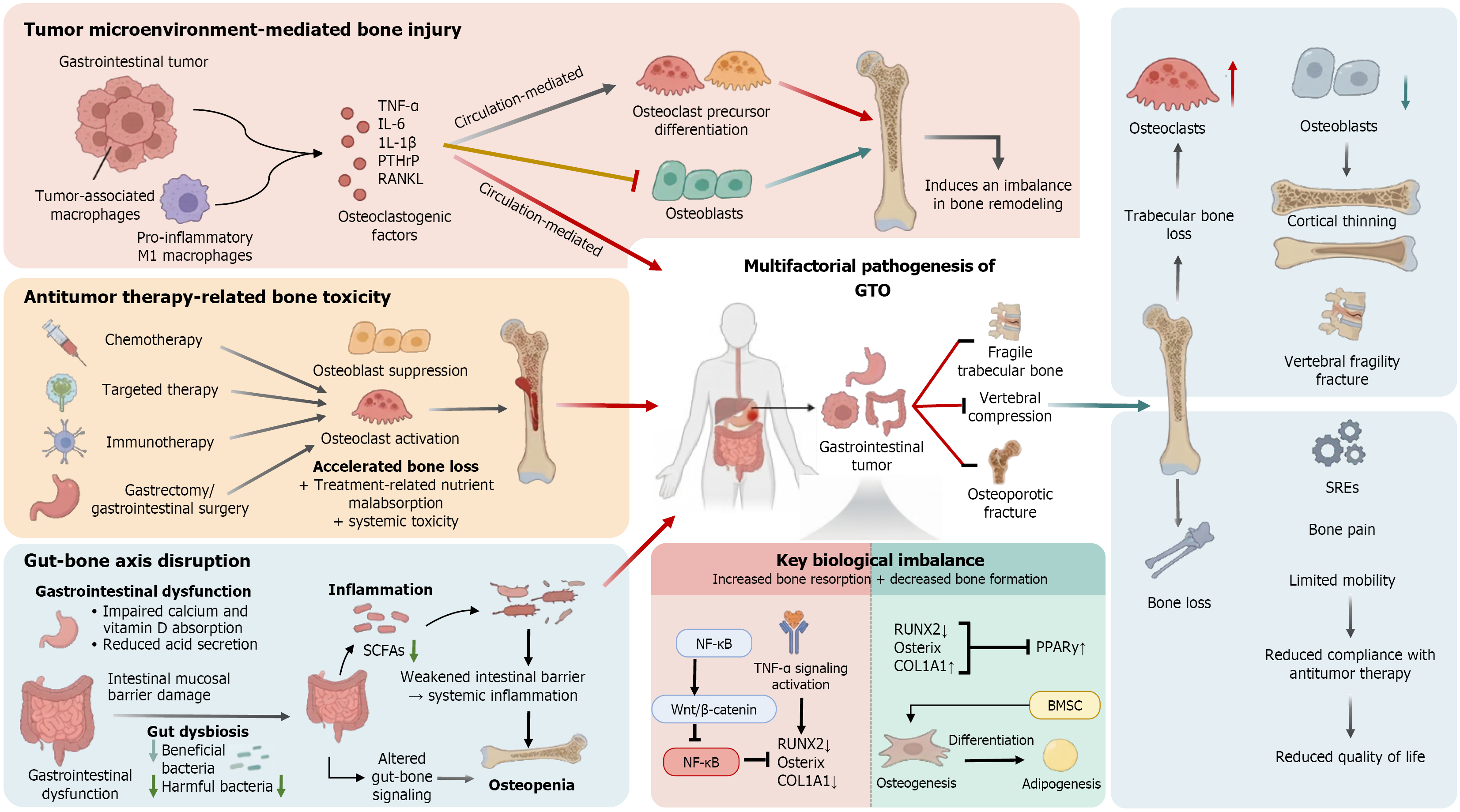
Figure 2 Multiple pathogenesis and consequences of gastrointestinal tumor-associated osteoporosis.
gastrointestinal tumor-associated osteoporosis results from the combined effects of tumor microenvironment-mediated bone injury, antitumor therapy-related bone toxicity, and gut-bone axis disruption. These processes enhance osteoclastogenesis, suppress osteoblast function, impair nutrient absorption, and promote systemic inflammation. At the molecular level, nuclear factor kappa-B/tumor necrosis factor signaling activation, Wnt/β-catenin inhibition, and dysregulated bone marrow mesenchymal stem cell differentiation jointly shift bone remodeling toward increased resorption and reduced formation, ultimately leading to trabecular bone loss, cortical thinning, vertebral fragility fracture, skeletal-related events, bone pain, limited mobility, and reduced quality of life. BMSC: Bone marrow mesenchymal stem cell; COL1A1: Collagen type I alpha 1 chain; GTO: Gastrointestinal tumor-associated osteoporosis; IL-1β: Interleukin-1 beta; IL-6: Interleukin-6; NF-κB: Nuclear factor kappa-B; PPARγ: Peroxisome proliferator-activated receptor gamma; PTHrP: Parathyroid hormone-related protein; RANKL: Receptor activator of nuclear factor kappa-B ligand; RUNX2: Runt-related transcription factor 2; SCFAs: Short-chain fatty acids; SREs: Skeletal-related events; TNF-α: Tumor necrosis factor-alpha.
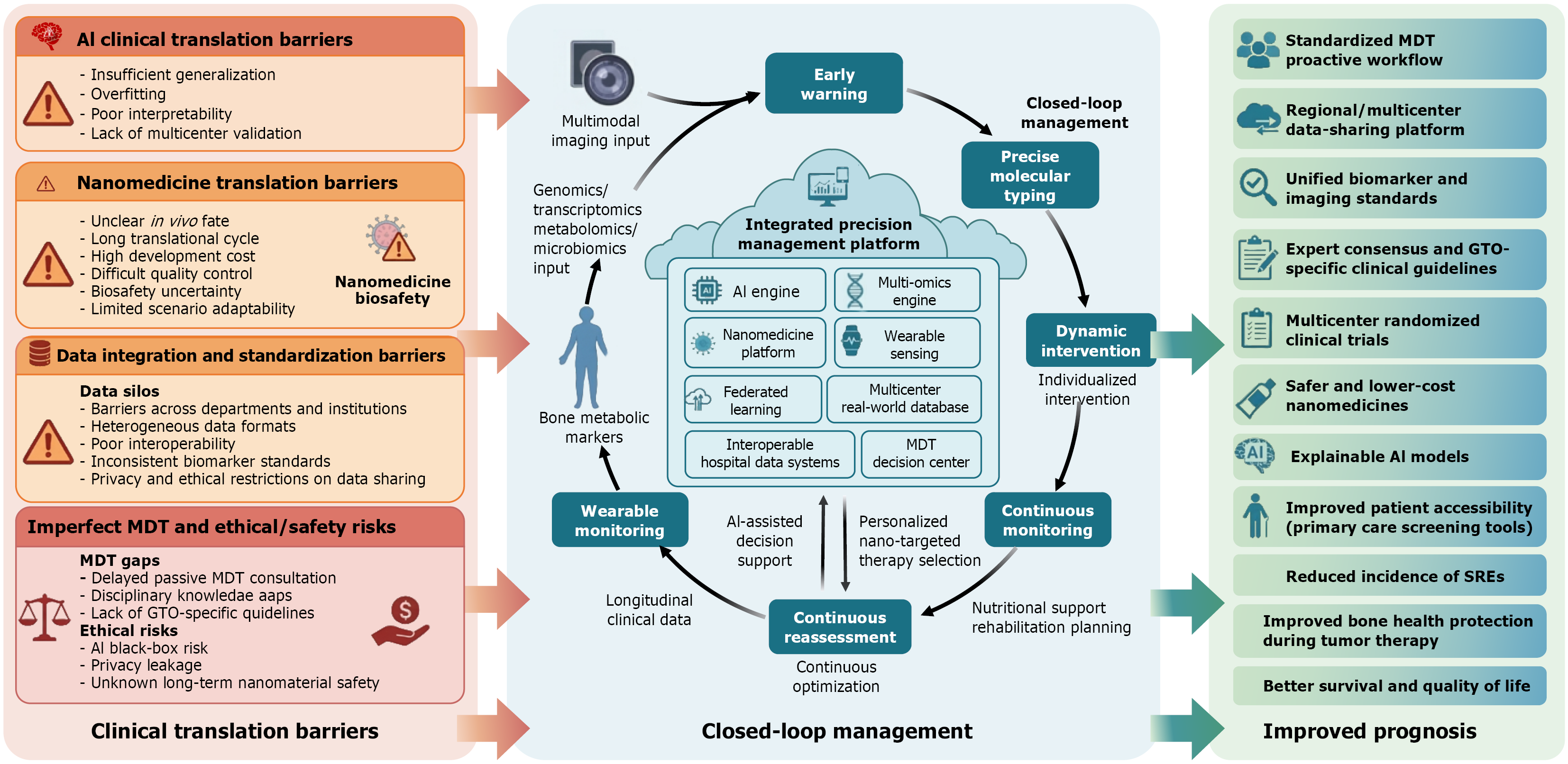
Figure 3 Translational barriers and closed-loop implementation pathway for precision management of gastrointestinal tumor-associated osteoporosis.
The left panel summarizes the major barriers limiting the clinical translation of gastrointestinal tumor-associated osteoporosis precision management, including insufficient artificial intelligence (AI) generalizability and interpretability, nanomedicine biosafety and quality-control challenges, multidimensional data silos and a lack of standardization, and imperfect multidisciplinary team (MDT) collaboration with ethical and safety risks. The center panel illustrates a closed-loop precision-management framework integrating multimodal imaging, multiomics, wearable monitoring, multicenter real-world databases, and interoperable hospital systems to support early warning, molecular typing, dynamic intervention, continuous reassessment, and longitudinal monitoring. The right panel outlines key implementation strategies, including standardized MDT workflows, regional data-sharing platforms, unified biomarker and imaging standards, expert consensus and clinical guidelines, multicenter trials, safer nanomedicines, and explainable AI, ultimately improving bone protection, reducing skeletal-related event incidence, and enhancing prognosis and quality of life. AI: Artificial intelligence; GTO: Gastrointestinal tumor-associated osteoporosis; MDT: Multidisciplinary team; SRE: Skeletal-related event.
- Citation: Wang P, Sun JK, Li D, Shi Z, Lu PY, Jin DF, Huang SF, Ruan YH, Li WT, Shi MD, Ma ZH, Wang ZH, Hu LY, Xue ME, Zhang CJ, Li ZP. Precision management of gastrointestinal tumor-associated osteoporosis driven by cutting-edge technologies: Current status, challenges, and future prospects. World J Methodol 2026; 16(3): 121456
- URL: https://www.wjgnet.com/2222-0682/full/v16/i3/121456.htm
- DOI: https://dx.doi.org/10.5662/wjm.121456