
















Copyright: ©Author(s) 2026.
World J Methodol. Sep 20, 2026; 16(3): 111485
Published online Sep 20, 2026. doi: 10.5662/wjm.v16.i3.111485
Published online Sep 20, 2026. doi: 10.5662/wjm.v16.i3.111485
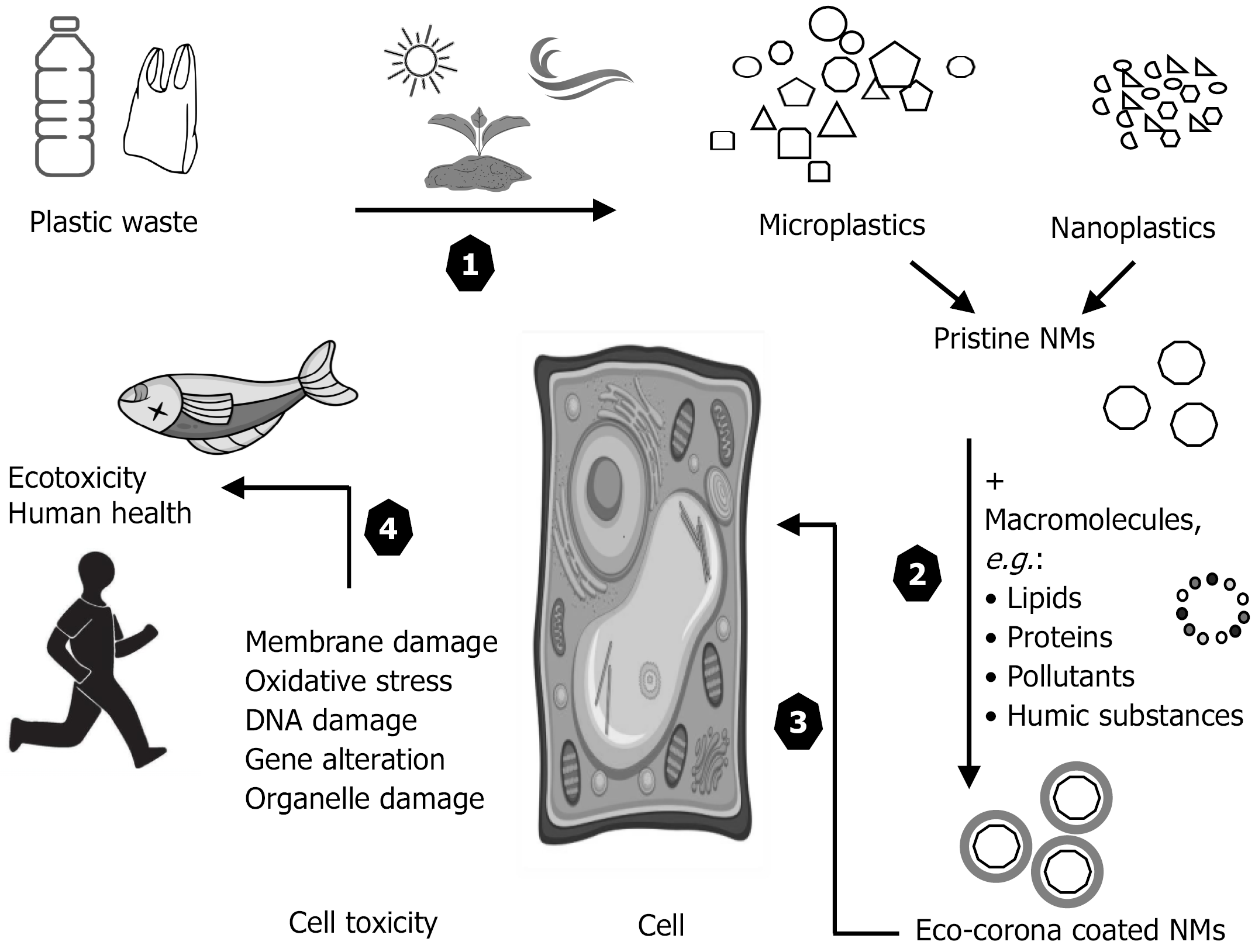
Figure 1 Schematic representation of the origin and potential toxic effects of eco-corona-coated micro- and nanoplastics.
The process begins with the fragmentation of plastic debris into microplastics (MPs) and nanoplastics under the influence of environmental stressors such as ultraviolet radiation, mechanical abrasion (e.g., waves), microbial activity, and temperature fluctuations (step 1). Once fragmented, these pristine nano- and microplastics interact with environmental macromolecules, including lipids, proteins, humic substances, and pollutants, leading to the formation of an eco-corona on their surface (step 2). These eco-corona-coated nano- and microplastics can then interact with living organisms, including plants, animals, and humans, at cellular or systemic levels, potentially disrupting biological functions (step 3). Ultimately, these interactions may lead to ecotoxic effects in ecosystems and adverse health outcomes in humans, such as microbiota dysbiosis (step 4). NMs: Nano-microplastics. Some vector elements used in this figure were provided by Vecteezy (available from: https://www.vecteezy.com/).
- Citation: Demarquoy J, Othman H. Eco-corona: A new frontier in understanding micro- and nanoplastic-gut interactions. World J Methodol 2026; 16(3): 111485
- URL: https://www.wjgnet.com/2222-0682/full/v16/i3/111485.htm
- DOI: https://dx.doi.org/10.5662/wjm.v16.i3.111485