
















©The Author(s) 2025.
World J Nephrol. Dec 25, 2025; 14(4): 110491
Published online Dec 25, 2025. doi: 10.5527/wjn.v14.i4.110491
Published online Dec 25, 2025. doi: 10.5527/wjn.v14.i4.110491
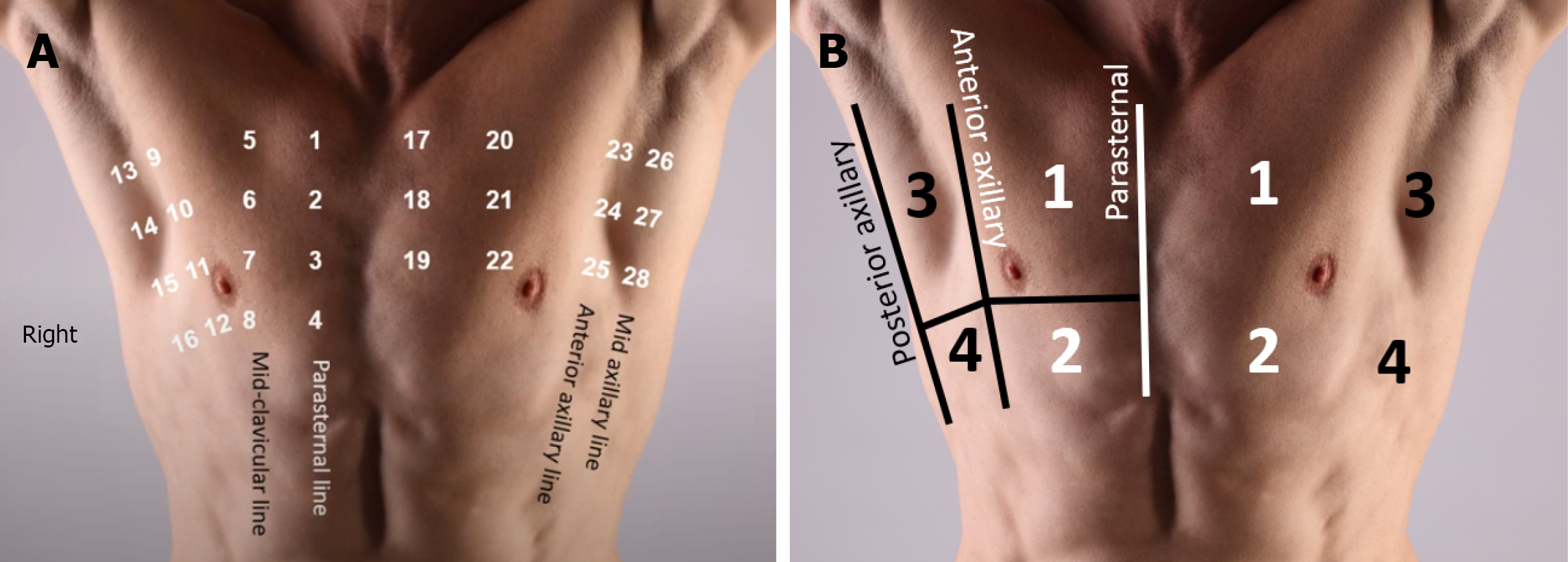
Figure 1 Lung ultrasound zones.
A: Twenty-Eight-zone method: 16 intercostal spaces on the right and 12 on the left are examined; B: Eight-zone lung ultrasound: Four zones in left hemithorax. In this method, each zone may include more than one intercostal space.
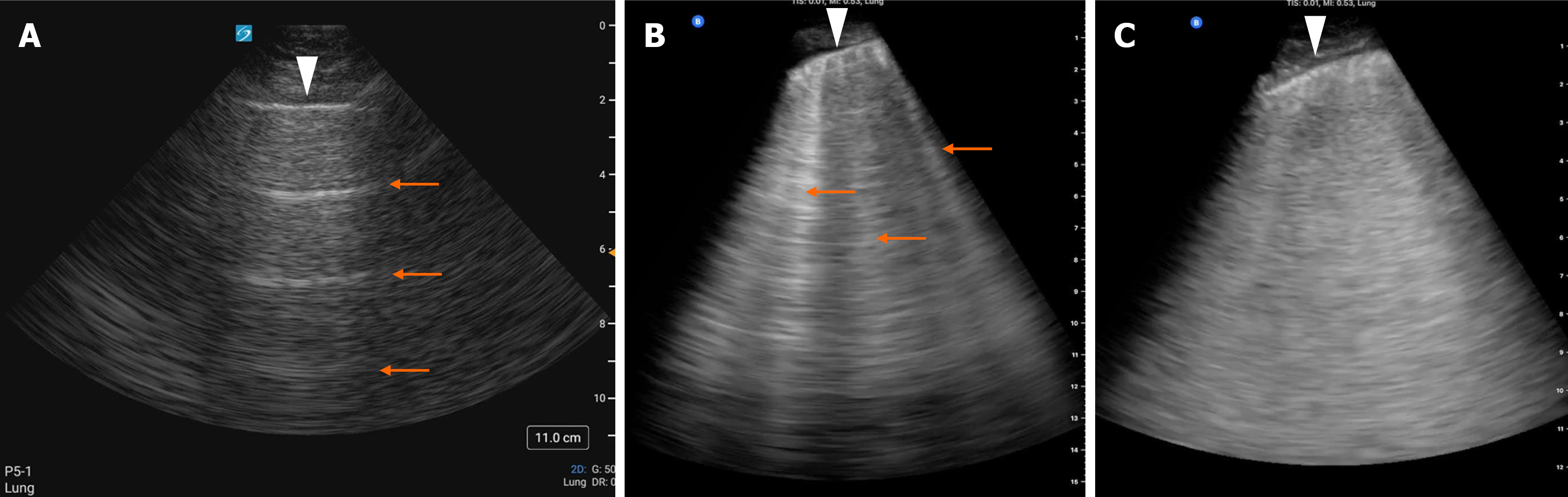
Figure 2 Lung ultrasound images showing.
A: Normal horizontal artifacts known as A-lines (indicated by arrows); B: Discrete B-lines (arrows); C: Confluent B-lines creating a white-out appearance in the scanned lung zone typically seen in alveolar edema. The arrowhead in each image indicates the pleural line.
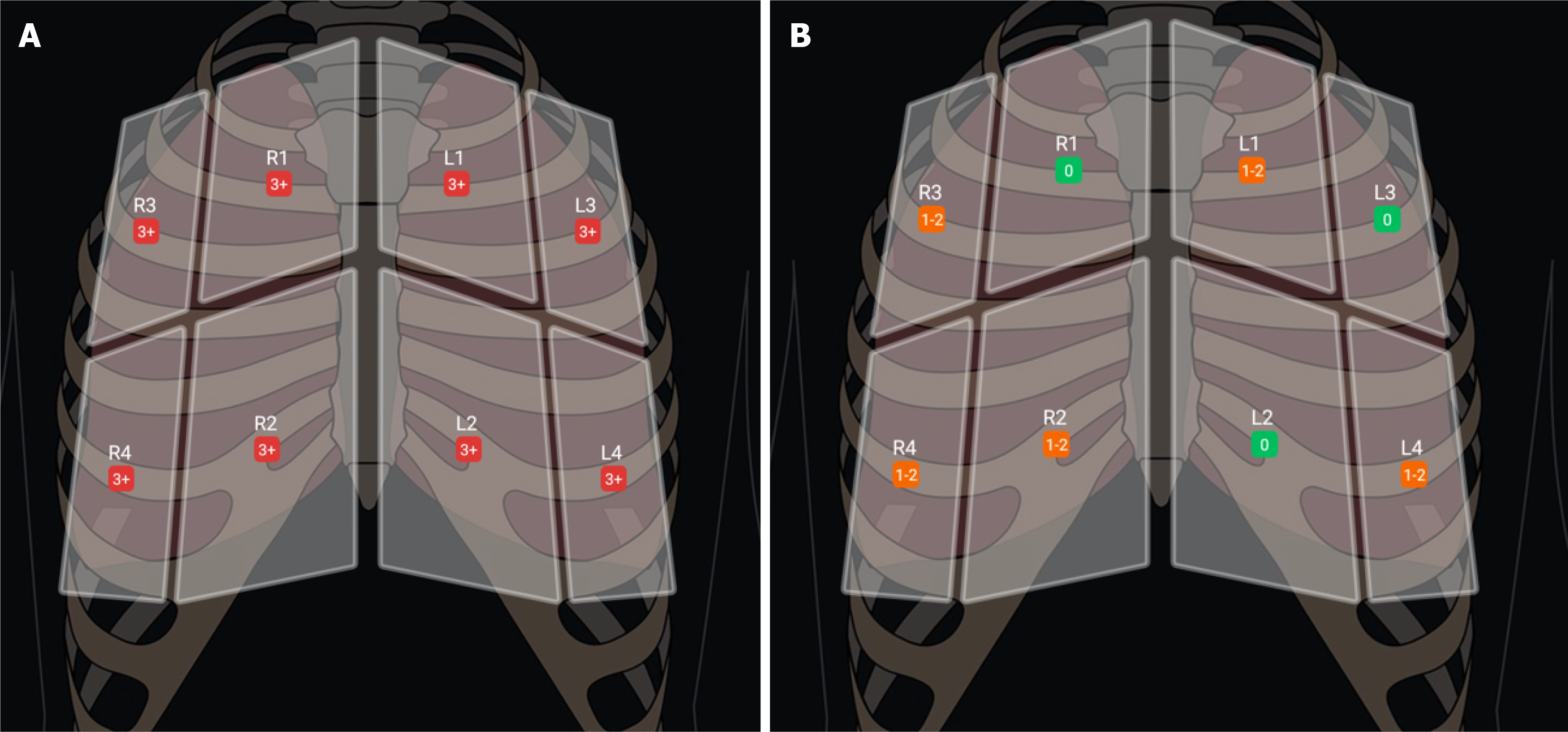
Figure 3 Eight-zone B-line summaries obtained using a handheld ultrasound device (Philips Lumify®) in a patient with end-stage kidney disease.
A: Pulmonary edema following a missed hemodialysis session, with three or more B-lines counted by the machine in each lung zone; B: Marked improvement after 35 liters of ultrafiltration, now showing only one to two B-lines per zone, though there remains potential for further improvement with additional fluid removal.
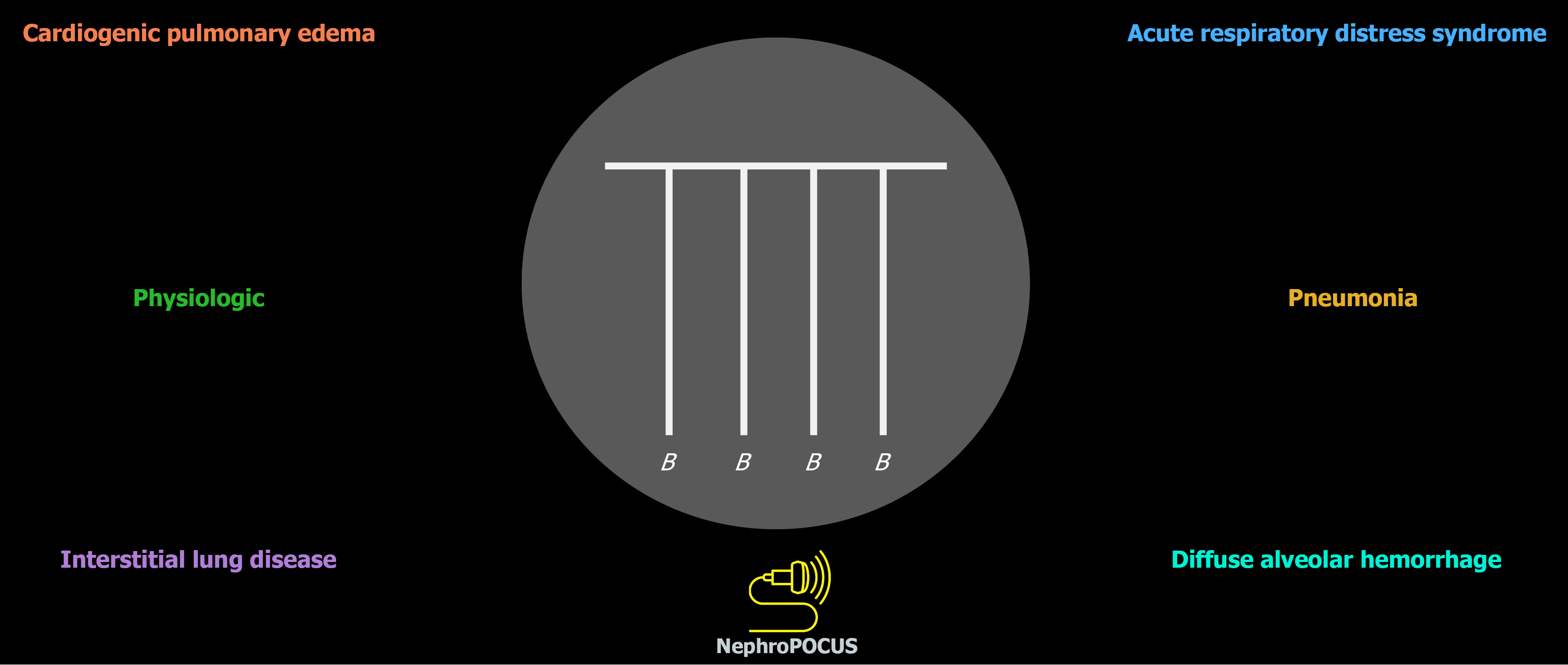
Figure 4
Illustration demonstrating that B-lines are not specific to cardiogenic pulmonary edema.
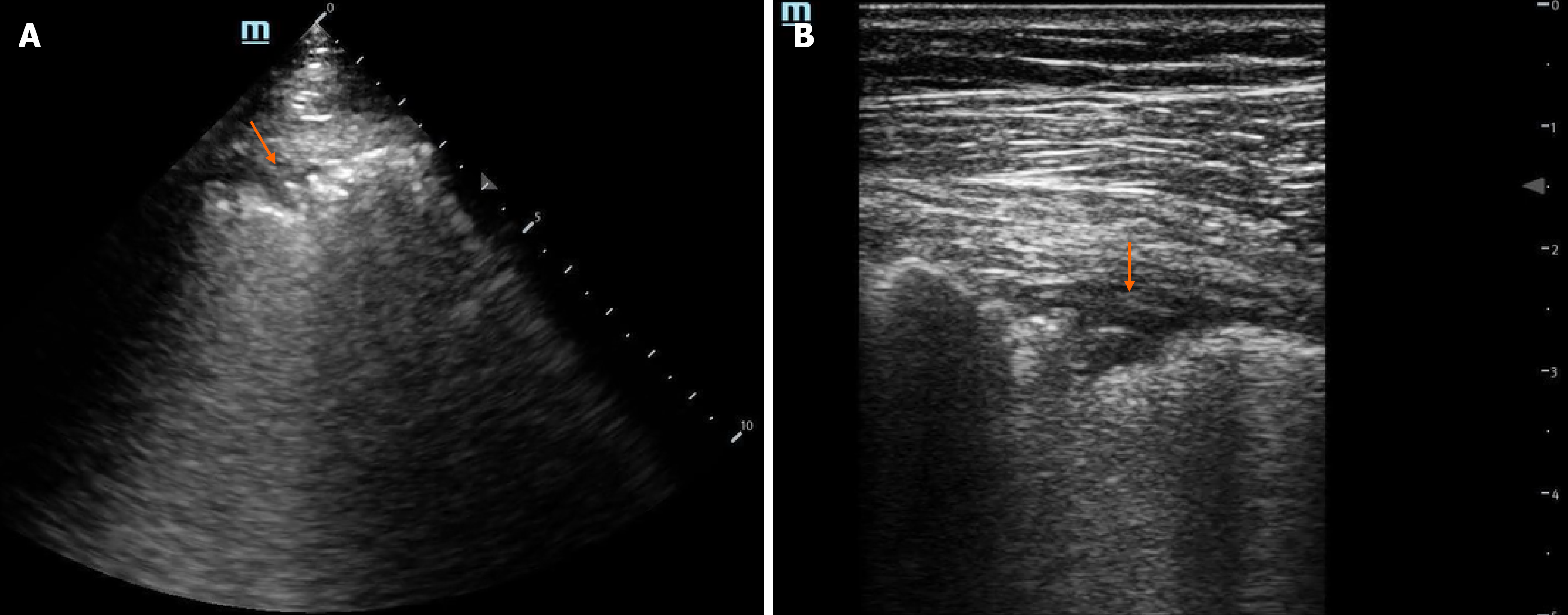
Figure 5 Lung ultrasound images showing.
A: Confluent B-lines with a thickened, irregular pleural line (arrow) in a patient with acute respiratory distress syndrome; B: A high-resolution image obtained using a linear transducer, highlighting subpleural consolidation (arrow).
- Citation: Gogula NSAR, Koratala A. Lung ultrasound in nephrology: Basics, applications, limitations, and future directions. World J Nephrol 2025; 14(4): 110491
- URL: https://www.wjgnet.com/2220-6124/full/v14/i4/110491.htm
- DOI: https://dx.doi.org/10.5527/wjn.v14.i4.110491